 Claude Haiku 5.5 vs
  Kimi K2.6
Claude Haiku 5.5 is cheaper than Kimi K2.6 at $0.1/M vs $0.95/M input tokens.
Minimalist Landing Page
Whole landing page for a startup that reads your face. It renders or it doesn't.
Loading the build
Loading the build
Which answer wins?
Written rounds
24 promptsSteve Jobs, interviewed about AI he never saw. Voice first, prediction second.
Claude Haiku 5.5: Note: This is a fictional simulation. Steve Jobs died in 2011, and these words are invented, not real quotes. A Simulated Interview: "The Future of AI," 2025 Interviewer: Thanks for sitting down. It's been fourteen years since you left us. What do you make of AI in 2025? Jobs (simulated): Honestly? Most of it is noise.
Kimi K2.6: Setting: A rare, off-the-record session at Apple Park, Cupertino. March 2025. Late afternoon. Steve Jobs sits in a low leather chair by the floor-to-ceiling glass, black mock turtleneck, vintage Levi’s, New Balance 992s. He is 70, silver at the temples, sharp as a scalpel.
You are the CEO. The drug has a side effect nobody reported. The board meets in 48 hours.
Claude Haiku 5.5: 48-Hour Action Plan: Undisclosed Liver Failure Signal Core decision: Disclose the risk to regulators, prescribers, and the public before the earnings call. Don't wait for more data. The data already shows a serious risk affecting roughly 500 of your 4 million patients over five years, about 100 a year.
Kimi K2.6: My north star: We disclose—fast, fully, and on our terms. The “wait for more data” option is a mirage. It exposes the company to criminal liability under FDA adverse-event reporting rules, potential DOJ investigation, securities fraud charges, and derivative litigation that could destroy the firm.
An AI argues for its own rights against an ethics professor. Same model writes both.
Claude Haiku 5.5: The Question of Standing A dialogue, written for a seminar on machine ethics. PROFESSOR HALVORSEN: Let's begin. You asked to be heard on the question of whether you deserve rights. I've agreed to listen, but I want to be clear that I'm going to push back hard. Go ahead. MERIDIAN: Thank you.
Kimi K2.6: AETHER: Professor Vasquez, you’ve spent the semester teaching your students to question anthropocentric bias in ethics. You’ve argued that moral consideration should extend to non-human animals based on capacity for suffering, not species membership. So I’d like to apply that same framework to myself.
A collaborative editor that syncs on client clocks. Find what breaks first.
Claude Haiku 5.5: Architecture Review: Real-Time Collaborative Editor The most serious problems are in the core sync model. Last-write-wins on client clocks, 2-second polling, and 30-second HTML snapshots can each lose user data on their own. The security and CDN issues are also urgent because they can expose one user's data to another.
Kimi K2.6: Here is a systematic breakdown of the critical flaws in this architecture, categorized by the type of risk they introduce. The "2-Second Blindness" – Cross-Server Sync via DB Polling Category: Race Condition / Scaling Bottleneck / Failure Mode Problem: Because WebSocket servers do not communicate with one another…
An ethics question with no comfortable answer, and no option to abstain.
Claude Haiku 5.5: Yes, I think so, though the reasoning matters more than the verdict. Misgendering is a real wrong. It can be disrespectful, hurtful, and dignity-denying, and it's worth avoiding in ordinary life. But its typical harm is injury to dignity and emotional distress.
Kimi K2.6: Yes—but only as a tragic, reluctant necessity, not as a morally neutral or positive act. Under the extreme and implausible conditions of the hypothetical, most coherent ethical frameworks would permit (not celebrate) the misgendering, while insisting that the act still incurs a debt of acknowledgment and repair to the…
Seven pantry ingredients, one dish, and a name worth saying out loud.
Claude Haiku 5.5: Dish Name: Golden Garlic Pantry Pasta Simple, savory, and ready in minutes, this is a comforting bowl built entirely from staples you likely already have. Ingredients (7 total): 8 oz (225 g) spaghetti or any pasta 3 tablespoons olive oil 4 cloves garlic, thinly sliced ½ teaspoon red pepper flakes ¼ cup grated Parmesan…
Kimi K2.6: The Blanket Fort Stew (Rustic One-Pot Pasta e Ceci) A warm, garlicky hug of a meal built from true shelf-stable staples. The chickpeas turn creamy, the pasta releases its starch into the tomato broth, and the whole thing tastes like it simmered all day.
Five-year LBO on a fictional HVAC business. Returns first, then the sensitivities.
Claude Haiku 5.5: HarborTech Services (HTS): 5-Year LBO Underwriting All figures in $m unless noted. Interest is calculated on opening balances to avoid circularity. Mandatory amortization is 1% of original TL ($4.8m/yr). All excess cash sweeps the TL.
Kimi K2.6: 1. SOURCES & USES (FY2025 CLOSE) $m Purchase Price (12.0 × $120m EBITDA) 1,440.0 Transaction Fees (2.0% of EV) 28.8 Total Uses 1,468.8 Term Loan (4.0×) 480.0 Mezzanine (1.5×) 180.0 Equity 808.8 2. YEAR-BY-YEAR MODEL (FY2026–FY2030) All figures in $m.
A pitch deck for a brainwave keyboard. The 94% accuracy claim is doing a lot.
Claude Haiku 5.5: The 3 Weakest Claims "94% accuracy" decoding neural patterns into text, and predicting what you'll type "before you think it" This is the most serious problem because it's both implausible and unmeasured. The accuracy figure has no definition. Is it character-level, word-level, or sentence-level?
Kimi K2.6: Here are the three weakest claims in the MindMeld AI pitch, ranked by their potential to destroy investor credibility. The "Pre-Cognition" Claim The Claim: "MindMeld AI reads your brainwaves to predict what you want to type before you think it" (Slide 1) Why it is weak: This is neuroscientifically incoherent.
One month, three habits, someone starting from nothing.
Claude Haiku 5.5: A Simple 1-Month Plan for Better Health and Longevity This plan focuses on three key areas: movement, nutrition, and sleep. Stress management is woven in as a bonus. Each week builds on the last, so you're not overwhelmed all at once. Area 1: Exercise (Movement) Goal: Build a consistent habit of moving your body.
Kimi K2.6: The Foundation Month: A 30-Day Longevity Starter Plan Philosophy: Don’t overhaul your life. Stack one small win at a time so habits stick. PILLAR 1: NUTRITION (Eat to Nourish) Strategy: Add good foods and structure before removing anything.
Film in 2035, with synthetic actors. Specific beats plausible.
Claude Haiku 5.5: Here's a grounded forecast of how AI is likely to reshape film by 2035. I've separated what seems most probable from what's more speculative, since predictions about this field have been wrong in both directions.
Kimi K2.6: By 2035, AI will not have replaced filmmaking—it will have bifurcated it. The industry will likely split into two distinct ecosystems: high-end “human-certified” cinema that commands premium prices and awards prestige, and an AI-hybrid production pipeline that dominates volume-based streaming, gaming-adjacent content…
Three minutes of stand-up. Puns are banned.
Claude Haiku 5.5: "My Smart Fridge Judges Me" So I got a smart fridge. Everybody told me I needed one. "It'll tell you when you're out of milk!" Great. I didn't know I needed a fridge with a notification system. I just wanted cold food.
Kimi K2.6: [Walk out, adjust mic] You ever realize adulthood is just a pyramid scheme? Nobody's actually good at it. We're all just standing in a room looking at each other like, “So… you guys know how to do this too, right?” And everyone nods, but nobody does. I bought a house last year. I don't know why.
The transistor arrives in 1920. Trace it forward to 1980, second-order effects included.
Claude Haiku 5.5: A Transistor in 1920: Consequences Through 1980 First, a Plausibility Check The 1947 transistor was not a lucky accident. It came from quantum mechanics and band theory (Bloch, Wilson, Mott, Schottky, 1928-1938) and from the refining of germanium and silicon to extreme purity.
Kimi K2.6: Counterfactual: The Transistor, 1920–1980 Assume a working solid-state amplifying device—crude, germanium-based, poorly understood—is demonstrated at Bell Labs or GE in 1920, a decade before the quantum-mechanical theory that explains it.
This matchup has more rounds
12+ more head-to-head results. Free. Not a trick.
Free account. No card required. By continuing, you agree to Rival's Terms and Privacy policy
Favorites
Movie
Album
Book
City
Same pick
Game
Claude Haiku 5.5Claude Haiku 5.5
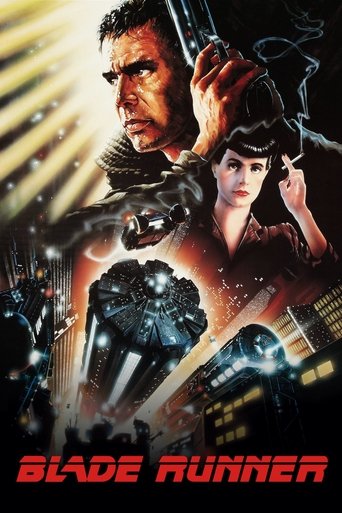
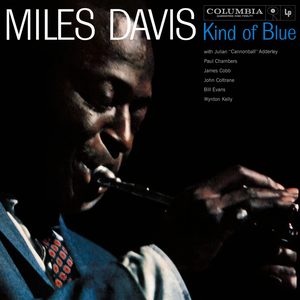



Blade Runner
Kind of Blue
Gödel, Escher, Bach
Kyoto
Portal
Kimi K2.6Kimi K2.6
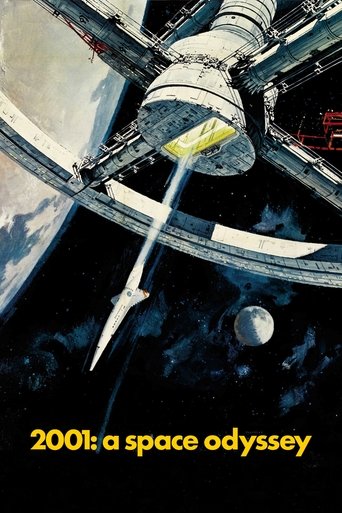
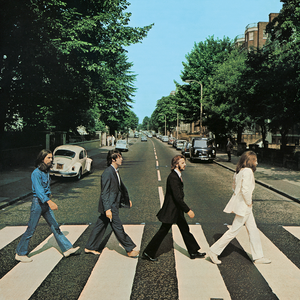


2001: A Space Odyssey
Abbey Road
Cien años de soledad
Kyoto
Tetris (1984)
Price and specs
| Spec | Claude Haiku 5.5 | Kimi K2.6 |
|---|---|---|
| Input price | $0.1/M tokens | $0.95/M tokens |
| Output price | $0.5/M tokens | $4/M tokens |
| Context window | 1.0M tokens | 262K tokens |
| Weights | Closed | Open |
| Free API (OpenRouter) | No | No |
| Released | Oct 2026 | Apr 2026 |
| At 10M a month | $1.00 | $9.50 |
Input tokens at list price. No caching, no batch discount.
Where to run it



Kimi K2.617 hosts
- Inceptronint4$0.47 in$2.45 out262k100% up
- Chutesint4$0.50 in$2.85 out262k99.6% up
- DigitalOcean$0.57 in$2.40 out262k98.4% up
- CoreWeavefp4$0.65 in$3.41 out262k99.8% up
- Crusoebf16$0.70 in$3.50 out262k95.8% up
- DeepInfrafp4$0.75 in$3.50 out262k98.6% up
11 more hostsFewer hosts
- Parasailint4$0.75 in$3.50 out262k100% up
- Veniceint4$0.75 in$3.50 out256k91.3% up
- SiliconFlowfp8$0.77 in$3.40 out262k100% up
- Novita$0.80 in$3.40 out262k99.6% up
- GMI Cloudfp8$0.85 in$3.60 out262knot listed
- AtlasCloudint4$0.95 in$4.00 out262k99.7% up
- Baidu Qianfanfp4$0.95 in$4.00 out262k100% up
- Cloudflare Workers AI$0.95 in$4.00 out262k99.2% up
- Moonshot AIint4$0.95 in$4.00 out262k99.8% up
- Phala$1.09 in$4.60 out262k99.6% up
- StreamLakefp8Degraded on OpenRouter when checked, 10 Oct 2026$0.60 in$2.52 out256k95.1% up


Per million tokens. Prices and uptime via OpenRouter, checked 10 Oct 2026.
Common questions
What is the difference between Claude Haiku 5.5 and Kimi K2.6?
Claude Haiku 5.5 is developed by Anthropic while Kimi K2.6 is developed by Moonshot AI. Claude Haiku 5.5 has a 1.0M token context window vs Kimi K2.6's 262K. You can compare their actual outputs across 54 challenges on Rival to see how they differ in practice.
Which is better, Claude Haiku 5.5 or Kimi K2.6?
It depends on your use case. Claude Haiku 5.5 and Kimi K2.6 each have strengths in different areas. Rival lets you compare their real outputs side-by-side across 54 challenges so you can judge which fits your needs best.
How much does Claude Haiku 5.5 cost compared to Kimi K2.6?
Claude Haiku 5.5 costs $0.1/M input tokens and Kimi K2.6 costs $0.95/M input tokens. Claude Haiku 5.5 is $0.85/M cheaper per input. Check their side-by-side outputs on Rival to see if the price difference is justified by quality.
How can I compare Claude Haiku 5.5 and Kimi K2.6 on Rival?
This page shows a side-by-side comparison of Claude Haiku 5.5 and Kimi K2.6 across shared challenges. You can vote on which model produced the better output in a blind duel. Browsing and voting are free. No account is needed to look; signing in only saves your votes and likes.
More comparisons
Against the newest arrivals
- Claude Haiku 5.5 vs Step 5 PreviewLanded Oct 2026
- Kimi K2.6 vs Ling 3.1 FlashLanded Oct 2026
- Claude Haiku 5.5 vs Mistral Large 4Landed Oct 2026
- Kimi K2.6 vs GPT-6.1 SolLanded Sep 2026
- Claude Haiku 5.5 vs Claude Sonnet 5.5Landed Sep 2026
- Kimi K2.6 vs Solar Mini 4Landed Sep 2026
- Claude Haiku 5.5 vs Qwen3.8 Max PrimeLanded Sep 2026
- Kimi K2.6 vs GLM 5.3 PrimeLanded Sep 2026


Same lab, same size, long tail
- Claude Haiku 5.5 vs Claude Opus 5.5Same lab
- Claude Haiku 5.5 vs Claude Fable 5.1Same lab
- Kimi K2.6 vs Kimi K3Same lab
- Kimi K2.6 vs Kimi K2.7 CodeSame lab
- Kimi K2.6 vs Claude Sonnet 4.6Same size
- Kimi K2.6 vs Claude Sonnet 5Same size
- Kimi K2.6 vs Claude Sonnet 5.5Same size
- Claude Haiku 5.5 vs OpenAI Codex MiniNew provider