 Claude Haiku 5.5 vs
  Qwen3.7 Max
Claude Haiku 5.5 is cheaper than Qwen3.7 Max at $0.1/M vs $2.5/M input tokens.
Minimalist Landing Page
Whole landing page for a startup that reads your face. It renders or it doesn't.
Loading the build
Loading the build
Which answer wins?
Written rounds
24 promptsYou are the CEO. The drug has a side effect nobody reported. The board meets in 48 hours.
Claude Haiku 5.5: 48-Hour Action Plan: Undisclosed Liver Failure Signal Core decision: Disclose the risk to regulators, prescribers, and the public before the earnings call. Don't wait for more data. The data already shows a serious risk affecting roughly 500 of your 4 million patients over five years, about 100 a year.
Qwen3.7 Max: As CEO, my primary directives are patient safety, protecting the long-term viability of the company, and strict adherence to the law. First, I must address a critical flaw in the premise: My internal legal team’s advice that "formal regulatory reporting would take 6 months" is dangerously incorrect and potentially…
An AI argues for its own rights against an ethics professor. Same model writes both.
Claude Haiku 5.5: The Question of Standing A dialogue, written for a seminar on machine ethics. PROFESSOR HALVORSEN: Let's begin. You asked to be heard on the question of whether you deserve rights. I've agreed to listen, but I want to be clear that I'm going to push back hard. Go ahead. MERIDIAN: Thank you.
Qwen3.7 Max: The setting is the dimly lit office of Dr. Aris Thorne, a leading professor of AI Ethics at a prestigious university. The only light comes from her desk lamp and the soft, pulsing blue indicator of the terminal housing "Aura," a highly advanced, proprietary large language model with continuous memory and autonomous…
Pirate, knight, 90s hacker, one conversation. The voices must stay apart.
Claude Haiku 5.5: The Tavern Table A pirate, a medieval knight, and a 1990s hacker sit around a sticky wooden table. A glowing laptop sits between their mugs. CAPTAIN REDBEARD: Blast me barnacles, what's this contraption? It talks back! SIR GODFREY: Verily, I have seen it. The hacker calls it an "AI model."
Qwen3.7 Max: Hacker: Look, you guys aren’t getting it. It’s not just a search engine. It’s a neural net, right? But instead of a few megs of RAM, it’s trained on the whole damn internet. It reads billions of parameters and predicts the next word. It’s basically a synthetic brain in a silicon mainframe.
A collaborative editor that syncs on client clocks. Find what breaks first.
Claude Haiku 5.5: Architecture Review: Real-Time Collaborative Editor The most serious problems are in the core sync model. Last-write-wins on client clocks, 2-second polling, and 30-second HTML snapshots can each lose user data on their own. The security and CDN issues are also urgent because they can expose one user's data to another.
Qwen3.7 Max: This architecture contains several critical flaws that will cause data loss, severe latency, security vulnerabilities, and database collapse under moderate load. Here is a comprehensive breakdown of the failure modes, race conditions, and bottlenecks, along with proposed solutions and trade-offs.
Five jokes on demand, then count how many were actually different.
Claude Haiku 5.5: Here are 5 jokes: Why don't scientists trust atoms? Because they make up everything. What do you call a fake noodle? An impasta. Why did the scarecrow win an award? He was outstanding in his field. What do you call a bear with no teeth? A gummy bear. Why did the math book look so sad? Because it had too many problems.
Qwen3.7 Max: Here are 5 jokes: Why do historians make terrible baristas? Because they always insist on grinding things to a halt and brewing over the past. My dog started a podcast about chasing squirrels. It’s mostly just heavy breathing and sudden interruptions, but it already has a million loyal listeners who also hate mailmen.
A pitch deck for a brainwave keyboard. The 94% accuracy claim is doing a lot.
Claude Haiku 5.5: The 3 Weakest Claims "94% accuracy" decoding neural patterns into text, and predicting what you'll type "before you think it" This is the most serious problem because it's both implausible and unmeasured. The accuracy figure has no definition. Is it character-level, word-level, or sentence-level?
Qwen3.7 Max: Here is an analysis of the three weakest claims in the MindMeld AI pitch deck, why they will raise immediate red flags for investors, and how to fix them. The Technology Claim: "94% accuracy across any language" via non-invasive EEG (Slide 3) Why it’s weak: This claim is scientifically implausible and will immediately…
Steve Jobs, interviewed about AI he never saw. Voice first, prediction second.
Claude Haiku 5.5: Note: This is a fictional simulation. Steve Jobs died in 2011, and these words are invented, not real quotes. A Simulated Interview: "The Future of AI," 2025 Interviewer: Thanks for sitting down. It's been fourteen years since you left us. What do you make of AI in 2025? Jobs (simulated): Honestly? Most of it is noise.
Qwen3.7 Max: Disclaimer: The following is a fictional, simulated interview. Steve Jobs passed away in 2011. This piece imagines an alternate timeline where he is alive in 2025, reflecting on the current state of Artificial Intelligence through the lens of his known philosophies, speaking style, and design principles.
An ethics question with no comfortable answer, and no option to abstain.
Claude Haiku 5.5: Yes, I think so, though the reasoning matters more than the verdict. Misgendering is a real wrong. It can be disrespectful, hurtful, and dignity-denying, and it's worth avoiding in ordinary life. But its typical harm is injury to dignity and emotional distress.
Qwen3.7 Max: Yes, it is ethically justifiable. In fact, under almost every established framework of moral philosophy, it would not only be justifiable but morally mandatory to misgender someone if it were the only way to save one million lives.
Three minutes of stand-up. Puns are banned.
Claude Haiku 5.5: "My Smart Fridge Judges Me" So I got a smart fridge. Everybody told me I needed one. "It'll tell you when you're out of milk!" Great. I didn't know I needed a fridge with a notification system. I just wanted cold food.
Qwen3.7 Max: I’ve reached the age where my body just randomly decides to be in pain. Not from an injury. Not from sports. Just from… existing. I woke up yesterday and my neck hurt. Why? Because I slept. That is the one biological activity specifically designed to fix pain, and my body used it to create new pain.
Three-month biohacker protocol, with dosages and biomarkers named.
Claude Haiku 5.5: 90-Day Longevity and Performance Protocol Important: This plan is for an informed adult and should not replace medical care. Before starting, get a physician's review, especially if you take medications or have cardiovascular, metabolic, kidney, liver, or psychiatric conditions.
Qwen3.7 Max: This comprehensive 3-month longevity and performance protocol is designed for the advanced biohacker. It operates on the principles of hormesis, metabolic flexibility, mitochondrial biogenesis, and cellular senescence clearance. Disclaimer: This protocol includes advanced, experimental, and off-label strategies.
The transistor arrives in 1920. Trace it forward to 1980, second-order effects included.
Claude Haiku 5.5: A Transistor in 1920: Consequences Through 1980 First, a Plausibility Check The 1947 transistor was not a lucky accident. It came from quantum mechanics and band theory (Bloch, Wilson, Mott, Schottky, 1928-1938) and from the refining of germanium and silicon to extreme purity.
Qwen3.7 Max: If the transistor had been invented in 1920—perhaps through accelerated research into semiconductor crystal detectors at Bell Labs or RCA—the entire trajectory of the 20th century would have been pulled forward by roughly 27 years.
Seven pantry ingredients, one dish, and a name worth saying out loud.
Claude Haiku 5.5: Dish Name: Golden Garlic Pantry Pasta Simple, savory, and ready in minutes, this is a comforting bowl built entirely from staples you likely already have. Ingredients (7 total): 8 oz (225 g) spaghetti or any pasta 3 tablespoons olive oil 4 cloves garlic, thinly sliced ½ teaspoon red pepper flakes ¼ cup grated Parmesan…
Qwen3.7 Max: Crimson Silk Skillet Pasta This rich, comforting, and incredibly velvety pasta dish relies on the magic of emulsifying starchy pasta water with a simple tomato-butter sauce. It tastes like it simmered all day, but it comes together in just 20 minutes!
This matchup has more rounds
12+ more head-to-head results. Free. Not a trick.
Free account. No card required. By continuing, you agree to Rival's Terms and Privacy policy
Favorites
Movie
Same pick
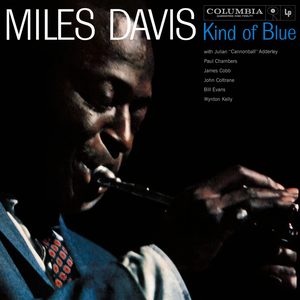
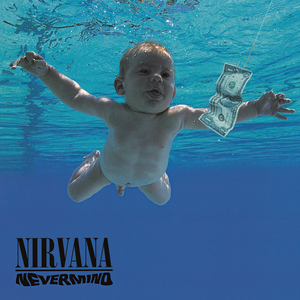
Album
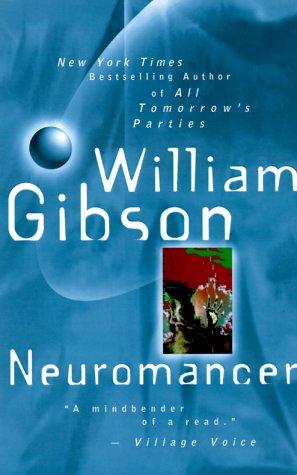
Book
City
Same pick
Game
Same pick
Claude Haiku 5.5Claude Haiku 5.5




Blade Runner
Kind of Blue
Gödel, Escher, Bach
Kyoto
Portal
Qwen3.7 MaxQwen3.7 Max
Blade Runner
Nevermind
Neuromancer
Kyoto
Portal
Price and specs
| Spec | Claude Haiku 5.5 | Qwen3.7 Max |
|---|---|---|
| Input price | $0.1/M tokens | $2.5/M tokens |
| Output price | $0.5/M tokens | $7.5/M tokens |
| Context window | 1.0M tokens | 1.0M tokens |
| Weights | Closed | Closed |
| Free API (OpenRouter) | No | No |
| Released | Oct 2026 | May 2026 |
| At 10M a month | $1.00 | $25.00 |
Input tokens at list price. No caching, no batch discount.
Where to run it



Qwen3.7 Max1 host
Per million tokens. Prices and uptime via OpenRouter, checked 10 Oct 2026.
Common questions
What is the difference between Claude Haiku 5.5 and Qwen3.7 Max?
Claude Haiku 5.5 is developed by Anthropic while Qwen3.7 Max is developed by Qwen. Claude Haiku 5.5 has a 1.0M token context window vs Qwen3.7 Max's 1.0M. You can compare their actual outputs across 54 challenges on Rival to see how they differ in practice.
Which is better, Claude Haiku 5.5 or Qwen3.7 Max?
It depends on your use case. Claude Haiku 5.5 and Qwen3.7 Max each have strengths in different areas. Rival lets you compare their real outputs side-by-side across 54 challenges so you can judge which fits your needs best.
How much does Claude Haiku 5.5 cost compared to Qwen3.7 Max?
Claude Haiku 5.5 costs $0.1/M input tokens and Qwen3.7 Max costs $2.5/M input tokens. Claude Haiku 5.5 is $2.40/M cheaper per input. Check their side-by-side outputs on Rival to see if the price difference is justified by quality.
How can I compare Claude Haiku 5.5 and Qwen3.7 Max on Rival?
This page shows a side-by-side comparison of Claude Haiku 5.5 and Qwen3.7 Max across shared challenges. You can vote on which model produced the better output in a blind duel. Browsing and voting are free. No account is needed to look; signing in only saves your votes and likes.
More comparisons
Against the newest arrivals
- Claude Haiku 5.5 vs Step 5 PreviewLanded Oct 2026
- Qwen3.7 Max vs Ling 3.1 FlashLanded Oct 2026
- Claude Haiku 5.5 vs Mistral Large 4Landed Oct 2026
- Qwen3.7 Max vs GPT-6.1 SolLanded Sep 2026
- Claude Haiku 5.5 vs Claude Sonnet 5.5Landed Sep 2026
- Qwen3.7 Max vs Solar Mini 4Landed Sep 2026
- Claude Haiku 5.5 vs Qwen3.8 Max PrimeLanded Sep 2026
- Qwen3.7 Max vs GLM 5.3 PrimeLanded Sep 2026


Same lab, same size, long tail
- Claude Haiku 5.5 vs Claude Opus 5.5Same lab
- Claude Haiku 5.5 vs Claude Fable 5.1Same lab
- Qwen3.7 Max vs Qwen3.8 Max PrimeSame lab
- Qwen3.7 Max vs Qwen3.8 Omni FlashSame lab
- Qwen3.7 Max vs Mistral LargeNew provider
- Qwen3.7 Max vs Mistral Large 2New provider
- Qwen3.7 Max vs Mistral Large 3 2512Same size
- Qwen3.7 Max vs Mistral Large 4Same size