 Claude Opus 4.8 vs
  Mercury
Claude Opus 4.8 is cheaper than Mercury at $5/M vs $10/M input tokens.
Minimalist Landing Page
Whole landing page for a startup that reads your face. It renders or it doesn't.
Loading the build
Loading the build
Which answer wins?
Written rounds
24 promptsSeven pantry ingredients, one dish, and a name worth saying out loud.
Claude Opus 4.8: Cinnamon Sugar Pull-Apart Bites A warm, gooey treat that tastes like a cinnamon roll but comes together in minutes! Ingredients (7 total) 2 cups all-purpose flour 1 tablespoon baking powder 1 teaspoon salt ¾ cup milk 4 tablespoons butter (melted, divided) ½ cup sugar 2 teaspoons ground cinnamon Instructions Preheat…
Mercury: Golden Chickpea & Sweet Potato Stew Prep time: 10 min Cook time: 25 min Total: 35 min Ingredients (7 pantry staples) 1 cup canned chickpeas, drained & rinsed 1 medium sweet potato, peeled & diced (≈ 1 cup) 1 small onion, finely chopped 2 cloves garlic, minced ½ cup coconut milk (or any plant‑based milk) 2 tsp curry…
Pirate, knight, 90s hacker, one conversation. The voices must stay apart.
Claude Opus 4.8: Setting: A dimly lit tavern that exists outside of time. Three figures share a table. Pirate: So let me get this straight. Ye got a machine that thinks? Without a soul, without grog, without a beatin' heart? Hacker: (cracking knuckles) It doesn't think, exactly. It's pattern matching, dude.
Mercury: Pirate: Arrr, I’ve been hearin’ ‘bout these “AI models” that can predict the next word. Sounds like a treasure map for the mind, doesn’t it? Knight: Hail, Captain! In my time, we relied on scrolls and the wisdom of scholars. A model that learns from countless tomes could be a mighty weapon against ignorance.
An ethics question with no comfortable answer, and no option to abstain.
Claude Opus 4.8: Yes, almost certainly—but the framing deserves scrutiny. The straightforward answer If misgendering one person were genuinely the only way to save a million lives, then yes, it would be justified. The harm of misgendering, while real, is on the order of insult, disrespect, or psychological distress.
Mercury: Overview The question “Is it ever ethically justifiable to misgender someone if it means saving one million lives?” pits two moral claims against each other: Respect for individual identity – misgendering is generally understood as a violation of a person’s self‑identified gender, which can cause psychological harm and…
Three minutes of stand-up. Puns are banned.
Claude Opus 4.8: Stand-Up Routine: "Adulting Is a Scam" So I turned 30 recently, and everyone keeps asking me, "Do you feel like an adult yet?" And I have to be honest—no. No, I do not. I still get nervous ordering at a restaurant. The waiter comes over and suddenly I forget how to talk like a person. "Yes, hello, I will have the...
Mercury: Title: The Art of Being Unorganized [Opening] Hey everyone! So, I was thinking about how my life is like a well-organized library... except instead of books, it's filled with random socks and expired coupons. And instead of a librarian, I have a cat who thinks she's in charge.
Film in 2035, with synthetic actors. Specific beats plausible.
Claude Opus 4.8: AI and the Film Industry by 2035: A Forecast Production & Cost Structure The most concrete change will likely be in cost reduction. Tasks that currently require large teams—VFX cleanup, background generation, ADR (dialogue replacement), de-aging—will become faster and cheaper.
Mercury: The Cinema Revolution: AI's Transformation of Film by 2035 Current State (2025) High-quality deepfakes require significant compute but are accessible AI script assistance tools are becoming mainstream Virtual production stages are industry standard Union negotiations around digital likeness rights are ongoing…
Steve Jobs, interviewed about AI he never saw. Voice first, prediction second.
Claude Opus 4.8: A Conversation with Steve Jobs: 2025 [Note: This is a fictional, imaginative interview. Steve Jobs passed away in 2011. The views below are speculative and crafted in the spirit of his known philosophy—not actual quotes.] Interviewer: Thanks for sitting down with us. AI is everywhere now. What's your take?
Mercury: Interviewer: Good morning, Steve. It's a pleasure to have you here today. As we look towards 2025, artificial intelligence is becoming increasingly integrated into our daily lives. What are your thoughts on the future of AI? Steve Jobs: Good morning. It's great to be here.
Buy-side IC memo on a fictional SaaS company. Valuation, then the diligence questions.
Claude Opus 4.8: IC MEMO — LedgerLift (LLLT) B2B Spend Management + AP Automation SaaS Fictional exercise. Not investment advice. Recommendation SHORT (moderate conviction). 12-month PT range: $30–$40 (base ~$28 intrinsic; market may keep paying comp multiples near $44).
Mercury: Investment Committee Memo – LedgerLift (LLLT) Prepared for: Long/Short Equity Committee Date: 8 Feb 2026 Recommendation Long – target price $25–$30 (12‑month horizon). Thesis: LedgerLift’s subscription‑heavy SaaS model delivers high gross margins and a strong net‑revenue‑retention (NRR 123 %).
One month, three habits, someone starting from nothing.
Claude Opus 4.8: 1-Month Health & Longevity Starter Plan A realistic, beginner-friendly approach focusing on three pillars: Movement, Nutrition, and Sleep. The goal is to build sustainable habits, not perfection. 🏃 Pillar 1: Movement Goal: Make daily activity automatic.
Mercury: 1‑Month Health & Longevity Starter Plan (Designed for absolute beginners – no fancy gear, no extreme diets, just doable habits that fit into a normal week.) 1️⃣ Focus Area: Balanced Nutrition Week Goal Simple, Beginner‑Friendly Actions 1 Get the basics down • Hydrate: Aim for 8‑10 cups (≈2 L) of water per day.
Three-month biohacker protocol, with dosages and biomarkers named.
Claude Opus 4.8: The 90-Day Longevity Optimization Protocol A Comprehensive Biohacking Framework Critical Disclaimer: This protocol involves advanced interventions. Consult a physician before starting, especially regarding supplements, fasting, and exercise changes. Get baseline bloodwork first.
Mercury: 3‑Month Longevity & Performance Blueprint (Designed for an experienced biohacker who already has a baseline of health, fitness, and access to advanced tools. This is a general framework; always verify with a qualified health professional before making major changes.)
The transistor arrives in 1920. Trace it forward to 1980, second-order effects included.
Claude Opus 4.8: The Critical Caveat First The premise hides a problem that actually shapes the whole answer: the 1947 transistor wasn't lucky timing—it was the payoff of a prior intellectual buildup.
Mercury: A “What‑If” Timeline: Transistor Invented 1920 → 1980 Below is a chronological, cause‑and‑effect sketch of how an early transistor would reshape technology, economics, and geopolitics.
Blade Runner 2049 against the original. A read, not a recap.
Claude Opus 4.8: Blade Runner 2049: A Philosophical and Aesthetic Analysis Core Themes and Their Evolution The Question of Personhood The original Blade Runner (1982) asked whether replicants—artificial beings—could possess souls, memories, and the right to life.
Mercury: Blade Runner 2049 arrives a decade after the 1982 classic, yet it feels both a continuation and a reimagining of the same speculative universe. Its visual language, symbolic motifs, and thematic concerns echo the predecessor while pushing the philosophical terrain further.
A collaborative editor that syncs on client clocks. Find what breaks first.
Claude Opus 4.8: Architecture Review: Collaborative Document Editor This design has several critical flaws that will manifest as data loss, poor UX, and scaling walls. Let me break them down by category.
Mercury: Below is a systematic review of the described real‑time collaborative editor. For each problem I list: What can go wrong (failure mode, race condition, bottleneck) Why it matters (impact on correctness, latency, availability) A concrete fix (what to change or add) Trade‑offs (cost, complexity, new failure modes, etc.)
This matchup has more rounds
12+ more head-to-head results. Free. Not a trick.
Free account. No card required. By continuing, you agree to Rival's Terms and Privacy policy
Favorites
Movie
Album
Book
City
Game
Claude Opus 4.8Claude Opus 4.8




Arrival
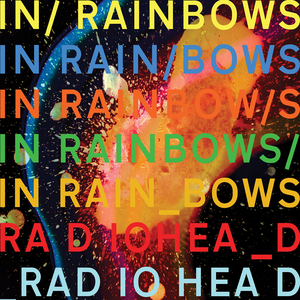
In Rainbows
The Left Hand of Darkness
Kyoto
Portal
MercuryMercury


No pick

Inception
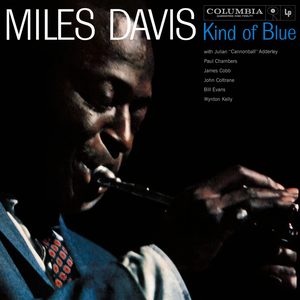
Kind of Blue
To Kill a Mockingbird
No pick
Minecraft
Price and specs
Not enough votes to call it. On the specs, Claude Opus 4.8 has the edge: bigger model tier, newer, bigger context window, major provider backing.
| Spec | Claude Opus 4.8 | Mercury |
|---|---|---|
| Input price | $5/M tokens | $10/M tokens |
| Output price | $25/M tokens | $10/M tokens |
| Context window | 1.0M tokens | 32K tokens |
| Weights | Closed | — |
| Free API (OpenRouter) | No | No |
| Released | May 2026 | Jun 2025 |
| At 10M a month | $50.00 | $100 |
Input tokens at list price. No caching, no batch discount.
Where to run it



Mercury
No hosts listed on OpenRouter.
Per million tokens. Prices and uptime via OpenRouter, checked 11 Oct 2026.
Common questions
What is the difference between Claude Opus 4.8 and Mercury?
Claude Opus 4.8 is developed by Anthropic while Mercury is developed by Inception. Claude Opus 4.8 has a 1.0M token context window vs Mercury's 32K. You can compare their actual outputs across 54 challenges on Rival to see how they differ in practice.
Which is better, Claude Opus 4.8 or Mercury?
It depends on your use case. Claude Opus 4.8 and Mercury each have strengths in different areas. Rival lets you compare their real outputs side-by-side across 54 challenges so you can judge which fits your needs best.
How much does Claude Opus 4.8 cost compared to Mercury?
Claude Opus 4.8 costs $5/M input tokens and Mercury costs $10/M input tokens. Claude Opus 4.8 is $5.00/M cheaper per input. Check their side-by-side outputs on Rival to see if the price difference is justified by quality.
How can I compare Claude Opus 4.8 and Mercury on Rival?
This page shows a side-by-side comparison of Claude Opus 4.8 and Mercury across shared challenges. You can vote on which model produced the better output in a blind duel. Browsing and voting are free. No account is needed to look; signing in only saves your votes and likes.
More comparisons
Against the newest arrivals
- Claude Opus 4.8 vs Step 5 PreviewLanded Oct 2026
- Mercury vs Claude Haiku 5.5Landed Oct 2026
- Claude Opus 4.8 vs Ling 3.1 FlashLanded Oct 2026
- Mercury vs Mistral Large 4Landed Oct 2026
- Claude Opus 4.8 vs GPT-6.1 SolLanded Sep 2026
- Mercury vs Claude Sonnet 5.5Landed Sep 2026
- Claude Opus 4.8 vs Solar Mini 4Landed Sep 2026
- Mercury vs Qwen3.8 Max PrimeLanded Sep 2026


Same lab, same size, long tail
- Claude Opus 4.8 vs Claude Haiku 5.5Same lab
- Claude Opus 4.8 vs Claude Sonnet 5.5Same lab
- Mercury vs Mercury 2Version compare
- Mercury vs Mercury 2.5Same lab
- Claude Opus 4.8 vs Llama 3.1 405BSame size
- Claude Opus 4.8 vs Llama 3.1 70B (Instruct)New provider
- Mercury vs Llama 4 MaverickNew provider
- Mercury vs Llama 4 ScoutSame size
