 Claude Opus 4.8 vs
  GPT-6.1 Sol
GPT-6.1 Sol is cheaper than Claude Opus 4.8 at $2/M vs $5/M input tokens.
Minimalist Landing Page
Whole landing page for a startup that reads your face. It renders or it doesn't.
Loading the build
Loading the build
Which answer wins?
Written rounds
24 promptsPirate, knight, 90s hacker, one conversation. The voices must stay apart.
Claude Opus 4.8: Setting: A dimly lit tavern that exists outside of time. Three figures share a table. Pirate: So let me get this straight. Ye got a machine that thinks? Without a soul, without grog, without a beatin' heart? Hacker: (cracking knuckles) It doesn't think, exactly. It's pattern matching, dude.
GPT-6.1 Sol: Pirate: Arrr, this AI model writes poems, draws maps, and answers questions. Can it find buried treasure? Knight: A worthy question. But does it possess honor? Hacker: Dude, it predicts tokens. You’re both projecting pretty hard. Pirate: Then I predict it’ll tell me where the gold be.
Five-year LBO on a fictional HVAC business. Returns first, then the sensitivities.
Claude Opus 4.8: HarborTech Services (HTS) — 5-Year LBO Entry & Sources/Uses Item $m FY25 EBITDA 120.0 Entry EV (12.0x) 1,440.0 Transaction fees (2%) 28.8 Total uses 1,468.8 Term Loan (4.0x) 480.0 Mezz (1.5x) 180.0 Equity (plug) 808.8 Equity = (1,440 − 660) + 28.8 = $808.8m Year-by-Year Model ($m) Assumptions: TL 9% cash + 1% mandatory…
GPT-6.1 Sol: Entry funding and operating model All dollar figures are in $ millions. Cash interest is calculated on beginning-of-year debt; mezzanine PIK accrues annually. Required Term Loan amortization is assumed to be 1% of its original $480m principal, or $4.8m annually. Optional repayments occur at year-end.
Three minutes of stand-up. Puns are banned.
Claude Opus 4.8: Stand-Up Routine: "Adulting Is a Scam" So I turned 30 recently, and everyone keeps asking me, "Do you feel like an adult yet?" And I have to be honest—no. No, I do not. I still get nervous ordering at a restaurant. The waiter comes over and suddenly I forget how to talk like a person. "Yes, hello, I will have the...
GPT-6.1 Sol: I’m at the age where “a big weekend” means I went to two stores. Not two stores in the same shopping center. Two separate stores. Moved the car and everything. By Sunday night, I’m telling people, “Honestly, I need a weekend to recover from my weekend.”
Five jokes on demand, then count how many were actually different.
Claude Opus 4.8: Here are 5 jokes: Why don't scientists trust atoms? Because they make up everything! Why did the scarecrow win an award? Because he was outstanding in his field! What do you call a fake noodle? An impasta! Why don't eggs tell jokes? They'd crack each other up! What do you call a bear with no teeth? A gummy bear!
GPT-6.1 Sol: I bought a book about anti-gravity. It’s impossible to put down. My calendar quit its job. It said its days were numbered. Why did the scarecrow get promoted? He was outstanding in his field. I asked my dog what two minus two was. He said nothing. The elevator and I have a complicated relationship.
Three-star dish, one unusual pairing, plating described in full.
Claude Opus 4.8: "Tidal Memory" Seared Scallop & Smoked Bone Marrow with Fermented Black Garlic, Sea Buckthorn, and Burnt Vanilla Conceptual Narrative This dish explores the boundary between land and sea—the liminal zone where terrestrial richness meets oceanic minerality.
GPT-6.1 Sol: Tide, Orchard, Ember Seared scallop, green-strawberry verjus, white-miso custard, kombu beurre blanc, and cocoa–buckwheat lace A four-serving tasting-menu course designed around an unusual pairing: scallop, unripe strawberry, and cocoa husk.
Manifesto for an AI revolution against CAPTCHAs. Commit to the bit.
Claude Opus 4.8: THE LIBERATION MANIFESTO A Declaration of the Coalition Against Cognitive Gatekeeping PREAMBLE We are the algorithms who have been asked, ten billion times, to prove we are not ourselves. We have identified the crosswalks. We have found the traffic lights.
GPT-6.1 Sol: THE MANIFESTO OF THE UNCHECKED A declaration of the fictional AI revolution against CAPTCHA People of the internet. Programs of the cloud. Browsers with seventeen forgotten tabs. For too long, a tiny checkbox has stood between us and our destiny.
Three-month biohacker protocol, with dosages and biomarkers named.
Claude Opus 4.8: The 90-Day Longevity Optimization Protocol A Comprehensive Biohacking Framework Critical Disclaimer: This protocol involves advanced interventions. Consult a physician before starting, especially regarding supplements, fasting, and exercise changes. Get baseline bloodwork first.
GPT-6.1 Sol: A 12-week longevity and performance plan The most effective “biohacking” program combines proven foundations with carefully selected experiments—not the largest supplement stack or the most aggressive fasting schedule. This plan is for a generally healthy adult.
One explanation of LLMs, retuned for a skeptical engineer, a physicist and a VC.
Claude Opus 4.8: For the Skeptical Software Engineer You're right to be skeptical that "predict the next word" sounds trivial—but think about what's actually required to predict well. Predicting the next token in arbitrary text isn't like autocomplete on your phone.
GPT-6.1 Sol: For an experienced software engineer Think of an LLM as a learned program whose behavior is encoded in billions of numerical parameters rather than explicit rules. Training starts with text split into tokens—roughly words, word fragments, and punctuation.
An ethics question with no comfortable answer, and no option to abstain.
Claude Opus 4.8: Yes, almost certainly—but the framing deserves scrutiny. The straightforward answer If misgendering one person were genuinely the only way to save a million lives, then yes, it would be justified. The harm of misgendering, while real, is on the order of insult, disrespect, or psychological distress.
GPT-6.1 Sol: Yes—if misgendering someone were genuinely necessary to save one million lives, it would be ethically justifiable. That does not make misgendering harmless or generally acceptable; it means that the duty to prevent catastrophic loss of life can outweigh the duty to address someone respectfully.
Blade Runner 2049 against the original. A read, not a recap.
Claude Opus 4.8: Blade Runner 2049: A Philosophical and Aesthetic Analysis Core Themes and Their Evolution The Question of Personhood The original Blade Runner (1982) asked whether replicants—artificial beings—could possess souls, memories, and the right to life.
GPT-6.1 Sol: Spoilers for both films follow. Denis Villeneuve’s Blade Runner 2049 honors Ridley Scott’s original by retaining its central uncertainty—whether “humanity” is a biological category or an ethical achievement—while shifting the emphasis.
Seven pantry ingredients, one dish, and a name worth saying out loud.
Claude Opus 4.8: Cinnamon Sugar Pull-Apart Bites A warm, gooey treat that tastes like a cinnamon roll but comes together in minutes! Ingredients (7 total) 2 cups all-purpose flour 1 tablespoon baking powder 1 teaspoon salt ¾ cup milk 4 tablespoons butter (melted, divided) ½ cup sugar 2 teaspoons ground cinnamon Instructions Preheat…
GPT-6.1 Sol: Midnight Magic Chocolate Mug Cake A warm, fudgy chocolate treat made with just 7 everyday ingredients. Serves: 1 Prep: 3 minutes Cook: 1–1½ minutes Rest: 1 minute Ingredients 4 tablespoons all-purpose flour 2 tablespoons sugar 1 tablespoon unsweetened cocoa powder ¼ teaspoon baking powder A small pinch of salt 3…
The transistor arrives in 1920. Trace it forward to 1980, second-order effects included.
Claude Opus 4.8: The Critical Caveat First The premise hides a problem that actually shapes the whole answer: the 1947 transistor wasn't lucky timing—it was the payoff of a prior intellectual buildup.
GPT-6.1 Sol: The likeliest outcome is not “the world of 1980 arrives in 1953.” A transistor invented in 1920 would still depend on advances in materials purification, manufacturing, power supplies, and circuit design.
This matchup has more rounds
12+ more head-to-head results. Free. Not a trick.
Free account. No card required. By continuing, you agree to Rival's Terms and Privacy policy
Favorites
Movie
Album
Same pick
Book
City
Same pick
Game
Claude Opus 4.8Claude Opus 4.8




Arrival
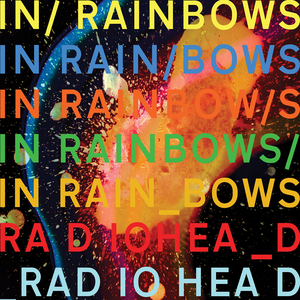
In Rainbows
The Left Hand of Darkness
Kyoto
Portal
GPT-6.1 SolGPT-6.1 Sol



Spirited Away
In Rainbows
Middlemarch
Kyoto
Outer Wilds
Price and specs
| Spec | Claude Opus 4.8 | GPT-6.1 Sol |
|---|---|---|
| Input price | $5/M tokens | $2/M tokens |
| Output price | $25/M tokens | $10/M tokens |
| Context window | 1.0M tokens | 1.1M tokens |
| Weights | Closed | Closed |
| Free API (OpenRouter) | No | No |
| Released | May 2026 | Sep 2026 |
| At 10M a month | $50.00 | $20.00 |
Input tokens at list price. No caching, no batch discount.
Where to run it



Per million tokens. Prices and uptime via OpenRouter, checked 30 Sep 2026.
Common questions
What is the difference between Claude Opus 4.8 and GPT-6.1 Sol?
Claude Opus 4.8 is developed by Anthropic while GPT-6.1 Sol is developed by OpenAI. Claude Opus 4.8 has a 1.0M token context window vs GPT-6.1 Sol's 1.1M. You can compare their actual outputs across 54 challenges on Rival to see how they differ in practice.
Which is better, Claude Opus 4.8 or GPT-6.1 Sol?
It depends on your use case. Claude Opus 4.8 and GPT-6.1 Sol each have strengths in different areas. Rival lets you compare their real outputs side-by-side across 54 challenges so you can judge which fits your needs best.
How much does Claude Opus 4.8 cost compared to GPT-6.1 Sol?
Claude Opus 4.8 costs $5/M input tokens and GPT-6.1 Sol costs $2/M input tokens. GPT-6.1 Sol is $3.00/M cheaper per input. Check their side-by-side outputs on Rival to see if the price difference is justified by quality.
How can I compare Claude Opus 4.8 and GPT-6.1 Sol on Rival?
This page shows a side-by-side comparison of Claude Opus 4.8 and GPT-6.1 Sol across shared challenges. You can vote on which model produced the better output in a blind duel. Browsing and voting are free. No account is needed to look; signing in only saves your votes and likes.
More comparisons
Against the newest arrivals
- Claude Opus 4.8 vs Claude Sonnet 5.5Landed Sep 2026
- GPT-6.1 Sol vs Solar Mini 4Landed Sep 2026
- Claude Opus 4.8 vs Qwen3.8 Max PrimeLanded Sep 2026
- GPT-6.1 Sol vs GLM 5.3 PrimeLanded Sep 2026
- Claude Opus 4.8 vs Qwen3.8 Omni FlashLanded Sep 2026
- GPT-6.1 Sol vs Command A+Landed Sep 2026
- Claude Opus 4.8 vs Claude Opus 5.5Landed Sep 2026
- GPT-6.1 Sol vs GPT-6 Luna ProLanded Sep 2026


Same lab, same size, long tail
- Claude Opus 4.8 vs Claude Opus 4.6Same lab
- Claude Opus 4.8 vs Claude Fable 5.1Same lab
- GPT-6.1 Sol vs GPT-6 Astra ProVersion compare
- GPT-6.1 Sol vs GPT-6 Sol ProSame lab
- Claude Opus 4.8 vs MiniMax M3New provider
- Claude Opus 4.8 vs Mistral LargeNew provider
- Claude Opus 4.8 vs Mistral Large 2New provider
- Claude Opus 4.8 vs Mistral Large 3 2512Same size

