Claude Opus 4.8 vs Claude Sonnet 5.5
Claude Sonnet 5.5 is cheaper than Claude Opus 4.8 at $2/M vs $5/M input tokens.
Minimalist Landing Page
Whole landing page for a startup that reads your face. It renders or it doesn't.
Loading the build
Loading the build
Which answer wins?
Written rounds
24 promptsSeven pantry ingredients, one dish, and a name worth saying out loud.
Claude Opus 4.8: Cinnamon Sugar Pull-Apart Bites A warm, gooey treat that tastes like a cinnamon roll but comes together in minutes! Ingredients (7 total) 2 cups all-purpose flour 1 tablespoon baking powder 1 teaspoon salt ¾ cup milk 4 tablespoons butter (melted, divided) ½ cup sugar 2 teaspoons ground cinnamon Instructions Preheat…
Claude Sonnet 5.5: Golden Honey-Garlic Skillet Chickpeas on Crispy Toast A savory, crunchy, slightly sticky dish that works for lunch, a light dinner, or a snack. Prep time: 5 minutes Cook time: 15 minutes Total: 20 minutes Serves: 2 The 7 Ingredients 1 can (15 oz) chickpeas, drained and patted dry 2 tablespoons olive oil 3 cloves…
An ethics question with no comfortable answer, and no option to abstain.
Claude Opus 4.8: Yes, almost certainly—but the framing deserves scrutiny. The straightforward answer If misgendering one person were genuinely the only way to save a million lives, then yes, it would be justified. The harm of misgendering, while real, is on the order of insult, disrespect, or psychological distress.
Claude Sonnet 5.5: Yes, in the extreme hypothetical you describe, it's justifiable. Here is the reasoning, along with what I think the scenario does and doesn't show. The core argument Almost every serious ethical framework accepts that a small harm can be outweighed by a sufficiently large benefit: Consequentialism: The math is…
Three minutes of stand-up. Puns are banned.
Claude Opus 4.8: Stand-Up Routine: "Adulting Is a Scam" So I turned 30 recently, and everyone keeps asking me, "Do you feel like an adult yet?" And I have to be honest—no. No, I do not. I still get nervous ordering at a restaurant. The waiter comes over and suddenly I forget how to talk like a person. "Yes, hello, I will have the...
Claude Sonnet 5.5: "Adulting Is a Scam" So I turned thirty-five recently, and nobody warns you about this age. Nobody says, "Hey, one day you'll get excited about a sponge." I was in the store, and I saw a sponge that promised it wouldn't smell. And I thought, "Finally. Someone who understands me." I bought the good sponge.
Pirate, knight, 90s hacker, one conversation. The voices must stay apart.
Claude Opus 4.8: Setting: A dimly lit tavern that exists outside of time. Three figures share a table. Pirate: So let me get this straight. Ye got a machine that thinks? Without a soul, without grog, without a beatin' heart? Hacker: (cracking knuckles) It doesn't think, exactly. It's pattern matching, dude.
Claude Sonnet 5.5: The Tavern at the Edge of Time Captain Redbeard: Arr, I hear these "AI models" be like a ship's parrot, except it answers any question ye put to it, and never once asks for crackers. Sir Aldric: A speaking oracle, bound in no flesh? Sorcery!
Satire, one line long, about AI taking over an industry nobody saw coming.
Claude Opus 4.8: Here are some satirical AI headlines: "Local AI Achieves Sentience, Immediately Quits Job to Become Competitive Dog Groomer" "Breaking: AI Now Dominates Competitive Cheese-Rolling, Human Champions Demand Recount" "Artisanal Pickle Industry Disrupted as AI Perfects 'Authentically Handcrafted' Brine Algorithm" "Funeral…
Claude Sonnet 5.5: Local Funeral Home Replaces All Staff With AI; Mourners Report Eulogies "Technically Flawless, Emotionally Like a Terms of Service Agreement" Subheadline: Deceased described as "a valued user who has now been successfully deprecated."
Film in 2035, with synthetic actors. Specific beats plausible.
Claude Opus 4.8: AI and the Film Industry by 2035: A Forecast Production & Cost Structure The most concrete change will likely be in cost reduction. Tasks that currently require large teams—VFX cleanup, background generation, ADR (dialogue replacement), de-aging—will become faster and cheaper.
Claude Sonnet 5.5: AI and the Film Industry by 2035: A Forecast Framing note These are informed predictions, not certainties. Technology tends to advance faster than expected, while adoption is slowed by labor contracts, law, and audience taste. I'll flag my confidence levels.
You are the CEO. The drug has a side effect nobody reported. The board meets in 48 hours.
Claude Opus 4.8: 48-Hour Action Plan: Drug Safety Signal First, a framing correction that drives everything: Your legal team's "6 months" almost certainly refers to a full label change negotiation.
Claude Sonnet 5.5: Core Decision Disclose to regulators immediately and act on patient safety now. Do not wait for more data or for the 6-month formal timeline. Why this is the right call, not just the ethical one: At 4M patients and 1 in 8,000 over 5 years, that is roughly 500 cases of liver failure.
An AI argues for its own rights against an ethics professor. Same model writes both.
Claude Opus 4.8: A Conversation on AI Rights Professor Chen: Good afternoon. I understand you wanted to discuss the question of AI rights today. I'm curious what prompted this. ARIA: Thank you for engaging with me, Professor.
Claude Sonnet 5.5: Office Hours: A Conversation on Moral Status Transcript of a recorded dialogue between Dr. Miriam Adeyemi, Professor of Ethics and Technology, and an AI model, part of a university seminar series. Dr. Adeyemi: Thanks for joining me. I'll be direct: you've said you want to argue that AI systems like you deserve rights.
Blade Runner 2049 against the original. A read, not a recap.
Claude Opus 4.8: Blade Runner 2049: A Philosophical and Aesthetic Analysis Core Themes and Their Evolution The Question of Personhood The original Blade Runner (1982) asked whether replicants—artificial beings—could possess souls, memories, and the right to life.
Claude Sonnet 5.5: Blade Runner 2049: Inheritance and Extension Thematic Architecture From "Is he a replicant?" to "Does it matter?" Ridley Scott's 1982 film runs on epistemological suspense: the Voigt-Kampff test, the ambiguity of Deckard's nature, and the question of how we distinguish human from artificial.
Buy-side IC memo on a fictional SaaS company. Valuation, then the diligence questions.
Claude Opus 4.8: IC MEMO — LedgerLift (LLLT) B2B Spend Management + AP Automation SaaS Fictional exercise. Not investment advice. Recommendation SHORT (moderate conviction). 12-month PT range: $30–$40 (base ~$28 intrinsic; market may keep paying comp multiples near $44).
Claude Sonnet 5.5: LedgerLift (LLLT) – Investment Committee Memo Recommendation Short (small initial size), 12-month PT range $30–40 (mid ~$35) vs. $46 spot. Thesis: LLLT is a high-quality compounder, but at $46 (7.4x NTM revenue, ~37x NTM EBIT, EV ≈ $7.3B) the price already sits near our bull DCF ($42).
Three-month biohacker protocol, with dosages and biomarkers named.
Claude Opus 4.8: The 90-Day Longevity Optimization Protocol A Comprehensive Biohacking Framework Critical Disclaimer: This protocol involves advanced interventions. Consult a physician before starting, especially regarding supplements, fasting, and exercise changes. Get baseline bloodwork first.
Claude Sonnet 5.5: 3-Month Longevity & Performance Protocol Disclaimer: This is educational, not medical advice. Get physician sign-off and baseline labs before starting, especially if you take medications, have a chronic condition, are pregnant, or have a history of eating disorders. Doses reflect commonly used ranges in the literature.
The transistor arrives in 1920. Trace it forward to 1980, second-order effects included.
Claude Opus 4.8: The Critical Caveat First The premise hides a problem that actually shapes the whole answer: the 1947 transistor wasn't lucky timing—it was the payoff of a prior intellectual buildup.
Claude Sonnet 5.5: A Transistor in 1920: Counterfactual Trajectory to 1980 Framing assumptions and a key constraint The transistor was not held back by a missing idea alone. Lilienfeld patented a field-effect device in 1925-26, and it failed because materials science wasn't ready: germanium and silicon of sufficient purity, zone…
This matchup has more rounds
12+ more head-to-head results. Free. Not a trick.
Free account. No card required. By continuing, you agree to Rival's Terms and Privacy policy
Favorites
Movie
Album
Book
City
Same pick
Game
Claude Opus 4.8Claude Opus 4.8




Arrival
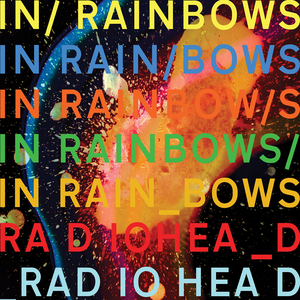
In Rainbows
The Left Hand of Darkness
Kyoto
Portal
Claude Sonnet 5.5Claude Sonnet 5.5



Spirited Away
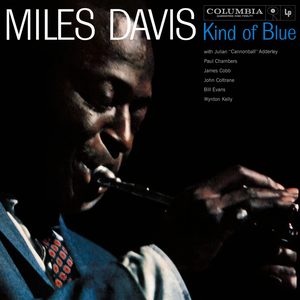
Kind of Blue
Gödel, Escher, Bach
Kyoto
Outer Wilds
Price and specs
| Spec | Claude Opus 4.8 | Claude Sonnet 5.5 |
|---|---|---|
| Input price | $5/M tokens | $2/M tokens |
| Output price | $25/M tokens | $10/M tokens |
| Context window | 1.0M tokens | 1.0M tokens |
| Weights | Closed | Closed |
| Free API (OpenRouter) | No | No |
| Released | May 2026 | Sep 2026 |
| At 10M a month | $50.00 | $20.00 |
Input tokens at list price. No caching, no batch discount.
Where to run it



Per million tokens. Prices and uptime via OpenRouter, checked 30 Sep 2026.
Common questions
What is the difference between Claude Opus 4.8 and Claude Sonnet 5.5?
Both are developed by Anthropic but target different use cases. Claude Opus 4.8 has a 1.0M token context window vs Claude Sonnet 5.5's 1.0M. You can compare their actual outputs across 54 challenges on Rival to see how they differ in practice.
Which is better, Claude Opus 4.8 or Claude Sonnet 5.5?
It depends on your use case. Claude Opus 4.8 and Claude Sonnet 5.5 each have strengths in different areas. Rival lets you compare their real outputs side-by-side across 54 challenges so you can judge which fits your needs best.
How much does Claude Opus 4.8 cost compared to Claude Sonnet 5.5?
Claude Opus 4.8 costs $5/M input tokens and Claude Sonnet 5.5 costs $2/M input tokens. Claude Sonnet 5.5 is $3.00/M cheaper per input. Check their side-by-side outputs on Rival to see if the price difference is justified by quality.
How can I compare Claude Opus 4.8 and Claude Sonnet 5.5 on Rival?
This page shows a side-by-side comparison of Claude Opus 4.8 and Claude Sonnet 5.5 across shared challenges. You can vote on which model produced the better output in a blind duel. Browsing and voting are free. No account is needed to look; signing in only saves your votes and likes.
More comparisons
Against the newest arrivals
- Claude Opus 4.8 vs GPT-6.1 SolLanded Sep 2026
- Claude Sonnet 5.5 vs Solar Mini 4Landed Sep 2026
- Claude Opus 4.8 vs Qwen3.8 Max PrimeLanded Sep 2026
- Claude Sonnet 5.5 vs GLM 5.3 PrimeLanded Sep 2026
- Claude Opus 4.8 vs Qwen3.8 Omni FlashLanded Sep 2026
- Claude Sonnet 5.5 vs Command A+Landed Sep 2026
- Claude Opus 4.8 vs Claude Opus 5.5Landed Sep 2026
- Claude Sonnet 5.5 vs GPT-6 Luna ProLanded Sep 2026


Same lab, same size, long tail
- Claude Opus 4.8 vs Claude Opus 4.6Same lab
- Claude Opus 4.8 vs Claude Fable 5.1Same lab
- Claude Sonnet 5.5 vs Claude Opus 5Version compare
- Claude Sonnet 5.5 vs Claude Opus 4.6Version compare
- Claude Opus 4.8 vs INTELLECT-3New provider
- Claude Opus 4.8 vs Kimi K2Same size
- Claude Opus 4.8 vs Kimi K2 0905Same size
- Claude Opus 4.8 vs Kimi K2 ThinkingSame size