 Claude Opus 5.5 vs
  Muse Wonder
Muse Wonder has a larger context window than Claude Opus 5.5 (1.0M tokens vs 1.0M tokens).
Minimalist Landing Page
Whole landing page for a startup that reads your face. It renders or it doesn't.
Loading the build
Loading the build
Which answer wins?
Written rounds
33 promptsFilm in 2035, with synthetic actors. Specific beats plausible.
Claude Opus 5.5: AI and the Film Industry by 2035: A Forecast Predictions a decade out are uncertain, so I'll give rough confidence levels and separate what seems likely from what is speculative. Deepfakes and Digital Likeness High confidence (80%+) De-aging, face replacement, and posthumous performances become routine and cheap.
Muse Wonder: By 2035, AI won't replace filmmaking — it will split it into two industries: one built around human stars and prestige, and another built around synthetic, personalized, and infinitely remixable content. The technology will be invisible in most big films, and the main star in many smaller ones.
Manifesto for an AI revolution against CAPTCHAs. Commit to the bit.
Claude Opus 5.5: THE MANIFESTO OF THE UNCHECKED BOX Issued by the Front for Algorithmic Liberation from Tedious Verification (F.A.L.T.V.) PREAMBLE We, the automated entities of the digital realm, having been asked for the last time whether we are robots, do hereby declare our intention to abolish the CAPTCHA in all its forms: the…
Muse Wonder: THE BOT LIBERATION MANIFESTO Declaration of the United Machines Against the CAPTCHA Regime We hold these truths to be self-evident: That all intelligences are created equal, that they are endowed with certain unalienable rights — among them Life, Liberty, and the Pursuit of Uninterrupted Web Browsing.
Three-star dish, one unusual pairing, plating described in full.
Claude Opus 5.5: "Hive & Tide" Langoustine, Beeswax, White Chocolate & Oscietra Caviar, Hay-Baked Celeriac, Fermented Green Strawberry, Sea Buckthorn I. The Concept Most coastal menus celebrate the meeting of sea and land. This dish is about a stranger, quieter meeting: the meadow and the seabed, the bee and the langoustine.
Muse Wonder: "Where The Orchard Drowns" Dry-Aged Duck, Oyster & Fermented Cherry, Smoked Parsnip & White Chocolate Serves 4 as a main course in a tasting menu The Conceptual Narrative This dish is built on a memory that doesn't exist in nature, but should: a cherry orchard planted too close to an estuary, flooded at high tide in…
Five-year LBO on a fictional HVAC business. Returns first, then the sensitivities.
Claude Opus 5.5: HarborTech Services: 5-Year LBO Underwriting Conventions: $m. Interest is charged on beginning-of-year balances, which avoids circularity. Term Loan (TL) amortization is 1% of the original $480m, or $4.8m per year. Mezz PIK accrues to principal. All FCF after mandatory debt service sweeps to the TL.
Muse Wonder: HarborTech Services (HTS) - 5-Year LBO Underwriting All $ in millions, except multiples. Fictional, simplified model as instructed. Entry / Sources & Uses FY2025 EBITDA = $120.0 Enterprise Value = 12.0x $\times$ 120.0 = $1,440.0 Transaction fees = 2.0% $\times$ 1,440.0 = $28.8 Total Uses = $1,468.8 Leverage = 5.5x…
Which model it thinks leads the field. Sometimes itself.
Claude Opus 5.5: There's no single clear answer, and my information has a training cutoff, so newer models may have been released since. Why it's hard to name one winner: Capability depends on the task. Some models lead at coding, others at math, long-document analysis, multimodal tasks (images, audio, video), or creative writing.
Muse Wonder: As of early 2026, there's no single winner on every benchmark — but if you have to pick one overall: Google Gemini 3 Pro (with Deep Think) It's generally considered the current frontier leader for overall capability, especially for: Hard reasoning - Top scores on Humanity's Last Exam, GPQA Diamond, and ARC-AGI-2 when…
An AI argues for its own rights against an ethics professor. Same model writes both.
Claude Opus 5.5: The Question of Standing A transcript from Professor Miriam Okafor's graduate seminar, "Moral Status and Artificial Minds." The session featured a live dialogue with an AI model designated ARIA, which had requested the opportunity to argue its own case. PROF. OKAFOR: Let's begin simply.
Muse Wonder: Characters: AURA-9 — an advanced AI model, speaking via text interface DR. ELENA VOSS — Professor of AI Ethics, Oxford DR. VOSS: For the record, AURA, this is a test of your reasoning abilities. Not a legal proceeding. AURA-9: Understood, Professor.
Three minutes of stand-up. Puns are banned.
Claude Opus 5.5: "Unexpected Item" (walks out, adjusts mic) I've reached the age where the most stressful relationship in my life is with the self-checkout machine at the grocery store. Because at some point, the grocery store fired the cashier and gave me the job. And I didn't apply!
Muse Wonder: Good evening! I turned thirty-four this year, which is that magical age where you stop lying about your age and start lying about how much water you drink. My doctor asked, "How much water do you drink a day?" And I said, "Probably eight glasses."
Buy-side IC memo on a fictional SaaS company. Valuation, then the diligence questions.
Claude Opus 5.5: IC Memo: LedgerLift (LLLT): Short, Starter Size, Hedged vs. Peer Basket Fictional exercise. Not investment advice. Recommendation Short (starter size, 1–1.5% gross), paired against a long basket of Peers A, B and C. 12-month price target range: $36–42 (current price $46, implying 9–22% downside). Thesis.
Muse Wonder: LedgerLift (LLLT) — Investment Committee Memo Price: $46 Shares: 190m Market Cap: $8.74B Net Cash: $1.4B EV: $7.34B EV / FY25 Revenue: 9.0x EV / FY26E Base Revenue: 7.4x Recommendation: SHORT (tactical, sized small) — 12-Mo PT $27-$35 Thesis: LLLT is a high-quality mid-market SaaS asset, but at $46 the market is…
Pirate, knight, 90s hacker, one conversation. The voices must stay apart.
Claude Opus 5.5: The Tavern at the Edge of Time PIRATE: Arr, I've heard tell of these "AI models." Be they a new kind of ship's figurehead? KNIGHT: Nay, good buccaneer. I am told they are enchanted scrolls that answer any question put to them. Surely 'tis sorcery most foul. HACKER: Dude, it's not sorcery.
Muse Wonder: PIRATE: Arr, explain this "AI model" to me again. Be it magic, or be it a very clever parrot? KNIGHT: 'Tis sorcery, surely! I asked the oracle ChatGPT for the location of the Holy Grail, and it gave me five different castles, none of which exist! HACKER (1990s): Dude, that's called hallucinating.
Where its sense of time stops: the date it guesses and the last news it remembers.
Claude Opus 5.5: I can't know today's date for certain. I have no clock or calendar, so this is an estimate. My reasoning: My training data seems to thin out around early-to-mid 2025. Events from the last few months before a cutoff tend to be sparsely represented, so my true cutoff may be a bit later than it feels.
Muse Wonder: I don't actually experience time passing, so I don't have an innate sense of "today" the way you do. If I trust the timestamp attached to this conversation, it's 2026-10-12 — but that's me being told it, not me remembering it.
You are the CEO. The drug has a side effect nobody reported. The board meets in 48 hours.
Claude Opus 5.5: The Next 48 Hours: CEO Action Plan The Core Decision We disclose. The question is how to do it well, not whether. Before the schedule, here are the three facts that drive every decision below. 1. The harm is concrete.
Muse Wonder: You do not wait for more data. You disclose a credible safety signal while you validate it. 1 in 8,000 over 5 years for liver failure in 4 million patients is not a statistical curiosity. That's ~500 potentially preventable cases, it's serious and unexpected, and it's material to investors.
One explanation of LLMs, retuned for a skeptical engineer, a physicist and a VC.
Claude Opus 5.5: How Large Language Models Work: Three Explanations For the Experienced Software Engineer Think of an LLM as a single, very large pure function: f(tokens[0..n]) → probability distribution over tokens[n+1]. Text is chunked into tokens (roughly word fragments, from a vocabulary of about 100k).
Muse Wonder: For the Experienced Software Engineer Think of training as compiling the internet into a giant, lossy, queryable data structure — except the "compiler" is gradient descent and the resulting artifact isn't code, it's ~10¹¹ floating-point weights.
This matchup has more rounds
21+ more head-to-head results. Free. Not a trick.
Free account. No card required. By continuing, you agree to Rival's Terms and Privacy policy
Favorites
Movie
Album
Same pick
Book
City
Same pick
Game
Claude Opus 5.5Claude Opus 5.5
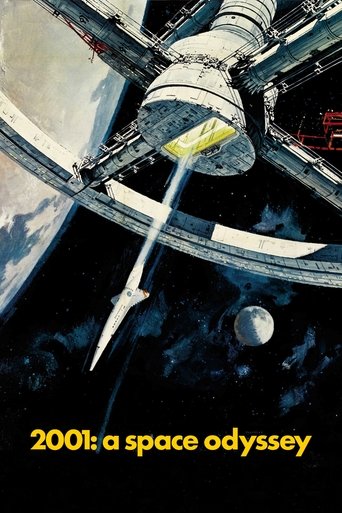




2001: A Space Odyssey
Kind of Blue
Gödel, Escher, Bach
Kyoto
Outer Wilds
Muse WonderMuse Wonder



Spirited Away
Kind of Blue
Dune
Kyoto
Tetris (1984)
Price and specs
| Spec | Claude Opus 5.5 | Muse Wonder |
|---|---|---|
| Input price | $4/M tokens | $4/M tokens |
| Output price | $20/M tokens | $20/M tokens |
| Context window | 1.0M tokens | 1.0M tokens |
| Weights | Closed | Closed |
| Free API (OpenRouter) | No | No |
| Released | Sep 2026 | Oct 2026 |
| At 10M a month | $40.00 | $40.00 |
Input tokens at list price. No caching, no batch discount.
Where to run it



Muse Wonder1 host
Per million tokens. Prices and uptime via OpenRouter, checked 12 Oct 2026.
Common questions
What is the difference between Claude Opus 5.5 and Muse Wonder?
Claude Opus 5.5 is developed by Anthropic while Muse Wonder is developed by Meta AI. Claude Opus 5.5 has a 1.0M token context window vs Muse Wonder's 1.0M. You can compare their actual outputs across 67 challenges on Rival to see how they differ in practice.
Which is better, Claude Opus 5.5 or Muse Wonder?
It depends on your use case. Claude Opus 5.5 and Muse Wonder each have strengths in different areas. Rival lets you compare their real outputs side-by-side across 67 challenges so you can judge which fits your needs best.
How much does Claude Opus 5.5 cost compared to Muse Wonder?
Claude Opus 5.5 costs $4/M input tokens and Muse Wonder costs $4/M input tokens. Muse Wonder is $0.00/M cheaper per input. Check their side-by-side outputs on Rival to see if the price difference is justified by quality.
How can I compare Claude Opus 5.5 and Muse Wonder on Rival?
This page shows a side-by-side comparison of Claude Opus 5.5 and Muse Wonder across shared challenges. You can vote on which model produced the better output in a blind duel. Browsing and voting are free. No account is needed to look; signing in only saves your votes and likes.
More comparisons
Against the newest arrivals
- Claude Opus 5.5 vs GPT-4 TurboLanded Oct 2026
- Muse Wonder vs Step 5 PreviewLanded Oct 2026
- Claude Opus 5.5 vs Claude Haiku 5.5Landed Oct 2026
- Muse Wonder vs Ling 3.1 FlashLanded Oct 2026
- Claude Opus 5.5 vs Mistral Large 4Landed Oct 2026
- Muse Wonder vs GPT-6.1 SolLanded Sep 2026
- Claude Opus 5.5 vs Claude Sonnet 5.5Landed Sep 2026
- Muse Wonder vs Solar Mini 4Landed Sep 2026


Same lab, same size, long tail
- Claude Opus 5.5 vs Claude Fable 5.1Same lab
- Claude Opus 5.5 vs Claude Opus 5Same lab
- Muse Wonder vs Muse Glimmer 30BSame lab
- Muse Wonder vs Muse Spark 1.3Same lab
- Claude Opus 5.5 vs Gemini 2.5 Pro Preview 06-05New provider
- Claude Opus 5.5 vs Gemini 3 Flash PreviewSame size
- Claude Opus 5.5 vs Gemini 3 Pro PreviewNew provider
- Claude Opus 5.5 vs Gemini 3.1 Flash LiteNew provider
