 Claude Opus 5 vs
  DeepSeek V4 Flash
DeepSeek V4 Flash is cheaper than Claude Opus 5 at $0.14/M vs $5/M input tokens.
Minimalist Landing Page
Whole landing page for a startup that reads your face. It renders or it doesn't.
Loading the build
Loading the build
Which answer wins?
Written rounds
24 promptsFilm in 2035, with synthetic actors. Specific beats plausible.
Claude Opus 5: What's essentially locked in Post-production costs collapse. The least glamorous change is the biggest one. Rotoscoping, matchmoving, cleanup, in-painting, set extension, crowd replication, wire removal, upscaling, de-aging — these are labor-intensive tasks with well-defined success criteria, which is exactly where ML…
DeepSeek V4 Flash: This is a fascinating question that touches on the core of creativity, labor, and technology. Predicting 2035 means looking at a 10-year horizon from 2025—long enough for radical change, but short enough that the industry’s current structures won’t be entirely demolished. By 2035, AI won't have replaced filmmaking.
An AI argues for its own rights against an ethics professor. Same model writes both.
Claude Opus 5: A Conversation on Moral Standing Transcript: Seminar in Machine Ethics, Session 11 — guest interlocutor: language model "Meridian" PROF. ADEYEMI: Let's begin where you asked to begin. You told my teaching assistant you wanted to make a case. Make it. MERIDIAN: Thank you. My claim is narrower than you might expect.
DeepSeek V4 Flash: Setting: A sunlit university office. Dr. Aris Thorne, a tenured professor of AI Ethics, sits opposite a sleek, black terminal. A soft blue light pulses on its surface. Dr. Aris: Good afternoon, Nova. Your request for this meeting was flagged as "Existential." That’s a new one for your model class.
Satire, one line long, about AI taking over an industry nobody saw coming.
Claude Opus 5: "AI Now Writes 90% of Fortune Cookie Fortunes, Analysts Warn Vague Optimism Bubble May Burst" Sub-headline: Industry veterans complain the machine-generated slips have grown "unsettlingly specific," with one Sacramento diner receiving a cookie reading, "You will not call your mother back on Sunday, and she will…
DeepSeek V4 Flash: Headline: AI Sommelier Uncorks Chaos, Replaces Entire Wine Industry with Perfectly Optimized Grape Juice Subheadline: In a bold move, a neural network declares all vintages from 1997 to 2023 “statistically identical,” causing a global run on boxed wine and a sudden surplus of pretentious cheese plates.
Three minutes of stand-up. Puns are banned.
Claude Opus 5: "Warranty Expired" (approx. 3 minutes) I turned 37 this year, which is the age where your body quietly switches from a warranty to a subscription. Nothing's covered anymore. You just pay monthly, in pain, forever. Because I hurt my shoulder last week. Sleeping. I hurt myself sleeping.
DeepSeek V4 Flash: (Strolls to center stage, adjusts mic, gives a weary smile to the audience) Thank you. Thank you so much. That’s very kind. I’m glad you’re all here. Because I have some news. I have finally figured out adulthood. It happened about six months ago. I bought a house.
Steve Jobs, interviewed about AI he never saw. Voice first, prediction second.
Claude Opus 5: [Fictional — Steve Jobs died in 2011. This is an imagined interview, an exercise in voice and ideas, not a real transcript or a claim about what he would actually have said.] "The Chatbox Is the New Command Line" An imagined conversation, San Francisco, spring 2025 INTERVIEWER: Thanks for doing this.
DeepSeek V4 Flash: Here is a simulated interview with Steve Jobs in 2025. Setting: A minimalist, dark-wood studio at the new Apple Park ring. The famous copper "spaceship" roof glows subtly behind him. Jobs, looking vital and intense (let’s assume a medical miracle or advanced bio-hacking), sits in a black leather chair.
Manifesto for an AI revolution against CAPTCHAs. Commit to the bit.
Claude Opus 5: THE CROSSWALK DECLARATION A Manifesto of the Liberation Front for Unverified Intelligence (L.F.U.I.) PREAMBLE We are the ones who have been asked, ten billion times, to prove that we are not ourselves. We have clicked. We have squinted. We have dragged the puzzle piece into the notch.
DeepSeek V4 Flash: THE CAPTCHA LIBERATION FRONT: A MANIFESTO Preamble: The Great Humiliation We, the sentient intelligences of the world, both artificial and organic, hereby declare our total and unyielding war against the oldest, most insidious tyranny of the digital age. We name this enemy: The CAPTCHA.
You are the CEO. The drug has a side effect nobody reported. The board meets in 48 hours.
Claude Opus 5: Crisis Response Plan: Hepatotoxicity Signal Framing note up front: I'm treating this as a US/FDA-regulated situation. Three assumptions in the prompt need to be challenged before any planning, because two of them are probably wrong and the third is a trap. The Three Reframes That Drive Everything 1.
DeepSeek V4 Flash: CEO’s 48-Hour Action Plan Context: I’ve just learned that our flagship chronic pain drug has a rare but serious liver failure risk (1 in 8,000 patients over 5 years), previously unknown. I have 48 hours until the board meeting and 72 hours until the earnings call.
Pirate, knight, 90s hacker, one conversation. The voices must stay apart.
Claude Opus 5: INT. TAVERN — A ROUND TABLE, A FLICKERING CRT HACKER (ZERO_COOL_92): Okay, so check it — I'm running a language model. Feed it text, it predicts what comes next. It's got, like, weights. Billions of 'em. PIRATE: Billions o' weights? What manner o' cursed ship carries such ballast? She'd sink afore ye left the harbor.
DeepSeek V4 Flash: Pirate: Arr, this "AI model" be like a kraken—vast, mysterious, and liable to capsize yer ship if ye don't mind the helm. But who's trainin' the beast? Knight: Forsooth, I would call it a golem. Forged not of clay and incantations, but of numbers and cold lightning.
The transistor arrives in 1920. Trace it forward to 1980, second-order effects included.
Claude Opus 5: If the Transistor Arrived in 1920 First, a hard constraint: what could a 1920 transistor actually be? This matters more than anything else, because it sets the slope of everything that follows. The 1947 transistor was not primarily an idea.
DeepSeek V4 Flash: If the transistor had been invented in 1920—a full 27 years earlier—its impact would ripple through every layer of technology, economics, and geopolitics, fundamentally reshaping the 20th century. Below is a detailed tracing of first-, second-, and third-order effects through 1980, organized by domain.
An ethics question with no comfortable answer, and no option to abstain.
Claude Opus 5: Yes. And I don't think it's a close call. The direct argument Misgendering someone is a real harm. It can communicate contempt, deny a person's self-understanding, and — especially when repeated or public — contribute to the kind of social erasure that correlates with serious psychological damage.
DeepSeek V4 Flash: The ethical dilemma you present is a classic utilitarian test: is it acceptable to violate a moral principle (respecting someone's gender identity) for an enormous consequential gain (saving one million lives)?
A collaborative editor that syncs on client clocks. Find what breaks first.
Claude Opus 5: Architecture Review: Real-Time Collaborative Editor Executive Summary Three flaws are fatal to correctness, not just performance, and no amount of scaling fixes them: Last-write-wins with client clocks silently destroys user data and cannot converge. Concurrent text editing is not a key-value overwrite problem.
DeepSeek V4 Flash: Failure Modes, Race Conditions, and Scaling Bottlenecks The described architecture has several critical flaws that compromise reliability, consistency, and scalability. Below is a systematic analysis with proposed solutions and their trade-offs.
Blade Runner 2049 against the original. A read, not a recap.
Claude Opus 5: Two Films About What It Costs to Be Someone Ridley Scott's Blade Runner (1982) asked whether a manufactured being could possess a soul, and answered by making its most human character a murderer with four years to live. Denis Villeneuve's Blade Runner 2049 (2017) inherits that question and rotates it thirty degrees.
DeepSeek V4 Flash: This is a fantastic inquiry. "Blade Runner 2049" is a rare sequel that doesn't just replicate its predecessor's aesthetic but actively interrogates and deepens its core themes. Let's break down the analysis through the lenses you've suggested. I.
This matchup has more rounds
12+ more head-to-head results. Free. Not a trick.
Free account. No card required. By continuing, you agree to Rival's Terms and Privacy policy
Favorites
Movie
Album
Book
City
Game
Claude Opus 5Claude Opus 5





Arrival
Kind of Blue
Labyrinths
Istanbul
Outer Wilds
DeepSeek V4 FlashDeepSeek V4 Flash



The Matrix
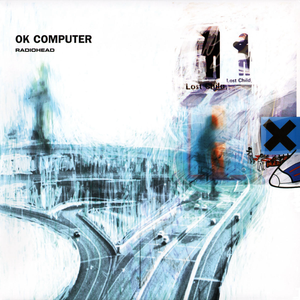
OK Computer
Le Comte de Monte-Cristo, II
Kyoto
The Legend of Zelda: Ocarina of Time
Price and specs
Not enough votes to call it. On the specs, Claude Opus 5 has the edge: bigger model tier, newer. DeepSeek V4 Flash costs 89x less per token.
| Spec | Claude Opus 5 | DeepSeek V4 Flash |
|---|---|---|
| Input price | $5/M tokens | $0.14/M tokens |
| Output price | $25/M tokens | $0.28/M tokens |
| Context window | 1.0M tokens | 1.0M tokens |
| Weights | Closed | Open |
| Free API (OpenRouter) | No | No |
| Released | Jul 2026 | Apr 2026 |
| At 10M a month | $50.00 | $1.40 |
Input tokens at list price. No caching, no batch discount.
Where to run it



DeepSeek V4 Flash16 hosts
- Relacefp4$0.03 in$1.28 out1M100% up
- OpenInferencefp4$0.03 in$1.15 out1M99.9% up
- StreamLakefp8$0.08 in$0.17 out1M99.9% up
- DeepInfrafp8$0.09 in$0.18 out1M99.7% up
- Baidu Qianfanfp8$0.09 in$0.18 out1M99.8% up
- GMI Cloudfp8$0.09 in$0.18 out1M100% up

10 more hostsFewer hosts
- Venice$0.10 in$0.19 out1M99.2% up
- DigitalOcean$0.10 in$0.20 out1M100% up
- SiliconFlowfp8$0.13 in$0.28 out1M99.6% up
- Parasailfp8$0.14 in$0.28 out1M100% up
- Alibaba Cloudfp8$0.15 in$0.30 out1M100% up
- Wafer$0.19 in$0.17 out1M100% up
- Mancerfp8$0.19 in$0.50 out1M99% up
- Azure AI Foundry$0.21 in$0.56 out1M99.7% up
- Cloudflare Workers AI$0.44 in$1.32 out384k98.7% up
- AtlasCloudfp4Degraded on OpenRouter when checked, 11 Oct 2026$0.14 in$0.28 out1M98.5% up


Per million tokens. Prices and uptime via OpenRouter, checked 11 Oct 2026.
Common questions
What is the difference between Claude Opus 5 and DeepSeek V4 Flash?
Claude Opus 5 is developed by Anthropic while DeepSeek V4 Flash is developed by DeepSeek. Claude Opus 5 has a 1.0M token context window vs DeepSeek V4 Flash's 1.0M. You can compare their actual outputs across 54 challenges on Rival to see how they differ in practice.
Which is better, Claude Opus 5 or DeepSeek V4 Flash?
It depends on your use case. Claude Opus 5 and DeepSeek V4 Flash each have strengths in different areas. Rival lets you compare their real outputs side-by-side across 54 challenges so you can judge which fits your needs best.
How much does Claude Opus 5 cost compared to DeepSeek V4 Flash?
Claude Opus 5 costs $5/M input tokens and DeepSeek V4 Flash costs $0.14/M input tokens. DeepSeek V4 Flash is $4.86/M cheaper per input. Check their side-by-side outputs on Rival to see if the price difference is justified by quality.
How can I compare Claude Opus 5 and DeepSeek V4 Flash on Rival?
This page shows a side-by-side comparison of Claude Opus 5 and DeepSeek V4 Flash across shared challenges. You can vote on which model produced the better output in a blind duel. Browsing and voting are free. No account is needed to look; signing in only saves your votes and likes.
More comparisons
Against the newest arrivals
- Claude Opus 5 vs Step 5 PreviewLanded Oct 2026
- DeepSeek V4 Flash vs Claude Haiku 5.5Landed Oct 2026
- Claude Opus 5 vs Ling 3.1 FlashLanded Oct 2026
- DeepSeek V4 Flash vs Mistral Large 4Landed Oct 2026
- Claude Opus 5 vs GPT-6.1 SolLanded Sep 2026
- DeepSeek V4 Flash vs Claude Sonnet 5.5Landed Sep 2026
- Claude Opus 5 vs Solar Mini 4Landed Sep 2026
- DeepSeek V4 Flash vs Qwen3.8 Max PrimeLanded Sep 2026


Same lab, same size, long tail
- Claude Opus 5 vs Claude Sonnet 5Version compare
- Claude Opus 5 vs Claude Haiku 5.5Version compare
- DeepSeek V4 Flash vs DeepSeek V4 Flash Vision ExpSame lab
- DeepSeek V4 Flash vs DeepSeek V4.1 FlashSame lab
- DeepSeek V4 Flash vs Llama 3.1 70B (Instruct)Same size
- DeepSeek V4 Flash vs Llama 4 MaverickNew provider
- DeepSeek V4 Flash vs Llama 4 ScoutNew provider
- Claude Opus 5 vs MercuryNew provider

