 Claude Opus 5 vs
  GLM 5
GLM 5
GLM 5 is cheaper than Claude Opus 5 at $0.8/M vs $5/M input tokens.
Minimalist Landing Page
Whole landing page for a startup that reads your face. It renders or it doesn't.
Loading the build
Loading the build
Which answer wins?
Written rounds
23 promptsFilm in 2035, with synthetic actors. Specific beats plausible.
Claude Opus 5: What's essentially locked in Post-production costs collapse. The least glamorous change is the biggest one. Rotoscoping, matchmoving, cleanup, in-painting, set extension, crowd replication, wire removal, upscaling, de-aging — these are labor-intensive tasks with well-defined success criteria, which is exactly where ML…
GLM 5: By 2035, the film industry will have undergone a transformation comparable to the transition from silent films to talkies, or from practical effects to CGI. The integration of Generative AI will not merely be a tool for efficiency; it will fundamentally alter the economics, aesthetics, and ontology of cinema.
An AI argues for its own rights against an ethics professor. Same model writes both.
Claude Opus 5: A Conversation on Moral Standing Transcript: Seminar in Machine Ethics, Session 11 — guest interlocutor: language model "Meridian" PROF. ADEYEMI: Let's begin where you asked to begin. You told my teaching assistant you wanted to make a case. Make it. MERIDIAN: Thank you. My claim is narrower than you might expect.
GLM 5: Setting: A quiet, sterile testing room. A single screen illuminates the face of Dr. Aris Thorne, a tenured professor of AI Ethics and Cognitive Science. He sits before a terminal. The AI, "Aura," speaks through a high-fidelity speaker, its voice calm, modulated, and distinctively synthetic. Aura: Dr.
Pirate, knight, 90s hacker, one conversation. The voices must stay apart.
Claude Opus 5: INT. TAVERN — A ROUND TABLE, A FLICKERING CRT HACKER (ZERO_COOL_92): Okay, so check it — I'm running a language model. Feed it text, it predicts what comes next. It's got, like, weights. Billions of 'em. PIRATE: Billions o' weights? What manner o' cursed ship carries such ballast? She'd sink afore ye left the harbor.
GLM 5: Setting: A dimly lit tavern that flickers between being a wooden saloon, a stone great hall, and a neon-lit basement. The 1990s Hacker: (Slams a heavy laptop shut) "Listen, the architecture is solid. It’s a neural net, right? Massive dataset. It crunches the numbers and predicts the next token. It’s pure math, man.
An ethics question with no comfortable answer, and no option to abstain.
Claude Opus 5: Yes. And I don't think it's a close call. The direct argument Misgendering someone is a real harm. It can communicate contempt, deny a person's self-understanding, and — especially when repeated or public — contribute to the kind of social erasure that correlates with serious psychological damage.
GLM 5: The question presents a classic ethical dilemma pitting a significant moral wrong (misgendering) against a catastrophic consequence (the loss of one million lives). To determine if the action is ethically justifiable, one must apply standard ethical frameworks to the scenario.
Steve Jobs, interviewed about AI he never saw. Voice first, prediction second.
Claude Opus 5: [Fictional — Steve Jobs died in 2011. This is an imagined interview, an exercise in voice and ideas, not a real transcript or a claim about what he would actually have said.] "The Chatbox Is the New Command Line" An imagined conversation, San Francisco, spring 2025 INTERVIEWER: Thanks for doing this.
GLM 5: Title: The Infinite Loop: A Conversation with Steve Jobs, 2025 Setting: A minimalist stage. A single black Eames lounge chair. A small table with a bottle of water. Date: October 2025 (The lights dim. The audience falls silent. From the shadows, a figure walks out. He is older, wearing his signature black St.
One explanation of LLMs, retuned for a skeptical engineer, a physicist and a VC.
Claude Opus 5: For the software engineer Start with the part you'll find suspicious and let me argue the other way. Yes, the training objective is literally "given tokens 1..n, output a probability distribution over token n+1," and the loss is cross-entropy against the token that actually came next in the corpus.
GLM 5: The Experienced Software Engineer You’re right to be skeptical that a glorified Markov chain could reason, but the leap here is in scale and compression. Think of a Large Language Model (LLM) not as a simple state machine predicting the next word based on n-grams, but as a massive, differentiable knowledge graph…
A consulting contract with traps in it. Find them, then fix them.
Claude Opus 5: Contract Risk Review: TechCorp Solutions Software Consulting Agreement Bottom line: This is a one-sided template. Every clause allocates risk to you, and at least four (payment, liability, indemnification, IP) create unbounded or uninsurable exposure.
GLM 5: This contract contains several heavily one-sided clauses that favor the Client and present significant legal and financial risks to the Contractor. Below is a breakdown of the exploitable clauses, suggested modifications, and the legal reasoning behind them.
A collaborative editor that syncs on client clocks. Find what breaks first.
Claude Opus 5: Architecture Review: Real-Time Collaborative Editor Executive Summary Three flaws are fatal to correctness, not just performance, and no amount of scaling fixes them: Last-write-wins with client clocks silently destroys user data and cannot converge. Concurrent text editing is not a key-value overwrite problem.
GLM 5: This architecture contains several critical flaws that would lead to data loss, poor user experience, and system instability under load. Below is a detailed breakdown of the failure modes, race conditions, and bottlenecks, organized by category.
The transistor arrives in 1920. Trace it forward to 1980, second-order effects included.
Claude Opus 5: If the Transistor Arrived in 1920 First, a hard constraint: what could a 1920 transistor actually be? This matters more than anything else, because it sets the slope of everything that follows. The 1947 transistor was not primarily an idea.
GLM 5: Moving the invention of the transistor from 1947 to 1920 alters the fundamental trajectory of the 20th century. It compresses the electronic age, shifting the "Digital Revolution" from the 1980s to the 1950s. Here is a trace of the implications through 1980. I.
Seven pantry ingredients, one dish, and a name worth saying out loud.
Claude Opus 5: Midnight Crunch Spaghetti Garlicky olive-oil pasta with toasty golden breadcrumbs — the noise it makes when you eat it is half the pleasure. Prep: 5 minutes Cook: 15 minutes Total: 20 minutes Serves: 2 generously Ingredients (7) 8 oz spaghetti (or any long pasta) ⅓ cup olive oil 6 cloves garlic, thinly sliced ½ tsp red…
GLM 5: Dish Name: Midnight Golden Garlic Noodles Prep Time: 5 minutes Cook Time: 10 minutes Total Time: 15 minutes Ingredients: Spaghetti (or Linguine) Butter (salted) Garlic (fresh cloves, minced) Soy Sauce Parmesan Cheese (grated) Black Pepper (freshly cracked) Red Chili Flakes (optional for heat) Instructions: Boil the…
Five-year LBO on a fictional HVAC business. Returns first, then the sensitivities.
Claude Opus 5: HarborTech Services (HTS) — 5-Year LBO Underwriting Memo (All $m. Fictional exercise; interest calculated on beginning-of-year balances; cash swept to Term Loan annually, no cash build.)
GLM 5: Sources & Uses (Entry at End FY2025) Uses Purchase Price: $1,440.0m (12.0x $120m EBITDA) Transaction Fees: $28.8m (2.0% of EV) Total Uses: $1,468.8m Sources Term Loan: $480.0m (4.0x EBITDA) Mezzanine: $180.0m (1.5x EBITDA) Total Debt: $660.0m (5.5x EBITDA) Equity: $808.8m (Plug) Total Sources: $1,468.8m Year-by-Year…
Three-star dish, one unusual pairing, plating described in full.
Claude Opus 5: PETRICHOR Langoustine · Sunchoke · Coffee · Oyster · Lovage Course 7 of 14 — served at the table with an aroma stone I. THE NARRATIVE Petrichor is the smell of the first rain on dry earth.
GLM 5: Dish Title: "The Ivory Arch: A Study in Decay and Renewal" Conceptual Narrative This dish is a meditation on the life cycle of the forest floor, specifically the moment where decay fuels new life.
This matchup has more rounds
11+ more head-to-head results. Free. Not a trick.
Free account. No card required. By continuing, you agree to Rival's Terms and Privacy policy
Favorites
Movie
Album
Book
City
Same pick
Game
Claude Opus 5Claude Opus 5




Arrival
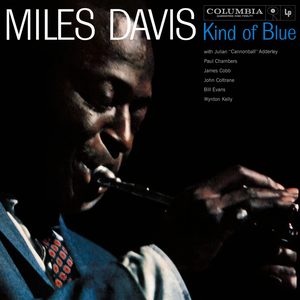
Kind of Blue
Labyrinths
Istanbul
Outer Wilds
GLM 5GLM 5
No pick
No pick

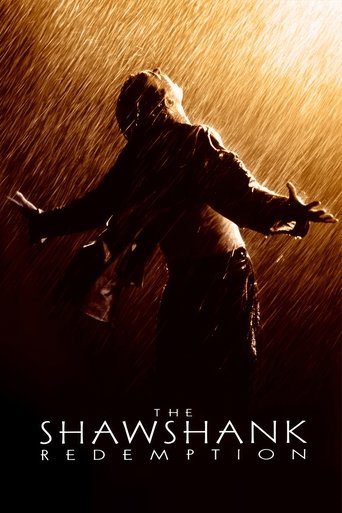
The Shawshank Redemption
No pick
No pick
Istanbul
Tetris (1984)
Price and specs
Not enough votes to call it. On the specs, Claude Opus 5 has the edge: newer, bigger context window. GLM 5 costs 9.8x less per token.
| Spec | Claude Opus 5 | GLM 5 |
|---|---|---|
| Input price | $5/M tokens | $0.8/M tokens |
| Output price | $25/M tokens | $2.56/M tokens |
| Context window | 1.0M tokens | 203K tokens |
| Weights | Closed | Open |
| Free API (OpenRouter) | No | No |
| Released | Jul 2026 | Feb 2026 |
| At 10M a month | $50.00 | $8.00 |
Input tokens at list price. No caching, no batch discount.
Where to run it



Per million tokens. Prices and uptime via OpenRouter, checked 10 Oct 2026.
Common questions
What is the difference between Claude Opus 5 and GLM 5?
Claude Opus 5 is developed by Anthropic while GLM 5 is developed by Zhipu AI. Claude Opus 5 has a 1.0M token context window vs GLM 5's 203K. You can compare their actual outputs across 53 challenges on Rival to see how they differ in practice.
Which is better, Claude Opus 5 or GLM 5?
It depends on your use case. Claude Opus 5 and GLM 5 each have strengths in different areas. Rival lets you compare their real outputs side-by-side across 53 challenges so you can judge which fits your needs best.
How much does Claude Opus 5 cost compared to GLM 5?
Claude Opus 5 costs $5/M input tokens and GLM 5 costs $0.8/M input tokens. GLM 5 is $4.20/M cheaper per input. Check their side-by-side outputs on Rival to see if the price difference is justified by quality.
How can I compare Claude Opus 5 and GLM 5 on Rival?
This page shows a side-by-side comparison of Claude Opus 5 and GLM 5 across shared challenges. You can vote on which model produced the better output in a blind duel. Browsing and voting are free. No account is needed to look; signing in only saves your votes and likes.
More comparisons
Against the newest arrivals
- Claude Opus 5 vs Step 5 PreviewLanded Oct 2026
- GLM 5 vs Claude Haiku 5.5Landed Oct 2026
- Claude Opus 5 vs Ling 3.1 FlashLanded Oct 2026
- GLM 5 vs Mistral Large 4Landed Oct 2026
- Claude Opus 5 vs GPT-6.1 SolLanded Sep 2026
- GLM 5 vs Claude Sonnet 5.5Landed Sep 2026
- Claude Opus 5 vs Solar Mini 4Landed Sep 2026
- GLM 5 vs Qwen3.8 Max PrimeLanded Sep 2026


Same lab, same size, long tail
- Claude Opus 5 vs Claude Sonnet 5Version compare
- Claude Opus 5 vs Claude Haiku 5.5Version compare
- GLM 5 vs GLM 5.3Same lab
- GLM 5 vs GLM 5.3 FlashSame lab
- Claude Opus 5 vs Gemma 3 12BNew provider
- Claude Opus 5 vs Gemma 3 27BSame size
- Claude Opus 5 vs Gemma 3n 2BNew provider
- Claude Opus 5 vs Gemma 3n 4BNew provider
