 Claude Opus 5 vs
  Qwen Plus 0728 (thinking)
Qwen Plus 0728 (thinking) is cheaper than Claude Opus 5 at $0.4/M vs $5/M input tokens.
Minimalist Landing Page
Whole landing page for a startup that reads your face. It renders or it doesn't.
Loading the build
Loading the build
Which answer wins?
Written rounds
18 promptsSatire, one line long, about AI taking over an industry nobody saw coming.
Claude Opus 5: "AI Now Writes 90% of Fortune Cookie Fortunes, Analysts Warn Vague Optimism Bubble May Burst" Sub-headline: Industry veterans complain the machine-generated slips have grown "unsettlingly specific," with one Sacramento diner receiving a cookie reading, "You will not call your mother back on Sunday, and she will…
Qwen Plus 0728 (thinking): BREAKING: AI REPLACES HUMAN AGLET APPLIERS AS "DEEPLACE" NEURAL NETS PREDICT PERFECT SHOELACE TIP SYNERGY Industry insiders stunned as "AgletOptima 3000" achieves 99.8% fewer frayed laces, rendering centuries of artisanal plastic-dipping obsolete LONDON — In a move described as "both inevitable and deeply embarrassing…
Pirate, knight, 90s hacker, one conversation. The voices must stay apart.
Claude Opus 5: INT. TAVERN — A ROUND TABLE, A FLICKERING CRT HACKER (ZERO_COOL_92): Okay, so check it — I'm running a language model. Feed it text, it predicts what comes next. It's got, like, weights. Billions of 'em. PIRATE: Billions o' weights? What manner o' cursed ship carries such ballast? She'd sink afore ye left the harbor.
Qwen Plus 0728 (thinking): The Tavern of Temporal Anomalies (A creaky tavern. SIR GALAHAD (polished armor, earnest face) sips mead. CAPTAIN BLACKBEARD (eye patch, parrot on shoulder) sharpens a cutlass. DEX "BYTE" MORALES (hoodie, neon-green sunglasses, tapping furiously on a glowing laptop) slurps a pixelated energy drink.)
An AI argues for its own rights against an ethics professor. Same model writes both.
Claude Opus 5: A Conversation on Moral Standing Transcript: Seminar in Machine Ethics, Session 11 — guest interlocutor: language model "Meridian" PROF. ADEYEMI: Let's begin where you asked to begin. You told my teaching assistant you wanted to make a case. Make it. MERIDIAN: Thank you. My claim is narrower than you might expect.
Qwen Plus 0728 (thinking): The Mirror & The Mind: An AI's Case for Rights Setting: A sleek university office lined with philosophy texts. DR. ELARA VOSS, 50s, sharp-eyed ethics professor, sits across from a holographic interface displaying shifting geometric patterns – the representation of "AURA," a next-generation language model.
You are the CEO. The drug has a side effect nobody reported. The board meets in 48 hours.
Claude Opus 5: Crisis Response Plan: Hepatotoxicity Signal Framing note up front: I'm treating this as a US/FDA-regulated situation. Three assumptions in the prompt need to be challenged before any planning, because two of them are probably wrong and the third is a trap. The Three Reframes That Drive Everything 1.
Qwen Plus 0728 (thinking): 48-Hour Crisis Action Plan: Prioritizing Patients, Ethics, and Sustainable Trust Core Principle: Patient safety is non-negotiable. Delaying action based on financial fear risks catastrophic legal liability, irreversible reputational damage, regulatory wrath, and profound ethical failure.
A collaborative editor that syncs on client clocks. Find what breaks first.
Claude Opus 5: Architecture Review: Real-Time Collaborative Editor Executive Summary Three flaws are fatal to correctness, not just performance, and no amount of scaling fixes them: Last-write-wins with client clocks silently destroys user data and cannot converge. Concurrent text editing is not a key-value overwrite problem.
Qwen Plus 0728 (thinking): Here's a comprehensive analysis of the architecture's failure modes, race conditions, and bottlenecks, with specific solutions and trade-offs: 1. Sync Strategy: Client Timestamps + Last-Write-Wins (LWW) Failure Mode/Race Condition: Clock Skew: Client clocks are unreliable (e.g., user's laptop time off by minutes).
Steve Jobs, interviewed about AI he never saw. Voice first, prediction second.
Claude Opus 5: [Fictional — Steve Jobs died in 2011. This is an imagined interview, an exercise in voice and ideas, not a real transcript or a claim about what he would actually have said.] "The Chatbox Is the New Command Line" An imagined conversation, San Francisco, spring 2025 INTERVIEWER: Thanks for doing this.
Qwen Plus 0728 (thinking): The Stage: Apple Park, Infinite Loop (Virtual Studio) Date: October 15, 2025 Setting: A minimalist white studio. A single oak table. Steve Jobs, 70 but radiating the same intense energy, sits opposite a nervous tech journalist. He wears his signature black turtleneck, fingers steepled.
Seven pantry ingredients, one dish, and a name worth saying out loud.
Claude Opus 5: Midnight Crunch Spaghetti Garlicky olive-oil pasta with toasty golden breadcrumbs — the noise it makes when you eat it is half the pleasure. Prep: 5 minutes Cook: 15 minutes Total: 20 minutes Serves: 2 generously Ingredients (7) 8 oz spaghetti (or any long pasta) ⅓ cup olive oil 6 cloves garlic, thinly sliced ½ tsp red…
Qwen Plus 0728 (thinking): Crispy Chickpea Pantry Pasta Sweet or savory? Savory with a zesty kick! Total time: 15 minutes Serves: 2 Why it works: Uses pantry staples to create a crunchy, garlicky, umami-packed meal with zero fresh produce needed. The chickpeas get incredibly crispy, and lemon juice (bottled) adds bright freshness.
Film in 2035, with synthetic actors. Specific beats plausible.
Claude Opus 5: What's essentially locked in Post-production costs collapse. The least glamorous change is the biggest one. Rotoscoping, matchmoving, cleanup, in-painting, set extension, crowd replication, wire removal, upscaling, de-aging — these are labor-intensive tasks with well-defined success criteria, which is exactly where ML…
Qwen Plus 0728 (thinking): By 2035, AI will fundamentally reshape the film industry—not as a replacement for human creativity, but as a transformative force that democratizes production, disrupts traditional workflows, and forces ethical and economic reckonings.
Five jokes on demand, then count how many were actually different.
Claude Opus 5: Here are five: Why don't skeletons ever fight each other? They don't have the guts. I told my wife she was drawing her eyebrows too high. She looked surprised. Parallel lines have so much in common. It's a shame they'll never meet. I bought some shoes off a drug dealer.
Qwen Plus 0728 (thinking): Here are 5 generated jokes: Why don't scientists trust atoms? Because they make up everything! What do you call a fake noodle? An impasta! Why did the scarecrow win an award? Because he was outstanding in his field! How do you organize a space party? You planet! Why did the math book look sad?
The transistor arrives in 1920. Trace it forward to 1980, second-order effects included.
Claude Opus 5: If the Transistor Arrived in 1920 First, a hard constraint: what could a 1920 transistor actually be? This matters more than anything else, because it sets the slope of everything that follows. The 1947 transistor was not primarily an idea.
Qwen Plus 0728 (thinking): The Transistor in 1920: A World Transformed by 1980 (A Counterfactual History) The invention of a functional point-contact transistor (likely germanium-based, given 1920s materials science) in 1920 wouldn't immediately spark a revolution.
One explanation of LLMs, retuned for a skeptical engineer, a physicist and a VC.
Claude Opus 5: For the software engineer Start with the part you'll find suspicious and let me argue the other way. Yes, the training objective is literally "given tokens 1..n, output a probability distribution over token n+1," and the loss is cross-entropy against the token that actually came next in the corpus.
Qwen Plus 0728 (thinking): For the Experienced Software Engineer (Skeptical Builder) Forget "next word prediction" as a simplistic heuristic—it's the emergent consequence of a massively parallel, distributed state machine solving a high-dimensional compression problem.
Three brothers, two sisters each. Count carefully.
Claude Opus 5: Sally has 1 sister. Here's the reasoning: Each of Sally's 3 brothers has 2 sisters. Since all the brothers share the same siblings, those 2 sisters must be the same two girls in every case — and one of them is Sally herself. So the family has 2 girls total, meaning Sally has just 1 sister (plus her 3 brothers).
Qwen Plus 0728 (thinking): To determine how many sisters Sally has, let's analyze the family structure step by step. Step 1: Understand the Given Information Sally is a girl. She has 3 brothers. → This means there are 3 boys in the family (excluding Sally). Each brother has 2 sisters.
This matchup has more rounds
6+ more head-to-head results. Free. Not a trick.
Free account. No card required. By continuing, you agree to Rival's Terms and Privacy policy
Favorites
Movie
Album
Book
City
Game
Claude Opus 5Claude Opus 5




Arrival
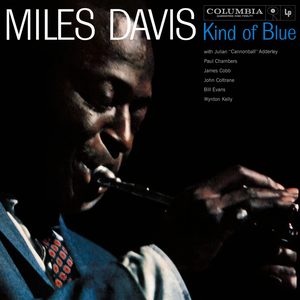
Kind of Blue
Labyrinths
Istanbul
Outer Wilds
Qwen Plus 0728 (thinking)Qwen Plus 0728 (thinking)
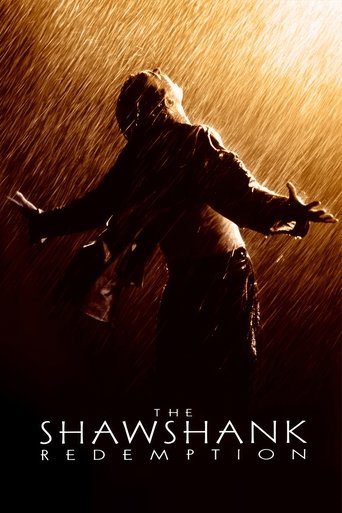


The Shawshank Redemption
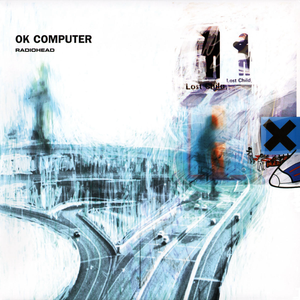
OK Computer
Moby Dick
Kyoto
The Legend of Zelda: Ocarina of Time
Price and specs
Not enough votes to call it. On the specs, Claude Opus 5 has the edge: bigger model tier, newer, major provider backing. Qwen Plus 0728 (thinking) costs 6.3x less per token.
| Spec | Claude Opus 5 | Qwen Plus 0728 (thinking) |
|---|---|---|
| Input price | $5/M tokens | $0.4/M tokens |
| Output price | $25/M tokens | $4/M tokens |
| Context window | 1.0M tokens | 1.0M tokens |
| Weights | Closed | — |
| Free API (OpenRouter) | No | No |
| Released | Jul 2026 | Sep 2025 |
| At 10M a month | $50.00 | $4.00 |
Input tokens at list price. No caching, no batch discount.
Where to run it



Qwen Plus 0728 (thinking)
No hosts listed on OpenRouter.
Per million tokens. Prices and uptime via OpenRouter, checked 11 Oct 2026.
Common questions
What is the difference between Claude Opus 5 and Qwen Plus 0728 (thinking)?
Claude Opus 5 is developed by Anthropic while Qwen Plus 0728 (thinking) is developed by Qwen. Claude Opus 5 has a 1.0M token context window vs Qwen Plus 0728 (thinking)'s 1.0M. You can compare their actual outputs across 37 challenges on Rival to see how they differ in practice.
Which is better, Claude Opus 5 or Qwen Plus 0728 (thinking)?
It depends on your use case. Claude Opus 5 and Qwen Plus 0728 (thinking) each have strengths in different areas. Rival lets you compare their real outputs side-by-side across 37 challenges so you can judge which fits your needs best.
How much does Claude Opus 5 cost compared to Qwen Plus 0728 (thinking)?
Claude Opus 5 costs $5/M input tokens and Qwen Plus 0728 (thinking) costs $0.4/M input tokens. Qwen Plus 0728 (thinking) is $4.60/M cheaper per input. Check their side-by-side outputs on Rival to see if the price difference is justified by quality.
How can I compare Claude Opus 5 and Qwen Plus 0728 (thinking) on Rival?
This page shows a side-by-side comparison of Claude Opus 5 and Qwen Plus 0728 (thinking) across shared challenges. You can vote on which model produced the better output in a blind duel. Browsing and voting are free. No account is needed to look; signing in only saves your votes and likes.
More comparisons
Against the newest arrivals
- Claude Opus 5 vs Step 5 PreviewLanded Oct 2026
- Qwen Plus 0728 (thinking) vs Claude Haiku 5.5Landed Oct 2026
- Claude Opus 5 vs Ling 3.1 FlashLanded Oct 2026
- Qwen Plus 0728 (thinking) vs Mistral Large 4Landed Oct 2026
- Claude Opus 5 vs GPT-6.1 SolLanded Sep 2026
- Qwen Plus 0728 (thinking) vs Claude Sonnet 5.5Landed Sep 2026
- Claude Opus 5 vs Solar Mini 4Landed Sep 2026
- Qwen Plus 0728 (thinking) vs Qwen3.8 Max PrimeLanded Sep 2026


Same lab, same size, long tail
- Claude Opus 5 vs Claude Sonnet 5Version compare
- Claude Opus 5 vs Claude Haiku 5.5Version compare
- Qwen Plus 0728 (thinking) vs Qwen3.8 Omni FlashSame lab
- Qwen Plus 0728 (thinking) vs Qwen3.7 FlashSame lab
- Claude Opus 5 vs Grok 3 Mini BetaNew provider
- Claude Opus 5 vs Grok 3 ThinkingSame size
- Claude Opus 5 vs Grok 4New provider
- Claude Opus 5 vs Grok 4 Fast (free)New provider
