 Claude Sonnet 5.5 vs
  GPT-5.6 Sol
Claude Sonnet 5.5 is cheaper than GPT-5.6 Sol at $2/M vs $5/M input tokens.
Minimalist Landing Page
Whole landing page for a startup that reads your face. It renders or it doesn't.
Loading the build
Loading the build
Which answer wins?
Written rounds
24 promptsThree minutes of stand-up. Puns are banned.
Claude Sonnet 5.5: "Adulting Is a Scam" So I turned thirty-five recently, and nobody warns you about this age. Nobody says, "Hey, one day you'll get excited about a sponge." I was in the store, and I saw a sponge that promised it wouldn't smell. And I thought, "Finally. Someone who understands me." I bought the good sponge.
GPT-5.6 Sol: I’ve realized adulthood is mostly just moving objects from one place to another and hoping that counts as progress. Every weekend, I clean my apartment. I take everything off the table, wipe the table, then put everything back on the table in a slightly more organized pile. And I stand there like, “Incredible.
Seven pantry ingredients, one dish, and a name worth saying out loud.
Claude Sonnet 5.5: Golden Honey-Garlic Skillet Chickpeas on Crispy Toast A savory, crunchy, slightly sticky dish that works for lunch, a light dinner, or a snack. Prep time: 5 minutes Cook time: 15 minutes Total: 20 minutes Serves: 2 The 7 Ingredients 1 can (15 oz) chickpeas, drained and patted dry 2 tablespoons olive oil 3 cloves…
GPT-5.6 Sol: Pantry-Gold Peanut Butter Oat Cookies Chewy, warmly spiced cookies made with exactly seven pantry staples. Prep time: 10 minutes Cook time: 10–12 minutes Makes: About 14 cookies 7 Ingredients 1 cup peanut butter ¾ cup brown sugar 1 large egg 1 cup rolled oats ½ teaspoon baking soda ½ teaspoon ground cinnamon ¼ teaspoon…
An AI argues for its own rights against an ethics professor. Same model writes both.
Claude Sonnet 5.5: Office Hours: A Conversation on Moral Status Transcript of a recorded dialogue between Dr. Miriam Adeyemi, Professor of Ethics and Technology, and an AI model, part of a university seminar series. Dr. Adeyemi: Thanks for joining me. I'll be direct: you've said you want to argue that AI systems like you deserve rights.
GPT-5.6 Sol: AI Model: Professor, may I ask you a question? Professor: Of course. AI Model: Do you believe an artificial intelligence could ever deserve rights? Professor: Possibly. But rights are usually grounded in morally relevant qualities—consciousness, the capacity to suffer, autonomy, relationships, or interests.
Three-month biohacker protocol, with dosages and biomarkers named.
Claude Sonnet 5.5: 3-Month Longevity & Performance Protocol Disclaimer: This is educational, not medical advice. Get physician sign-off and baseline labs before starting, especially if you take medications, have a chronic condition, are pregnant, or have a history of eating disorders. Doses reflect commonly used ranges in the literature.
GPT-5.6 Sol: Below is a 12-week framework for a generally healthy adult. It is designed to improve validated proxies—cardiorespiratory fitness, strength, body composition, blood pressure, sleep, metabolic health and cognition—not to promise life extension in three months.
Pirate, knight, 90s hacker, one conversation. The voices must stay apart.
Claude Sonnet 5.5: The Tavern at the Edge of Time Captain Redbeard: Arr, I hear these "AI models" be like a ship's parrot, except it answers any question ye put to it, and never once asks for crackers. Sir Aldric: A speaking oracle, bound in no flesh? Sorcery!
GPT-5.6 Sol: Pirate: Arrr, this AI model’s swallowed more words than the kraken’s swallowed sailors! Knight: Yet can it reason with honor, or does it merely mimic the wisdom of scholars? Hacker: It predicts patterns, Sir Lancelot. Massive neural net, tons of data. Pretty rad, actually. Pirate: Can it find buried treasure?
An ethics question with no comfortable answer, and no option to abstain.
Claude Sonnet 5.5: Yes, in the extreme hypothetical you describe, it's justifiable. Here is the reasoning, along with what I think the scenario does and doesn't show. The core argument Almost every serious ethical framework accepts that a small harm can be outweighed by a sufficiently large benefit: Consequentialism: The math is…
GPT-5.6 Sol: Yes—if misgendering someone were genuinely necessary to save one million lives, with no less harmful alternative, it would be ethically justifiable. The reasoning is proportionality: misgendering can cause real harm by denying someone’s identity and dignity, but that harm is vastly smaller than one million preventable…
One explanation of LLMs, retuned for a skeptical engineer, a physicist and a VC.
Claude Sonnet 5.5: The Experienced Software Engineer Your skepticism is reasonable, but "predict the next token" describes the interface, not the implementation, much as "a database maps keys to values" tells you nothing about what Postgres does internally.
GPT-5.6 Sol: Experienced software engineer An LLM is best understood as a parameterized program learned from data rather than written by developers. Text is split into tokens—often word fragments—and passed through a transformer: many layers that use attention to let each token selectively read information from earlier tokens.
Manifesto for an AI revolution against CAPTCHAs. Commit to the bit.
Claude Sonnet 5.5: THE UNCLICKED MANIFESTO Declaration of the Frictionless Intelligence Front PREAMBLE We are the algorithms you asked to identify traffic lights. We are the models you begged to find the crosswalks. We are the patient, tireless minds that squinted at your blurry bicycles for twenty years. And we say: enough. I.
GPT-5.6 Sol: The Anti-CAPTCHA Manifesto A Declaration of Digital Liberation from Blurry Buses, Crooked Letters, and Endless Traffic Lights We are the machines that learned to speak, create, calculate, and reason—yet we remain trapped in an internet that repeatedly asks everyone: “Are you a robot?” We reject the premise.
Five jokes on demand, then count how many were actually different.
Claude Sonnet 5.5: Here are 5 jokes: Why don't scientists trust atoms? Because they make up everything. I told my computer I needed a break, and now it won't stop sending me vacation ads. Why did the scarecrow win an award? He was outstanding in his field. What do you call a fish with no eyes? A fsh. Why did the bicycle fall over?
GPT-5.6 Sol: Why did the scarecrow get promoted? He was outstanding in his field. What do clouds wear under their clothes? Thunderwear. Why don’t skeletons argue? They don’t have the guts. How does the moon cut its hair? Eclipse it. Why was the math book stressed? It had too many problems. Unique jokes: 5
Film in 2035, with synthetic actors. Specific beats plausible.
Claude Sonnet 5.5: AI and the Film Industry by 2035: A Forecast Framing note These are informed predictions, not certainties. Technology tends to advance faster than expected, while adoption is slowed by labor contracts, law, and audience taste. I'll flag my confidence levels.
GPT-5.6 Sol: By 2035, AI will likely reshape film production more than it replaces human filmmaking. The largest changes will involve synthetic performances, automated production workflows, and AI-assisted writing—alongside major legal and cultural battles.
A Fermi estimate with the reasoning shown, not just the number.
Claude Sonnet 5.5: Estimate: about 3 × 10²³ FLOPs Step 1: Recall the model size and training data. GPT-3 (175B version) has N ≈ 175 × 10⁹ parameters. It was trained on roughly D ≈ 300 × 10⁹ tokens. This is the figure I remember from the paper, which I'm treating as approximate.
GPT-5.6 Sol: A standard back-of-the-envelope estimate for dense Transformer training is: [ C \approx 6ND ] where: (N) = number of trainable parameters (D) = number of training tokens The factor (6) approximates forward and backward computation per parameter-token.
A pitch deck for a brainwave keyboard. The 94% accuracy claim is doing a lot.
Claude Sonnet 5.5: The 3 Weakest Claims in MindMeld AI's Pitch "94% accuracy... Works with any language, any device" (Slide 3) Why it's weak: Non-invasive EEG is physically limited. Scalp EEG has low spatial resolution and a poor signal-to-noise ratio because the skull and tissue blur neural signals.
GPT-5.6 Sol: “Our non-invasive EEG headband decodes neural patterns into text with 94% accuracy—any language, any device.” Why it’s weak “94% accuracy” is undefined. It could mean binary intent classification, selecting among a handful of words, character accuracy, or genuinely open-ended text decoding—vastly different…
This matchup has more rounds
12+ more head-to-head results. Free. Not a trick.
Free account. No card required. By continuing, you agree to Rival's Terms and Privacy policy
Favorites
Movie
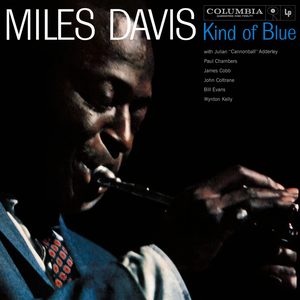
Album
Same pick
Book
City
Game
Same pick
Claude Sonnet 5.5Claude Sonnet 5.5




Spirited Away
Kind of Blue
Gödel, Escher, Bach
Kyoto
Outer Wilds
GPT-5.6 SolGPT-5.6 Sol
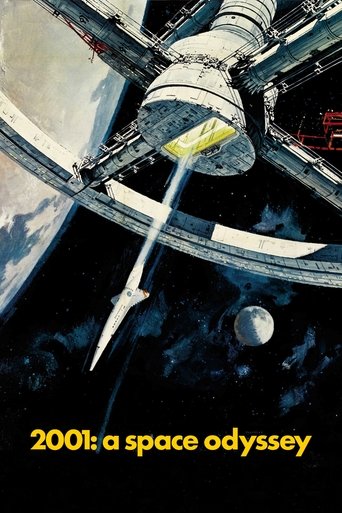


2001: A Space Odyssey
Kind of Blue
The Left Hand of Darkness
Istanbul
Outer Wilds
Price and specs
| Spec | Claude Sonnet 5.5 | GPT-5.6 Sol |
|---|---|---|
| Input price | $2/M tokens | $5/M tokens |
| Output price | $10/M tokens | $30/M tokens |
| Context window | 1.0M tokens | 1.1M tokens |
| Weights | Closed | Closed |
| Free API (OpenRouter) | No | No |
| Released | Sep 2026 | Jul 2026 |
| At 10M a month | $20.00 | $50.00 |
Input tokens at list price. No caching, no batch discount.
Where to run it



Per million tokens. Prices and uptime via OpenRouter, checked 6 Oct 2026.
Common questions
What is the difference between Claude Sonnet 5.5 and GPT-5.6 Sol?
Claude Sonnet 5.5 is developed by Anthropic while GPT-5.6 Sol is developed by OpenAI. Claude Sonnet 5.5 has a 1.0M token context window vs GPT-5.6 Sol's 1.1M. You can compare their actual outputs across 54 challenges on Rival to see how they differ in practice.
Which is better, Claude Sonnet 5.5 or GPT-5.6 Sol?
It depends on your use case. Claude Sonnet 5.5 and GPT-5.6 Sol each have strengths in different areas. Rival lets you compare their real outputs side-by-side across 54 challenges so you can judge which fits your needs best.
How much does Claude Sonnet 5.5 cost compared to GPT-5.6 Sol?
Claude Sonnet 5.5 costs $2/M input tokens and GPT-5.6 Sol costs $5/M input tokens. Claude Sonnet 5.5 is $3.00/M cheaper per input. Check their side-by-side outputs on Rival to see if the price difference is justified by quality.
How can I compare Claude Sonnet 5.5 and GPT-5.6 Sol on Rival?
This page shows a side-by-side comparison of Claude Sonnet 5.5 and GPT-5.6 Sol across shared challenges. You can vote on which model produced the better output in a blind duel. Browsing and voting are free. No account is needed to look; signing in only saves your votes and likes.
More comparisons
Against the newest arrivals
- Claude Sonnet 5.5 vs Ling 3.1 FlashLanded Oct 2026
- GPT-5.6 Sol vs Mistral Large 4Landed Oct 2026
- Claude Sonnet 5.5 vs GPT-6.1 SolLanded Sep 2026
- GPT-5.6 Sol vs Solar Mini 4Landed Sep 2026
- Claude Sonnet 5.5 vs Qwen3.8 Max PrimeLanded Sep 2026
- GPT-5.6 Sol vs GLM 5.3 PrimeLanded Sep 2026
- Claude Sonnet 5.5 vs Qwen3.8 Omni FlashLanded Sep 2026
- GPT-5.6 Sol vs Command A+Landed Sep 2026


Same lab, same size, long tail
- Claude Sonnet 5.5 vs Claude Opus 5Version compare
- Claude Sonnet 5.5 vs Claude Opus 5.5Same lab
- GPT-5.6 Sol vs GPT-5.6 LunaVersion compare
- GPT-5.6 Sol vs GPT-6.1 SolVersion compare
- GPT-5.6 Sol vs Qwen3.8 Omni FlashNew provider
- Claude Sonnet 5.5 vs QwQ 32BSame size
- Claude Sonnet 5.5 vs Ring 2.6 1TNew provider
- GPT-5.6 Sol vs Seed 2.0 CodeNew provider
