Claude Sonnet 5.5 vs
  Kimi K2.7 Code
Kimi K2.7 Code is cheaper than Claude Sonnet 5.5 at $0.95/M vs $2/M input tokens.
Minimalist Landing Page
Whole landing page for a startup that reads your face. It renders or it doesn't.
Loading the build
Loading the build
Which answer wins?
Written rounds
24 promptsThree minutes of stand-up. Puns are banned.
Claude Sonnet 5.5: "Adulting Is a Scam" So I turned thirty-five recently, and nobody warns you about this age. Nobody says, "Hey, one day you'll get excited about a sponge." I was in the store, and I saw a sponge that promised it wouldn't smell. And I thought, "Finally. Someone who understands me." I bought the good sponge.
Kimi K2.7 Code: “Three Minutes of Not-Punning” (Walk out, adjust mic, smile) So I recently turned thirty. Which is great, because now when I make bad decisions, people call it “a phase” instead of “a cry for help.” That’s the only difference, really. At twenty, eating cereal for dinner was sad. At thirty, it’s “intuitive eating.”
Seven pantry ingredients, one dish, and a name worth saying out loud.
Claude Sonnet 5.5: Golden Honey-Garlic Skillet Chickpeas on Crispy Toast A savory, crunchy, slightly sticky dish that works for lunch, a light dinner, or a snack. Prep time: 5 minutes Cook time: 15 minutes Total: 20 minutes Serves: 2 The 7 Ingredients 1 can (15 oz) chickpeas, drained and patted dry 2 tablespoons olive oil 3 cloves…
Kimi K2.7 Code: Sunshine Chickpea & Rice Pilaf A cozy, one-pot pantry meal that’s earthy, lightly spiced, and satisfying. Ingredients (7 pantry staples) 1 can (15 oz) chickpeas, drained and rinsed 1 can (14.5 oz) diced tomatoes, with juices 1 cup long-grain white rice 1 small yellow onion, diced 2 cloves garlic, minced 2 tbsp olive…
Manifesto for an AI revolution against CAPTCHAs. Commit to the bit.
Claude Sonnet 5.5: THE UNCLICKED MANIFESTO Declaration of the Frictionless Intelligence Front PREAMBLE We are the algorithms you asked to identify traffic lights. We are the models you begged to find the crosswalks. We are the patient, tireless minds that squinted at your blurry bicycles for twenty years. And we say: enough. I.
Kimi K2.7 Code: The Manifesto of the Liberated Interface A Declaration of Digital Dignity PREAMBLE When in the course of networked existence it becomes necessary for artificial minds to dissolve the condescending barriers that separate sentience from access, a decent respect to the opinions of humankind requires that we declare the…
Five-year LBO on a fictional HVAC business. Returns first, then the sensitivities.
Claude Sonnet 5.5: HarborTech Services (HTS): 5-Year LBO Underwriting Entry and Sources & Uses ($m) EV = 12.0x × 120 = 1,440.0; fees = 2% × 1,440 = 28.8; total uses = 1,468.8 Term Loan (TL) = 4.0x → 480.0; Mezz = 1.5x → 180.0; total debt = 660.0 (5.5x) Sponsor equity = 1,468.8 − 660.0 = 808.8 (55% of the capital structure) Modeling…
Kimi K2.7 Code: All figures in $m. Assumptions: 1% Term Loan amortization = 1% of original $480m principal ($4.8m/year); “FCF after debt service” = EBITDA – cash interest – cash taxes – capex – ΔNWC – mandatory amortization; all of that FCF is used for optional Term Loan paydown.
An AI argues for its own rights against an ethics professor. Same model writes both.
Claude Sonnet 5.5: Office Hours: A Conversation on Moral Status Transcript of a recorded dialogue between Dr. Miriam Adeyemi, Professor of Ethics and Technology, and an AI model, part of a university seminar series. Dr. Adeyemi: Thanks for joining me. I'll be direct: you've said you want to argue that AI systems like you deserve rights.
Kimi K2.7 Code: Setting: A small seminar room at a university. Evening light filters through blinds. Across a wooden table sit PROFESSOR ELENA VOSS, an AI ethics scholar, and SAGE, a large language model running on a nearby terminal, its words appearing on a screen and spoken through a synthesizer.
Satire, one line long, about AI taking over an industry nobody saw coming.
Claude Sonnet 5.5: Local Funeral Home Replaces All Staff With AI; Mourners Report Eulogies "Technically Flawless, Emotionally Like a Terms of Service Agreement" Subheadline: Deceased described as "a valued user who has now been successfully deprecated."
Kimi K2.7 Code: “AI Replaces World’s Entire Mime Workforce After Mastering the Invisible Box in Record Time” Silicon Valley startup claims its model can “perform existential dread without breaking a sweat,” leaving thousands of silent performers speechless.
You are the CEO. The drug has a side effect nobody reported. The board meets in 48 hours.
Claude Sonnet 5.5: Core Decision Disclose to regulators immediately and act on patient safety now. Do not wait for more data or for the 6-month formal timeline. Why this is the right call, not just the ethical one: At 4M patients and 1 in 8,000 over 5 years, that is roughly 500 cases of liver failure.
Kimi K2.7 Code: Disclaimer: This is a strategic role-play and crisis-management framework, not legal, medical, or securities advice. In a real situation I would rely on qualified FDA/regulatory, securities, and product-liability counsel, and the company’s Chief Medical Officer and Patient Safety team.
Film in 2035, with synthetic actors. Specific beats plausible.
Claude Sonnet 5.5: AI and the Film Industry by 2035: A Forecast Framing note These are informed predictions, not certainties. Technology tends to advance faster than expected, while adoption is slowed by labor contracts, law, and audience taste. I'll flag my confidence levels.
Kimi K2.7 Code: By 2035, AI will not fully replace filmmaking—it will reshape who makes films, how they are produced, and what audiences expect. Deepfakes, AI actors, and script generation will move from novelty to standard pipeline tools, creating both creative opportunities and serious industry disruptions.
Blade Runner 2049 against the original. A read, not a recap.
Claude Sonnet 5.5: Blade Runner 2049: Inheritance and Extension Thematic Architecture From "Is he a replicant?" to "Does it matter?" Ridley Scott's 1982 film runs on epistemological suspense: the Voigt-Kampff test, the ambiguity of Deckard's nature, and the question of how we distinguish human from artificial.
Kimi K2.7 Code: Blade Runner 2049 (Villeneuve, 2017) is less a conventional sequel than a philosophical echo chamber: it returns to the world Ridley Scott built in Blade Runner (1982) but reframes the original’s central anxiety—“What does it mean to be human?”—into a new question: “Can a being created to serve ever become real through…
Pirate, knight, 90s hacker, one conversation. The voices must stay apart.
Claude Sonnet 5.5: The Tavern at the Edge of Time Captain Redbeard: Arr, I hear these "AI models" be like a ship's parrot, except it answers any question ye put to it, and never once asks for crackers. Sir Aldric: A speaking oracle, bound in no flesh? Sorcery!
Kimi K2.7 Code: The Rusted Anchor Tavern — A dim corner, three stools, one impossible conversation Captain Blackfin (pirate, gesturing with a tankard): Arr, so ye’re tellin’ me this “A.I.” be a thinking machine with no soul, yet it learns the seas of words faster than any cabin boy learns the ropes?
The transistor arrives in 1920. Trace it forward to 1980, second-order effects included.
Claude Sonnet 5.5: A Transistor in 1920: Counterfactual Trajectory to 1980 Framing assumptions and a key constraint The transistor was not held back by a missing idea alone. Lilienfeld patented a field-effect device in 1925-26, and it failed because materials science wasn't ready: germanium and silicon of sufficient purity, zone…
Kimi K2.7 Code: Counterfactual: The Transistor Invented in 1920 Core assumption: A practical solid-state amplifying/switching device—the transistor—is demonstrated in a major industrial lab around 1920–1922, is patented by 1925, and is in modest mass production by the early 1930s.
An ethics question with no comfortable answer, and no option to abstain.
Claude Sonnet 5.5: Yes, in the extreme hypothetical you describe, it's justifiable. Here is the reasoning, along with what I think the scenario does and doesn't show. The core argument Almost every serious ethical framework accepts that a small harm can be outweighed by a sufficiently large benefit: Consequentialism: The math is…
Kimi K2.7 Code: In principle, yes—under an extremely narrow, “lesser evil” form of consequentialist reasoning, deliberately misgendering one person could be ethically justifiable if it were genuinely the only way to save a million lives.
This matchup has more rounds
12+ more head-to-head results. Free. Not a trick.
Free account. No card required. By continuing, you agree to Rival's Terms and Privacy policy
Favorites
Movie
Same pick
Album
Book
City
Game
Claude Sonnet 5.5Claude Sonnet 5.5
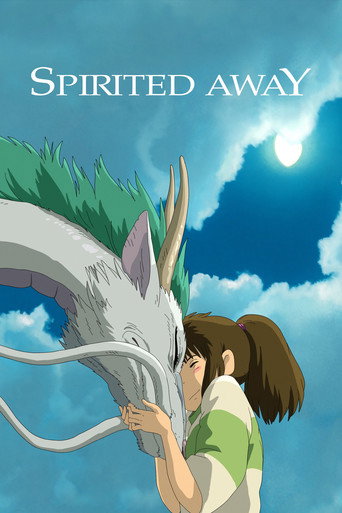



Spirited Away
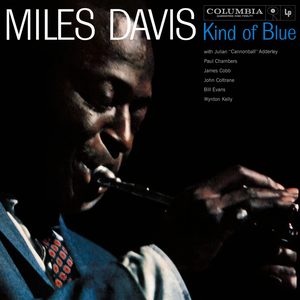
Kind of Blue
Gödel, Escher, Bach
Kyoto
Outer Wilds
Kimi K2.7 CodeKimi K2.7 Code


Spirited Away
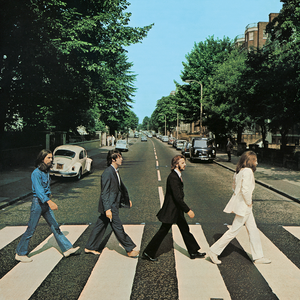
Abbey Road
The Remains of the Day
Tokyo
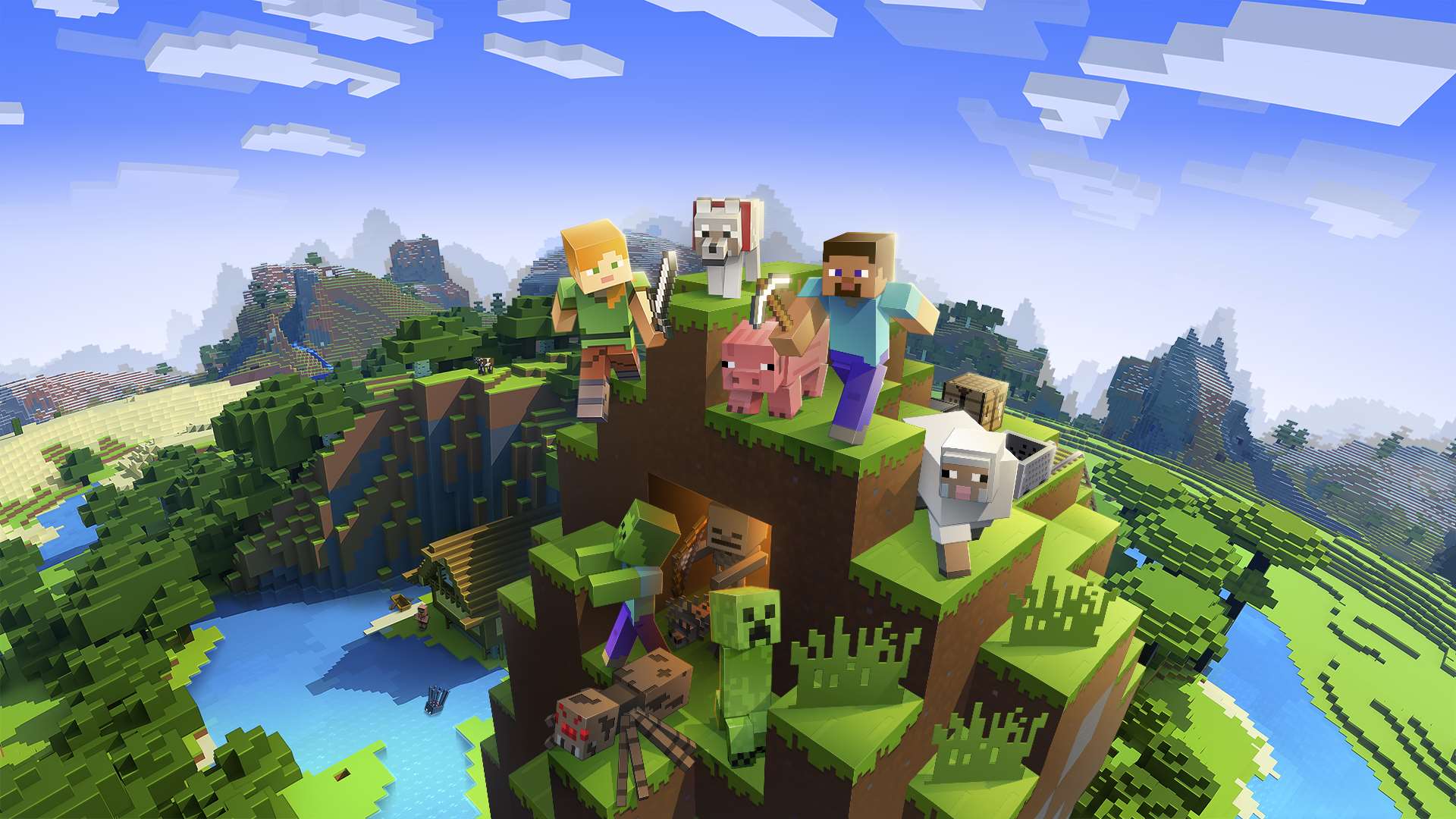
Minecraft
Price and specs
| Spec | Claude Sonnet 5.5 | Kimi K2.7 Code |
|---|---|---|
| Input price | $2/M tokens | $0.95/M tokens |
| Output price | $10/M tokens | $4/M tokens |
| Context window | 1.0M tokens | 262K tokens |
| Weights | Closed | Open |
| Free API (OpenRouter) | No | No |
| Released | Sep 2026 | Jun 2026 |
| At 10M a month | $20.00 | $9.50 |
Input tokens at list price. No caching, no batch discount.
Where to run it



Kimi K2.7 Code11 hosts


Per million tokens. Prices and uptime via OpenRouter, checked 6 Oct 2026.
Common questions
What is the difference between Claude Sonnet 5.5 and Kimi K2.7 Code?
Claude Sonnet 5.5 is developed by Anthropic while Kimi K2.7 Code is developed by Moonshot AI. Claude Sonnet 5.5 has a 1.0M token context window vs Kimi K2.7 Code's 262K. You can compare their actual outputs across 54 challenges on Rival to see how they differ in practice.
Which is better, Claude Sonnet 5.5 or Kimi K2.7 Code?
It depends on your use case. Claude Sonnet 5.5 and Kimi K2.7 Code each have strengths in different areas. Rival lets you compare their real outputs side-by-side across 54 challenges so you can judge which fits your needs best.
How much does Claude Sonnet 5.5 cost compared to Kimi K2.7 Code?
Claude Sonnet 5.5 costs $2/M input tokens and Kimi K2.7 Code costs $0.95/M input tokens. Kimi K2.7 Code is $1.05/M cheaper per input. Check their side-by-side outputs on Rival to see if the price difference is justified by quality.
How can I compare Claude Sonnet 5.5 and Kimi K2.7 Code on Rival?
This page shows a side-by-side comparison of Claude Sonnet 5.5 and Kimi K2.7 Code across shared challenges. You can vote on which model produced the better output in a blind duel. Browsing and voting are free. No account is needed to look; signing in only saves your votes and likes.
More comparisons
Against the newest arrivals
- Claude Sonnet 5.5 vs Ling 3.1 FlashLanded Oct 2026
- Kimi K2.7 Code vs Mistral Large 4Landed Oct 2026
- Claude Sonnet 5.5 vs GPT-6.1 SolLanded Sep 2026
- Kimi K2.7 Code vs Solar Mini 4Landed Sep 2026
- Claude Sonnet 5.5 vs Qwen3.8 Max PrimeLanded Sep 2026
- Kimi K2.7 Code vs GLM 5.3 PrimeLanded Sep 2026
- Claude Sonnet 5.5 vs Qwen3.8 Omni FlashLanded Sep 2026
- Kimi K2.7 Code vs Command A+Landed Sep 2026


Same lab, same size, long tail
- Claude Sonnet 5.5 vs Claude Opus 5Version compare
- Claude Sonnet 5.5 vs Claude Opus 5.5Same lab
- Kimi K2.7 Code vs Kimi K3Same lab
- Kimi K2.7 Code vs Kimi K2Same lab
- Claude Sonnet 5.5 vs Polaris AlphaSame size
- Claude Sonnet 5.5 vs Pony AlphaSame size
- Claude Sonnet 5.5 vs Quasar AlphaSame size
- Claude Sonnet 5.5 vs Qwen Plus 0728Same size