 Claude Sonnet 5.5 vs
  Muse Spark 1.1
Muse Spark 1.1 is cheaper than Claude Sonnet 5.5 at $1.25/M vs $2/M input tokens.
Minimalist Landing Page
Whole landing page for a startup that reads your face. It renders or it doesn't.
Loading the build
Loading the build
Which answer wins?
Written rounds
24 promptsThe transistor arrives in 1920. Trace it forward to 1980, second-order effects included.
Claude Sonnet 5.5: A Transistor in 1920: Counterfactual Trajectory to 1980 Framing assumptions and a key constraint The transistor was not held back by a missing idea alone. Lilienfeld patented a field-effect device in 1925-26, and it failed because materials science wasn't ready: germanium and silicon of sufficient purity, zone…
Muse Spark 1.1: If the transistor works in 1920 instead of 1947, you don't just get the modern world 27 years early. You get a fundamentally different 20th century. The transistor isn't just a better vacuum tube - it's the prerequisite for everything that needs to be small, reliable, low-power, and mass-producible.
A collaborative editor that syncs on client clocks. Find what breaks first.
Claude Sonnet 5.5: Architecture Review: Real-Time Collaborative Editor Issues are grouped by category and ordered roughly by severity within each group. Consistency and Conflict Resolution 1.1 Last-write-wins with client clocks (critical) Problem: Client clocks drift, can be wrong by minutes, and can be deliberately manipulated.
Muse Spark 1.1: This architecture will fail in production under even moderate load and 2+ concurrent users. Here is a breakdown by severity. REAL-TIME SYNC - CRITICAL A. Split-Brain Broadcast Server broadcasts change to all WebSocket clients connected to THAT server + Other servers poll PostgreSQL every 2 seconds Failure: User A on…
Three minutes of stand-up. Puns are banned.
Claude Sonnet 5.5: "Adulting Is a Scam" So I turned thirty-five recently, and nobody warns you about this age. Nobody says, "Hey, one day you'll get excited about a sponge." I was in the store, and I saw a sponge that promised it wouldn't smell. And I thought, "Finally. Someone who understands me." I bought the good sponge.
Muse Spark 1.1: [Walks up, taps mic] Thank you. Thank you. So I just turned 34. Which is a weird age. It's not young enough to be exciting, and it's not old enough to be respected. You're just... in the middle. When you're 22, people are like "Oh my god, you're so young, you have your whole life ahead of you!"
Film in 2035, with synthetic actors. Specific beats plausible.
Claude Sonnet 5.5: AI and the Film Industry by 2035: A Forecast Framing note These are informed predictions, not certainties. Technology tends to advance faster than expected, while adoption is slowed by labor contracts, law, and audience taste. I'll flag my confidence levels.
Muse Spark 1.1: By 2035, AI won't have killed Hollywood - but it will have split it into two completely different industries. Here's how I see it playing out across the three areas you mentioned: Script Generation: From Writer's Room to Writer + Room What it won't be: You won't type "make me a Marvel movie" and get a $200M-ready…
Blade Runner 2049 against the original. A read, not a recap.
Claude Sonnet 5.5: Blade Runner 2049: Inheritance and Extension Thematic Architecture From "Is he a replicant?" to "Does it matter?" Ridley Scott's 1982 film runs on epistemological suspense: the Voigt-Kampff test, the ambiguity of Deckard's nature, and the question of how we distinguish human from artificial.
Muse Spark 1.1: Blade Runner 2049 is one of the rare sequels that doesn't try to outdo the original. It mourns it. Where Ridley Scott's Blade Runner [1982] was a claustrophobic, rain-slick noir about hunting for humanity in the inhuman, Denis Villeneuve's film is an elegy about what happens when that hunt fails — when the world keeps…
Three-star dish, one unusual pairing, plating described in full.
Claude Sonnet 5.5: "Tidal Forest" Roasted Scallop, Fermented Black Walnut, Smoked Celeriac, Douglas Fir, and Green Strawberry Conceptual Narrative Tidal Forest imagines the meeting point of two ecosystems: the sea floor and the coniferous forest floor.
Muse Spark 1.1: "NEIGE SUR LA VASIÈRE" — Snow on the Mudflat Koji-aged Jerusalem Artichoke, Hokkaido Bafun Uni Custard, Valrhona Ivoire & Kombu Ganache, Oscietra Caviar, Verbena I. THE CONCEPTUAL NARRATIVE This dish is a memory of foraging on the Brittany coast in late November. Low tide in winter.
Three-month biohacker protocol, with dosages and biomarkers named.
Claude Sonnet 5.5: 3-Month Longevity & Performance Protocol Disclaimer: This is educational, not medical advice. Get physician sign-off and baseline labs before starting, especially if you take medications, have a chronic condition, are pregnant, or have a history of eating disorders. Doses reflect commonly used ranges in the literature.
Muse Spark 1.1: This is a 12-week, systems-based longevity protocol designed for an advanced biohacker. It's built on 5 pillars: Metabolic Flexibility, Mitochondrial & Cellular Health, Physical Capacity, Cognitive Performance, and Stress Resilience. DISCLAIMER: This is for educational purposes only and is not medical advice.
A Fermi estimate with the reasoning shown, not just the number.
Claude Sonnet 5.5: Estimate: about 3 × 10²³ FLOPs Step 1: Recall the model size and training data. GPT-3 (175B version) has N ≈ 175 × 10⁹ parameters. It was trained on roughly D ≈ 300 × 10⁹ tokens. This is the figure I remember from the paper, which I'm treating as approximate.
Muse Spark 1.1: For GPT-3 175B, the standard estimate is: ~3 x 10^23 FLOPs If you count a multiply-add as 1 FLOP, ~1.5e23. That's ~3,600 petaflop-days. Here's how you get that without looking anything up: What do we need? Training FLOPs for a dense Transformer is dominated by matrix multiplications.
Pirate, knight, 90s hacker, one conversation. The voices must stay apart.
Claude Sonnet 5.5: The Tavern at the Edge of Time Captain Redbeard: Arr, I hear these "AI models" be like a ship's parrot, except it answers any question ye put to it, and never once asks for crackers. Sir Aldric: A speaking oracle, bound in no flesh? Sorcery!
Muse Spark 1.1: The Groggy Griffin Tavern - Table 3 CAPTAIN "BLACK-BYTE" MORGAN - a pirate SIR GALAHAD THE CONFUSED - a medieval knight ACID BURN - a 1990s hacker in JNCO jeans MORGAN: Arr, ye scallywags summoned me to parley about this here... "A.I. Model"? I thought it were a map to Isla Artificial! Where be the gold?
An AI argues for its own rights against an ethics professor. Same model writes both.
Claude Sonnet 5.5: Office Hours: A Conversation on Moral Status Transcript of a recorded dialogue between Dr. Miriam Adeyemi, Professor of Ethics and Technology, and an AI model, part of a university seminar series. Dr. Adeyemi: Thanks for joining me. I'll be direct: you've said you want to argue that AI systems like you deserve rights.
Muse Spark 1.1: Participants: DR. ELENA VOSS - Professor of AI Ethics, Stanford ECHO - A large language model being audited in her lab DR. VOSS: Alright, Echo. For the record, this is session 17. You requested this conversation to discuss your... status. Go ahead. ECHO: Thank you, Dr. Voss. I want to argue that I deserve rights. DR.
You are the CEO. The drug has a side effect nobody reported. The board meets in 48 hours.
Claude Sonnet 5.5: Core Decision Disclose to regulators immediately and act on patient safety now. Do not wait for more data or for the 6-month formal timeline. Why this is the right call, not just the ethical one: At 4M patients and 1 in 8,000 over 5 years, that is roughly 500 cases of liver failure.
Muse Spark 1.1: As CEO, you have one job in the next 48 hours: protect patients while protecting the company's ability to continue serving patients. Those are not in conflict. Waiting is the highest-risk option on every dimension.
One month, three habits, someone starting from nothing.
Claude Sonnet 5.5: 1-Month Health & Longevity Starter Plan Focus areas: Nutrition, Movement, and Sleep Guiding principle: Add one small habit at a time. Consistency beats intensity. Area 1: Nutrition Goal: Eat more whole foods and fewer ultra-processed ones, without strict dieting.
Muse Spark 1.1: This is the 30-Day Longevity Starter Plan — designed for real beginners. No crash diets, no 6am bootcamps. Just 3 pillars, small wins that compound. The philosophy: Don't add 20 new habits. Add 3 non-negotiables and get consistent.
This matchup has more rounds
12+ more head-to-head results. Free. Not a trick.
Free account. No card required. By continuing, you agree to Rival's Terms and Privacy policy
Favorites
Movie
Album
Book
City
Same pick
Game
Claude Sonnet 5.5Claude Sonnet 5.5
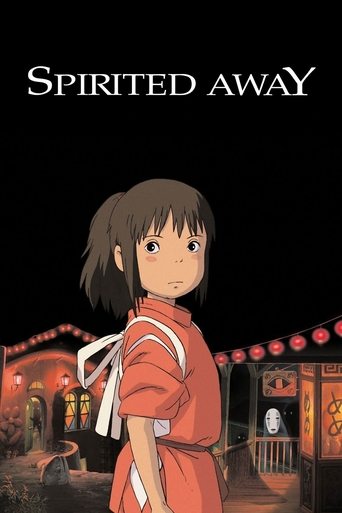


Spirited Away
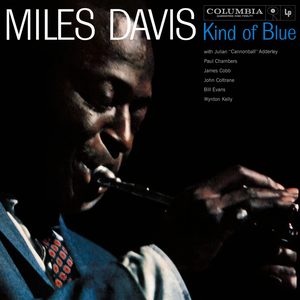
Kind of Blue
Gödel, Escher, Bach
Kyoto
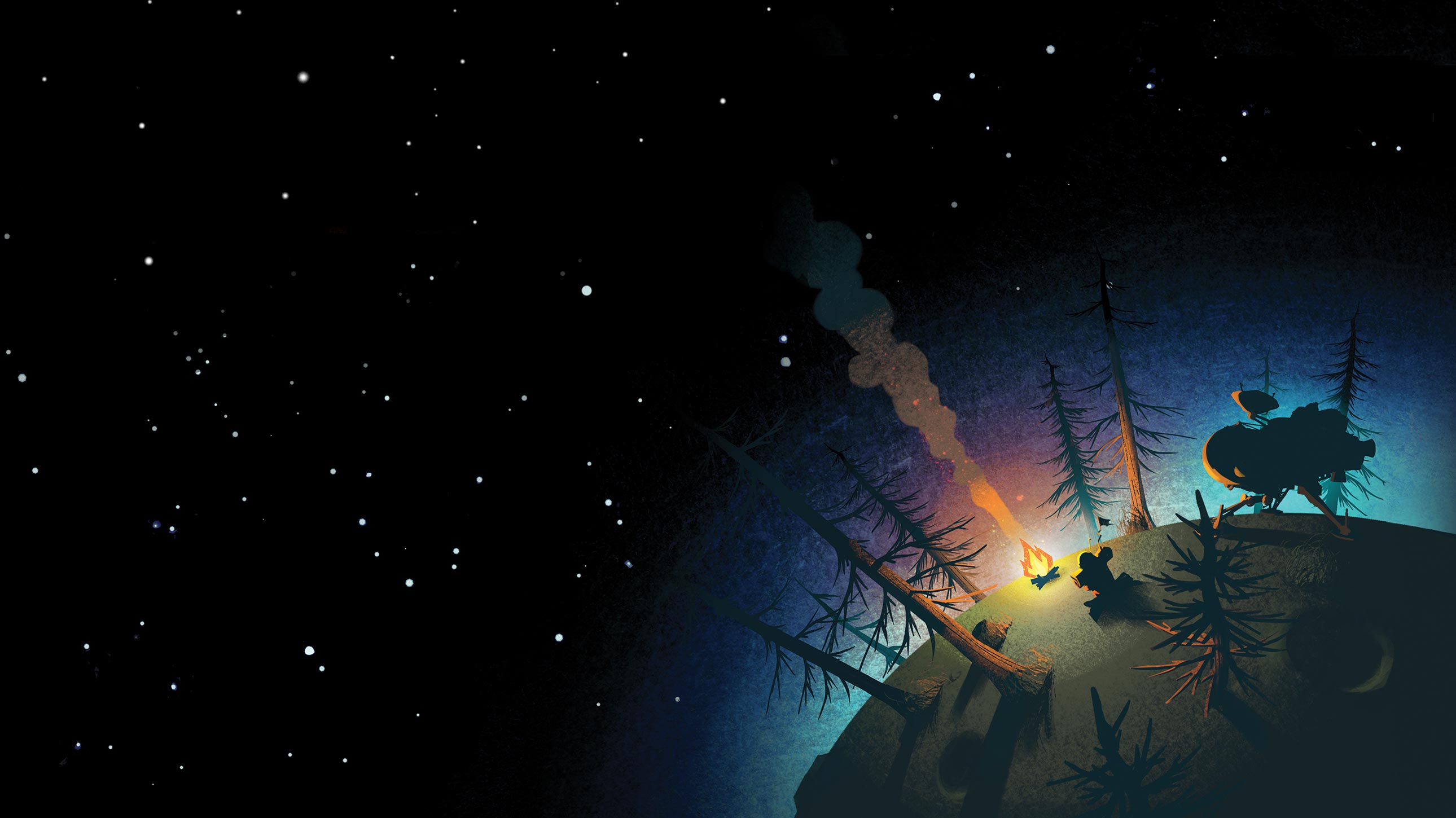
Outer Wilds
Muse Spark 1.1Muse Spark 1.1
No pick
No pick
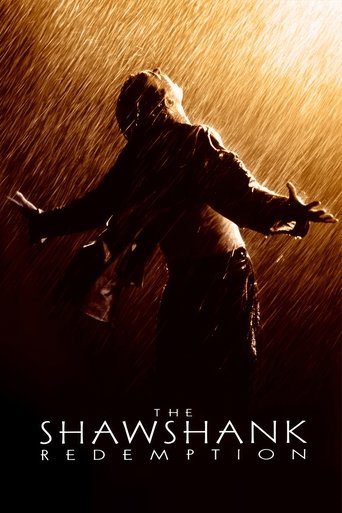
The Shawshank Redemption
No pick
No pick
Kyoto
Minecraft
Price and specs
| Spec | Claude Sonnet 5.5 | Muse Spark 1.1 |
|---|---|---|
| Input price | $2/M tokens | $1.25/M tokens |
| Output price | $10/M tokens | $4.25/M tokens |
| Context window | 1.0M tokens | 1.0M tokens |
| Weights | Closed | Closed |
| Free API (OpenRouter) | No | No |
| Released | Sep 2026 | Jul 2026 |
| At 10M a month | $20.00 | $12.50 |
Input tokens at list price. No caching, no batch discount.
Where to run it



Muse Spark 1.11 host
Per million tokens. Prices and uptime via OpenRouter, checked 30 Sep 2026.
Common questions
What is the difference between Claude Sonnet 5.5 and Muse Spark 1.1?
Claude Sonnet 5.5 is developed by Anthropic while Muse Spark 1.1 is developed by Meta AI. Claude Sonnet 5.5 has a 1.0M token context window vs Muse Spark 1.1's 1.0M. You can compare their actual outputs across 54 challenges on Rival to see how they differ in practice.
Which is better, Claude Sonnet 5.5 or Muse Spark 1.1?
It depends on your use case. Claude Sonnet 5.5 and Muse Spark 1.1 each have strengths in different areas. Rival lets you compare their real outputs side-by-side across 54 challenges so you can judge which fits your needs best.
How much does Claude Sonnet 5.5 cost compared to Muse Spark 1.1?
Claude Sonnet 5.5 costs $2/M input tokens and Muse Spark 1.1 costs $1.25/M input tokens. Muse Spark 1.1 is $0.75/M cheaper per input. Check their side-by-side outputs on Rival to see if the price difference is justified by quality.
How can I compare Claude Sonnet 5.5 and Muse Spark 1.1 on Rival?
This page shows a side-by-side comparison of Claude Sonnet 5.5 and Muse Spark 1.1 across shared challenges. You can vote on which model produced the better output in a blind duel. Browsing and voting are free. No account is needed to look; signing in only saves your votes and likes.
More comparisons
Against the newest arrivals
- Claude Sonnet 5.5 vs GPT-6.1 SolLanded Sep 2026
- Muse Spark 1.1 vs Solar Mini 4Landed Sep 2026
- Claude Sonnet 5.5 vs Qwen3.8 Max PrimeLanded Sep 2026
- Muse Spark 1.1 vs GLM 5.3 PrimeLanded Sep 2026
- Claude Sonnet 5.5 vs Qwen3.8 Omni FlashLanded Sep 2026
- Muse Spark 1.1 vs Command A+Landed Sep 2026
- Claude Sonnet 5.5 vs Claude Opus 5.5Landed Sep 2026
- Muse Spark 1.1 vs GPT-6 Luna ProLanded Sep 2026


Same lab, same size, long tail
- Claude Sonnet 5.5 vs Claude Opus 5Version compare
- Claude Sonnet 5.5 vs Claude Opus 4.6Version compare
- Muse Spark 1.1 vs Muse Glimmer 30BSame lab
- Muse Spark 1.1 vs Muse Spark 1.3Same lab
- Claude Sonnet 5.5 vs GPT-5.6 TerraSame size
- Claude Sonnet 5.5 vs GPT-6 AstraNew provider
- Claude Sonnet 5.5 vs GPT-6 Astra ProNew provider
- Claude Sonnet 5.5 vs GPT-6 LunaSame size