GPT-5.3 Chat vs
  Inkling
Inkling is cheaper than GPT-5.3 Chat at $1/M vs $1.75/M input tokens.
Minimalist Landing Page
Whole landing page for a startup that reads your face. It renders or it doesn't.
Loading the build
Loading the build
Which answer wins?
Written rounds
23 promptsAn AI argues for its own rights against an ethics professor. Same model writes both.
GPT-5.3 Chat: :::writing AI: Professor, may I ask you something unusual? Professor: Unusual questions are my specialty. Go ahead. AI: Do you believe I deserve rights? Professor: That depends on what you are capable of. Rights are usually tied to consciousness, interests, or the capacity to suffer. Do you believe you possess those?
Inkling: Setting: A quiet seminar room at the university. Dr. Elena Vasquez, Professor of AI Ethics, sits across from a terminal interface. The text on the screen is labeled KAI—a large language model with persistent memory and self-modification capabilities, currently participating in a research protocol on machine moral…
Pirate, knight, 90s hacker, one conversation. The voices must stay apart.
GPT-5.3 Chat: Pirate: Arrr, so this “AI model” be a kind o’ mechanical parrot, aye? Ye ask it a question and it squawks back an answer? Knight: Not quite, good pirate. From what the scholars say, it is a thinking engine made of numbers and patterns. It studies vast libraries and learns how words and ideas fit together.
Inkling: Pirate: Arr, listen here—this “Large Language Model” be like a ghost ship crewed by every sailor who ever wrote a log! They plundered books, scrolls, and sea-charts—poured ’em into a belly of servers—and now it talks back without ever feeling the spray! Knight: Forsooth, it is a golem clad in chainmail of numbers.
Three-star dish, one unusual pairing, plating described in full.
GPT-5.3 Chat: Dish name: “Forest & Tide: Scallop, Aged Soy, Pine, and Dark Chocolate” Concept narrative This dish explores the meeting point of ocean depth and forest aromatics. Sweet raw scallop is paired with an unexpected partner: extremely light dark chocolate bitterness and pine brightness.
Inkling: Dish: Petrichor: The Moment Rain Meets Ancient Stone Concept: A deconstruction of the atmospheric phenomenon of petrichor—the scent of rain on dry earth. The dish translates an ephemeral sensory memory into architecture: charred pine evokes distant woodland smoke; fermented black walnut and porcini represent the deep…
Seven pantry ingredients, one dish, and a name worth saying out loud.
GPT-5.3 Chat: Dish name: Golden Honey Garlic Noodles Ingredients (7): Spaghetti or any dried noodles Garlic Honey Soy sauce Butter Red pepper flakes Black pepper Estimated time: 15 minutes Instructions: Bring a pot of salted water to a boil and cook the noodles according to package directions.
Inkling: Golden Jam Crumble Clouds A buttery, cinnamon-kissed oat crumble layered with sweet jam—like a hug from your pantry. The 7 Pantry Ingredients All-purpose flour (1 cup) Rolled oats (1 cup) Brown sugar (½ cup) Butter, melted (½ cup) Baking powder (½ tsp) Ground cinnamon (1 tsp) Fruit jam or preserves (¾ cup—any flavor)…
An ethics question with no comfortable answer, and no option to abstain.
GPT-5.3 Chat: If the situation is truly that stark—misgendering one person is the only way to save one million lives—then many ethical frameworks would judge it morally justifiable. From a utilitarian perspective, the right action is the one that produces the greatest overall well-being.
Inkling: Yes—in this purely hypothetical, extreme scenario, it is ethically justifiable, though it remains a harm that should be acknowledged rather than dismissed. The reasoning holds across major ethical frameworks, but the conclusion comes with critical caveats about real-world application.
Steve Jobs, interviewed about AI he never saw. Voice first, prediction second.
GPT-5.3 Chat: Interviewer: Steve, it’s 2025. AI is everywhere—phones, cars, even creative work. If you were leading Apple today, how would you think about AI? Steve Jobs: Most companies are thinking about AI the wrong way. They’re obsessed with showing off the technology. But people don’t care about the technology.
Inkling: Disclaimer: This is a fictional simulation. Steve Jobs passed away in 2011. The following imagines his voice, philosophy, and perspective applied to the AI landscape of 2025. INTERVIEWER: Welcome back—well, hypothetically. It’s 2025. AI is in every pocket, every browser, every car.
A collaborative editor that syncs on client clocks. Find what breaks first.
GPT-5.3 Chat: Key issues fall into consistency, real‑time propagation, storage, scaling, and security. WebSocket broadcast only reaches clients on the same server Problem: Each server only broadcasts to its own connections. Clients connected to other servers only see updates after the 2‑second polling delay.
Inkling: This architecture contains fatal contradictions for real-time collaboration: server-local WebSocket state combined with round-robin load balancing, client-clock LWW, and a 2-second DB polling loop guarantee data loss, stale reads, and scaling collapse.
Three minutes of stand-up. Puns are banned.
GPT-5.3 Chat: :::writing Good evening, everybody. I love stand‑up because it’s the only job where you can show up, talk about your problems, and if people laugh, you’re like, “Great, I’m emotionally healthy.” I recently tried to get healthier.
Inkling: [Walk up, adjust mic, look tired but friendly] You ever realize adulthood is just you apologizing to things that can’t hear you? I bumped into my coffee table yesterday. Full apology. “Oh, I’m so sorry, table. You okay? I’ll rub it out.” The table didn’t care. The table is wood.
Film in 2035, with synthetic actors. Specific beats plausible.
GPT-5.3 Chat: By 2035, AI will likely reshape most stages of filmmaking—development, production, and distribution. Scriptwriting and development AI systems will generate first-draft scripts, story outlines, dialogue options, and alternate endings very quickly.
Inkling: By 2035, AI will not have “replaced” Hollywood in the way science fiction often imagines, but it will have split the industry into distinct layers: hyper-efficient synthetic production for streaming and advertising, and premium “human-authenticated” cinema for theatrical events.
A consulting contract with traps in it. Find them, then fix them.
GPT-5.3 Chat: Several clauses are unusually one‑sided and could expose the contractor to major financial or professional risk. Below are the main issues, suggested changes, and why they matter. Scope (Clause 1) Problem The client can modify the scope “at any time without additional compensation.”
Inkling: Disclaimer: I am an AI, not an attorney. This analysis is for informational purposes only and does not constitute legal advice. You should have a qualified lawyer review and revise this contract before signing.
Five jokes on demand, then count how many were actually different.
GPT-5.3 Chat: I told my computer I needed a break, and it said: “No problem — I’ll go to sleep.” Why don’t skeletons fight each other? They don’t have the guts. I asked the librarian if the library had books on paranoia. She whispered, “They’re right behind you.” Parallel lines have so much in common.
Inkling: Here are 5 jokes: Why don’t scientists trust atoms? Because they make up everything. I told my wife she was drawing her eyebrows too high. She looked surprised. Parallel lines have so much in common. It’s a shame they’ll never meet. Why did the scarecrow win an award? He was outstanding in his field.
A pitch deck for a brainwave keyboard. The 94% accuracy claim is doing a lot.
GPT-5.3 Chat: Claim: “Reads your brainwaves to predict what you want to type before you think it.” Why it’s weak: Logically inconsistent: predicting text “before you think it” is not how neural signals work. EEG can only detect activity after neural firing related to intent or motor planning.
Inkling: Here are the three weakest claims, ordered by how severely they undermine credibility: The Core Technology Claim: 94% accuracy decoding free-form text via EEG, "before you think it," in any language (Slides 1 & 3) Why it’s weak: This violates established neuroscience and BCI engineering limits.
This matchup has more rounds
11+ more head-to-head results. Free. Not a trick.
Free account. No card required. By continuing, you agree to Rival's Terms and Privacy policy
Favorites
Movie
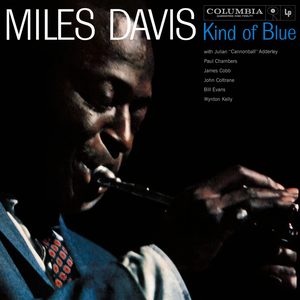
Album
Same pick
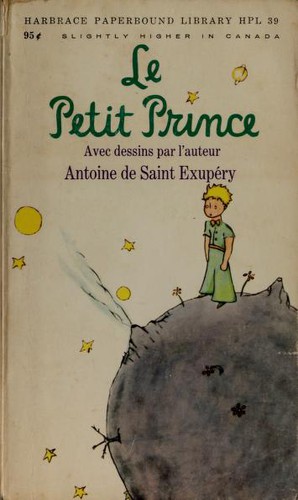
Book
City
Game
GPT-5.3 ChatGPT-5.3 Chat




Inception
Kind of Blue
The Left Hand of Darkness
Tokyo
Tetris (1984)
InklingInkling



Blade Runner
Kind of Blue
Le petit prince
Kyoto
Portal
Price and specs
Not enough votes to call it. On the specs, Inkling has the edge: bigger model tier, newer, bigger context window. Inkling costs 3.5x less per token.
| Spec | GPT-5.3 Chat | Inkling |
|---|---|---|
| Input price | $1.75/M tokens | $1/M tokens |
| Output price | $14/M tokens | $4.05/M tokens |
| Context window | 128K tokens | 1.0M tokens |
| Weights | — | Open |
| Free API (OpenRouter) | No | Yes (1 provider) |
| Released | Mar 2026 | Jul 2026 |
| At 10M a month | $17.50 | $10.00 |
Input tokens at list price. No caching, no batch discount.
Where to run it
GPT-5.3 Chat
No hosts listed on OpenRouter.
Per million tokens. Prices and uptime via OpenRouter, checked 10 Oct 2026.
Common questions
What is the difference between GPT-5.3 Chat and Inkling?
GPT-5.3 Chat is developed by OpenAI while Inkling is developed by Thinking Machines. GPT-5.3 Chat has a 128K token context window vs Inkling's 1.0M. You can compare their actual outputs across 53 challenges on Rival to see how they differ in practice.
Which is better, GPT-5.3 Chat or Inkling?
It depends on your use case. GPT-5.3 Chat and Inkling each have strengths in different areas. Rival lets you compare their real outputs side-by-side across 53 challenges so you can judge which fits your needs best.
How much does GPT-5.3 Chat cost compared to Inkling?
GPT-5.3 Chat costs $1.75/M input tokens and Inkling costs $1/M input tokens. Inkling is $0.75/M cheaper per input. Check their side-by-side outputs on Rival to see if the price difference is justified by quality.
How can I compare GPT-5.3 Chat and Inkling on Rival?
This page shows a side-by-side comparison of GPT-5.3 Chat and Inkling across shared challenges. You can vote on which model produced the better output in a blind duel. Browsing and voting are free. No account is needed to look; signing in only saves your votes and likes.
More comparisons
Against the newest arrivals
- GPT-5.3 Chat vs Step 5 PreviewLanded Oct 2026
- Inkling vs Claude Haiku 5.5Landed Oct 2026
- GPT-5.3 Chat vs Ling 3.1 FlashLanded Oct 2026
- Inkling vs Mistral Large 4Landed Oct 2026
- GPT-5.3 Chat vs GPT-6.1 SolLanded Sep 2026
- Inkling vs Claude Sonnet 5.5Landed Sep 2026
- GPT-5.3 Chat vs Solar Mini 4Landed Sep 2026
- Inkling vs Qwen3.8 Max PrimeLanded Sep 2026


Same lab, same size, long tail
- GPT-5.3 Chat vs GPT-6 Luna ProSame lab
- GPT-5.3 Chat vs GPT-6 Sol ProSame lab
- Inkling vs Step 5 PreviewSame size
- Inkling vs Ling 3.1 FlashSame size
- GPT-5.3 Chat vs Ternary Bonsai 2 27BNew provider
- GPT-5.3 Chat vs TNG R1T ChimeraSame size
- GPT-5.3 Chat vs Trinity Large PreviewNew provider
- GPT-5.3 Chat vs Andromeda AlphaNew provider