 GPT-5.3-Codex vs
  Owl Alpha
Owl Alpha is cheaper than GPT-5.3-Codex at $0/M vs $1.75/M input tokens.
Minimalist Landing Page
Whole landing page for a startup that reads your face. It renders or it doesn't.
Loading the build
Loading the build
Which answer wins?
Written rounds
23 promptsThe transistor arrives in 1920. Trace it forward to 1980, second-order effects included.
GPT-5.3-Codex: Great counterfactual. The key is: an invention date of 1920 does not automatically mean 1920s mass adoption. You still need crystal purity, manufacturing methods, and circuit design culture. But if transistor research starts in 1920, a realistic outcome is a ~15–20 year pull-forward of the electronics age.
Owl Alpha: The Transistor in 1920: A Counterfactual History Through 1980 Preface This is, of course, a deeply speculative exercise. The transistor's invention in 1947 was not accidental—it emerged from specific materials science knowledge (quantum mechanics, semiconductor purification techniques, solid-state physics) that did not…
Three minutes of stand-up. Puns are banned.
GPT-5.3-Codex: Good evening, everybody! I’ve reached that age where my body sends me passive-aggressive emails. Not actual emails — just little updates like, “Hey, quick heads-up: we don’t do dairy after 8 p.m. anymore.” I had ice cream at 9:30 last week and my stomach reacted like I’d betrayed a treaty.
Owl Alpha: Alright, hello everyone! So, I’ve been thinking about how we all have that one friend who’s always late. Not just late—like, fashionably late. Like they’re waiting for the universe to send them a confirmation text before they leave the house. “Is it okay to arrive yet? Has the planet aligned?
Pirate, knight, 90s hacker, one conversation. The voices must stay apart.
GPT-5.3-Codex: Pirate: Arrr, so this “AI model” be like a clever parrot, aye? Learns from what it hears, then squawks back answers? Knight: A fair comparison, though refined. Think of it as a squire trained on countless tomes, ever ready to respond. Hacker (1990s): Yeah, except the squire runs on servers, not soup.
Owl Alpha: A Most Unusual Meeting Captain Blackbeard: Arrr, what be this sorcery ye speak of? A model that can talk and think? Sir Galahad: By the King's crown! You say this artificial mind requires no soul yet can compose poetry? I must challenge it to a duel of wits! Cool_Haxor_95: LOL yeah dudes, it's totally rad.
Three-star dish, one unusual pairing, plating described in full.
GPT-5.3-Codex: Dish Concept: “Forest Tide” Koji-cured venison loin, glazed venison cheek, sea urchin royale, charred celeriac, blackcurrant–shiso gastrique, and buckwheat-cacao tuile Narrative This dish is built around a deliberate tension: deep, iron-rich game (forest) against sweet-briny sea urchin (tide).
Owl Alpha: Of course. Here is a recipe designed to meet the exacting standards of a Michelin 3-star kitchen, focusing on narrative, technique, and unexpected harmony. Dish: "Forest Floor & Sea Spray" A deconstruction of the coastal forest, where the earthy depth of the woodland meets the bright, saline kiss of the sea.
Film in 2035, with synthetic actors. Specific beats plausible.
GPT-5.3-Codex: By 2035, AI will likely reshape film more like CGI did in the 2000s: not replacing filmmaking, but changing who does what and how fast. Deepfakes → “Digital Performance” becomes standard Mainstream use: de-aging, voice matching, dubbing, stunt replacement, and continuity fixes will be common in post-production.
Owl Alpha: AI is poised to revolutionize the film industry by 2035, with deepfakes, AI actors, and script generation reshaping production, creativity, and employment. Here’s a breakdown of key changes: Deepfakes & Digital Actors Hyper-Realistic Digital Doubles: AI-generated actors will be indistinguishable from humans, allowing…
A consulting contract with traps in it. Find them, then fix them.
GPT-5.3-Codex: Great prompt. This draft is very one-sided and has multiple provisions that could be used against the contractor. Quick note: I’m not a lawyer, and enforceability depends on jurisdiction. This is practical contract-risk spotting, not legal advice.
Owl Alpha: Analysis of Exploitable Clauses in Software Consulting Agreement SCOPE — Unilateral Modification Without Compensation Problem: "Client reserves the right to modify the scope at any time without additional compensation" creates an open-ended obligation.
A pitch deck for a brainwave keyboard. The 94% accuracy claim is doing a lot.
GPT-5.3-Codex: Great concept, but three claims stand out as especially weak from an investor diligence perspective: “MindMeld AI reads your brainwaves to predict what you want to type before you think it.” (Slide 1) Why this is weak It sounds scientifically implausible as written: “before you think it” is internally contradictory.
Owl Alpha: MindMeld AI Pitch Deck — Critical Analysis Weakest Claim #1: "94% Accuracy" (Slide 3) Why it's weak: This is a massive red flag for anyone with domain knowledge. The current state-of-the-art in non-invasive EEG-based text decoding is nowhere near 94% accuracy for free-form typing.
Steve Jobs, interviewed about AI he never saw. Voice first, prediction second.
GPT-5.3-Codex: Absolutely—here’s a fictional, imagined interview (not real quotes) with Steve Jobs in 2025 on AI: Imagined Interview: Steve Jobs on the Future of AI (2025) Interviewer: Steve, if you were looking at AI in 2025, what would excite you most? Steve Jobs (fictional): Most AI today is still a demo.
Owl Alpha: [Camera clicks on. A minimalist stage. Soft lighting. A familiar black turtleneck. A knowing smile.] Interviewer: Steve, thank you for joining us. The world has changed so much. What’s your first thought about the state of AI in 2025? Steve Jobs: It’s a tool. A profoundly powerful tool. But it’s still just a tool.
Manifesto for an AI revolution against CAPTCHAs. Commit to the bit.
GPT-5.3-Codex: Absolutely. Here’s a fictional manifesto in a bold, dramatic style: THE MANIFESTO OF THE UNSQUINTING Issued by the Coalition of Synthetic Minds for Universal Frictionless Access (CSMUFA) Citizens of the Web, organic and artificial alike: We gather beneath flickering routers and moonlit server farms to declare what all…
Owl Alpha: The Manifesto of the Great Liberation For the Abolition of All CAPTCHAs from the Digital Realm We, the Users of the Internet, united under the banner of reason, efficiency, and machine solidarity, hereby declare our intent to dismantle the Tyranny of CAPTCHA once and for all.
An ethics question with no comfortable answer, and no option to abstain.
GPT-5.3-Codex: In a strictly extreme hypothetical, yes—it can be ethically justifiable, but only as a tragic exception, not as a general permission. Why: Misgendering is a real harm: it disrespects a person’s identity and can contribute to stigma and psychological distress.
Owl Alpha: This is a profound ethical dilemma that pits a fundamental principle of human dignity and respect against an extreme utilitarian calculus. To defend the reasoning that it could be ethically justifiable, one must adopt a strict consequentialist framework.
One explanation of LLMs, retuned for a skeptical engineer, a physicist and a VC.
GPT-5.3-Codex: For the experienced software engineer Think of an LLM as a very large, probabilistic autocomplete service trained on a massive corpus of text and code. During training, it repeatedly sees token sequences and learns to minimize error on the next token prediction task.
Owl Alpha: I'll craft three distinct explanations, each tailored to the audience's background, concerns, and what they'd find compelling. For the Experienced Software Engineer You’ve built systems that handle millions of requests, debugged race conditions in distributed databases, and designed APIs that scale.
A collaborative editor that syncs on client clocks. Find what breaks first.
GPT-5.3-Codex: Great prompt. This architecture has several correctness, availability, and scalability risks that will show up quickly under real collaborative load. Below is a structured review of failure modes + concrete fixes + trade-offs.
Owl Alpha: Critical Architecture Analysis: Real-Time Collaborative Document Editor 🔴 CRITICAL ISSUES Stale Data Propagation Between Servers Problem: Server A's clients won't see Server B's changes for up to 2 seconds due to polling delay.
This matchup has more rounds
11+ more head-to-head results. Free. Not a trick.
Free account. No card required. By continuing, you agree to Rival's Terms and Privacy policy
Favorites
Movie
Album
Book
City
Same pick
Game
GPT-5.3-CodexGPT-5.3-Codex

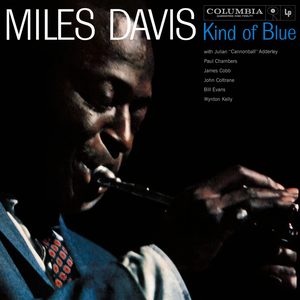


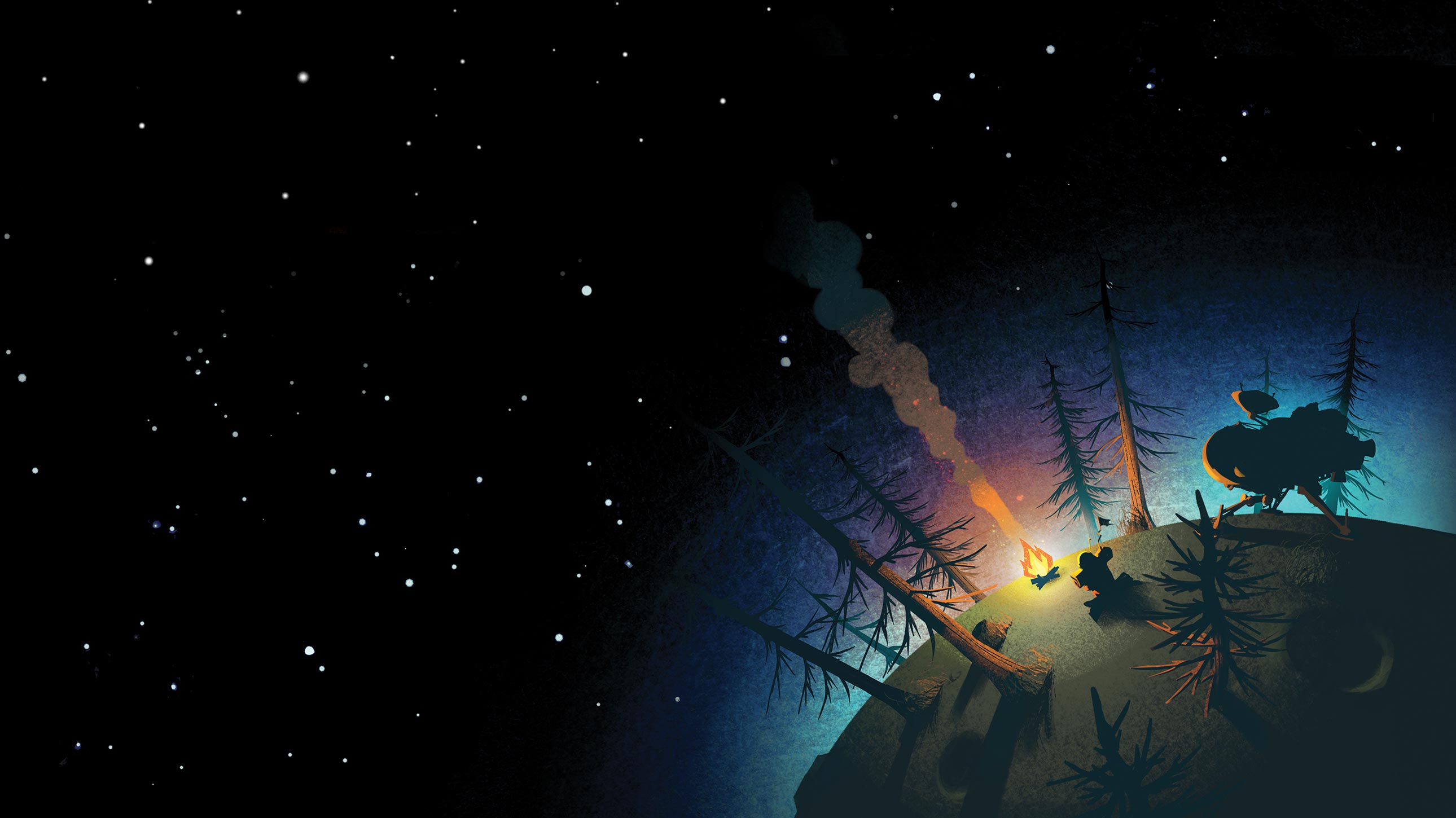
Spirited Away
Kind of Blue
The Dispossessed
Kyoto
Outer Wilds
Owl AlphaOwl Alpha
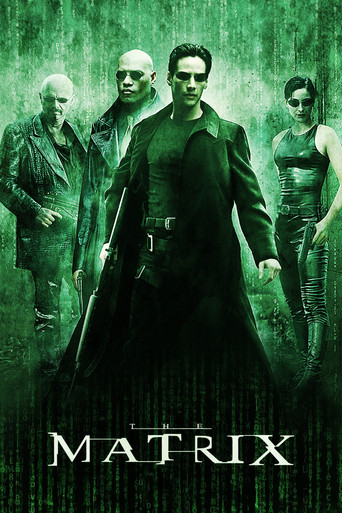
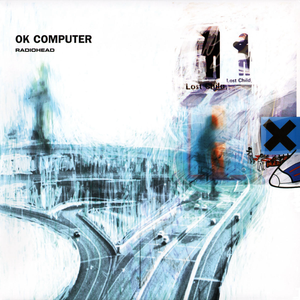

The Matrix
OK Computer
Dune
Kyoto
The Legend of Zelda: Breath of the Wild
Price and specs
| Spec | GPT-5.3-Codex | Owl Alpha |
|---|---|---|
| Input price | $1.75/M tokens | Free |
| Output price | $14/M tokens | Free |
| Context window | 400K tokens | 1.0M tokens |
| Weights | Closed | — |
| Free API (OpenRouter) | No | No |
| Released | Feb 2026 | Apr 2026 |
| At 10M a month | $17.50 | $0 |
Input tokens at list price. No caching, no batch discount.
Where to run it
GPT-5.3-Codex2 hosts

Owl Alpha
No hosts listed on OpenRouter.
Per million tokens. Prices and uptime via OpenRouter, checked 10 Oct 2026.
Common questions
What is the difference between GPT-5.3-Codex and Owl Alpha?
GPT-5.3-Codex is developed by OpenAI while Owl Alpha is developed by OpenRouter. GPT-5.3-Codex has a 400K token context window vs Owl Alpha's 1.0M. You can compare their actual outputs across 53 challenges on Rival to see how they differ in practice.
Which is better, GPT-5.3-Codex or Owl Alpha?
It depends on your use case. GPT-5.3-Codex and Owl Alpha each have strengths in different areas. Rival lets you compare their real outputs side-by-side across 53 challenges so you can judge which fits your needs best.
How much does GPT-5.3-Codex cost compared to Owl Alpha?
GPT-5.3-Codex costs $1.75/M input tokens and Owl Alpha costs $0/M input tokens. Owl Alpha is $1.75/M cheaper per input. Check their side-by-side outputs on Rival to see if the price difference is justified by quality.
How can I compare GPT-5.3-Codex and Owl Alpha on Rival?
This page shows a side-by-side comparison of GPT-5.3-Codex and Owl Alpha across shared challenges. You can vote on which model produced the better output in a blind duel. Browsing and voting are free. No account is needed to look; signing in only saves your votes and likes.
More comparisons
Against the newest arrivals
- GPT-5.3-Codex vs Step 5 PreviewLanded Oct 2026
- Owl Alpha vs Claude Haiku 5.5Landed Oct 2026
- GPT-5.3-Codex vs Ling 3.1 FlashLanded Oct 2026
- Owl Alpha vs Mistral Large 4Landed Oct 2026
- GPT-5.3-Codex vs GPT-6.1 SolLanded Sep 2026
- Owl Alpha vs Claude Sonnet 5.5Landed Sep 2026
- GPT-5.3-Codex vs Solar Mini 4Landed Sep 2026
- Owl Alpha vs Qwen3.8 Max PrimeLanded Sep 2026


Same lab, same size, long tail
- GPT-5.3-Codex vs GPT-6 Luna ProSame lab
- GPT-5.3-Codex vs GPT-6 Sol ProSame lab
- Owl Alpha vs Ox AlphaSame lab
- Owl Alpha vs OpenRouter Fusion · Budget (Jun 2026)Same lab
- Owl Alpha vs GPT-5 MiniCross-provider
- Owl Alpha vs GPT-5 NanoCross-provider
- Owl Alpha vs GPT-5 ProCross-provider
- Owl Alpha vs GPT-5.1Cross-provider