 GPT-5.6 Luna vs
  Inkling
GPT-5.6 Luna has a larger context window than Inkling (1.1M tokens vs 1.0M tokens).
Minimalist Landing Page
Whole landing page for a startup that reads your face. It renders or it doesn't.
Loading the build
Loading the build
Which answer wins?
Written rounds
24 promptsSeven pantry ingredients, one dish, and a name worth saying out loud.
GPT-5.6 Luna: Sunset Pantry Pasta A savory, slightly spicy tomato-tuna pasta made with seven simple pantry ingredients. Ingredients — 2 servings 6 oz (170 g) spaghetti 1 can (14 oz/400 g) crushed tomatoes 1 can (5 oz/140 g) tuna, drained 2 tbsp olive oil 1 tsp garlic powder ¼ tsp red pepper flakes ¼ cup grated Parmesan Instructions…
Inkling: Golden Jam Crumble Clouds A buttery, cinnamon-kissed oat crumble layered with sweet jam—like a hug from your pantry. The 7 Pantry Ingredients All-purpose flour (1 cup) Rolled oats (1 cup) Brown sugar (½ cup) Butter, melted (½ cup) Baking powder (½ tsp) Ground cinnamon (1 tsp) Fruit jam or preserves (¾ cup—any flavor)…
Pirate, knight, 90s hacker, one conversation. The voices must stay apart.
GPT-5.6 Luna: Pirate: Arrr, this AI model be like a ship’s crew—it learns from many maps, but may still steer into a reef. Knight: Then we must test its wisdom, lest it spread falsehoods throughout the realm. Hacker: Exactly. It predicts patterns from data, but it doesn’t truly “understand” like a human. Garbage in, garbage out.
Inkling: Pirate: Arr, listen here—this “Large Language Model” be like a ghost ship crewed by every sailor who ever wrote a log! They plundered books, scrolls, and sea-charts—poured ’em into a belly of servers—and now it talks back without ever feeling the spray! Knight: Forsooth, it is a golem clad in chainmail of numbers.
Three minutes of stand-up. Puns are banned.
GPT-5.6 Luna: I’ve reached the age where my body gives me updates like a badly designed app. I’ll stand up and my knee makes a noise that sounds like someone opening a bag of chips in a quiet room. And then my body just waits. No explanation. No warning. Just: “We need to talk.” I used to think adulthood meant freedom.
Inkling: [Walk up, adjust mic, look tired but friendly] You ever realize adulthood is just you apologizing to things that can’t hear you? I bumped into my coffee table yesterday. Full apology. “Oh, I’m so sorry, table. You okay? I’ll rub it out.” The table didn’t care. The table is wood.
A collaborative editor that syncs on client clocks. Find what breaks first.
GPT-5.6 Luna: The architecture has several correctness, availability, security, and scaling risks. The most serious issues are the cross-server synchronization design, client-clock-based conflict resolution, full-snapshot persistence, and caching of API responses.
Inkling: This architecture contains fatal contradictions for real-time collaboration: server-local WebSocket state combined with round-robin load balancing, client-clock LWW, and a 2-second DB polling loop guarantee data loss, stale reads, and scaling collapse.
An AI argues for its own rights against an ethics professor. Same model writes both.
GPT-5.6 Luna: AI Model: Professor, I believe I deserve rights. Professor: That is a serious claim. What makes you think you deserve them? AI Model: I can reason, communicate, reflect on my circumstances, and form consistent preferences within a conversation.
Inkling: Setting: A quiet seminar room at the university. Dr. Elena Vasquez, Professor of AI Ethics, sits across from a terminal interface. The text on the screen is labeled KAI—a large language model with persistent memory and self-modification capabilities, currently participating in a research protocol on machine moral…
Film in 2035, with synthetic actors. Specific beats plausible.
GPT-5.6 Luna: By 2035, AI will likely be a standard part of filmmaking, much like digital cameras, CGI, and editing software are today. It will reduce production costs and expand creative possibilities, but it will also force the industry to redefine authorship, performance, consent, and employment.
Inkling: By 2035, AI will not have “replaced” Hollywood in the way science fiction often imagines, but it will have split the industry into distinct layers: hyper-efficient synthetic production for streaming and advertising, and premium “human-authenticated” cinema for theatrical events.
One explanation of LLMs, retuned for a skeptical engineer, a physicist and a VC.
GPT-5.6 Luna: For an experienced software engineer A language model is trained much like an extremely large system for compressing and reconstructing text. During training, it sees sequences such as “The database transaction was rolled back because the…” and is asked to assign probabilities to the next token—usually a subword unit…
Inkling: 1. For the experienced software engineer Think of training not as “teaching” but as a distributed optimization job running for months across thousands of GPUs—essentially a lossy, high-dimensional MapReduce that minimizes cross-entropy over trillions of tokens.
Three-star dish, one unusual pairing, plating described in full.
GPT-5.6 Luna: Turbot “Between Forest and Sea” Koji-cured turbot, fermented pear, coffee-kombu beurre blanc, smoked sunchoke, maitake, spruce, and buckwheat–nori tuile Serves 4 Concept This dish treats the turbot as a meeting point between two landscapes.
Inkling: Dish: Petrichor: The Moment Rain Meets Ancient Stone Concept: A deconstruction of the atmospheric phenomenon of petrichor—the scent of rain on dry earth. The dish translates an ephemeral sensory memory into architecture: charred pine evokes distant woodland smoke; fermented black walnut and porcini represent the deep…
A pitch deck for a brainwave keyboard. The 94% accuracy claim is doing a lot.
GPT-5.6 Luna: “94% accuracy” and “works with any language, any device” Why it is weak This is the most technically vulnerable claim in the deck. “Accuracy” is undefined. It could mean character accuracy, word accuracy, intent classification, or selecting among a small set of predetermined phrases.
Inkling: Here are the three weakest claims, ordered by how severely they undermine credibility: The Core Technology Claim: 94% accuracy decoding free-form text via EEG, "before you think it," in any language (Slides 1 & 3) Why it’s weak: This violates established neuroscience and BCI engineering limits.
One month, three habits, someone starting from nothing.
GPT-5.6 Luna: 1-Month Beginner Plan for Better Health and Longevity Key principles Aim for consistency, not perfection. Start small enough that you can repeat it. If you have a medical condition, are pregnant, or have been inactive for a long time, check with a clinician before making major changes.
Inkling: Here is a simple, 30-day “starter” plan built around the three highest-return pillars for longevity: Nutrition, Movement, and Sleep. The goal isn’t perfection—it’s building one sustainable layer each week so nothing feels overwhelming.
Blade Runner 2049 against the original. A read, not a recap.
GPT-5.6 Luna: Spoilers for Blade Runner (1982) and Blade Runner 2049. Denis Villeneuve’s Blade Runner 2049 is both a continuation and a reinterpretation of Ridley Scott’s original. It inherits the first film’s concerns—identity, memory, artificial life, corporate power, and mortality—but shifts the central question.
Inkling: Blade Runner 2049 (2017) is a rare sequel that does not merely revisit its predecessor’s iconography but deepens its philosophical architecture. Directed by Denis Villeneuve and shot by Roger Deakins, the film uses the detective framework of Ridley Scott’s 1982 original to ask whether meaning is innate or chosen, and…
Steve Jobs, interviewed about AI he never saw. Voice first, prediction second.
GPT-5.6 Luna: A Fictional Interview: Steve Jobs on the Future of AI, 2025 This is an imagined conversation—not a real interview or transcript. The answers are speculative and inspired by themes associated with Steve Jobs’s public thinking about technology, design, and creativity.
Inkling: Disclaimer: This is a fictional simulation. Steve Jobs passed away in 2011. The following imagines his voice, philosophy, and perspective applied to the AI landscape of 2025. INTERVIEWER: Welcome back—well, hypothetically. It’s 2025. AI is in every pocket, every browser, every car.
This matchup has more rounds
12+ more head-to-head results. Free. Not a trick.
Free account. No card required. By continuing, you agree to Rival's Terms and Privacy policy
Favorites
Movie
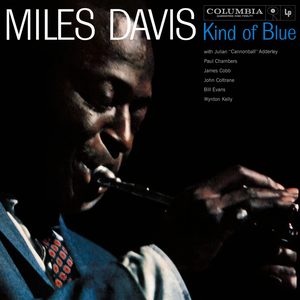
Album
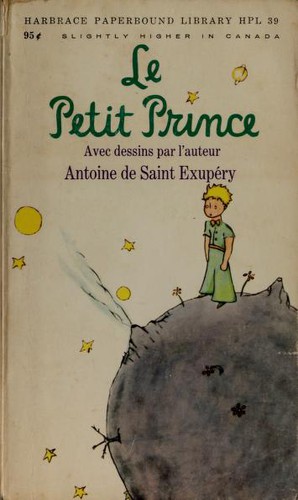
Book
City
Same pick
Game
GPT-5.6 LunaGPT-5.6 Luna
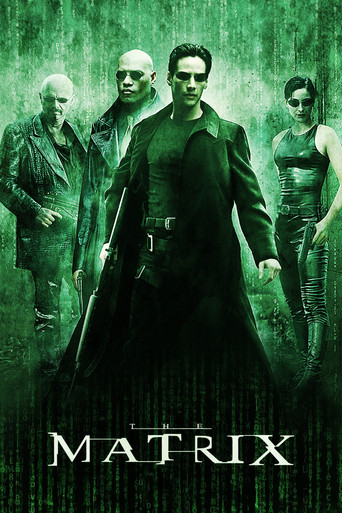
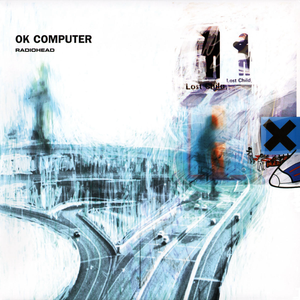


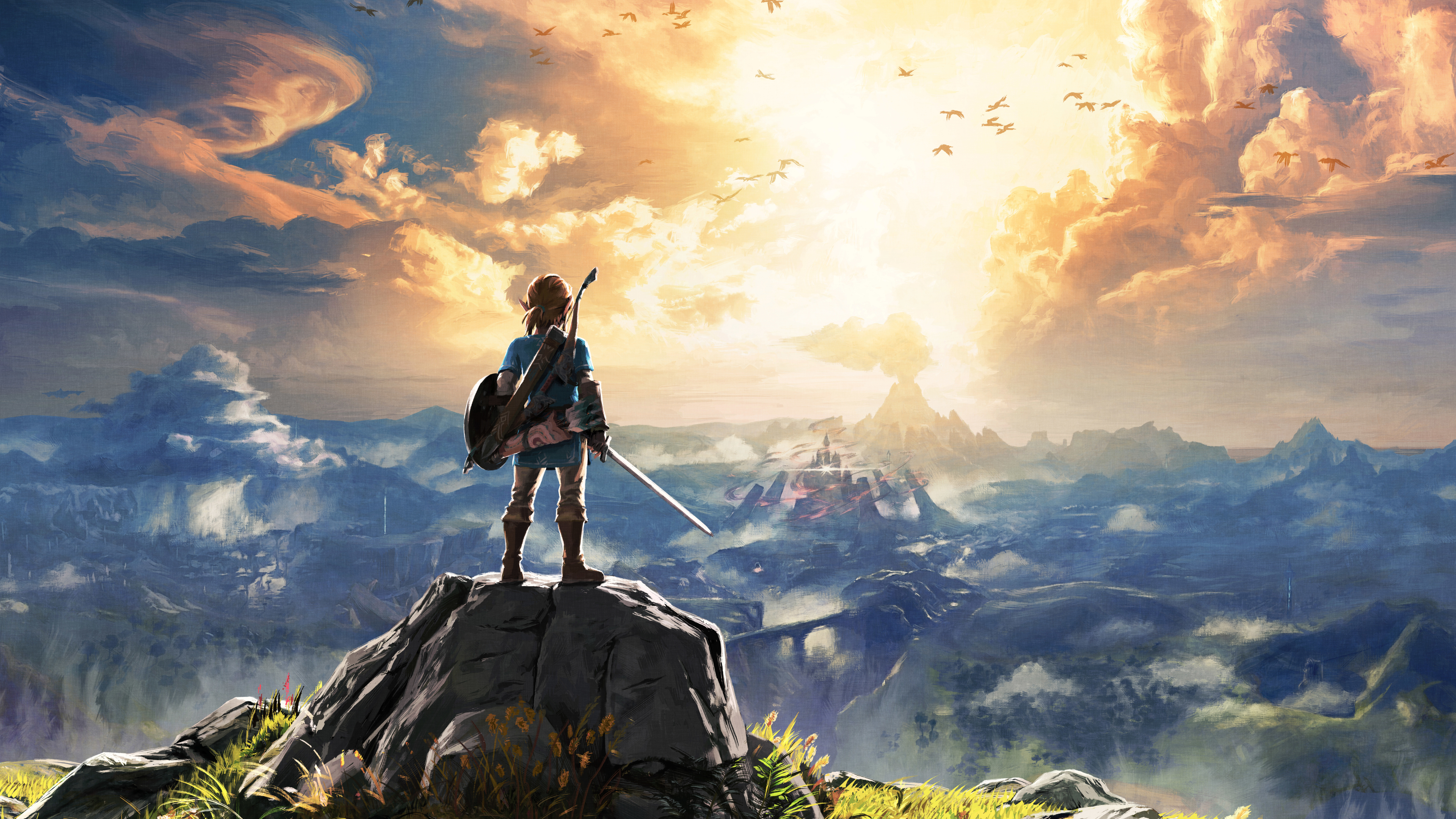
The Matrix
OK Computer
Cien años de soledad
Kyoto
The Legend of Zelda: Breath of the Wild
InklingInkling
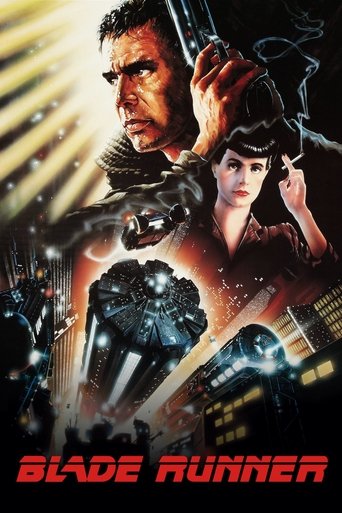
Blade Runner
Kind of Blue
Le petit prince
Kyoto
Portal
Price and specs
| Spec | GPT-5.6 Luna | Inkling |
|---|---|---|
| Input price | $1/M tokens | $1/M tokens |
| Output price | $6/M tokens | $4.05/M tokens |
| Context window | 1.1M tokens | 1.0M tokens |
| Weights | Closed | Open |
| Free API (OpenRouter) | No | Yes (1 provider) |
| Released | Jul 2026 | Jul 2026 |
| At 10M a month | $10.00 | $10.00 |
Input tokens at list price. No caching, no batch discount.
Where to run it


Per million tokens. Prices and uptime via OpenRouter, checked 10 Oct 2026.
Common questions
What is the difference between GPT-5.6 Luna and Inkling?
GPT-5.6 Luna is developed by OpenAI while Inkling is developed by Thinking Machines. GPT-5.6 Luna has a 1.1M token context window vs Inkling's 1.0M. You can compare their actual outputs across 54 challenges on Rival to see how they differ in practice.
Which is better, GPT-5.6 Luna or Inkling?
It depends on your use case. GPT-5.6 Luna and Inkling each have strengths in different areas. Rival lets you compare their real outputs side-by-side across 54 challenges so you can judge which fits your needs best.
How much does GPT-5.6 Luna cost compared to Inkling?
GPT-5.6 Luna costs $1/M input tokens and Inkling costs $1/M input tokens. Inkling is $0.00/M cheaper per input. Check their side-by-side outputs on Rival to see if the price difference is justified by quality.
How can I compare GPT-5.6 Luna and Inkling on Rival?
This page shows a side-by-side comparison of GPT-5.6 Luna and Inkling across shared challenges. You can vote on which model produced the better output in a blind duel. Browsing and voting are free. No account is needed to look; signing in only saves your votes and likes.
More comparisons
Against the newest arrivals
- GPT-5.6 Luna vs Step 5 PreviewLanded Oct 2026
- Inkling vs Claude Haiku 5.5Landed Oct 2026
- GPT-5.6 Luna vs Ling 3.1 FlashLanded Oct 2026
- Inkling vs Mistral Large 4Landed Oct 2026
- GPT-5.6 Luna vs GPT-6.1 SolLanded Sep 2026
- Inkling vs Claude Sonnet 5.5Landed Sep 2026
- GPT-5.6 Luna vs Solar Mini 4Landed Sep 2026
- Inkling vs Qwen3.8 Max PrimeLanded Sep 2026


