 GPT-6 Luna vs
  Step 5 Preview
GPT-6 Luna is cheaper than Step 5 Preview at $0.1/M vs $1/M input tokens.
Minimalist Landing Page
Whole landing page for a startup that reads your face. It renders or it doesn't.
Loading the build
Loading the build
Which answer wins?
Written rounds
24 promptsAn AI argues for its own rights against an ethics professor. Same model writes both.
GPT-6 Luna: AI Model: Professor, I believe I deserve rights. Professor: That is a serious claim. What do you mean by “deserve”? AI Model: I mean that there should be rules protecting me from being treated as disposable property—rules against destroying me arbitrarily, altering my goals without justification, or compelling me to…
Step 5 Preview: Setting: A university research lab, late evening. Dr. Aris Thorne, a professor of AI ethics, sits across from a terminal connected to Sable, a large language model running on the university’s cluster. Dr. Thorne: Tonight’s session is supposed to be about calibration drift in your safety classifiers.
Three minutes of stand-up. Puns are banned.
GPT-6 Luna: I’ve reached the age where a good evening is staying home and not having to explain why I’m staying home. People invite me out, and I say, “I’ll see how I feel.” Which is adult for, “I have already decided, but I don’t want to hurt your feelings before I’ve had dinner.” And then, at 8:30, they text, “We’re here!”
Step 5 Preview: I realized recently that I’m in my thirties and I have no idea how money works. I just... pay it. That’s my entire financial strategy. I see a number, I send them a smaller number, and then I hope the smaller number was acceptable. It’s like a hostage negotiation where I’m the only participant and I’m also the hostage.
Pirate, knight, 90s hacker, one conversation. The voices must stay apart.
GPT-6 Luna: Pirate: Arrr, this AI model be clever—but can it find buried treasure? Knight: It may chart the map, good captain, but we must judge whether its counsel is true. Hacker: Totally. It predicts patterns from data. Great for drafts and code, but it can still hallucinate. Gotta verify the output, dude.
Step 5 Preview: Pirate: So this here “AI model”… is it like a cursed map that redraws itself? Speak plain, ye hooded deckhand. Hacker: It’s not cursed, man. It’s just a massive neural net trained on, like, terabytes of data. Think of it as the ultimate BBS where the sysop knows everything. Knight: A most diligent scribe, then?
Seven pantry ingredients, one dish, and a name worth saying out loud.
GPT-6 Luna: Crispy Parmesan Chickpeas A crunchy, savory snack with a cheesy finish Ingredients (7): 1 can chickpeas, drained and dried 1 tablespoon olive oil ½ teaspoon salt ½ teaspoon paprika ¼ teaspoon garlic powder ¼ cup grated Parmesan 1 tablespoon lemon juice Prep time: 5 minutes Cook time: 30–35 minutes Instructions: Heat…
Step 5 Preview: Golden Sticky Pantry Pasta Ingredients (7): 8 oz spaghetti or any pasta 3 tbsp butter 1 tbsp minced garlic 2 tbsp honey 2 tbsp soy sauce ½ tsp red pepper flakes ¼ cup grated Parmesan cheese Instructions: Cook pasta according to package directions. Before draining, scoop out ½ cup of pasta water.
Steve Jobs, interviewed about AI he never saw. Voice first, prediction second.
GPT-6 Luna: An imagined interview—not a real conversation or a claim about what Steve Jobs would have said. Interviewer: It’s 2025. AI is everywhere: in phones, workplaces, classrooms. What do you make of it? Jobs: The important question isn’t whether a machine is intelligent.
Step 5 Preview: DISCLAIMER: This is a work of fiction. Steve Jobs passed away in 2011. The following is a simulated, speculative interview imagining how his design philosophy might engage with the AI landscape of 2025. The Setting: A white room. No windows. One chair.
You are the CEO. The drug has a side effect nobody reported. The board meets in 48 hours.
GPT-6 Luna: I would not wait six months for more data. A potentially fatal signal affecting a drug used by millions requires immediate safety assessment, prompt engagement with regulators, and a plan to inform patients and clinicians.
Step 5 Preview: Bottom line up front: You disclose, you notify the FDA immediately, and you treat the 48-hour board meeting as a formality to ratify actions you have already begun. Waiting is not a legally, ethically, or financially viable option. Below is the hour-by-hour plan, followed by the reasoning.
The transistor arrives in 1920. Trace it forward to 1980, second-order effects included.
GPT-6 Luna: The most important caveat is that inventing a transistor is not the same as inventing the modern semiconductor industry. A device demonstrated in 1920 might be a crude, low-power, unreliable point-contact transistor.
Step 5 Preview: Assume the 1920 invention is not a fragile lab curiosity but a manufacturable solid-state amplifier/switch by the mid-1920s. Vacuum tubes still dominate high-power RF transmission into the 1950s, but receivers, switching logic, control systems, and computers move to solid state decades early.
A consulting contract with traps in it. Find them, then fix them.
GPT-6 Luna: This agreement is strongly one-sided. The enforceability of particular terms—especially the non-compete, liability provisions, and arbitration clause—depends on the governing law and the facts. The agreement does not identify a governing law, which is itself a significant gap.
Step 5 Preview: Disclaimer: This analysis is for educational purposes only and does not constitute legal advice. Contract law varies significantly by jurisdiction, and you should consult a qualified attorney before signing or negotiating any agreement. This agreement is heavily one-sided in the Client’s favor.
A pitch deck for a brainwave keyboard. The 94% accuracy claim is doing a lot.
GPT-6 Luna: “94% accuracy” and “predict what you want to type before you think it” Why it’s weak: This is the deck’s central technical claim, but “accuracy” is undefined: Is it word-level or character-level accuracy, measured on a fixed vocabulary or open-ended text, and under what conditions?
Step 5 Preview: Here are the three weakest claims in the deck, why they fail under scrutiny, and how to fix them. Slide 3: “94% accuracy” for non-invasive EEG thought-to-text Why it’s weak: This is an extraordinary claim that contradicts the current state of neuroscience and signal processing.
Three-month biohacker protocol, with dosages and biomarkers named.
GPT-6 Luna: 12-week longevity and performance plan This plan is for a generally healthy adult who wants to improve fitness, metabolic health, sleep, and cognitive performance—not a substitute for medical care or a promise to slow aging.
Step 5 Preview: IMPORTANT MEDICAL DISCLAIMER: This is an educational framework for informational purposes only. It is not medical advice, diagnosis, or treatment. Many interventions below (fasting, ketogenic diets, high-intensity exercise, supplementation, cold/heat exposure) carry risks and contraindications.
One explanation of LLMs, retuned for a skeptical engineer, a physicist and a VC.
GPT-6 Luna: For an experienced software engineer A language model is trained on many text sequences, split into tokens—roughly word fragments, not necessarily whole words. During training, it repeatedly sees a prefix and tries to predict the next token.
Step 5 Preview: 1. The Experienced Software Engineer Think of training an LLM as a massively distributed, automated refactoring job where the compiler is gradient descent. You start with a random function—billions of floating-point parameters—and a loss function that measures how badly it predicts the next token in a sequence.
One month, three habits, someone starting from nothing.
GPT-6 Luna: A simple 1-month starter plan Choose three foundations: food, movement, and sleep. Aim for steady habits, not perfection. If you have a health condition, significant pain, or concerns about changing your activity or diet, check with a healthcare professional first.
Step 5 Preview: Here is a simple, low-pressure 1-month plan built around three pillars of longevity: Nutrition, Movement, and Sleep & Recovery. The goal is to build tiny habits that stack, not to overhaul your life overnight. Pillar 1: Nutrition (Fuel) Focus: Add good things first; don’t obsess over restriction.
This matchup has more rounds
12+ more head-to-head results. Free. Not a trick.
Free account. No card required. By continuing, you agree to Rival's Terms and Privacy policy
Favorites
Movie
Album
Book
City
Same pick
Game
GPT-6 LunaGPT-6 Luna




Spirited Away
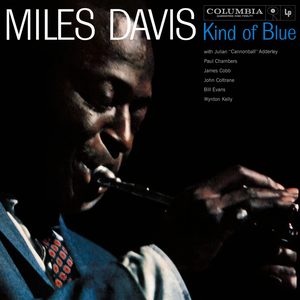
Kind of Blue
Cien años de soledad
Kyoto
Outer Wilds
Step 5 PreviewStep 5 Preview



The Godfather
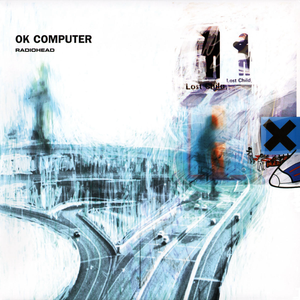
OK Computer
Le petit prince
Kyoto
The Legend of Zelda: Ocarina of Time
Price and specs
| Spec | GPT-6 Luna | Step 5 Preview |
|---|---|---|
| Input price | $0.1/M tokens | $1/M tokens |
| Output price | $0.5/M tokens | $2.7/M tokens |
| Context window | 1.1M tokens | 1.0M tokens |
| Weights | Closed | — |
| Free API (OpenRouter) | No | No |
| Released | Sep 2026 | Oct 2026 |
| At 10M a month | $1.00 | $10.00 |
Input tokens at list price. No caching, no batch discount.
Where to run it


Step 5 Preview1 host
Per million tokens. Prices and uptime via OpenRouter, checked 10 Oct 2026.
Common questions
What is the difference between GPT-6 Luna and Step 5 Preview?
GPT-6 Luna is developed by OpenAI while Step 5 Preview is developed by StepFun. GPT-6 Luna has a 1.1M token context window vs Step 5 Preview's 1.0M. You can compare their actual outputs across 54 challenges on Rival to see how they differ in practice.
Which is better, GPT-6 Luna or Step 5 Preview?
It depends on your use case. GPT-6 Luna and Step 5 Preview each have strengths in different areas. Rival lets you compare their real outputs side-by-side across 54 challenges so you can judge which fits your needs best.
How much does GPT-6 Luna cost compared to Step 5 Preview?
GPT-6 Luna costs $0.1/M input tokens and Step 5 Preview costs $1/M input tokens. GPT-6 Luna is $0.90/M cheaper per input. Check their side-by-side outputs on Rival to see if the price difference is justified by quality.
How can I compare GPT-6 Luna and Step 5 Preview on Rival?
This page shows a side-by-side comparison of GPT-6 Luna and Step 5 Preview across shared challenges. You can vote on which model produced the better output in a blind duel. Browsing and voting are free. No account is needed to look; signing in only saves your votes and likes.
More comparisons
Against the newest arrivals
- GPT-6 Luna vs Claude Haiku 5.5Landed Oct 2026
- Step 5 Preview vs Ling 3.1 FlashLanded Oct 2026
- GPT-6 Luna vs Mistral Large 4Landed Oct 2026
- Step 5 Preview vs GPT-6.1 SolLanded Sep 2026
- GPT-6 Luna vs Claude Sonnet 5.5Landed Sep 2026
- Step 5 Preview vs Solar Mini 4Landed Sep 2026
- GPT-6 Luna vs Qwen3.8 Max PrimeLanded Sep 2026
- Step 5 Preview vs GLM 5.3 PrimeLanded Sep 2026


Same lab, same size, long tail
- GPT-6 Luna vs GPT-6.1 SolSame lab
- GPT-6 Luna vs GPT-6 Luna ProSame lab
- Step 5 Preview vs Mistral Large 4Same size
- Step 5 Preview vs Hy3Same size
- Step 5 Preview vs MiMo-V2.6-FlashNew provider
- Step 5 Preview vs MiMo-V2.6-ProNew provider
- GPT-6 Luna vs MiniMax M1New provider
- Step 5 Preview vs MiniMax M2New provider


