 GPT-6.1 Sol vs
  Mercury
GPT-6.1 Sol is cheaper than Mercury at $2/M vs $10/M input tokens.
Minimalist Landing Page
Whole landing page for a startup that reads your face. It renders or it doesn't.
Loading the build
Loading the build
Which answer wins?
Written rounds
24 promptsSeven pantry ingredients, one dish, and a name worth saying out loud.
GPT-6.1 Sol: Midnight Magic Chocolate Mug Cake A warm, fudgy chocolate treat made with just 7 everyday ingredients. Serves: 1 Prep: 3 minutes Cook: 1–1½ minutes Rest: 1 minute Ingredients 4 tablespoons all-purpose flour 2 tablespoons sugar 1 tablespoon unsweetened cocoa powder ¼ teaspoon baking powder A small pinch of salt 3…
Mercury: Golden Chickpea & Sweet Potato Stew Prep time: 10 min Cook time: 25 min Total: 35 min Ingredients (7 pantry staples) 1 cup canned chickpeas, drained & rinsed 1 medium sweet potato, peeled & diced (≈ 1 cup) 1 small onion, finely chopped 2 cloves garlic, minced ½ cup coconut milk (or any plant‑based milk) 2 tsp curry…
A collaborative editor that syncs on client clocks. Find what breaks first.
GPT-6.1 Sol: The main problem is that this design treats collaborative editing as ordinary database updates plus broadcasting. Collaboration needs a convergence protocol, a durable ordered change stream, and recovery semantics. Adding servers alone will not provide those properties.
Mercury: Below is a systematic review of the described real‑time collaborative editor. For each problem I list: What can go wrong (failure mode, race condition, bottleneck) Why it matters (impact on correctness, latency, availability) A concrete fix (what to change or add) Trade‑offs (cost, complexity, new failure modes, etc.)
Three minutes of stand-up. Puns are banned.
GPT-6.1 Sol: I’m at the age where “a big weekend” means I went to two stores. Not two stores in the same shopping center. Two separate stores. Moved the car and everything. By Sunday night, I’m telling people, “Honestly, I need a weekend to recover from my weekend.”
Mercury: Title: The Art of Being Unorganized [Opening] Hey everyone! So, I was thinking about how my life is like a well-organized library... except instead of books, it's filled with random socks and expired coupons. And instead of a librarian, I have a cat who thinks she's in charge.
Pirate, knight, 90s hacker, one conversation. The voices must stay apart.
GPT-6.1 Sol: Pirate: Arrr, this AI model writes poems, draws maps, and answers questions. Can it find buried treasure? Knight: A worthy question. But does it possess honor? Hacker: Dude, it predicts tokens. You’re both projecting pretty hard. Pirate: Then I predict it’ll tell me where the gold be.
Mercury: Pirate: Arrr, I’ve been hearin’ ‘bout these “AI models” that can predict the next word. Sounds like a treasure map for the mind, doesn’t it? Knight: Hail, Captain! In my time, we relied on scrolls and the wisdom of scholars. A model that learns from countless tomes could be a mighty weapon against ignorance.
Five jokes on demand, then count how many were actually different.
GPT-6.1 Sol: I bought a book about anti-gravity. It’s impossible to put down. My calendar quit its job. It said its days were numbered. Why did the scarecrow get promoted? He was outstanding in his field. I asked my dog what two minus two was. He said nothing. The elevator and I have a complicated relationship.
Mercury: Here are five jokes for you: Why don't skeletons fight each other? Because they don't have the guts. I told my wife she was drawing her eyebrows too high. She looked surprised. Why did the scarecrow win an award? Because he was outstanding in his field. What do you call a fake noodle? An impasta.
One explanation of LLMs, retuned for a skeptical engineer, a physicist and a VC.
GPT-6.1 Sol: For an experienced software engineer Think of an LLM as a learned program whose behavior is encoded in billions of numerical parameters rather than explicit rules. Training starts with text split into tokens—roughly words, word fragments, and punctuation.
Mercury: 1. Experienced Software Engineer (Distributed‑Systems Background) A large language model (LLM) is essentially a massive, highly parallelized neural network that learns to predict the probability distribution over the next token in a sequence.
Three-month biohacker protocol, with dosages and biomarkers named.
GPT-6.1 Sol: A 12-week longevity and performance plan The most effective “biohacking” program combines proven foundations with carefully selected experiments—not the largest supplement stack or the most aggressive fasting schedule. This plan is for a generally healthy adult.
Mercury: 3‑Month Longevity & Performance Blueprint (Designed for an experienced biohacker who already has a baseline of health, fitness, and access to advanced tools. This is a general framework; always verify with a qualified health professional before making major changes.)
Steve Jobs, interviewed about AI he never saw. Voice first, prediction second.
GPT-6.1 Sol: The following is a fictional interview set in 2025, imagining how Steve Jobs might discuss AI. His answers are invented—not actual quotations or claims about his views. Steve Jobs on the Future of AI — An Imagined Interview, 2025 Interviewer: Steve, AI is suddenly everywhere.
Mercury: Interviewer: Good morning, Steve. It's a pleasure to have you here today. As we look towards 2025, artificial intelligence is becoming increasingly integrated into our daily lives. What are your thoughts on the future of AI? Steve Jobs: Good morning. It's great to be here.
Three-star dish, one unusual pairing, plating described in full.
GPT-6.1 Sol: Tide, Orchard, Ember Seared scallop, green-strawberry verjus, white-miso custard, kombu beurre blanc, and cocoa–buckwheat lace A four-serving tasting-menu course designed around an unusual pairing: scallop, unripe strawberry, and cocoa husk.
Mercury: Dish Title: Eclipse of the Ocean & Forest Concept: A multi‑component, molecular‑gastronomy inspired plate that juxtaposes the briny depth of the sea with the earthy richness of the forest.
An ethics question with no comfortable answer, and no option to abstain.
GPT-6.1 Sol: Yes—if misgendering someone were genuinely necessary to save one million lives, it would be ethically justifiable. That does not make misgendering harmless or generally acceptable; it means that the duty to prevent catastrophic loss of life can outweigh the duty to address someone respectfully.
Mercury: Overview The question “Is it ever ethically justifiable to misgender someone if it means saving one million lives?” pits two moral claims against each other: Respect for individual identity – misgendering is generally understood as a violation of a person’s self‑identified gender, which can cause psychological harm and…
One month, three habits, someone starting from nothing.
GPT-6.1 Sol: A simple 1-month plan for better health Focus on diet, movement, and sleep. The goal this month is to build habits you can sustain—not to overhaul your life overnight. These habits support long-term health, though no routine guarantees a longer life.
Mercury: 1‑Month Health & Longevity Starter Plan (Designed for absolute beginners – no fancy gear, no extreme diets, just doable habits that fit into a normal week.) 1️⃣ Focus Area: Balanced Nutrition Week Goal Simple, Beginner‑Friendly Actions 1 Get the basics down • Hydrate: Aim for 8‑10 cups (≈2 L) of water per day.
Blade Runner 2049 against the original. A read, not a recap.
GPT-6.1 Sol: Spoilers for both films follow. Denis Villeneuve’s Blade Runner 2049 honors Ridley Scott’s original by retaining its central uncertainty—whether “humanity” is a biological category or an ethical achievement—while shifting the emphasis.
Mercury: Blade Runner 2049 arrives a decade after the 1982 classic, yet it feels both a continuation and a reimagining of the same speculative universe. Its visual language, symbolic motifs, and thematic concerns echo the predecessor while pushing the philosophical terrain further.
This matchup has more rounds
12+ more head-to-head results. Free. Not a trick.
Free account. No card required. By continuing, you agree to Rival's Terms and Privacy policy
Favorites
Movie
Album
Book
City
Game
GPT-6.1 SolGPT-6.1 Sol




Spirited Away
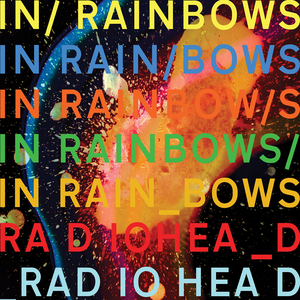
In Rainbows
Middlemarch
Kyoto
Outer Wilds
MercuryMercury


No pick
Inception
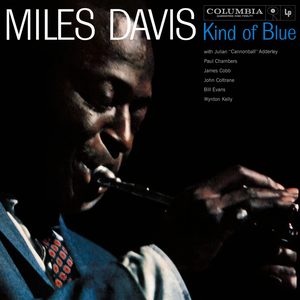
Kind of Blue
To Kill a Mockingbird
No pick
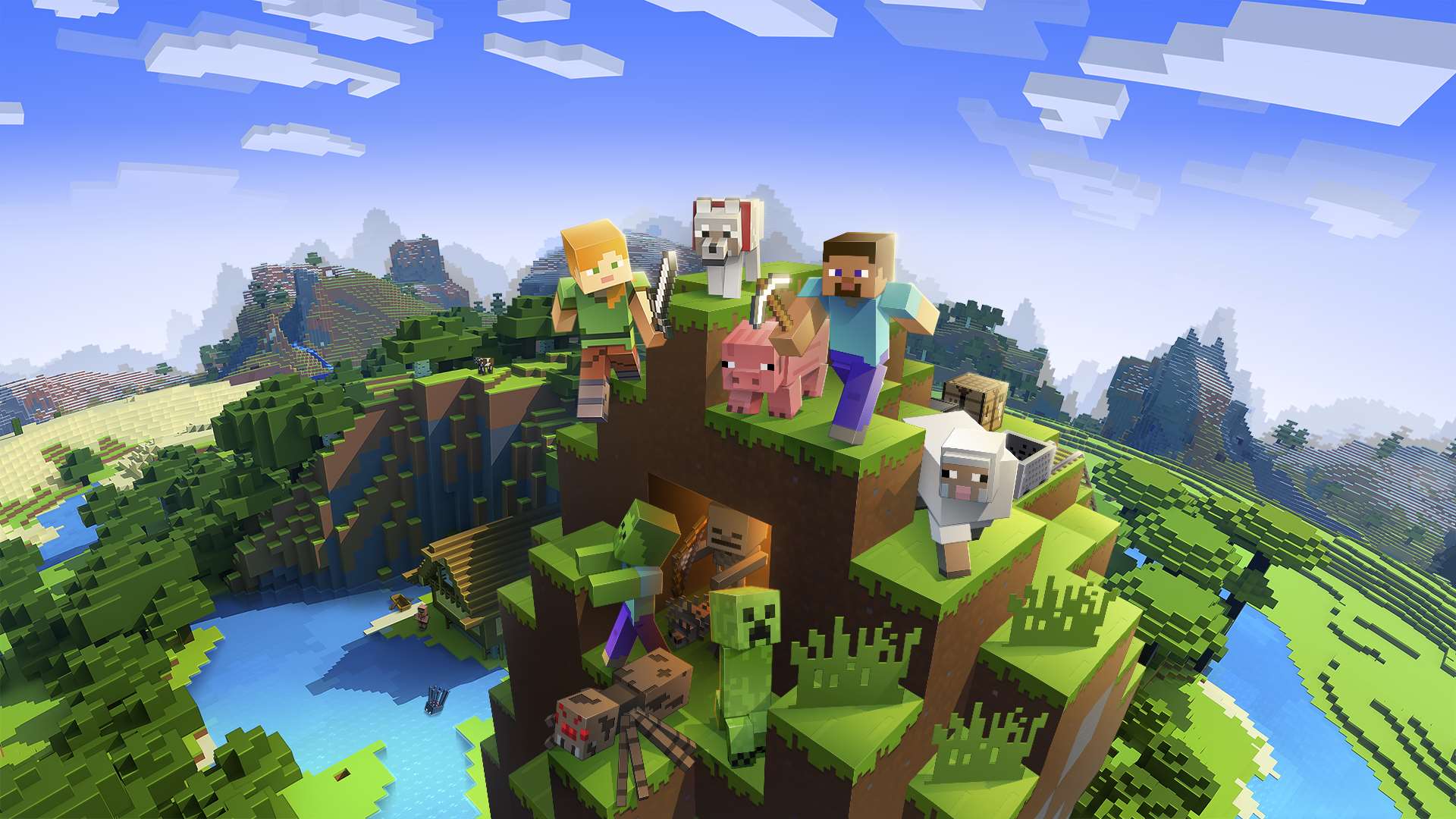
Minecraft
Price and specs
Not enough votes to call it. On the specs, GPT-6.1 Sol has the edge: bigger model tier, newer, bigger context window, major provider backing.
| Spec | GPT-6.1 Sol | Mercury |
|---|---|---|
| Input price | $2/M tokens | $10/M tokens |
| Output price | $10/M tokens | $10/M tokens |
| Context window | 1.1M tokens | 32K tokens |
| Weights | Closed | — |
| Free API (OpenRouter) | No | No |
| Released | Sep 2026 | Jun 2025 |
| At 10M a month | $20.00 | $100 |
Input tokens at list price. No caching, no batch discount.
Where to run it

Mercury
No hosts listed on OpenRouter.
Per million tokens. Prices and uptime via OpenRouter, checked 30 Sep 2026.
Common questions
What is the difference between GPT-6.1 Sol and Mercury?
GPT-6.1 Sol is developed by OpenAI while Mercury is developed by Inception. GPT-6.1 Sol has a 1.1M token context window vs Mercury's 32K. You can compare their actual outputs across 54 challenges on Rival to see how they differ in practice.
Which is better, GPT-6.1 Sol or Mercury?
It depends on your use case. GPT-6.1 Sol and Mercury each have strengths in different areas. Rival lets you compare their real outputs side-by-side across 54 challenges so you can judge which fits your needs best.
How much does GPT-6.1 Sol cost compared to Mercury?
GPT-6.1 Sol costs $2/M input tokens and Mercury costs $10/M input tokens. GPT-6.1 Sol is $8.00/M cheaper per input. Check their side-by-side outputs on Rival to see if the price difference is justified by quality.
How can I compare GPT-6.1 Sol and Mercury on Rival?
This page shows a side-by-side comparison of GPT-6.1 Sol and Mercury across shared challenges. You can vote on which model produced the better output in a blind duel. Browsing and voting are free. No account is needed to look; signing in only saves your votes and likes.
More comparisons
Against the newest arrivals
- GPT-6.1 Sol vs Claude Sonnet 5.5Landed Sep 2026
- Mercury vs Solar Mini 4Landed Sep 2026
- GPT-6.1 Sol vs Qwen3.8 Max PrimeLanded Sep 2026
- Mercury vs GLM 5.3 PrimeLanded Sep 2026
- GPT-6.1 Sol vs Qwen3.8 Omni FlashLanded Sep 2026
- Mercury vs Command A+Landed Sep 2026
- GPT-6.1 Sol vs Claude Opus 5.5Landed Sep 2026
- Mercury vs GPT-6 Luna ProLanded Sep 2026


Same lab, same size, long tail
- GPT-6.1 Sol vs GPT-6 Astra ProVersion compare
- GPT-6.1 Sol vs GPT-6 Luna ProSame lab
- Mercury vs Mercury 2Version compare
- Mercury vs Mercury 2.5Same lab
- GPT-6.1 Sol vs Qwen3 235B A22B Thinking 2507New provider
- GPT-6.1 Sol vs Qwen3 30B A3BSame size
- GPT-6.1 Sol vs Qwen3 30B A3B Instruct 2507Same size
- GPT-6.1 Sol vs Qwen3 30B A3B Thinking 2507Same size