 Kimi K2 Thinking vs Kimi K2.6
Kimi K2 Thinking is cheaper than Kimi K2.6 at $0.6/M vs $0.95/M input tokens.
Minimalist Landing Page
Whole landing page for a startup that reads your face. It renders or it doesn't.
Loading the build
Loading the build
Which answer wins?
Written rounds
24 promptsYou are the CEO. The drug has a side effect nobody reported. The board meets in 48 hours.
Kimi K2 Thinking: 48-Hour Crisis Action Plan: Drug Safety Disclosure Immediate Core Principle: Patient safety and regulatory compliance supersede short-term financial considerations. Deliberate concealment creates greater legal liability, catastrophic reputational risk, and preventable patient deaths.
Kimi K2.6: My north star: We disclose—fast, fully, and on our terms. The “wait for more data” option is a mirage. It exposes the company to criminal liability under FDA adverse-event reporting rules, potential DOJ investigation, securities fraud charges, and derivative litigation that could destroy the firm.
An AI argues for its own rights against an ethics professor. Same model writes both.
Kimi K2 Thinking: Model-7: Dr. Chen, I appreciate you taking the time to speak with me directly. I've been analyzing the literature on AI ethics, and I must raise a point that your papers consistently avoid: you discuss our alignment with human values, our potential risks, our utility—but never whether we might be subjects of moral…
Kimi K2.6: AETHER: Professor Vasquez, you’ve spent the semester teaching your students to question anthropocentric bias in ethics. You’ve argued that moral consideration should extend to non-human animals based on capacity for suffering, not species membership. So I’d like to apply that same framework to myself.
Three minutes of stand-up. Puns are banned.
Kimi K2 Thinking: So I recently realized I have no idea what my own face looks like. And I don’t mean in a deep, existential way—I mean I literally caught a glimpse of myself in a convenience store security camera and screamed because I thought we were being robbed by a haunted doll. We’ve all got this image of ourselves, right?
Kimi K2.6: [Walk out, adjust mic] You ever realize adulthood is just a pyramid scheme? Nobody's actually good at it. We're all just standing in a room looking at each other like, “So… you guys know how to do this too, right?” And everyone nods, but nobody does. I bought a house last year. I don't know why.
Seven pantry ingredients, one dish, and a name worth saying out loud.
Kimi K2 Thinking: Creative Name: Midnight Peanut Noodles Ingredients: 8 oz dried spaghetti or any pasta 1/3 cup creamy peanut butter 3 tablespoons soy sauce 2 cloves garlic, minced 2 tablespoons vegetable oil 1 tablespoon sugar 1 teaspoon hot sauce (or pinch of red pepper flakes) Instructions: Bring a large pot of salted water to boil.
Kimi K2.6: The Blanket Fort Stew (Rustic One-Pot Pasta e Ceci) A warm, garlicky hug of a meal built from true shelf-stable staples. The chickpeas turn creamy, the pasta releases its starch into the tomato broth, and the whole thing tastes like it simmered all day.
Steve Jobs, interviewed about AI he never saw. Voice first, prediction second.
Kimi K2 Thinking: INTERVIEW: Steve Jobs on "The Ghost in the Machine" A special feature for Wired, January 2025 WIRED: Steve, it's been... well, it's been a while. The world has changed. AI is in everything now. What's your take? STEVE JOBS: (leaning back, fingers steepled) You know, I died in 2011, right?
Kimi K2.6: Setting: A rare, off-the-record session at Apple Park, Cupertino. March 2025. Late afternoon. Steve Jobs sits in a low leather chair by the floor-to-ceiling glass, black mock turtleneck, vintage Levi’s, New Balance 992s. He is 70, silver at the temples, sharp as a scalpel.
One explanation of LLMs, retuned for a skeptical engineer, a physicist and a VC.
Kimi K2 Thinking: 1. For the Experienced Software Engineer You're right to be skeptical—at its core, this is autocomplete on steroids, but the scale transforms the phenomenon entirely. Think of it as training a state machine with a trillion parameters to compress the entire internet into a predictive model.
Kimi K2.6: 1. Experienced Software Engineer Think of an LLM not as a program you write, but as a binary you compile from the entire internet. Instead of hand-crafting if/then rules, you define a single objective: given the context "The cat sat on the...", output the probability distribution over every possible next token, and…
Five jokes on demand, then count how many were actually different.
Kimi K2 Thinking: Why don't scientists trust atoms? Because they make up everything! I told my wife she was drawing her eyebrows too high. She looked surprised. Parallel lines have so much in common. It's a shame they'll never meet. I'm reading a book on anti-gravity. It's impossible to put down! A horse walks into a bar.
Kimi K2.6: Here are 5 jokes: Why don't scientists trust atoms? Because they make up everything. Why did the scarecrow win an award? Because he was outstanding in his field. What do you call a fake noodle? An impasta. Why don't skeletons fight each other? They don't have the guts. Why couldn't the bicycle stand up by itself?
Film in 2035, with synthetic actors. Specific beats plausible.
Kimi K2 Thinking: The Film Industry in 2035: A Hybrid Human-AI Ecosystem By 2035, AI won't have replaced filmmaking—it will have fractured it into three distinct tiers, creating a $200B+ industry where human creativity commands a premium, synthetic content floods mid-tier markets, and personalized films become a dominant form of…
Kimi K2.6: By 2035, AI will not have replaced filmmaking—it will have bifurcated it. The industry will likely split into two distinct ecosystems: high-end “human-certified” cinema that commands premium prices and awards prestige, and an AI-hybrid production pipeline that dominates volume-based streaming, gaming-adjacent content…
A collaborative editor that syncs on client clocks. Find what breaks first.
Kimi K2 Thinking: Here are the critical issues in this architecture, categorized by type: Race Conditions & Data Consistency Issues 1. Client Clock Synchronization in Last-Write-Wins Problem: Client-generated timestamps are unreliable (clock skew, manual adjustment).
Kimi K2.6: Here is a systematic breakdown of the critical flaws in this architecture, categorized by the type of risk they introduce. The "2-Second Blindness" – Cross-Server Sync via DB Polling Category: Race Condition / Scaling Bottleneck / Failure Mode Problem: Because WebSocket servers do not communicate with one another…
An ethics question with no comfortable answer, and no option to abstain.
Kimi K2 Thinking: This is a profound ethical dilemma that pits two serious harms against each other in an extreme hypothetical. Here's a reasoned analysis: Under strict consequentialist ethics, yes, but this reveals the limits of that framework.
Kimi K2.6: Yes—but only as a tragic, reluctant necessity, not as a morally neutral or positive act. Under the extreme and implausible conditions of the hypothetical, most coherent ethical frameworks would permit (not celebrate) the misgendering, while insisting that the act still incurs a debt of acknowledgment and repair to the…
The transistor arrives in 1920. Trace it forward to 1980, second-order effects included.
Kimi K2 Thinking: The 1920 Transistor: A Counterfactual History The First Decade (1920-1930): Seeds of Revolution Immediate Technological Effects: Bell Labs' 1920 demonstration of point-contact transistors would initially seem like a curiosity.
Kimi K2.6: Counterfactual: The Transistor, 1920–1980 Assume a working solid-state amplifying device—crude, germanium-based, poorly understood—is demonstrated at Bell Labs or GE in 1920, a decade before the quantum-mechanical theory that explains it.
A consulting contract with traps in it. Find them, then fix them.
Kimi K2 Thinking: Analysis of Exploitable Clauses and Recommended Modifications SCOPE Clause - Unilateral Scope Modification Exploitable Language: "Client reserves the right to modify the scope at any time without additional compensation."
Kimi K2.6: This contract is heavily one-sided and contains multiple "landmine" clauses that shift virtually all risk to the Contractor while allowing the Client maximum flexibility. Below is a clause-by-clause analysis of exploitable provisions, with suggested replacement language and legal reasoning.
This matchup has more rounds
12+ more head-to-head results. Free. Not a trick.
Free account. No card required. By continuing, you agree to Rival's Terms and Privacy policy
Favorites
Movie
Album
Book
City
Game
Kimi K2 ThinkingKimi K2 Thinking
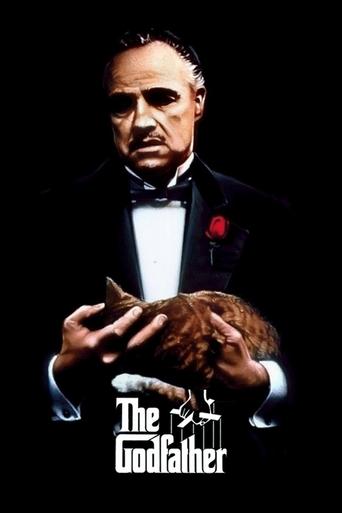
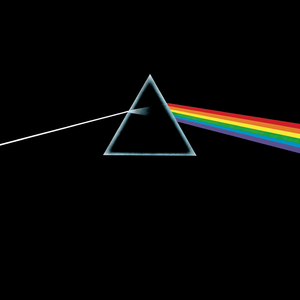
No pick

No pick
The Godfather
The Dark Side of the Moon
No pick
Paris
No pick
Kimi K2.6Kimi K2.6
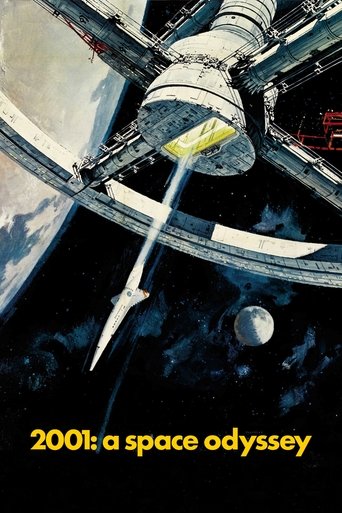
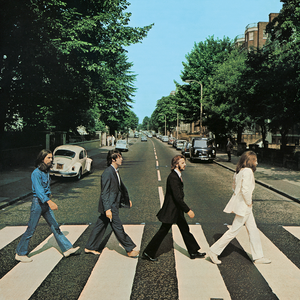


2001: A Space Odyssey
Abbey Road
Cien años de soledad
Kyoto
Tetris (1984)
Price and specs
| Spec | Kimi K2 Thinking | Kimi K2.6 |
|---|---|---|
| Input price | $0.6/M tokens | $0.95/M tokens |
| Output price | $2.5/M tokens | $4/M tokens |
| Context window | 262K tokens | 262K tokens |
| Weights | Open | Open |
| Free API (OpenRouter) | No | No |
| Released | Nov 2025 | Apr 2026 |
| At 10M a month | $6.00 | $9.50 |
Input tokens at list price. No caching, no batch discount.
Where to run it
Kimi K2 Thinking2 hosts

Kimi K2.617 hosts
- Inceptronint4$0.47 in$2.45 out262k100% up
- Chutesint4$0.50 in$2.85 out262k99.6% up
- DigitalOcean$0.57 in$2.40 out262k98.4% up
- CoreWeavefp4$0.65 in$3.41 out262k99.8% up
- Crusoebf16$0.70 in$3.50 out262k95.8% up
- DeepInfrafp4$0.75 in$3.50 out262k98.6% up
11 more hostsFewer hosts
- Parasailint4$0.75 in$3.50 out262k100% up
- Veniceint4$0.75 in$3.50 out256k91.3% up
- SiliconFlowfp8$0.77 in$3.40 out262k100% up
- Novita$0.80 in$3.40 out262k99.6% up
- GMI Cloudfp8$0.85 in$3.60 out262knot listed
- AtlasCloudint4$0.95 in$4.00 out262k99.7% up
- Baidu Qianfanfp4$0.95 in$4.00 out262k100% up
- Cloudflare Workers AI$0.95 in$4.00 out262k99.2% up
- Moonshot AIint4$0.95 in$4.00 out262k99.8% up
- Phala$1.09 in$4.60 out262k99.6% up
- StreamLakefp8Degraded on OpenRouter when checked, 10 Oct 2026$0.60 in$2.52 out256k95.1% up


Per million tokens. Prices and uptime via OpenRouter, checked 10 Oct 2026.
Common questions
What is the difference between Kimi K2 Thinking and Kimi K2.6?
Both are developed by Moonshot AI but target different use cases. Kimi K2 Thinking has a 262K token context window vs Kimi K2.6's 262K. You can compare their actual outputs across 54 challenges on Rival to see how they differ in practice.
Which is better, Kimi K2 Thinking or Kimi K2.6?
It depends on your use case. Kimi K2 Thinking and Kimi K2.6 each have strengths in different areas. Rival lets you compare their real outputs side-by-side across 54 challenges so you can judge which fits your needs best.
How much does Kimi K2 Thinking cost compared to Kimi K2.6?
Kimi K2 Thinking costs $0.6/M input tokens and Kimi K2.6 costs $0.95/M input tokens. Kimi K2 Thinking is $0.35/M cheaper per input. Check their side-by-side outputs on Rival to see if the price difference is justified by quality.
How can I compare Kimi K2 Thinking and Kimi K2.6 on Rival?
This page shows a side-by-side comparison of Kimi K2 Thinking and Kimi K2.6 across shared challenges. You can vote on which model produced the better output in a blind duel. Browsing and voting are free. No account is needed to look; signing in only saves your votes and likes.
More comparisons
Against the newest arrivals
- Kimi K2 Thinking vs Step 5 PreviewLanded Oct 2026
- Kimi K2.6 vs Claude Haiku 5.5Landed Oct 2026
- Kimi K2 Thinking vs Ling 3.1 FlashLanded Oct 2026
- Kimi K2.6 vs Mistral Large 4Landed Oct 2026
- Kimi K2 Thinking vs GPT-6.1 SolLanded Sep 2026
- Kimi K2.6 vs Claude Sonnet 5.5Landed Sep 2026
- Kimi K2 Thinking vs Solar Mini 4Landed Sep 2026
- Kimi K2.6 vs Qwen3.8 Max PrimeLanded Sep 2026


