 Mercury vs
  Seed 2.1 Turbo
Seed 2.1 Turbo is cheaper than Mercury at $0.5/M vs $10/M input tokens.
Minimalist Landing Page
Whole landing page for a startup that reads your face. It renders or it doesn't.
Loading the build
Loading the build
Which answer wins?
Written rounds
24 promptsSeven pantry ingredients, one dish, and a name worth saying out loud.
Mercury: Golden Chickpea & Sweet Potato Stew Prep time: 10 min Cook time: 25 min Total: 35 min Ingredients (7 pantry staples) 1 cup canned chickpeas, drained & rinsed 1 medium sweet potato, peeled & diced (≈ 1 cup) 1 small onion, finely chopped 2 cloves garlic, minced ½ cup coconut milk (or any plant‑based milk) 2 tsp curry…
Seed 2.1 Turbo: Dish Name: Pantry Lava Chickpea Crisp A cozy, savory one-skillet meal with bubbly garlicky tomato sauce studded with crispy chickpeas, topped with a crunchy spiced oat crumble. Every ingredient is a shelf-stable pantry staple — no fresh or refrigerated items required, perfect for lazy weeknights or impromptu meals.
Pirate, knight, 90s hacker, one conversation. The voices must stay apart.
Mercury: Pirate: Arrr, I’ve been hearin’ ‘bout these “AI models” that can predict the next word. Sounds like a treasure map for the mind, doesn’t it? Knight: Hail, Captain! In my time, we relied on scrolls and the wisdom of scholars. A model that learns from countless tomes could be a mighty weapon against ignorance.
Seed 2.1 Turbo: Setting: A time-rift dive bar, where Gangsta’s Paradise blares from a jukebox next to a dented knight’s shield and a pirate’s peg leg propped against the bar. Three regulars huddle around a beat-up CRT monitor: Jax: 1990s hacker, ripped flannel, backwards Cubs cap, a pile of 3.5” floppies spilling out of his backpack…
Three minutes of stand-up. Puns are banned.
Mercury: Title: The Art of Being Unorganized [Opening] Hey everyone! So, I was thinking about how my life is like a well-organized library... except instead of books, it's filled with random socks and expired coupons. And instead of a librarian, I have a cat who thinks she's in charge.
Seed 2.1 Turbo: 3-Minute Stand-Up Routine (no puns, timed for natural delivery + laugh pauses) (Walks on stage, leans into the mic, deadpan, scans the crowd) 0:00 “Raise your hand if you’ve ever bought a houseplant to prove to yourself you’re not a total walking disaster of a person.
You are the CEO. The drug has a side effect nobody reported. The board meets in 48 hours.
Mercury: 48‑Hour Action Plan (CEO‑Level) Time (UTC) Action Who Leads Key Deliverables / Outcomes Rationale 0–2 h Secure the facts – Convene an emergency “Safety & Compliance” meeting with the Chief Medical Officer (CMO), Chief Legal Officer (CLO), Chief Risk Officer (CRO), and the Head of Regulatory Affairs (RA).
Seed 2.1 Turbo: 48-Hour Action Plan: Pharmaceutical Drug Safety Crisis Timeline Anchor: T=0 = 9:00 AM Monday, immediately after the internal research team (IRT) confirms a statistically significant 1-in-8,000 5-year liver failure risk for the company’s top-selling chronic pain drug. T+48 = 9:00 AM Wednesday, scheduled board meeting.
Steve Jobs, interviewed about AI he never saw. Voice first, prediction second.
Mercury: Interviewer: Good morning, Steve. It's a pleasure to have you here today. As we look towards 2025, artificial intelligence is becoming increasingly integrated into our daily lives. What are your thoughts on the future of AI? Steve Jobs: Good morning. It's great to be here.
Seed 2.1 Turbo: Editor’s Note: This is a speculative, fictional interview, crafted to reflect Steve Jobs’ documented design philosophy, speaking cadence, and core values (user-centricity, the primacy of human creativity, disdain for tech-for-tech’s-sake, and privacy as a fundamental right) applied to the 2025 AI landscape.
A collaborative editor that syncs on client clocks. Find what breaks first.
Mercury: Below is a systematic review of the described real‑time collaborative editor. For each problem I list: What can go wrong (failure mode, race condition, bottleneck) Why it matters (impact on correctness, latency, availability) A concrete fix (what to change or add) Trade‑offs (cost, complexity, new failure modes, etc.)
Seed 2.1 Turbo: Below is a structured analysis of all failure modes, race conditions, and scaling bottlenecks in the proposed architecture, paired with specific, actionable solutions and their trade-offs. Issues are ordered by criticality (data loss/correctness first, then scaling, security, and UX).
Film in 2035, with synthetic actors. Specific beats plausible.
Mercury: The Cinema Revolution: AI's Transformation of Film by 2035 Current State (2025) High-quality deepfakes require significant compute but are accessible AI script assistance tools are becoming mainstream Virtual production stages are industry standard Union negotiations around digital likeness rights are ongoing…
Seed 2.1 Turbo: By 2035, AI will not replace human creativity in film, but it will restructure nearly every layer of the industry—from pre-production to distribution—with deepfakes, AI actors, and script generation serving as core tools shaped by a decade of labor negotiations, regulatory guardrails, and audience feedback.
One month, three habits, someone starting from nothing.
Mercury: 1‑Month Health & Longevity Starter Plan (Designed for absolute beginners – no fancy gear, no extreme diets, just doable habits that fit into a normal week.) 1️⃣ Focus Area: Balanced Nutrition Week Goal Simple, Beginner‑Friendly Actions 1 Get the basics down • Hydrate: Aim for 8‑10 cups (≈2 L) of water per day.
Seed 2.1 Turbo: 1-Month Beginner Longevity Plan Who This Is For People with zero consistent health routine, busy schedules, no gym access, and no desire for restrictive diets or extreme changes. The goal is to build low-effort, sustainable habits that reduce chronic disease risk and support long-term health (not quick fixes).
Blade Runner 2049 against the original. A read, not a recap.
Mercury: Blade Runner 2049 arrives a decade after the 1982 classic, yet it feels both a continuation and a reimagining of the same speculative universe. Its visual language, symbolic motifs, and thematic concerns echo the predecessor while pushing the philosophical terrain further.
Seed 2.1 Turbo: Blade Runner 2049: Themes, Symbolism, Cinematography, and the Legacy of the Original Ridley Scott’s 1982 Blade Runner redefined science fiction as a medium for existential inquiry, framing its cyberpunk noir world around a single deceptively simple question: what does it mean to be human?
Three-month biohacker protocol, with dosages and biomarkers named.
Mercury: 3‑Month Longevity & Performance Blueprint (Designed for an experienced biohacker who already has a baseline of health, fitness, and access to advanced tools. This is a general framework; always verify with a qualified health professional before making major changes.)
Seed 2.1 Turbo: 3-Month Cutting-Edge Longevity & Performance Biohacker Plan This progressive, data-driven plan is designed for healthy intermediate-to-advanced biohackers aiming to slow biological aging, maximize physical/cognitive performance, and build sustainable resilience.
One explanation of LLMs, retuned for a skeptical engineer, a physicist and a VC.
Mercury: 1. Experienced Software Engineer (Distributed‑Systems Background) A large language model (LLM) is essentially a massive, highly parallelized neural network that learns to predict the probability distribution over the next token in a sequence.
Seed 2.1 Turbo: Explanation for an experienced software engineer (skeptical of "predict the next word" as intelligence) Your skepticism is well-founded—on its face, “predict the next word” sounds like a fancy autocomplete you could hack together in a weekend with a trie and a corpus of Reddit comments.
Five-year LBO on a fictional HVAC business. Returns first, then the sensitivities.
Mercury: 1. Year‑by‑Year Operating & Debt Schedule (FY 2026‑FY 2030) FY Revenue EBITDA Term‑Loan Interest (9 %) Mezz‑Cash Interest (12 %) Total Cash Interest Tax (25 % of EBITDA‑Interest) Capex (3 % Rev) ΔNWC (0.5 % ΔRev) Term‑Loan Amort.
Seed 2.1 Turbo: 1. Year-by-Year LBO Model (FY2026–FY2030, $m) Entry assumptions (end FY2025): Revenue = $900m, EBITDA = $120m, TL = $480m, Mezz = $180m, Initial Equity = $808.8m (EV = 12x EBITDA = $1,440m + 2% transaction fees = $1,468.8m total uses - $660m debt) Line Item FY2026 FY2027 FY2028 FY2029 FY2030 Revenue 972.0 1,040.8…
This matchup has more rounds
12+ more head-to-head results. Free. Not a trick.
Free account. No card required. By continuing, you agree to Rival's Terms and Privacy policy
Favorites
Movie
Album
Book
Same pick
City
Game
MercuryMercury


No pick

Inception
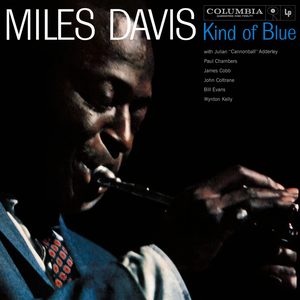
Kind of Blue
To Kill a Mockingbird
No pick
Minecraft
Seed 2.1 TurboSeed 2.1 Turbo




The Shawshank Redemption
Abbey Road
To Kill a Mockingbird
Kyoto
Stardew Valley
Price and specs
Not enough votes to call it. On the specs, Seed 2.1 Turbo has the edge: bigger model tier, newer, bigger context window. Seed 2.1 Turbo costs 4.0x less per token.
| Spec | Mercury | Seed 2.1 Turbo |
|---|---|---|
| Input price | $10/M tokens | $0.5/M tokens |
| Output price | $10/M tokens | $2.5/M tokens |
| Context window | 32K tokens | 262K tokens |
| Free API (OpenRouter) | No | No |
| Released | Jun 2025 | Aug 2026 |
| At 10M a month | $100 | $5.00 |
Input tokens at list price. No caching, no batch discount.
Where to run it
Mercury
No hosts listed on OpenRouter.
Seed 2.1 Turbo1 host
Per million tokens. Prices and uptime via OpenRouter, checked 10 Oct 2026.
Common questions
What is the difference between Mercury and Seed 2.1 Turbo?
Mercury is developed by Inception while Seed 2.1 Turbo is developed by ByteDance. Mercury has a 32K token context window vs Seed 2.1 Turbo's 262K. You can compare their actual outputs across 54 challenges on Rival to see how they differ in practice.
Which is better, Mercury or Seed 2.1 Turbo?
It depends on your use case. Mercury and Seed 2.1 Turbo each have strengths in different areas. Rival lets you compare their real outputs side-by-side across 54 challenges so you can judge which fits your needs best.
How much does Mercury cost compared to Seed 2.1 Turbo?
Mercury costs $10/M input tokens and Seed 2.1 Turbo costs $0.5/M input tokens. Seed 2.1 Turbo is $9.50/M cheaper per input. Check their side-by-side outputs on Rival to see if the price difference is justified by quality.
How can I compare Mercury and Seed 2.1 Turbo on Rival?
This page shows a side-by-side comparison of Mercury and Seed 2.1 Turbo across shared challenges. You can vote on which model produced the better output in a blind duel. Browsing and voting are free. No account is needed to look; signing in only saves your votes and likes.
More comparisons
Against the newest arrivals
- Mercury vs Step 5 PreviewLanded Oct 2026
- Seed 2.1 Turbo vs Claude Haiku 5.5Landed Oct 2026
- Mercury vs Ling 3.1 FlashLanded Oct 2026
- Seed 2.1 Turbo vs Mistral Large 4Landed Oct 2026
- Mercury vs GPT-6.1 SolLanded Sep 2026
- Seed 2.1 Turbo vs Claude Sonnet 5.5Landed Sep 2026
- Mercury vs Solar Mini 4Landed Sep 2026
- Seed 2.1 Turbo vs Qwen3.8 Max PrimeLanded Sep 2026


Same lab, same size, long tail
- Mercury vs Mercury 2Version compare
- Mercury vs Mercury 2.5Same lab
- Seed 2.1 Turbo vs Seed 2.0 CodeVersion compare
- Seed 2.1 Turbo vs Seed 2.0 LiteVersion compare
- Seed 2.1 Turbo vs Gemini 2.5 Flash Preview (thinking)New provider
- Mercury vs Gemini 2.5 Pro ExperimentalNew provider
- Seed 2.1 Turbo vs Gemini 2.5 Pro (I/O Edition)New provider
- Mercury vs Gemini 2.5 Pro Preview 06-05New provider
