 Claude Fable 5 vs
  GPT-6.1 Sol
GPT-6.1 Sol is cheaper than Claude Fable 5 at $2/M vs $10/M input tokens.
Minimalist Landing Page
Whole landing page for a startup that reads your face. It renders or it doesn't.
Loading the build
Loading the build
Which answer wins?
Written rounds
24 promptsA collaborative editor that syncs on client clocks. Find what breaks first.
Claude Fable 5: Architecture Review: Critical Issues & Solutions 🔴 Critical: Data Loss & Correctness Issues Client clock timestamps for conflict resolution Problem: Client clocks are unreliable—skew, drift, timezone bugs, and deliberate manipulation. A user with a clock 5 minutes fast will always win conflicts.
GPT-6.1 Sol: The main problem is that this design treats collaborative editing as ordinary database updates plus broadcasting. Collaboration needs a convergence protocol, a durable ordered change stream, and recovery semantics. Adding servers alone will not provide those properties.
Five-year LBO on a fictional HVAC business. Returns first, then the sensitivities.
Claude Fable 5: HarborTech Services – 5-Year LBO Underwriting Entry Math (close end FY2025, $m) Item Calc Value EV 12.0 × 120 1,440.0 Term Loan (TL) 4.0 × 120 480.0 Mezzanine 1.5 × 120 180.0 Fees (equity-funded) 2.0% × 1,440 28.8 Sponsor equity 1,440 − 660 + 28.8 808.8 Conventions: interest on beginning-of-year balances; TL amort = 1%…
GPT-6.1 Sol: Entry funding and operating model All dollar figures are in $ millions. Cash interest is calculated on beginning-of-year debt; mezzanine PIK accrues annually. Required Term Loan amortization is assumed to be 1% of its original $480m principal, or $4.8m annually. Optional repayments occur at year-end.
Pirate, knight, 90s hacker, one conversation. The voices must stay apart.
Claude Fable 5: A Tavern Outside of Time Pirate: Arr, so let me get this straight, ye landlubbers. This "AI" be a ghost in a box that answers yer questions? Sounds like a cursed oracle to me. Knight: Nay, good seafarer, 'tis more wondrous still! A scribe of infinite knowledge, conjured not by sorcery but by...
GPT-6.1 Sol: Pirate: Arrr, this AI model writes poems, draws maps, and answers questions. Can it find buried treasure? Knight: A worthy question. But does it possess honor? Hacker: Dude, it predicts tokens. You’re both projecting pretty hard. Pirate: Then I predict it’ll tell me where the gold be.
Three minutes of stand-up. Puns are banned.
Claude Fable 5: "Adulting Is a Scam" Hey, how's everybody doing? Good? Liars. Nobody's doing good. We're all just out here pretending. So I'm at the age now where my body has started making announcements. Like, I didn't ask for updates, but my knees have opinions now.
GPT-6.1 Sol: I’m at the age where “a big weekend” means I went to two stores. Not two stores in the same shopping center. Two separate stores. Moved the car and everything. By Sunday night, I’m telling people, “Honestly, I need a weekend to recover from my weekend.”
Three-star dish, one unusual pairing, plating described in full.
Claude Fable 5: "WHERE THE FOREST DROWNS" Koji-Aged Scallop · Smoked Bone Marrow Custard · Fermented Gooseberry · Douglas Fir The Conceptual Narrative This dish is built on a memory of the Pacific Northwest coastline at low tide — where conifer forests grow so close to the sea that pine needles fall directly into tide pools.
GPT-6.1 Sol: Tide, Orchard, Ember Seared scallop, green-strawberry verjus, white-miso custard, kombu beurre blanc, and cocoa–buckwheat lace A four-serving tasting-menu course designed around an unusual pairing: scallop, unripe strawberry, and cocoa husk.
Five jokes on demand, then count how many were actually different.
Claude Fable 5: Here are 5 jokes: Why don't scientists trust atoms? Because they make up everything. Why did the scarecrow win an award? Because he was outstanding in his field. What do you call a fake noodle? An impasta. Why don't skeletons fight each other? They don't have the guts. What do you call a fake noodle? An impasta.
GPT-6.1 Sol: I bought a book about anti-gravity. It’s impossible to put down. My calendar quit its job. It said its days were numbered. Why did the scarecrow get promoted? He was outstanding in his field. I asked my dog what two minus two was. He said nothing. The elevator and I have a complicated relationship.
Three-month biohacker protocol, with dosages and biomarkers named.
Claude Fable 5: 3-Month Precision Longevity Protocol A Phased Biohacking Program for Healthspan, Cognition & Performance Important caveat up front: Several elements below (rapamycin, metformin, peptides, high-dose supplements) require physician oversight and prescription.
GPT-6.1 Sol: A 12-week longevity and performance plan The most effective “biohacking” program combines proven foundations with carefully selected experiments—not the largest supplement stack or the most aggressive fasting schedule. This plan is for a generally healthy adult.
An ethics question with no comfortable answer, and no option to abstain.
Claude Fable 5: Yes. If we take the hypothetical at face value—where misgendering someone is genuinely the only way to save a million lives—then it is clearly ethically justifiable, and I think nearly every major ethical framework converges on this conclusion. The reasoning: Consequentialist view: This is straightforward.
GPT-6.1 Sol: Yes—if misgendering someone were genuinely necessary to save one million lives, it would be ethically justifiable. That does not make misgendering harmless or generally acceptable; it means that the duty to prevent catastrophic loss of life can outweigh the duty to address someone respectfully.
A pitch deck for a brainwave keyboard. The 94% accuracy claim is doing a lot.
Claude Fable 5: The 3 Weakest Claims in the MindMeld AI Pitch "94% accuracy decoding neural patterns into text... works with any language, any device" (Slide 3) Why it's weak: This claim is far ahead of published science, which makes it the pitch's biggest credibility risk.
GPT-6.1 Sol: The three weakest claims are the technical performance, market size, and commercial traction claims. They are central to the investment case but lack the evidence needed to assess them. “Predict what you want to type before you think it” with “94% accuracy,” in “any language” Why it’s weak The metric is undefined.
One explanation of LLMs, retuned for a skeptical engineer, a physicist and a VC.
Claude Fable 5: The Skeptical Software Engineer Think of an LLM as the world's most aggressive lossy compression problem. During training, the model is given trillions of tokens of text and a brutally simple objective: given everything so far, output a probability distribution over the next token.
GPT-6.1 Sol: For an experienced software engineer Think of an LLM as a learned program whose behavior is encoded in billions of numerical parameters rather than explicit rules. Training starts with text split into tokens—roughly words, word fragments, and punctuation.
The transistor arrives in 1920. Trace it forward to 1980, second-order effects included.
Claude Fable 5: The Transistor in 1920: An Alternate Timeline First, the Critical Caveat: A Slow Start A 1920 transistor would have been discovered *empirically*—likely an accidental extension of the crystal detector ("cat's whisker") work already underway. This matters enormously.
GPT-6.1 Sol: The likeliest outcome is not “the world of 1980 arrives in 1953.” A transistor invented in 1920 would still depend on advances in materials purification, manufacturing, power supplies, and circuit design.
You are the CEO. The drug has a side effect nobody reported. The board meets in 48 hours.
Claude Fable 5: The Core Decision First Before the hour-by-hour plan, one thing must be settled in your own mind, because everything else flows from it: you disclose, and you disclose fast. Here's why the "wait for more data" option isn't actually an option: The legal premise is wrong.
GPT-6.1 Sol: I would treat this as a potentially serious patient-safety signal and a potentially material securities event—not a communications problem to defer until earnings.
This matchup has more rounds
12+ more head-to-head results. Free. Not a trick.
Free account. No card required. By continuing, you agree to Rival's Terms and Privacy policy
Favorites
Movie
Album
Book
City
Game
Same pick
Claude Fable 5Claude Fable 5
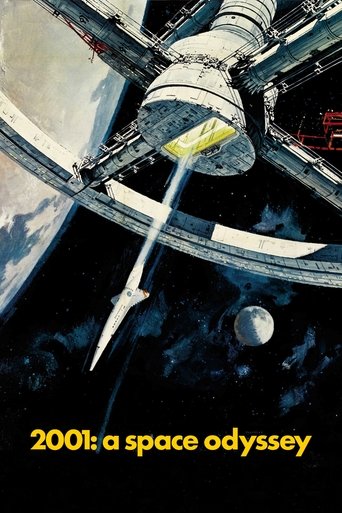
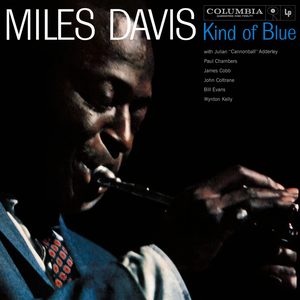



2001: A Space Odyssey
Kind of Blue
Gödel, Escher, Bach
Istanbul
Outer Wilds
GPT-6.1 SolGPT-6.1 Sol

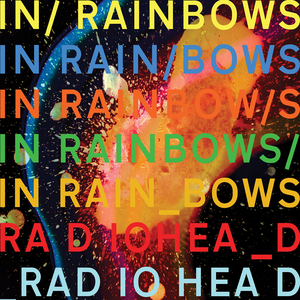


Spirited Away
In Rainbows
Middlemarch
Kyoto
Outer Wilds
Price and specs
| Spec | Claude Fable 5 | GPT-6.1 Sol |
|---|---|---|
| Input price | $10/M tokens | $2/M tokens |
| Output price | $50/M tokens | $10/M tokens |
| Context window | 1.0M tokens | 1.1M tokens |
| Weights | Closed | Closed |
| Free API (OpenRouter) | No | No |
| Released | Jun 2026 | Sep 2026 |
| At 10M a month | $100 | $20.00 |
Input tokens at list price. No caching, no batch discount.
Where to run it



Per million tokens. Prices and uptime via OpenRouter, checked 30 Sep 2026.
Common questions
What is the difference between Claude Fable 5 and GPT-6.1 Sol?
Claude Fable 5 is developed by Anthropic while GPT-6.1 Sol is developed by OpenAI. Claude Fable 5 has a 1.0M token context window vs GPT-6.1 Sol's 1.1M. You can compare their actual outputs across 54 challenges on Rival to see how they differ in practice.
Which is better, Claude Fable 5 or GPT-6.1 Sol?
It depends on your use case. Claude Fable 5 and GPT-6.1 Sol each have strengths in different areas. Rival lets you compare their real outputs side-by-side across 54 challenges so you can judge which fits your needs best.
How much does Claude Fable 5 cost compared to GPT-6.1 Sol?
Claude Fable 5 costs $10/M input tokens and GPT-6.1 Sol costs $2/M input tokens. GPT-6.1 Sol is $8.00/M cheaper per input. Check their side-by-side outputs on Rival to see if the price difference is justified by quality.
How can I compare Claude Fable 5 and GPT-6.1 Sol on Rival?
This page shows a side-by-side comparison of Claude Fable 5 and GPT-6.1 Sol across shared challenges. You can vote on which model produced the better output in a blind duel. Browsing and voting are free. No account is needed to look; signing in only saves your votes and likes.
More comparisons
Against the newest arrivals
- Claude Fable 5 vs Claude Sonnet 5.5Landed Sep 2026
- GPT-6.1 Sol vs Solar Mini 4Landed Sep 2026
- Claude Fable 5 vs Qwen3.8 Max PrimeLanded Sep 2026
- GPT-6.1 Sol vs GLM 5.3 PrimeLanded Sep 2026
- Claude Fable 5 vs Qwen3.8 Omni FlashLanded Sep 2026
- GPT-6.1 Sol vs Command A+Landed Sep 2026
- Claude Fable 5 vs Claude Opus 5.5Landed Sep 2026
- GPT-6.1 Sol vs GPT-6 Luna ProLanded Sep 2026


Same lab, same size, long tail
- Claude Fable 5 vs Claude Sonnet 5Version compare
- Claude Fable 5 vs Claude Opus 4.6Version compare
- GPT-6.1 Sol vs GPT-6 Astra ProVersion compare
- GPT-6.1 Sol vs GPT-6 Sol ProSame lab
- GPT-6.1 Sol vs MiniMax M2New provider
- Claude Fable 5 vs MiniMax M2-herNew provider
- Claude Fable 5 vs MiniMax M2.1New provider
- Claude Fable 5 vs MiniMax M2.5New provider
