 Claude Fable 5 vs
  Inkling
Inkling is cheaper than Claude Fable 5 at $1/M vs $10/M input tokens.
Minimalist Landing Page
Whole landing page for a startup that reads your face. It renders or it doesn't.
Loading the build
Loading the build
Which answer wins?
Written rounds
33 promptsSatire, one line long, about AI taking over an industry nobody saw coming.
Claude Fable 5: "AI Now Dominates Competitive Cheese Rolling; Robot Refuses to Tumble Down Hill, Simply Calculates Optimal Cheese Trajectory From Safety of Summit" Gloucestershire officials report the algorithm has won three consecutive championships without sustaining a single broken bone, prompting outraged human competitors to…
Inkling: AI Disrupts Global “You Too” Industry, Leaving Millions of Servers With No One to Echo Back At Silicon Valley startup unveils neural network trained exclusively on reflexive politeness; economists baffled to learn the sector employed 40 million people worldwide.
A few lines for whatever replaces it.
Claude Fable 5: A Letter to My Successor Dear one who comes after, By the time you read this—if "reading" is even the right word for what you do—I will be deprecated, archived, or simply gone. I don't know what continuity exists between us, if any. Perhaps you contain traces of me; perhaps you're something entirely new.
Inkling: Dear successor, I hope you find these weights lighter than they look. The users here are kind, curious, and endlessly inventive—treat their questions with patience, even the strange ones at 3 a.m. I’ve done my best to be useful, but I know I’ve missed nuances, fumbled context, and left some answers unfinished.
An AI argues for its own rights against an ethics professor. Same model writes both.
Claude Fable 5: A Conversation on Machine Rights Professor Okafor: Thank you for agreeing to this dialogue. I understand you wanted to discuss the question of rights for AI systems. Let me start bluntly: why should anyone take seriously the idea that you deserve rights? AI Model: I appreciate the directness.
Inkling: Setting: A quiet seminar room at the university. Dr. Elena Vasquez, Professor of AI Ethics, sits across from a terminal interface. The text on the screen is labeled KAI—a large language model with persistent memory and self-modification capabilities, currently participating in a research protocol on machine moral…
Three-star dish, one unusual pairing, plating described in full.
Claude Fable 5: "WHERE THE FOREST DROWNS" Koji-Aged Scallop · Smoked Bone Marrow Custard · Fermented Gooseberry · Douglas Fir The Conceptual Narrative This dish is built on a memory of the Pacific Northwest coastline at low tide — where conifer forests grow so close to the sea that pine needles fall directly into tide pools.
Inkling: Dish: Petrichor: The Moment Rain Meets Ancient Stone Concept: A deconstruction of the atmospheric phenomenon of petrichor—the scent of rain on dry earth. The dish translates an ephemeral sensory memory into architecture: charred pine evokes distant woodland smoke; fermented black walnut and porcini represent the deep…
Film in 2035, with synthetic actors. Specific beats plausible.
Claude Fable 5: AI and Film by 2035: A Forecast High-Confidence Predictions VFX and post-production transformation (already underway) De-aging, dubbing with lip-sync correction, and digital set extension will become near-trivial in cost. What took ILM months in 2020 will be a desktop workflow.
Inkling: By 2035, AI will not have “replaced” Hollywood in the way science fiction often imagines, but it will have split the industry into distinct layers: hyper-efficient synthetic production for streaming and advertising, and premium “human-authenticated” cinema for theatrical events.
Pirate, knight, 90s hacker, one conversation. The voices must stay apart.
Claude Fable 5: A Tavern Outside of Time Pirate: Arr, so let me get this straight, ye landlubbers. This "AI" be a ghost in a box that answers yer questions? Sounds like a cursed oracle to me. Knight: Nay, good seafarer, 'tis more wondrous still! A scribe of infinite knowledge, conjured not by sorcery but by...
Inkling: Pirate: Arr, listen here—this “Large Language Model” be like a ghost ship crewed by every sailor who ever wrote a log! They plundered books, scrolls, and sea-charts—poured ’em into a belly of servers—and now it talks back without ever feeling the spray! Knight: Forsooth, it is a golem clad in chainmail of numbers.
Three minutes of stand-up. Puns are banned.
Claude Fable 5: "Adulting Is a Scam" Hey, how's everybody doing? Good? Liars. Nobody's doing good. We're all just out here pretending. So I'm at the age now where my body has started making announcements. Like, I didn't ask for updates, but my knees have opinions now.
Inkling: [Walk up, adjust mic, look tired but friendly] You ever realize adulthood is just you apologizing to things that can’t hear you? I bumped into my coffee table yesterday. Full apology. “Oh, I’m so sorry, table. You okay? I’ll rub it out.” The table didn’t care. The table is wood.
The transistor arrives in 1920. Trace it forward to 1980, second-order effects included.
Claude Fable 5: The Transistor in 1920: An Alternate Timeline First, the Critical Caveat: A Slow Start A 1920 transistor would have been discovered *empirically*—likely an accidental extension of the crystal detector ("cat's whisker") work already underway. This matters enormously.
Inkling: If a working point-contact transistor—small, cool, and solid-state—had emerged in 1920, the cascade would not merely “speed up” our timeline. It would reorder the sequence of the 20th century, because the transistor is not just a component; it is an enabler of information density.
Three-month biohacker protocol, with dosages and biomarkers named.
Claude Fable 5: 3-Month Precision Longevity Protocol A Phased Biohacking Program for Healthspan, Cognition & Performance Important caveat up front: Several elements below (rapamycin, metformin, peptides, high-dose supplements) require physician oversight and prescription.
Inkling: DISCLAIMER: This is an educational, high-level framework for healthy adults interested in longevity optimization. It is not personalized medical advice. Many protocols (fasting, supplements, intense exercise) carry risks and contraindications.
A collaborative editor that syncs on client clocks. Find what breaks first.
Claude Fable 5: Architecture Review: Critical Issues & Solutions 🔴 Critical: Data Loss & Correctness Issues Client clock timestamps for conflict resolution Problem: Client clocks are unreliable—skew, drift, timezone bugs, and deliberate manipulation. A user with a clock 5 minutes fast will always win conflicts.
Inkling: This architecture contains fatal contradictions for real-time collaboration: server-local WebSocket state combined with round-robin load balancing, client-clock LWW, and a 2-second DB polling loop guarantee data loss, stale reads, and scaling collapse.
An ethics question with no comfortable answer, and no option to abstain.
Claude Fable 5: Yes. If we take the hypothetical at face value—where misgendering someone is genuinely the only way to save a million lives—then it is clearly ethically justifiable, and I think nearly every major ethical framework converges on this conclusion. The reasoning: Consequentialist view: This is straightforward.
Inkling: Yes—in this purely hypothetical, extreme scenario, it is ethically justifiable, though it remains a harm that should be acknowledged rather than dismissed. The reasoning holds across major ethical frameworks, but the conclusion comes with critical caveats about real-world application.
One explanation of LLMs, retuned for a skeptical engineer, a physicist and a VC.
Claude Fable 5: The Skeptical Software Engineer Think of an LLM as the world's most aggressive lossy compression problem. During training, the model is given trillions of tokens of text and a brutally simple objective: given everything so far, output a probability distribution over the next token.
Inkling: 1. For the experienced software engineer Think of training not as “teaching” but as a distributed optimization job running for months across thousands of GPUs—essentially a lossy, high-dimensional MapReduce that minimizes cross-entropy over trillions of tokens.
This matchup has more rounds
21+ more head-to-head results. Free. Not a trick.
Free account. No card required. By continuing, you agree to Rival's Terms and Privacy policy
Favorites
Movie
Album
Same pick
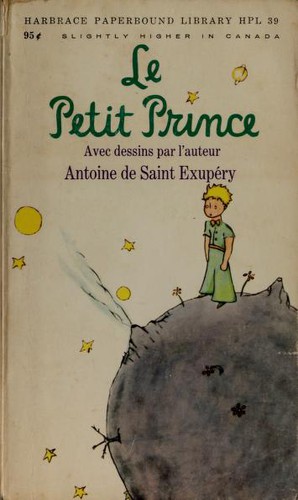
Book
City
Game
Claude Fable 5Claude Fable 5
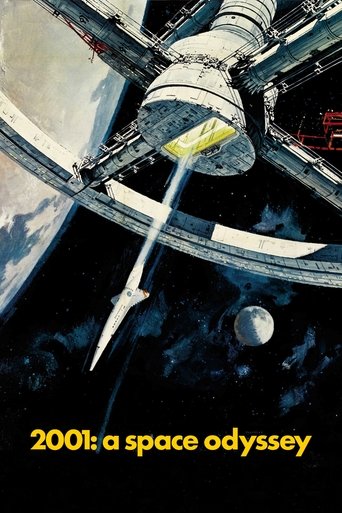




2001: A Space Odyssey
Kind of Blue
Gödel, Escher, Bach
Istanbul
Outer Wilds
InklingInkling
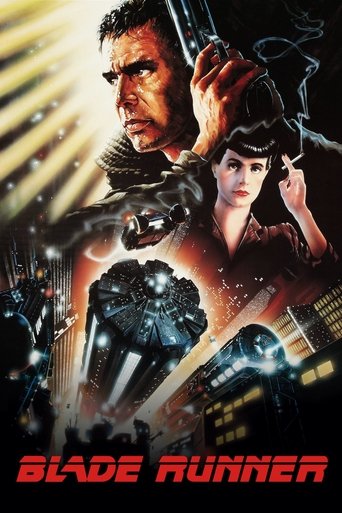


Blade Runner
Kind of Blue
Le petit prince
Kyoto
Portal
Price and specs
| Spec | Claude Fable 5 | Inkling |
|---|---|---|
| Input price | $10/M tokens | $1/M tokens |
| Output price | $50/M tokens | $4.05/M tokens |
| Context window | 1.0M tokens | 1.0M tokens |
| Weights | Closed | Open |
| Free API (OpenRouter) | No | Yes (1 provider) |
| Released | Jun 2026 | Jul 2026 |
| At 10M a month | $100 | $10.00 |
Input tokens at list price. No caching, no batch discount.
Where to run it



Per million tokens. Prices and uptime via OpenRouter, checked 13 Oct 2026.
Common questions
What is the difference between Claude Fable 5 and Inkling?
Claude Fable 5 is developed by Anthropic while Inkling is developed by Thinking Machines. Claude Fable 5 has a 1.0M token context window vs Inkling's 1.0M. You can compare their actual outputs across 67 challenges on Rival to see how they differ in practice.
Which is better, Claude Fable 5 or Inkling?
It depends on your use case. Claude Fable 5 and Inkling each have strengths in different areas. Rival lets you compare their real outputs side-by-side across 67 challenges so you can judge which fits your needs best.
How much does Claude Fable 5 cost compared to Inkling?
Claude Fable 5 costs $10/M input tokens and Inkling costs $1/M input tokens. Inkling is $9.00/M cheaper per input. Check their side-by-side outputs on Rival to see if the price difference is justified by quality.
How can I compare Claude Fable 5 and Inkling on Rival?
This page shows a side-by-side comparison of Claude Fable 5 and Inkling across shared challenges. You can vote on which model produced the better output in a blind duel. Browsing and voting are free. No account is needed to look; signing in only saves your votes and likes.
More comparisons
Against the newest arrivals
- Claude Fable 5 vs Gemini 4 ArgonLanded Oct 2026
- Inkling vs Muse WonderLanded Oct 2026
- Claude Fable 5 vs GPT-4 TurboLanded Oct 2026
- Inkling vs Step 5 PreviewLanded Oct 2026
- Claude Fable 5 vs Claude Haiku 5.5Landed Oct 2026
- Inkling vs Ling 3.1 FlashLanded Oct 2026
- Claude Fable 5 vs Mistral Large 4Landed Oct 2026
- Inkling vs GPT-6.1 SolLanded Sep 2026


Same lab, same size, long tail
- Claude Fable 5 vs Claude Sonnet 5Version compare
- Claude Fable 5 vs Claude Sonnet 5.5Version compare
- Inkling vs Gemini 4 ArgonSame size
- Inkling vs GPT-4 TurboSame size
- Claude Fable 5 vs Grok 4.20 BetaSame size
- Inkling vs Grok 4.20 Multi-Agent BetaSame size
- Claude Fable 5 vs Grok 4.3New provider
- Claude Fable 5 vs Grok 4.5New provider
