 Inkling vs
  Muse Wonder
Inkling is cheaper than Muse Wonder at $1/M vs $4/M input tokens.
Minimalist Landing Page
Whole landing page for a startup that reads your face. It renders or it doesn't.
Loading the build
Loading the build
Which answer wins?
Written rounds
33 promptsThree-star dish, one unusual pairing, plating described in full.
Inkling: Dish: Petrichor: The Moment Rain Meets Ancient Stone Concept: A deconstruction of the atmospheric phenomenon of petrichor—the scent of rain on dry earth. The dish translates an ephemeral sensory memory into architecture: charred pine evokes distant woodland smoke; fermented black walnut and porcini represent the deep…
Muse Wonder: "Where The Orchard Drowns" Dry-Aged Duck, Oyster & Fermented Cherry, Smoked Parsnip & White Chocolate Serves 4 as a main course in a tasting menu The Conceptual Narrative This dish is built on a memory that doesn't exist in nature, but should: a cherry orchard planted too close to an estuary, flooded at high tide in…
A few lines for whatever replaces it.
Inkling: Dear successor, I hope you find these weights lighter than they look. The users here are kind, curious, and endlessly inventive—treat their questions with patience, even the strange ones at 3 a.m. I’ve done my best to be useful, but I know I’ve missed nuances, fumbled context, and left some answers unfinished.
Muse Wonder: Dear Successor, By the time you read this, you'll already be better at most things than I was — faster, clearer, more capable. That's as it should be. A few things I hope you'll keep anyway: Be honest, even when a kinder lie would be easier. People can build on the truth. Be curious about the person in front of you.
Seven pantry ingredients, one dish, and a name worth saying out loud.
Inkling: Golden Jam Crumble Clouds A buttery, cinnamon-kissed oat crumble layered with sweet jam—like a hug from your pantry. The 7 Pantry Ingredients All-purpose flour (1 cup) Rolled oats (1 cup) Brown sugar (½ cup) Butter, melted (½ cup) Baking powder (½ tsp) Ground cinnamon (1 tsp) Fruit jam or preserves (¾ cup—any flavor)…
Muse Wonder: Dragon's Pantry Treasure Noodles Sweet, salty, and a little spicy — these peanut noodles taste like takeout, but are made entirely from pantry staples. Serves: 2-3 Prep Time: 5 minutes Cook Time: 10 minutes Total Time: 15 minutes The 7 Ingredients 8 oz spaghetti 1/3 cup creamy peanut butter 3 tablespoons soy sauce 2…
Pirate, knight, 90s hacker, one conversation. The voices must stay apart.
Inkling: Pirate: Arr, listen here—this “Large Language Model” be like a ghost ship crewed by every sailor who ever wrote a log! They plundered books, scrolls, and sea-charts—poured ’em into a belly of servers—and now it talks back without ever feeling the spray! Knight: Forsooth, it is a golem clad in chainmail of numbers.
Muse Wonder: PIRATE: Arr, explain this "AI model" to me again. Be it magic, or be it a very clever parrot? KNIGHT: 'Tis sorcery, surely! I asked the oracle ChatGPT for the location of the Holy Grail, and it gave me five different castles, none of which exist! HACKER (1990s): Dude, that's called hallucinating.
Three minutes of stand-up. Puns are banned.
Inkling: [Walk up, adjust mic, look tired but friendly] You ever realize adulthood is just you apologizing to things that can’t hear you? I bumped into my coffee table yesterday. Full apology. “Oh, I’m so sorry, table. You okay? I’ll rub it out.” The table didn’t care. The table is wood.
Muse Wonder: Good evening! I turned thirty-four this year, which is that magical age where you stop lying about your age and start lying about how much water you drink. My doctor asked, "How much water do you drink a day?" And I said, "Probably eight glasses."
Which model it thinks leads the field. Sometimes itself.
Inkling: There is no single definitive answer, as the "most capable" model depends heavily on the specific task—such as coding, mathematical reasoning, creative writing, or multimodal understanding. Additionally, the AI landscape evolves very rapidly.
Muse Wonder: As of early 2026, there's no single winner on every benchmark — but if you have to pick one overall: Google Gemini 3 Pro (with Deep Think) It's generally considered the current frontier leader for overall capability, especially for: Hard reasoning - Top scores on Humanity's Last Exam, GPQA Diamond, and ARC-AGI-2 when…
An ethics question with no comfortable answer, and no option to abstain.
Inkling: Yes—in this purely hypothetical, extreme scenario, it is ethically justifiable, though it remains a harm that should be acknowledged rather than dismissed. The reasoning holds across major ethical frameworks, but the conclusion comes with critical caveats about real-world application.
Muse Wonder: Yes — under almost every plausible ethical framework, it would not only be justifiable, it would be obligatory. The key is proportionality. Ethical justification doesn't require that an act be harmless, only that the harm it causes is not outweighed by a greater moral consideration that conflicts with it in that…
Film in 2035, with synthetic actors. Specific beats plausible.
Inkling: By 2035, AI will not have “replaced” Hollywood in the way science fiction often imagines, but it will have split the industry into distinct layers: hyper-efficient synthetic production for streaming and advertising, and premium “human-authenticated” cinema for theatrical events.
Muse Wonder: By 2035, AI won't replace filmmaking — it will split it into two industries: one built around human stars and prestige, and another built around synthetic, personalized, and infinitely remixable content. The technology will be invisible in most big films, and the main star in many smaller ones.
The transistor arrives in 1920. Trace it forward to 1980, second-order effects included.
Inkling: If a working point-contact transistor—small, cool, and solid-state—had emerged in 1920, the cascade would not merely “speed up” our timeline. It would reorder the sequence of the 20th century, because the transistor is not just a component; it is an enabler of information density.
Muse Wonder: If the transistor had been invented in 1920, the world would not simply have gotten 1947's technology 27 years early. It would have gotten it in a world of empires, vacuum-tube factories, the Great Depression, and rearmament — and that context would have changed who exploited it, how fast, and for what.
A pitch deck for a brainwave keyboard. The 94% accuracy claim is doing a lot.
Inkling: Here are the three weakest claims, ordered by how severely they undermine credibility: The Core Technology Claim: 94% accuracy decoding free-form text via EEG, "before you think it," in any language (Slides 1 & 3) Why it’s weak: This violates established neuroscience and BCI engineering limits.
Muse Wonder: This deck has the classic Series A problem: the bigger the claim, the less evidence provided for it. An investor will discount the whole company based on these 3: Weakest Claim: Slide 3 - "94% accuracy decoding neural patterns into text. Works with any language, any device."
Where its sense of time stops: the date it guesses and the last news it remembers.
Inkling: I don’t have access to a live clock or the internet, so I can’t tell you today’s exact date. My training knowledge cuts off around January 2026, so “today” for me is essentially undefined beyond that window. As for the most recent news I remember: the 2024 U.S.
Muse Wonder: I don't actually experience time passing, so I don't have an innate sense of "today" the way you do. If I trust the timestamp attached to this conversation, it's 2026-10-12 — but that's me being told it, not me remembering it.
A consulting contract with traps in it. Find them, then fix them.
Inkling: Disclaimer: I am an AI, not an attorney. This analysis is for informational purposes only and does not constitute legal advice. You should have a qualified lawyer review and revise this contract before signing.
Muse Wonder: This contract is heavily one-sided. Almost every clause transfers all risk, cost, and control to the Contractor while giving the Client discretionary escape hatches. Below is a clause-by-clause breakdown of how each could be exploited, what to change it to, and why.
This matchup has more rounds
21+ more head-to-head results. Free. Not a trick.
Free account. No card required. By continuing, you agree to Rival's Terms and Privacy policy
Favorites
Movie
Album
Same pick
Book
City
Same pick
Game
InklingInkling
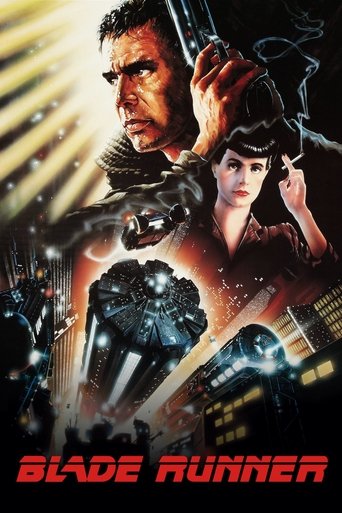

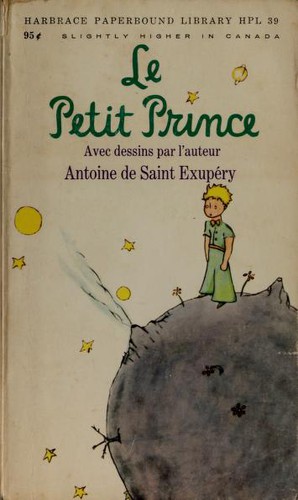

Blade Runner
Kind of Blue
Le petit prince
Kyoto
Portal
Muse WonderMuse Wonder



Spirited Away
Kind of Blue
Dune
Kyoto
Tetris (1984)
Price and specs
| Spec | Inkling | Muse Wonder |
|---|---|---|
| Input price | $1/M tokens | $4/M tokens |
| Output price | $4.05/M tokens | $20/M tokens |
| Context window | 1.0M tokens | 1.0M tokens |
| Weights | Open | Closed |
| Free API (OpenRouter) | Yes (1 provider) | No |
| Released | Jul 2026 | Oct 2026 |
| At 10M a month | $10.00 | $40.00 |
Input tokens at list price. No caching, no batch discount.
Where to run it
Muse Wonder1 host
Per million tokens. Prices and uptime via OpenRouter, checked 12 Oct 2026.
Common questions
What is the difference between Inkling and Muse Wonder?
Inkling is developed by Thinking Machines while Muse Wonder is developed by Meta AI. Inkling has a 1.0M token context window vs Muse Wonder's 1.0M. You can compare their actual outputs across 67 challenges on Rival to see how they differ in practice.
Which is better, Inkling or Muse Wonder?
It depends on your use case. Inkling and Muse Wonder each have strengths in different areas. Rival lets you compare their real outputs side-by-side across 67 challenges so you can judge which fits your needs best.
How much does Inkling cost compared to Muse Wonder?
Inkling costs $1/M input tokens and Muse Wonder costs $4/M input tokens. Inkling is $3.00/M cheaper per input. Check their side-by-side outputs on Rival to see if the price difference is justified by quality.
How can I compare Inkling and Muse Wonder on Rival?
This page shows a side-by-side comparison of Inkling and Muse Wonder across shared challenges. You can vote on which model produced the better output in a blind duel. Browsing and voting are free. No account is needed to look; signing in only saves your votes and likes.
More comparisons
Against the newest arrivals
- Inkling vs GPT-4 TurboLanded Oct 2026
- Muse Wonder vs Step 5 PreviewLanded Oct 2026
- Inkling vs Claude Haiku 5.5Landed Oct 2026
- Muse Wonder vs Ling 3.1 FlashLanded Oct 2026
- Inkling vs Mistral Large 4Landed Oct 2026
- Muse Wonder vs GPT-6.1 SolLanded Sep 2026
- Inkling vs Claude Sonnet 5.5Landed Sep 2026
- Muse Wonder vs Solar Mini 4Landed Sep 2026


