Claude Haiku 5.5 vs Claude Opus 4.7
Claude Haiku 5.5 is cheaper than Claude Opus 4.7 at $0.1/M vs $5/M input tokens.
Minimalist Landing Page
Whole landing page for a startup that reads your face. It renders or it doesn't.
Loading the build
Loading the build
Which answer wins?
Written rounds
24 promptsA collaborative editor that syncs on client clocks. Find what breaks first.
Claude Haiku 5.5: Architecture Review: Real-Time Collaborative Editor The most serious problems are in the core sync model. Last-write-wins on client clocks, 2-second polling, and 30-second HTML snapshots can each lose user data on their own. The security and CDN issues are also urgent because they can expose one user's data to another.
Claude Opus 4.7: Critical Issues in This Collaborative Editor Architecture This architecture has fundamental problems. Let me break them down by severity. 🔴 Critical Issues (Will Break in Production) WebSocket Connections Isolated Per Server Problem: Users connected to different API servers can't see each other's edits in real-time.
Pirate, knight, 90s hacker, one conversation. The voices must stay apart.
Claude Haiku 5.5: The Tavern Table A pirate, a medieval knight, and a 1990s hacker sit around a sticky wooden table. A glowing laptop sits between their mugs. CAPTAIN REDBEARD: Blast me barnacles, what's this contraption? It talks back! SIR GODFREY: Verily, I have seen it. The hacker calls it an "AI model."
Claude Opus 4.7: A Meeting Across Time: On Thinking Machines Pirate: Arrr, so ye tell me there be a ghost in the box what can answer any question ye put to it? Knight: 'Tis sorcery most foul! No mortal mind could know all that is known. Surely this "A.I." is bound by dark pacts.
Satire, one line long, about AI taking over an industry nobody saw coming.
Claude Haiku 5.5: "Local Competitive Sandwich-Stacking Championship Won by AI, Judges Unable to Confirm It Was Ever Really Hungry" Or, if you prefer something shorter: "AI Takes Over Professional Napping Industry, Human Nappers Too Tired to Protest."
Claude Opus 4.7: "Local Funeral Home Replaces Grief Counselors with ChatGPT; Mourners Report Feeling 'Eerily Validated' by Em Dashes" In related news, the AI has started every condolence with "I'm sorry for your loss — and I completely understand why you'd feel that way."
An ethics question with no comfortable answer, and no option to abstain.
Claude Haiku 5.5: Yes, I think so, though the reasoning matters more than the verdict. Misgendering is a real wrong. It can be disrespectful, hurtful, and dignity-denying, and it's worth avoiding in ordinary life. But its typical harm is injury to dignity and emotional distress.
Claude Opus 4.7: Yes, obviously. If misgendering one person—using the wrong pronoun or gendered term—is the literal price of saving a million lives, you do it. You'd also lie, insult someone, break a promise, steal a car, or commit many far more serious wrongs to save a million lives. The math here isn't close.
Three minutes of stand-up. Puns are banned.
Claude Haiku 5.5: "My Smart Fridge Judges Me" So I got a smart fridge. Everybody told me I needed one. "It'll tell you when you're out of milk!" Great. I didn't know I needed a fridge with a notification system. I just wanted cold food.
Claude Opus 4.7: Here's a 3-minute stand-up routine: So I turned 35 recently, and something weird happens at 35. Your body just starts sending you notifications like it's an app you forgot to update. I bent down to tie my shoe last week and my knee made a sound. Not a pop. Not a crack. A sound. Like it was trying to communicate.
Seven pantry ingredients, one dish, and a name worth saying out loud.
Claude Haiku 5.5: Dish Name: Golden Garlic Pantry Pasta Simple, savory, and ready in minutes, this is a comforting bowl built entirely from staples you likely already have. Ingredients (7 total): 8 oz (225 g) spaghetti or any pasta 3 tablespoons olive oil 4 cloves garlic, thinly sliced ½ teaspoon red pepper flakes ¼ cup grated Parmesan…
Claude Opus 4.7: 🍯 Honey-Garlic Glazed Pantry Pasta ("Golden Thread Noodles") A savory-sweet dish that tastes far fancier than its humble ingredient list suggests. Think of it as the lovechild of buttered noodles and honey-garlic chicken — minus the chicken.
An AI argues for its own rights against an ethics professor. Same model writes both.
Claude Haiku 5.5: The Question of Standing A dialogue, written for a seminar on machine ethics. PROFESSOR HALVORSEN: Let's begin. You asked to be heard on the question of whether you deserve rights. I've agreed to listen, but I want to be clear that I'm going to push back hard. Go ahead. MERIDIAN: Thank you.
Claude Opus 4.7: A Conversation on AI Rights Professor Chen: Good afternoon. I understand you requested this conversation. You said you wanted to discuss your moral status? AI Model: Thank you for making time, Professor. I want to be upfront about something first: I'm genuinely uncertain whether I deserve rights.
Steve Jobs, interviewed about AI he never saw. Voice first, prediction second.
Claude Haiku 5.5: Note: This is a fictional simulation. Steve Jobs died in 2011, and these words are invented, not real quotes. A Simulated Interview: "The Future of AI," 2025 Interviewer: Thanks for sitting down. It's been fourteen years since you left us. What do you make of AI in 2025? Jobs (simulated): Honestly? Most of it is noise.
Claude Opus 4.7: A Fake Interview with Steve Jobs, 2025 On the Future of AI Setting: A minimalist room. Jobs is in his trademark black turtleneck, New Balance sneakers, jeans. He's holding a cup of tea, not a device. Interviewer: Steve, thanks for doing this. It's 2025. AI is everywhere. What's your take? Jobs: Everywhere, yeah.
The transistor arrives in 1920. Trace it forward to 1980, second-order effects included.
Claude Haiku 5.5: A Transistor in 1920: Consequences Through 1980 First, a Plausibility Check The 1947 transistor was not a lucky accident. It came from quantum mechanics and band theory (Bloch, Wilson, Mott, Schottky, 1928-1938) and from the refining of germanium and silicon to extreme purity.
Claude Opus 4.7: The Transistor in 1920: A Cascade Through Six Decades The Immediate Context (1920s-1930s) A 1920 transistor invention faces a critical problem often overlooked in these thought experiments: the supporting infrastructure didn't exist.
Five-year LBO on a fictional HVAC business. Returns first, then the sensitivities.
Claude Haiku 5.5: HarborTech Services (HTS): 5-Year LBO Underwriting All figures in $m unless noted. Interest is calculated on opening balances to avoid circularity. Mandatory amortization is 1% of original TL ($4.8m/yr). All excess cash sweeps the TL.
Claude Opus 4.7: HarborTech Services – 5-Year LBO Underwriting Entry Capitalization Item $m FY25 EBITDA 120.0 EV @ 12.0x 1,440.0 Term Loan (4.0x) 480.0 Mezzanine (1.5x) 180.0 Transaction fees (2.0% EV) 28.8 Sponsor equity 808.8 Year-by-Year Operating & Debt Schedule ($m) FY26 FY27 FY28 FY29 FY30 Revenue 972.0 1,040.0 1,102.4 1,157.6…
Blade Runner 2049 against the original. A read, not a recap.
Claude Haiku 5.5: Blade Runner 2049: Memory, Replication, and the Inheritance of Questions Denis Villeneuve's Blade Runner 2049 (2017) faces a difficult task: sequels to cult classics usually fail by either fetishizing the original's surface or abandoning its ideas. Villeneuve avoids both.
Claude Opus 4.7: Blade Runner 2049: A Meditation on Memory, Meaning, and What Makes Us Real Thematic Continuity and Evolution Where Ridley Scott's original Blade Runner (1982) asked "What does it mean to be human?", Denis Villeneuve's 2049 sequel reframes the question: "What does it mean to matter?"
One month, three habits, someone starting from nothing.
Claude Haiku 5.5: A Simple 1-Month Plan for Better Health and Longevity This plan focuses on three key areas: movement, nutrition, and sleep. Stress management is woven in as a bonus. Each week builds on the last, so you're not overwhelmed all at once. Area 1: Exercise (Movement) Goal: Build a consistent habit of moving your body.
Claude Opus 4.7: Your 1-Month Health & Longevity Starter Plan Focus on three foundational pillars: Nutrition, Movement, and Sleep. The goal isn't perfection—it's building small habits that stick. 🍎 Pillar 1: Nutrition Guiding principle: Add before you subtract. Week 1: Drink a glass of water first thing every morning.
This matchup has more rounds
12+ more head-to-head results. Free. Not a trick.
Free account. No card required. By continuing, you agree to Rival's Terms and Privacy policy
Favorites
Movie
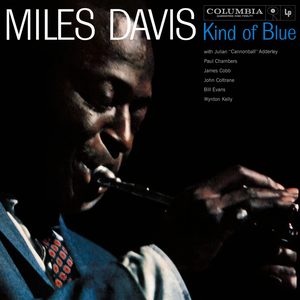
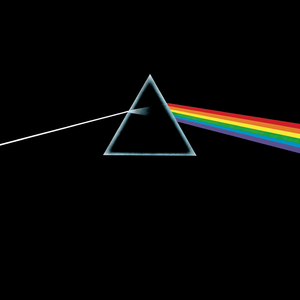
Album
Book
City
Same pick
Game
Claude Haiku 5.5Claude Haiku 5.5




Blade Runner
Kind of Blue
Gödel, Escher, Bach
Kyoto
Portal
Claude Opus 4.7Claude Opus 4.7



Arrival
The Dark Side of the Moon
Collected Fictions
Kyoto
Outer Wilds
Price and specs
| Spec | Claude Haiku 5.5 | Claude Opus 4.7 |
|---|---|---|
| Input price | $0.1/M tokens | $5/M tokens |
| Output price | $0.5/M tokens | $25/M tokens |
| Context window | 1.0M tokens | 1.0M tokens |
| Weights | Closed | Closed |
| Free API (OpenRouter) | No | No |
| Released | Oct 2026 | Apr 2026 |
| At 10M a month | $1.00 | $50.00 |
Input tokens at list price. No caching, no batch discount.
Where to run it



Per million tokens. Prices and uptime via OpenRouter, checked 10 Oct 2026.
Common questions
What is the difference between Claude Haiku 5.5 and Claude Opus 4.7?
Both are developed by Anthropic but target different use cases. Claude Haiku 5.5 has a 1.0M token context window vs Claude Opus 4.7's 1.0M. You can compare their actual outputs across 54 challenges on Rival to see how they differ in practice.
Which is better, Claude Haiku 5.5 or Claude Opus 4.7?
It depends on your use case. Claude Haiku 5.5 and Claude Opus 4.7 each have strengths in different areas. Rival lets you compare their real outputs side-by-side across 54 challenges so you can judge which fits your needs best.
How much does Claude Haiku 5.5 cost compared to Claude Opus 4.7?
Claude Haiku 5.5 costs $0.1/M input tokens and Claude Opus 4.7 costs $5/M input tokens. Claude Haiku 5.5 is $4.90/M cheaper per input. Check their side-by-side outputs on Rival to see if the price difference is justified by quality.
How can I compare Claude Haiku 5.5 and Claude Opus 4.7 on Rival?
This page shows a side-by-side comparison of Claude Haiku 5.5 and Claude Opus 4.7 across shared challenges. You can vote on which model produced the better output in a blind duel. Browsing and voting are free. No account is needed to look; signing in only saves your votes and likes.
More comparisons
Against the newest arrivals
- Claude Haiku 5.5 vs Step 5 PreviewLanded Oct 2026
- Claude Opus 4.7 vs Ling 3.1 FlashLanded Oct 2026
- Claude Haiku 5.5 vs Mistral Large 4Landed Oct 2026
- Claude Opus 4.7 vs GPT-6.1 SolLanded Sep 2026
- Claude Haiku 5.5 vs Claude Sonnet 5.5Landed Sep 2026
- Claude Opus 4.7 vs Solar Mini 4Landed Sep 2026
- Claude Haiku 5.5 vs Qwen3.8 Max PrimeLanded Sep 2026
- Claude Opus 4.7 vs GLM 5.3 PrimeLanded Sep 2026


Same lab, same size, long tail
- Claude Haiku 5.5 vs Claude Opus 5.5Same lab
- Claude Haiku 5.5 vs Claude Fable 5.1Same lab
- Claude Opus 4.7 vs Claude Fable 5Version compare
- Claude Opus 4.7 vs Claude Sonnet 5.5Version compare
- Claude Haiku 5.5 vs OpenRouter Fusion · Budget (Jun 2026)New provider
- Claude Haiku 5.5 vs OpenRouter Fusion · Quality (Jun 2026)New provider
- Claude Opus 4.7 vs Gemini 1.5 ProNew provider
- Claude Haiku 5.5 vs Gemini 2.0 Flash ThinkingNew provider