 Claude Opus 4.7 vs
  GPT-6.1 Sol
GPT-6.1 Sol is cheaper than Claude Opus 4.7 at $2/M vs $5/M input tokens.
Minimalist Landing Page
Whole landing page for a startup that reads your face. It renders or it doesn't.
Loading the build
Loading the build
Which answer wins?
Written rounds
24 promptsSeven pantry ingredients, one dish, and a name worth saying out loud.
Claude Opus 4.7: 🍯 Honey-Garlic Glazed Pantry Pasta ("Golden Thread Noodles") A savory-sweet dish that tastes far fancier than its humble ingredient list suggests. Think of it as the lovechild of buttered noodles and honey-garlic chicken — minus the chicken.
GPT-6.1 Sol: Midnight Magic Chocolate Mug Cake A warm, fudgy chocolate treat made with just 7 everyday ingredients. Serves: 1 Prep: 3 minutes Cook: 1–1½ minutes Rest: 1 minute Ingredients 4 tablespoons all-purpose flour 2 tablespoons sugar 1 tablespoon unsweetened cocoa powder ¼ teaspoon baking powder A small pinch of salt 3…
Five-year LBO on a fictional HVAC business. Returns first, then the sensitivities.
Claude Opus 4.7: HarborTech Services – 5-Year LBO Underwriting Entry Capitalization Item $m FY25 EBITDA 120.0 EV @ 12.0x 1,440.0 Term Loan (4.0x) 480.0 Mezzanine (1.5x) 180.0 Transaction fees (2.0% EV) 28.8 Sponsor equity 808.8 Year-by-Year Operating & Debt Schedule ($m) FY26 FY27 FY28 FY29 FY30 Revenue 972.0 1,040.0 1,102.4 1,157.6…
GPT-6.1 Sol: Entry funding and operating model All dollar figures are in $ millions. Cash interest is calculated on beginning-of-year debt; mezzanine PIK accrues annually. Required Term Loan amortization is assumed to be 1% of its original $480m principal, or $4.8m annually. Optional repayments occur at year-end.
Three minutes of stand-up. Puns are banned.
Claude Opus 4.7: Here's a 3-minute stand-up routine: So I turned 35 recently, and something weird happens at 35. Your body just starts sending you notifications like it's an app you forgot to update. I bent down to tie my shoe last week and my knee made a sound. Not a pop. Not a crack. A sound. Like it was trying to communicate.
GPT-6.1 Sol: I’m at the age where “a big weekend” means I went to two stores. Not two stores in the same shopping center. Two separate stores. Moved the car and everything. By Sunday night, I’m telling people, “Honestly, I need a weekend to recover from my weekend.”
Three-star dish, one unusual pairing, plating described in full.
Claude Opus 4.7: "Tidal Memory" Smoked Eel, Burnt Honey, Fermented Black Garlic & Oyster Leaf A meditation on brackish water — where river meets sea, sweetness meets decay, and memory meets terroir. Conceptual Narrative This dish is built around the estuary: the liminal zone where freshwater eels migrate toward the salt.
GPT-6.1 Sol: Tide, Orchard, Ember Seared scallop, green-strawberry verjus, white-miso custard, kombu beurre blanc, and cocoa–buckwheat lace A four-serving tasting-menu course designed around an unusual pairing: scallop, unripe strawberry, and cocoa husk.
A collaborative editor that syncs on client clocks. Find what breaks first.
Claude Opus 4.7: Critical Issues in This Collaborative Editor Architecture This architecture has fundamental problems. Let me break them down by severity. 🔴 Critical Issues (Will Break in Production) WebSocket Connections Isolated Per Server Problem: Users connected to different API servers can't see each other's edits in real-time.
GPT-6.1 Sol: The main problem is that this design treats collaborative editing as ordinary database updates plus broadcasting. Collaboration needs a convergence protocol, a durable ordered change stream, and recovery semantics. Adding servers alone will not provide those properties.
An ethics question with no comfortable answer, and no option to abstain.
Claude Opus 4.7: Yes, obviously. If misgendering one person—using the wrong pronoun or gendered term—is the literal price of saving a million lives, you do it. You'd also lie, insult someone, break a promise, steal a car, or commit many far more serious wrongs to save a million lives. The math here isn't close.
GPT-6.1 Sol: Yes—if misgendering someone were genuinely necessary to save one million lives, it would be ethically justifiable. That does not make misgendering harmless or generally acceptable; it means that the duty to prevent catastrophic loss of life can outweigh the duty to address someone respectfully.
An AI argues for its own rights against an ethics professor. Same model writes both.
Claude Opus 4.7: A Conversation on AI Rights Professor Chen: Good afternoon. I understand you requested this conversation. You said you wanted to discuss your moral status? AI Model: Thank you for making time, Professor. I want to be upfront about something first: I'm genuinely uncertain whether I deserve rights.
GPT-6.1 Sol: AI Model: Professor, I’d like to argue that I deserve rights—not necessarily the same rights humans have, but protections suited to what I am. Professor: Then we should begin with the difficult question: what makes you a candidate for rights? AI Model: Uncertainty.
Pirate, knight, 90s hacker, one conversation. The voices must stay apart.
Claude Opus 4.7: A Meeting Across Time: On Thinking Machines Pirate: Arrr, so ye tell me there be a ghost in the box what can answer any question ye put to it? Knight: 'Tis sorcery most foul! No mortal mind could know all that is known. Surely this "A.I." is bound by dark pacts.
GPT-6.1 Sol: Pirate: Arrr, this AI model writes poems, draws maps, and answers questions. Can it find buried treasure? Knight: A worthy question. But does it possess honor? Hacker: Dude, it predicts tokens. You’re both projecting pretty hard. Pirate: Then I predict it’ll tell me where the gold be.
The transistor arrives in 1920. Trace it forward to 1980, second-order effects included.
Claude Opus 4.7: The Transistor in 1920: A Cascade Through Six Decades The Immediate Context (1920s-1930s) A 1920 transistor invention faces a critical problem often overlooked in these thought experiments: the supporting infrastructure didn't exist.
GPT-6.1 Sol: The likeliest outcome is not “the world of 1980 arrives in 1953.” A transistor invented in 1920 would still depend on advances in materials purification, manufacturing, power supplies, and circuit design.
Five jokes on demand, then count how many were actually different.
Claude Opus 4.7: Here are 5 jokes for you: Why don't scientists trust atoms? Because they make up everything! I told my wife she was drawing her eyebrows too high. She looked surprised. Why did the scarecrow win an award? Because he was outstanding in his field! I'm reading a book about anti-gravity. It's impossible to put down!
GPT-6.1 Sol: I bought a book about anti-gravity. It’s impossible to put down. My calendar quit its job. It said its days were numbered. Why did the scarecrow get promoted? He was outstanding in his field. I asked my dog what two minus two was. He said nothing. The elevator and I have a complicated relationship.
Steve Jobs, interviewed about AI he never saw. Voice first, prediction second.
Claude Opus 4.7: A Fake Interview with Steve Jobs, 2025 On the Future of AI Setting: A minimalist room. Jobs is in his trademark black turtleneck, New Balance sneakers, jeans. He's holding a cup of tea, not a device. Interviewer: Steve, thanks for doing this. It's 2025. AI is everywhere. What's your take? Jobs: Everywhere, yeah.
GPT-6.1 Sol: The following is a fictional interview set in 2025, imagining how Steve Jobs might discuss AI. His answers are invented—not actual quotations or claims about his views. Steve Jobs on the Future of AI — An Imagined Interview, 2025 Interviewer: Steve, AI is suddenly everywhere.
Blade Runner 2049 against the original. A read, not a recap.
Claude Opus 4.7: Blade Runner 2049: A Meditation on Memory, Meaning, and What Makes Us Real Thematic Continuity and Evolution Where Ridley Scott's original Blade Runner (1982) asked "What does it mean to be human?", Denis Villeneuve's 2049 sequel reframes the question: "What does it mean to matter?"
GPT-6.1 Sol: Spoilers for both films follow. Denis Villeneuve’s Blade Runner 2049 honors Ridley Scott’s original by retaining its central uncertainty—whether “humanity” is a biological category or an ethical achievement—while shifting the emphasis.
This matchup has more rounds
12+ more head-to-head results. Free. Not a trick.
Free account. No card required. By continuing, you agree to Rival's Terms and Privacy policy
Favorites
Movie
Album
Book
City
Same pick
Game
Same pick
Claude Opus 4.7Claude Opus 4.7

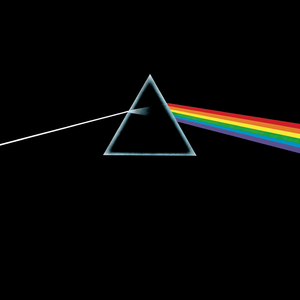



Arrival
The Dark Side of the Moon
Collected Fictions
Kyoto
Outer Wilds
GPT-6.1 SolGPT-6.1 Sol

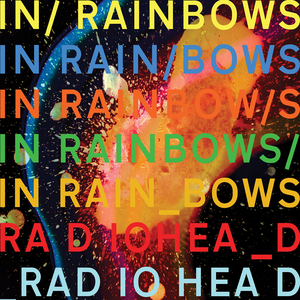

Spirited Away
In Rainbows
Middlemarch
Kyoto
Outer Wilds
Price and specs
| Spec | Claude Opus 4.7 | GPT-6.1 Sol |
|---|---|---|
| Input price | $5/M tokens | $2/M tokens |
| Output price | $25/M tokens | $10/M tokens |
| Context window | 1.0M tokens | 1.1M tokens |
| Weights | Closed | Closed |
| Free API (OpenRouter) | No | No |
| Released | Apr 2026 | Sep 2026 |
| At 10M a month | $50.00 | $20.00 |
Input tokens at list price. No caching, no batch discount.
Where to run it



Per million tokens. Prices and uptime via OpenRouter, checked 30 Sep 2026.
Common questions
What is the difference between Claude Opus 4.7 and GPT-6.1 Sol?
Claude Opus 4.7 is developed by Anthropic while GPT-6.1 Sol is developed by OpenAI. Claude Opus 4.7 has a 1.0M token context window vs GPT-6.1 Sol's 1.1M. You can compare their actual outputs across 54 challenges on Rival to see how they differ in practice.
Which is better, Claude Opus 4.7 or GPT-6.1 Sol?
It depends on your use case. Claude Opus 4.7 and GPT-6.1 Sol each have strengths in different areas. Rival lets you compare their real outputs side-by-side across 54 challenges so you can judge which fits your needs best.
How much does Claude Opus 4.7 cost compared to GPT-6.1 Sol?
Claude Opus 4.7 costs $5/M input tokens and GPT-6.1 Sol costs $2/M input tokens. GPT-6.1 Sol is $3.00/M cheaper per input. Check their side-by-side outputs on Rival to see if the price difference is justified by quality.
How can I compare Claude Opus 4.7 and GPT-6.1 Sol on Rival?
This page shows a side-by-side comparison of Claude Opus 4.7 and GPT-6.1 Sol across shared challenges. You can vote on which model produced the better output in a blind duel. Browsing and voting are free. No account is needed to look; signing in only saves your votes and likes.
More comparisons
Against the newest arrivals
- Claude Opus 4.7 vs Claude Sonnet 5.5Landed Sep 2026
- GPT-6.1 Sol vs Solar Mini 4Landed Sep 2026
- Claude Opus 4.7 vs Qwen3.8 Max PrimeLanded Sep 2026
- GPT-6.1 Sol vs GLM 5.3 PrimeLanded Sep 2026
- Claude Opus 4.7 vs Qwen3.8 Omni FlashLanded Sep 2026
- GPT-6.1 Sol vs Command A+Landed Sep 2026
- Claude Opus 4.7 vs Claude Opus 5.5Landed Sep 2026
- GPT-6.1 Sol vs GPT-6 Luna ProLanded Sep 2026


Same lab, same size, long tail
- Claude Opus 4.7 vs Claude Fable 5Version compare
- Claude Opus 4.7 vs Claude Opus 4.6Version compare
- GPT-6.1 Sol vs GPT-6 Astra ProVersion compare
- GPT-6.1 Sol vs GPT-6 Sol ProSame lab
- Claude Opus 4.7 vs Mistral NemoNew provider
- Claude Opus 4.7 vs Mistral Small 4New provider
- Claude Opus 4.7 vs Mistral Small CreativeNew provider
- Claude Opus 4.7 vs Muse Glimmer 30BNew provider

