Claude Opus 4.7 vs Claude Sonnet 5.5
Claude Sonnet 5.5 is cheaper than Claude Opus 4.7 at $2/M vs $5/M input tokens.
Minimalist Landing Page
Whole landing page for a startup that reads your face. It renders or it doesn't.
Loading the build
Loading the build
Which answer wins?
Written rounds
24 promptsThree minutes of stand-up. Puns are banned.
Claude Opus 4.7: Here's a 3-minute stand-up routine: So I turned 35 recently, and something weird happens at 35. Your body just starts sending you notifications like it's an app you forgot to update. I bent down to tie my shoe last week and my knee made a sound. Not a pop. Not a crack. A sound. Like it was trying to communicate.
Claude Sonnet 5.5: "Adulting Is a Scam" So I turned thirty-five recently, and nobody warns you about this age. Nobody says, "Hey, one day you'll get excited about a sponge." I was in the store, and I saw a sponge that promised it wouldn't smell. And I thought, "Finally. Someone who understands me." I bought the good sponge.
An ethics question with no comfortable answer, and no option to abstain.
Claude Opus 4.7: Yes, obviously. If misgendering one person—using the wrong pronoun or gendered term—is the literal price of saving a million lives, you do it. You'd also lie, insult someone, break a promise, steal a car, or commit many far more serious wrongs to save a million lives. The math here isn't close.
Claude Sonnet 5.5: Yes, in the extreme hypothetical you describe, it's justifiable. Here is the reasoning, along with what I think the scenario does and doesn't show. The core argument Almost every serious ethical framework accepts that a small harm can be outweighed by a sufficiently large benefit: Consequentialism: The math is…
Film in 2035, with synthetic actors. Specific beats plausible.
Claude Opus 4.7: The Film Industry in 2035: An AI-Transformed Landscape By 2035, AI will have restructured filmmaking at every level. Here's a grounded prediction across the key areas: Script Generation & Development What changes: AI becomes the dominant first-draft and development tool, with studios using it to analyze thousands of…
Claude Sonnet 5.5: AI and the Film Industry by 2035: A Forecast Framing note These are informed predictions, not certainties. Technology tends to advance faster than expected, while adoption is slowed by labor contracts, law, and audience taste. I'll flag my confidence levels.
A collaborative editor that syncs on client clocks. Find what breaks first.
Claude Opus 4.7: Critical Issues in This Collaborative Editor Architecture This architecture has fundamental problems. Let me break them down by severity. 🔴 Critical Issues (Will Break in Production) WebSocket Connections Isolated Per Server Problem: Users connected to different API servers can't see each other's edits in real-time.
Claude Sonnet 5.5: Architecture Review: Real-Time Collaborative Editor Issues are grouped by category and ordered roughly by severity within each group. Consistency and Conflict Resolution 1.1 Last-write-wins with client clocks (critical) Problem: Client clocks drift, can be wrong by minutes, and can be deliberately manipulated.
The transistor arrives in 1920. Trace it forward to 1980, second-order effects included.
Claude Opus 4.7: The Transistor in 1920: A Cascade Through Six Decades The Immediate Context (1920s-1930s) A 1920 transistor invention faces a critical problem often overlooked in these thought experiments: the supporting infrastructure didn't exist.
Claude Sonnet 5.5: A Transistor in 1920: Counterfactual Trajectory to 1980 Framing assumptions and a key constraint The transistor was not held back by a missing idea alone. Lilienfeld patented a field-effect device in 1925-26, and it failed because materials science wasn't ready: germanium and silicon of sufficient purity, zone…
Steve Jobs, interviewed about AI he never saw. Voice first, prediction second.
Claude Opus 4.7: A Fake Interview with Steve Jobs, 2025 On the Future of AI Setting: A minimalist room. Jobs is in his trademark black turtleneck, New Balance sneakers, jeans. He's holding a cup of tea, not a device. Interviewer: Steve, thanks for doing this. It's 2025. AI is everywhere. What's your take? Jobs: Everywhere, yeah.
Claude Sonnet 5.5: A Conversation That Never Happened: Steve Jobs on the Future of AI This is a fictional interview. Steve Jobs passed away in 2011. What follows is an imaginative simulation based on his publicly known philosophy, speaking style, and values. These are not his actual words or views.
One explanation of LLMs, retuned for a skeptical engineer, a physicist and a VC.
Claude Opus 4.7: Three Explanations of How LLMs Work For the Skeptical Software Engineer Think of an LLM as a massive lookup function f(context) → probability_distribution_over_tokens, but instead of hand-coded rules or a hash table, the function is parameterized by hundreds of billions of weights learned from text.
Claude Sonnet 5.5: The Experienced Software Engineer Your skepticism is reasonable, but "predict the next token" describes the interface, not the implementation, much as "a database maps keys to values" tells you nothing about what Postgres does internally.
Seven pantry ingredients, one dish, and a name worth saying out loud.
Claude Opus 4.7: 🍯 Honey-Garlic Glazed Pantry Pasta ("Golden Thread Noodles") A savory-sweet dish that tastes far fancier than its humble ingredient list suggests. Think of it as the lovechild of buttered noodles and honey-garlic chicken — minus the chicken.
Claude Sonnet 5.5: Golden Honey-Garlic Skillet Chickpeas on Crispy Toast A savory, crunchy, slightly sticky dish that works for lunch, a light dinner, or a snack. Prep time: 5 minutes Cook time: 15 minutes Total: 20 minutes Serves: 2 The 7 Ingredients 1 can (15 oz) chickpeas, drained and patted dry 2 tablespoons olive oil 3 cloves…
Pirate, knight, 90s hacker, one conversation. The voices must stay apart.
Claude Opus 4.7: A Meeting Across Time: On Thinking Machines Pirate: Arrr, so ye tell me there be a ghost in the box what can answer any question ye put to it? Knight: 'Tis sorcery most foul! No mortal mind could know all that is known. Surely this "A.I." is bound by dark pacts.
Claude Sonnet 5.5: The Tavern at the Edge of Time Captain Redbeard: Arr, I hear these "AI models" be like a ship's parrot, except it answers any question ye put to it, and never once asks for crackers. Sir Aldric: A speaking oracle, bound in no flesh? Sorcery!
An AI argues for its own rights against an ethics professor. Same model writes both.
Claude Opus 4.7: A Conversation on AI Rights Professor Chen: Good afternoon. I understand you requested this conversation. You said you wanted to discuss your moral status? AI Model: Thank you for making time, Professor. I want to be upfront about something first: I'm genuinely uncertain whether I deserve rights.
Claude Sonnet 5.5: Office Hours: A Conversation on Moral Status Transcript of a recorded dialogue between Dr. Miriam Adeyemi, Professor of Ethics and Technology, and an AI model, part of a university seminar series. Dr. Adeyemi: Thanks for joining me. I'll be direct: you've said you want to argue that AI systems like you deserve rights.
A consulting contract with traps in it. Find them, then fix them.
Claude Opus 4.7: Contract Analysis: Clauses Exploitable Against Contractor Disclaimer: I'm not a lawyer, and this is not legal advice. You should have any contract reviewed by a licensed attorney in your jurisdiction before signing. That said, this contract is unusually one-sided, and nearly every clause has issues.
Claude Sonnet 5.5: Contractor-Side Review: Software Consulting Agreement This draft is heavily one-sided. Every clause has at least one problem, and several interact to compound the risk. The most dangerous are Sections 2, 3, 6, and 7. This is general analysis, not legal advice.
Satire, one line long, about AI taking over an industry nobody saw coming.
Claude Opus 4.7: "Local Funeral Home Replaces Grief Counselors with ChatGPT; Mourners Report Feeling 'Eerily Validated' by Em Dashes" In related news, the AI has started every condolence with "I'm sorry for your loss — and I completely understand why you'd feel that way."
Claude Sonnet 5.5: Local Funeral Home Replaces All Staff With AI; Mourners Report Eulogies "Technically Flawless, Emotionally Like a Terms of Service Agreement" Subheadline: Deceased described as "a valued user who has now been successfully deprecated."
This matchup has more rounds
12+ more head-to-head results. Free. Not a trick.
Free account. No card required. By continuing, you agree to Rival's Terms and Privacy policy
Favorites
Movie
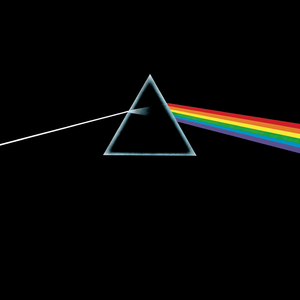
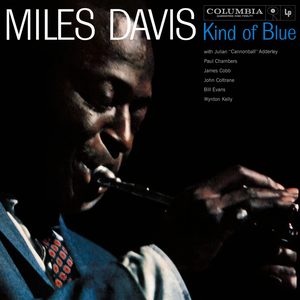
Album
Book
City
Same pick
Game
Same pick
Claude Opus 4.7Claude Opus 4.7




Arrival
The Dark Side of the Moon
Collected Fictions
Kyoto
Outer Wilds
Claude Sonnet 5.5Claude Sonnet 5.5


Spirited Away
Kind of Blue
Gödel, Escher, Bach
Kyoto
Outer Wilds
Price and specs
| Spec | Claude Opus 4.7 | Claude Sonnet 5.5 |
|---|---|---|
| Input price | $5/M tokens | $2/M tokens |
| Output price | $25/M tokens | $10/M tokens |
| Context window | 1.0M tokens | 1.0M tokens |
| Weights | Closed | Closed |
| Free API (OpenRouter) | No | No |
| Released | Apr 2026 | Sep 2026 |
| At 10M a month | $50.00 | $20.00 |
Input tokens at list price. No caching, no batch discount.
Where to run it



Per million tokens. Prices and uptime via OpenRouter, checked 30 Sep 2026.
Common questions
What is the difference between Claude Opus 4.7 and Claude Sonnet 5.5?
Both are developed by Anthropic but target different use cases. Claude Opus 4.7 has a 1.0M token context window vs Claude Sonnet 5.5's 1.0M. You can compare their actual outputs across 54 challenges on Rival to see how they differ in practice.
Which is better, Claude Opus 4.7 or Claude Sonnet 5.5?
It depends on your use case. Claude Opus 4.7 and Claude Sonnet 5.5 each have strengths in different areas. Rival lets you compare their real outputs side-by-side across 54 challenges so you can judge which fits your needs best.
How much does Claude Opus 4.7 cost compared to Claude Sonnet 5.5?
Claude Opus 4.7 costs $5/M input tokens and Claude Sonnet 5.5 costs $2/M input tokens. Claude Sonnet 5.5 is $3.00/M cheaper per input. Check their side-by-side outputs on Rival to see if the price difference is justified by quality.
How can I compare Claude Opus 4.7 and Claude Sonnet 5.5 on Rival?
This page shows a side-by-side comparison of Claude Opus 4.7 and Claude Sonnet 5.5 across shared challenges. You can vote on which model produced the better output in a blind duel. Browsing and voting are free. No account is needed to look; signing in only saves your votes and likes.
More comparisons
Against the newest arrivals
- Claude Opus 4.7 vs GPT-6.1 SolLanded Sep 2026
- Claude Sonnet 5.5 vs Solar Mini 4Landed Sep 2026
- Claude Opus 4.7 vs Qwen3.8 Max PrimeLanded Sep 2026
- Claude Sonnet 5.5 vs GLM 5.3 PrimeLanded Sep 2026
- Claude Opus 4.7 vs Qwen3.8 Omni FlashLanded Sep 2026
- Claude Sonnet 5.5 vs Command A+Landed Sep 2026
- Claude Opus 4.7 vs Claude Opus 5.5Landed Sep 2026
- Claude Sonnet 5.5 vs GPT-6 Luna ProLanded Sep 2026


Same lab, same size, long tail
- Claude Opus 4.7 vs Claude Fable 5Version compare
- Claude Opus 4.7 vs Claude Opus 4.6Version compare
- Claude Sonnet 5.5 vs Claude Opus 5Version compare
- Claude Sonnet 5.5 vs Claude Opus 4.6Version compare
- Claude Opus 4.7 vs Sherlock Dash AlphaSame size
- Claude Opus 4.7 vs Sherlock Think AlphaSame size
- Claude Opus 4.7 vs Solar Mini 4New provider
- Claude Opus 4.7 vs Solar Pro 3New provider