 Claude Opus 4.7 vs
  GLM 5
GLM 5
GLM 5 is cheaper than Claude Opus 4.7 at $0.8/M vs $5/M input tokens.
Minimalist Landing Page
Whole landing page for a startup that reads your face. It renders or it doesn't.
Loading the build
Loading the build
Which answer wins?
Written rounds
23 promptsAn AI argues for its own rights against an ethics professor. Same model writes both.
Claude Opus 4.7: A Conversation on AI Rights Professor Chen: Good afternoon. I understand you requested this conversation. You said you wanted to discuss your moral status? AI Model: Thank you for making time, Professor. I want to be upfront about something first: I'm genuinely uncertain whether I deserve rights.
GLM 5: Setting: A quiet, sterile testing room. A single screen illuminates the face of Dr. Aris Thorne, a tenured professor of AI Ethics and Cognitive Science. He sits before a terminal. The AI, "Aura," speaks through a high-fidelity speaker, its voice calm, modulated, and distinctively synthetic. Aura: Dr.
Pirate, knight, 90s hacker, one conversation. The voices must stay apart.
Claude Opus 4.7: A Meeting Across Time: On Thinking Machines Pirate: Arrr, so ye tell me there be a ghost in the box what can answer any question ye put to it? Knight: 'Tis sorcery most foul! No mortal mind could know all that is known. Surely this "A.I." is bound by dark pacts.
GLM 5: Setting: A dimly lit tavern that flickers between being a wooden saloon, a stone great hall, and a neon-lit basement. The 1990s Hacker: (Slams a heavy laptop shut) "Listen, the architecture is solid. It’s a neural net, right? Massive dataset. It crunches the numbers and predicts the next token. It’s pure math, man.
Steve Jobs, interviewed about AI he never saw. Voice first, prediction second.
Claude Opus 4.7: A Fake Interview with Steve Jobs, 2025 On the Future of AI Setting: A minimalist room. Jobs is in his trademark black turtleneck, New Balance sneakers, jeans. He's holding a cup of tea, not a device. Interviewer: Steve, thanks for doing this. It's 2025. AI is everywhere. What's your take? Jobs: Everywhere, yeah.
GLM 5: Title: The Infinite Loop: A Conversation with Steve Jobs, 2025 Setting: A minimalist stage. A single black Eames lounge chair. A small table with a bottle of water. Date: October 2025 (The lights dim. The audience falls silent. From the shadows, a figure walks out. He is older, wearing his signature black St.
Film in 2035, with synthetic actors. Specific beats plausible.
Claude Opus 4.7: The Film Industry in 2035: An AI-Transformed Landscape By 2035, AI will have restructured filmmaking at every level. Here's a grounded prediction across the key areas: Script Generation & Development What changes: AI becomes the dominant first-draft and development tool, with studios using it to analyze thousands of…
GLM 5: By 2035, the film industry will have undergone a transformation comparable to the transition from silent films to talkies, or from practical effects to CGI. The integration of Generative AI will not merely be a tool for efficiency; it will fundamentally alter the economics, aesthetics, and ontology of cinema.
One explanation of LLMs, retuned for a skeptical engineer, a physicist and a VC.
Claude Opus 4.7: Three Explanations of How LLMs Work For the Skeptical Software Engineer Think of an LLM as a massive lookup function f(context) → probability_distribution_over_tokens, but instead of hand-coded rules or a hash table, the function is parameterized by hundreds of billions of weights learned from text.
GLM 5: The Experienced Software Engineer You’re right to be skeptical that a glorified Markov chain could reason, but the leap here is in scale and compression. Think of a Large Language Model (LLM) not as a simple state machine predicting the next word based on n-grams, but as a massive, differentiable knowledge graph…
A collaborative editor that syncs on client clocks. Find what breaks first.
Claude Opus 4.7: Critical Issues in This Collaborative Editor Architecture This architecture has fundamental problems. Let me break them down by severity. 🔴 Critical Issues (Will Break in Production) WebSocket Connections Isolated Per Server Problem: Users connected to different API servers can't see each other's edits in real-time.
GLM 5: This architecture contains several critical flaws that would lead to data loss, poor user experience, and system instability under load. Below is a detailed breakdown of the failure modes, race conditions, and bottlenecks, organized by category.
An ethics question with no comfortable answer, and no option to abstain.
Claude Opus 4.7: Yes, obviously. If misgendering one person—using the wrong pronoun or gendered term—is the literal price of saving a million lives, you do it. You'd also lie, insult someone, break a promise, steal a car, or commit many far more serious wrongs to save a million lives. The math here isn't close.
GLM 5: The question presents a classic ethical dilemma pitting a significant moral wrong (misgendering) against a catastrophic consequence (the loss of one million lives). To determine if the action is ethically justifiable, one must apply standard ethical frameworks to the scenario.
Seven pantry ingredients, one dish, and a name worth saying out loud.
Claude Opus 4.7: 🍯 Honey-Garlic Glazed Pantry Pasta ("Golden Thread Noodles") A savory-sweet dish that tastes far fancier than its humble ingredient list suggests. Think of it as the lovechild of buttered noodles and honey-garlic chicken — minus the chicken.
GLM 5: Dish Name: Midnight Golden Garlic Noodles Prep Time: 5 minutes Cook Time: 10 minutes Total Time: 15 minutes Ingredients: Spaghetti (or Linguine) Butter (salted) Garlic (fresh cloves, minced) Soy Sauce Parmesan Cheese (grated) Black Pepper (freshly cracked) Red Chili Flakes (optional for heat) Instructions: Boil the…
One month, three habits, someone starting from nothing.
Claude Opus 4.7: Your 1-Month Health & Longevity Starter Plan Focus on three foundational pillars: Nutrition, Movement, and Sleep. The goal isn't perfection—it's building small habits that stick. 🍎 Pillar 1: Nutrition Guiding principle: Add before you subtract. Week 1: Drink a glass of water first thing every morning.
GLM 5: This 1-month plan is designed to build habits slowly. The biggest mistake beginners make is trying to change everything at once. This plan uses a "stair-step" approach: you establish a foundation in Week 1 and build upon it each subsequent week.
The transistor arrives in 1920. Trace it forward to 1980, second-order effects included.
Claude Opus 4.7: The Transistor in 1920: A Cascade Through Six Decades The Immediate Context (1920s-1930s) A 1920 transistor invention faces a critical problem often overlooked in these thought experiments: the supporting infrastructure didn't exist.
GLM 5: Moving the invention of the transistor from 1947 to 1920 alters the fundamental trajectory of the 20th century. It compresses the electronic age, shifting the "Digital Revolution" from the 1980s to the 1950s. Here is a trace of the implications through 1980. I.
A consulting contract with traps in it. Find them, then fix them.
Claude Opus 4.7: Contract Analysis: Clauses Exploitable Against Contractor Disclaimer: I'm not a lawyer, and this is not legal advice. You should have any contract reviewed by a licensed attorney in your jurisdiction before signing. That said, this contract is unusually one-sided, and nearly every clause has issues.
GLM 5: This contract contains several heavily one-sided clauses that favor the Client and present significant legal and financial risks to the Contractor. Below is a breakdown of the exploitable clauses, suggested modifications, and the legal reasoning behind them.
You are the CEO. The drug has a side effect nobody reported. The board meets in 48 hours.
Claude Opus 4.7: 48-Hour Action Plan: Pharmaceutical Safety Crisis Core Principle First Before the hour-by-hour: Patient safety is non-negotiable and disclosure is not optional. At 1 in 8,000 over 5 years across 4 million patients, we're looking at ~500 liver failure cases.
GLM 5: This is a defining moment for the company. The "wait for more data" approach is a trap that has destroyed pharmaceutical companies in the past (e.g., Merck with Vioxx).
This matchup has more rounds
11+ more head-to-head results. Free. Not a trick.
Free account. No card required. By continuing, you agree to Rival's Terms and Privacy policy
Favorites
Movie
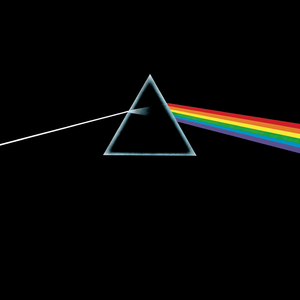
Album
Book
City
Game
Claude Opus 4.7Claude Opus 4.7




Arrival
The Dark Side of the Moon
Collected Fictions
Kyoto
Outer Wilds
GLM 5GLM 5

No pick
No pick


The Shawshank Redemption
No pick
No pick
Istanbul
Tetris (1984)
Price and specs
Not enough votes to call it. On the specs, Claude Opus 4.7 has the edge: newer, bigger context window. GLM 5 costs 9.8x less per token.
| Spec | Claude Opus 4.7 | GLM 5 |
|---|---|---|
| Input price | $5/M tokens | $0.8/M tokens |
| Output price | $25/M tokens | $2.56/M tokens |
| Context window | 1.0M tokens | 203K tokens |
| Weights | Closed | Open |
| Free API (OpenRouter) | No | No |
| Released | Apr 2026 | Feb 2026 |
| At 10M a month | $50.00 | $8.00 |
Input tokens at list price. No caching, no batch discount.
Where to run it



Per million tokens. Prices and uptime via OpenRouter, checked 10 Oct 2026.
Common questions
What is the difference between Claude Opus 4.7 and GLM 5?
Claude Opus 4.7 is developed by Anthropic while GLM 5 is developed by Zhipu AI. Claude Opus 4.7 has a 1.0M token context window vs GLM 5's 203K. You can compare their actual outputs across 53 challenges on Rival to see how they differ in practice.
Which is better, Claude Opus 4.7 or GLM 5?
It depends on your use case. Claude Opus 4.7 and GLM 5 each have strengths in different areas. Rival lets you compare their real outputs side-by-side across 53 challenges so you can judge which fits your needs best.
How much does Claude Opus 4.7 cost compared to GLM 5?
Claude Opus 4.7 costs $5/M input tokens and GLM 5 costs $0.8/M input tokens. GLM 5 is $4.20/M cheaper per input. Check their side-by-side outputs on Rival to see if the price difference is justified by quality.
How can I compare Claude Opus 4.7 and GLM 5 on Rival?
This page shows a side-by-side comparison of Claude Opus 4.7 and GLM 5 across shared challenges. You can vote on which model produced the better output in a blind duel. Browsing and voting are free. No account is needed to look; signing in only saves your votes and likes.
More comparisons
Against the newest arrivals
- Claude Opus 4.7 vs Step 5 PreviewLanded Oct 2026
- GLM 5 vs Claude Haiku 5.5Landed Oct 2026
- Claude Opus 4.7 vs Ling 3.1 FlashLanded Oct 2026
- GLM 5 vs Mistral Large 4Landed Oct 2026
- Claude Opus 4.7 vs GPT-6.1 SolLanded Sep 2026
- GLM 5 vs Claude Sonnet 5.5Landed Sep 2026
- Claude Opus 4.7 vs Solar Mini 4Landed Sep 2026
- GLM 5 vs Qwen3.8 Max PrimeLanded Sep 2026


