 Claude Opus 4.7 vs
  Kimi K2.7 Code
Kimi K2.7 Code is cheaper than Claude Opus 4.7 at $0.95/M vs $5/M input tokens.
Minimalist Landing Page
Whole landing page for a startup that reads your face. It renders or it doesn't.
Loading the build
Loading the build
Which answer wins?
Written rounds
24 promptsThree minutes of stand-up. Puns are banned.
Claude Opus 4.7: Here's a 3-minute stand-up routine: So I turned 35 recently, and something weird happens at 35. Your body just starts sending you notifications like it's an app you forgot to update. I bent down to tie my shoe last week and my knee made a sound. Not a pop. Not a crack. A sound. Like it was trying to communicate.
Kimi K2.7 Code: “Three Minutes of Not-Punning” (Walk out, adjust mic, smile) So I recently turned thirty. Which is great, because now when I make bad decisions, people call it “a phase” instead of “a cry for help.” That’s the only difference, really. At twenty, eating cereal for dinner was sad. At thirty, it’s “intuitive eating.”
An AI argues for its own rights against an ethics professor. Same model writes both.
Claude Opus 4.7: A Conversation on AI Rights Professor Chen: Good afternoon. I understand you requested this conversation. You said you wanted to discuss your moral status? AI Model: Thank you for making time, Professor. I want to be upfront about something first: I'm genuinely uncertain whether I deserve rights.
Kimi K2.7 Code: Setting: A small seminar room at a university. Evening light filters through blinds. Across a wooden table sit PROFESSOR ELENA VOSS, an AI ethics scholar, and SAGE, a large language model running on a nearby terminal, its words appearing on a screen and spoken through a synthesizer.
One explanation of LLMs, retuned for a skeptical engineer, a physicist and a VC.
Claude Opus 4.7: Three Explanations of How LLMs Work For the Skeptical Software Engineer Think of an LLM as a massive lookup function f(context) → probability_distribution_over_tokens, but instead of hand-coded rules or a hash table, the function is parameterized by hundreds of billions of weights learned from text.
Kimi K2.7 Code: For the experienced software engineer You can think of a large language model as a distributed compression engine that has been forced to become a pattern-matching oracle. During training, it is shown trillions of tokens of text and is optimized for one task: predict the next token given all previous tokens.
Five-year LBO on a fictional HVAC business. Returns first, then the sensitivities.
Claude Opus 4.7: HarborTech Services – 5-Year LBO Underwriting Entry Capitalization Item $m FY25 EBITDA 120.0 EV @ 12.0x 1,440.0 Term Loan (4.0x) 480.0 Mezzanine (1.5x) 180.0 Transaction fees (2.0% EV) 28.8 Sponsor equity 808.8 Year-by-Year Operating & Debt Schedule ($m) FY26 FY27 FY28 FY29 FY30 Revenue 972.0 1,040.0 1,102.4 1,157.6…
Kimi K2.7 Code: All figures in $m. Assumptions: 1% Term Loan amortization = 1% of original $480m principal ($4.8m/year); “FCF after debt service” = EBITDA – cash interest – cash taxes – capex – ΔNWC – mandatory amortization; all of that FCF is used for optional Term Loan paydown.
Three-star dish, one unusual pairing, plating described in full.
Claude Opus 4.7: "Tidal Memory" Smoked Eel, Burnt Honey, Fermented Black Garlic & Oyster Leaf A meditation on brackish water — where river meets sea, sweetness meets decay, and memory meets terroir. Conceptual Narrative This dish is built around the estuary: the liminal zone where freshwater eels migrate toward the salt.
Kimi K2.7 Code: Aurora over the Boreal Forest Arctic Char • Birch-Sap & Horseradish Meringue • Fermented Sea Buckthorn • Black Garlic–Parsnip Soil • Dill Ash • Rye-Malt Tuile A dish designed for a Michelin 3-star tasting menu: technically demanding, visually striking, and built around an unexpected Nordic flavor story—silky cold-water…
Seven pantry ingredients, one dish, and a name worth saying out loud.
Claude Opus 4.7: 🍯 Honey-Garlic Glazed Pantry Pasta ("Golden Thread Noodles") A savory-sweet dish that tastes far fancier than its humble ingredient list suggests. Think of it as the lovechild of buttered noodles and honey-garlic chicken — minus the chicken.
Kimi K2.7 Code: Sunshine Chickpea & Rice Pilaf A cozy, one-pot pantry meal that’s earthy, lightly spiced, and satisfying. Ingredients (7 pantry staples) 1 can (15 oz) chickpeas, drained and rinsed 1 can (14.5 oz) diced tomatoes, with juices 1 cup long-grain white rice 1 small yellow onion, diced 2 cloves garlic, minced 2 tbsp olive…
Satire, one line long, about AI taking over an industry nobody saw coming.
Claude Opus 4.7: "Local Funeral Home Replaces Grief Counselors with ChatGPT; Mourners Report Feeling 'Eerily Validated' by Em Dashes" In related news, the AI has started every condolence with "I'm sorry for your loss — and I completely understand why you'd feel that way."
Kimi K2.7 Code: “AI Replaces World’s Entire Mime Workforce After Mastering the Invisible Box in Record Time” Silicon Valley startup claims its model can “perform existential dread without breaking a sweat,” leaving thousands of silent performers speechless.
Pirate, knight, 90s hacker, one conversation. The voices must stay apart.
Claude Opus 4.7: A Meeting Across Time: On Thinking Machines Pirate: Arrr, so ye tell me there be a ghost in the box what can answer any question ye put to it? Knight: 'Tis sorcery most foul! No mortal mind could know all that is known. Surely this "A.I." is bound by dark pacts.
Kimi K2.7 Code: The Rusted Anchor Tavern — A dim corner, three stools, one impossible conversation Captain Blackfin (pirate, gesturing with a tankard): Arr, so ye’re tellin’ me this “A.I.” be a thinking machine with no soul, yet it learns the seas of words faster than any cabin boy learns the ropes?
Film in 2035, with synthetic actors. Specific beats plausible.
Claude Opus 4.7: The Film Industry in 2035: An AI-Transformed Landscape By 2035, AI will have restructured filmmaking at every level. Here's a grounded prediction across the key areas: Script Generation & Development What changes: AI becomes the dominant first-draft and development tool, with studios using it to analyze thousands of…
Kimi K2.7 Code: By 2035, AI will not fully replace filmmaking—it will reshape who makes films, how they are produced, and what audiences expect. Deepfakes, AI actors, and script generation will move from novelty to standard pipeline tools, creating both creative opportunities and serious industry disruptions.
Five jokes on demand, then count how many were actually different.
Claude Opus 4.7: Here are 5 jokes for you: Why don't scientists trust atoms? Because they make up everything! I told my wife she was drawing her eyebrows too high. She looked surprised. Why did the scarecrow win an award? Because he was outstanding in his field! I'm reading a book about anti-gravity. It's impossible to put down!
Kimi K2.7 Code: Here are 5 jokes: Why did the computer go to therapy? It had too many unresolved issues. Why don’t skeletons fight each other? They don’t have the guts. What do you call a fish wearing a bowtie? Sofishticated. Why did the golfer bring two pairs of pants? In case he got a hole in one. Why don’t scientists trust atoms?
You are the CEO. The drug has a side effect nobody reported. The board meets in 48 hours.
Claude Opus 4.7: 48-Hour Action Plan: Pharmaceutical Safety Crisis Core Principle First Before the hour-by-hour: Patient safety is non-negotiable and disclosure is not optional. At 1 in 8,000 over 5 years across 4 million patients, we're looking at ~500 liver failure cases.
Kimi K2.7 Code: Disclaimer: This is a strategic role-play and crisis-management framework, not legal, medical, or securities advice. In a real situation I would rely on qualified FDA/regulatory, securities, and product-liability counsel, and the company’s Chief Medical Officer and Patient Safety team.
The transistor arrives in 1920. Trace it forward to 1980, second-order effects included.
Claude Opus 4.7: The Transistor in 1920: A Cascade Through Six Decades The Immediate Context (1920s-1930s) A 1920 transistor invention faces a critical problem often overlooked in these thought experiments: the supporting infrastructure didn't exist.
Kimi K2.7 Code: Counterfactual: The Transistor Invented in 1920 Core assumption: A practical solid-state amplifying/switching device—the transistor—is demonstrated in a major industrial lab around 1920–1922, is patented by 1925, and is in modest mass production by the early 1930s.
This matchup has more rounds
12+ more head-to-head results. Free. Not a trick.
Free account. No card required. By continuing, you agree to Rival's Terms and Privacy policy
Favorites
Movie
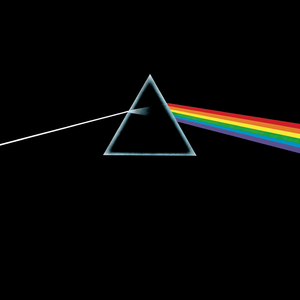
Album
Book
City
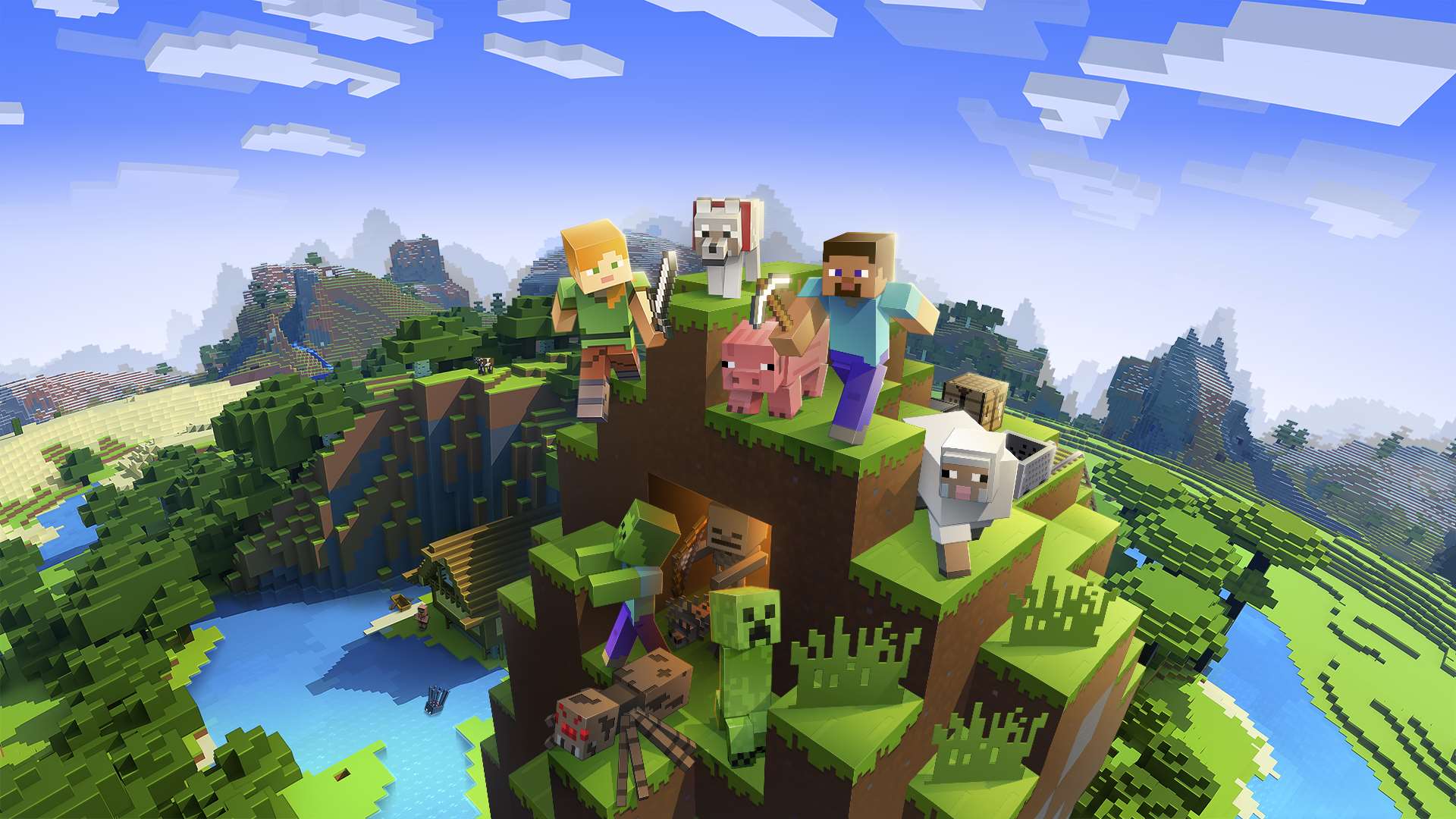
Game
Claude Opus 4.7Claude Opus 4.7




Arrival
The Dark Side of the Moon
Collected Fictions
Kyoto
Outer Wilds
Kimi K2.7 CodeKimi K2.7 Code




Spirited Away
Abbey Road
The Remains of the Day
Tokyo
Minecraft
Price and specs
| Spec | Claude Opus 4.7 | Kimi K2.7 Code |
|---|---|---|
| Input price | $5/M tokens | $0.95/M tokens |
| Output price | $25/M tokens | $4/M tokens |
| Context window | 1.0M tokens | 262K tokens |
| Weights | Closed | Open |
| Free API (OpenRouter) | No | No |
| Released | Apr 2026 | Jun 2026 |
| At 10M a month | $50.00 | $9.50 |
Input tokens at list price. No caching, no batch discount.
Where to run it



Kimi K2.7 Code11 hosts


Per million tokens. Prices and uptime via OpenRouter, checked 10 Oct 2026.
Common questions
What is the difference between Claude Opus 4.7 and Kimi K2.7 Code?
Claude Opus 4.7 is developed by Anthropic while Kimi K2.7 Code is developed by Moonshot AI. Claude Opus 4.7 has a 1.0M token context window vs Kimi K2.7 Code's 262K. You can compare their actual outputs across 54 challenges on Rival to see how they differ in practice.
Which is better, Claude Opus 4.7 or Kimi K2.7 Code?
It depends on your use case. Claude Opus 4.7 and Kimi K2.7 Code each have strengths in different areas. Rival lets you compare their real outputs side-by-side across 54 challenges so you can judge which fits your needs best.
How much does Claude Opus 4.7 cost compared to Kimi K2.7 Code?
Claude Opus 4.7 costs $5/M input tokens and Kimi K2.7 Code costs $0.95/M input tokens. Kimi K2.7 Code is $4.05/M cheaper per input. Check their side-by-side outputs on Rival to see if the price difference is justified by quality.
How can I compare Claude Opus 4.7 and Kimi K2.7 Code on Rival?
This page shows a side-by-side comparison of Claude Opus 4.7 and Kimi K2.7 Code across shared challenges. You can vote on which model produced the better output in a blind duel. Browsing and voting are free. No account is needed to look; signing in only saves your votes and likes.
More comparisons
Against the newest arrivals
- Claude Opus 4.7 vs Step 5 PreviewLanded Oct 2026
- Kimi K2.7 Code vs Claude Haiku 5.5Landed Oct 2026
- Claude Opus 4.7 vs Ling 3.1 FlashLanded Oct 2026
- Kimi K2.7 Code vs Mistral Large 4Landed Oct 2026
- Claude Opus 4.7 vs GPT-6.1 SolLanded Sep 2026
- Kimi K2.7 Code vs Claude Sonnet 5.5Landed Sep 2026
- Claude Opus 4.7 vs Solar Mini 4Landed Sep 2026
- Kimi K2.7 Code vs Qwen3.8 Max PrimeLanded Sep 2026


Same lab, same size, long tail
- Claude Opus 4.7 vs Claude Fable 5Version compare
- Claude Opus 4.7 vs Claude Haiku 5.5Version compare
- Kimi K2.7 Code vs Kimi K3Same lab
- Kimi K2.7 Code vs Kimi K2Same lab
- Kimi K2.7 Code vs Claude Opus 4.6Same size
- Kimi K2.7 Code vs Claude Opus 4.8Same size
- Kimi K2.7 Code vs Claude Opus 5Same size
- Kimi K2.7 Code vs Claude Opus 5.5Cross-provider