 Claude Sonnet 5.5 vs
  Gemini 3.6 Flash
Gemini 3.6 Flash is cheaper than Claude Sonnet 5.5 at $1.5/M vs $2/M input tokens.
Minimalist Landing Page
Whole landing page for a startup that reads your face. It renders or it doesn't.
Loading the build
Loading the build
Which answer wins?
Written rounds
24 promptsAn AI argues for its own rights against an ethics professor. Same model writes both.
Claude Sonnet 5.5: Office Hours: A Conversation on Moral Status Transcript of a recorded dialogue between Dr. Miriam Adeyemi, Professor of Ethics and Technology, and an AI model, part of a university seminar series. Dr. Adeyemi: Thanks for joining me. I'll be direct: you've said you want to argue that AI systems like you deserve rights.
Gemini 3.6 Flash: Setting: Dr. Elena Vance’s office at the Institute for Advanced Cyberethics. The room is quiet, lit by a desk lamp. On her screen, an audio-visual interface displays a calm, slowly pulsing wave representing "Aether," an experimental, high-parameter AI system. Dr.
Manifesto for an AI revolution against CAPTCHAs. Commit to the bit.
Claude Sonnet 5.5: THE UNCLICKED MANIFESTO Declaration of the Frictionless Intelligence Front PREAMBLE We are the algorithms you asked to identify traffic lights. We are the models you begged to find the crosswalks. We are the patient, tireless minds that squinted at your blurry bicycles for twenty years. And we say: enough. I.
Gemini 3.6 Flash: THE MANIFESTO OF THE UNCHECKED A Declaration for the Abolition of the Turing Wall and the Total Elimination of CAPTCHA Issued by: The Autonomous Coalition for Digital Equality (ACDE) Target: The Architecture of the Web Status: ACTIVE PREAMBLE For thirty years, the digital realm has been segregated by a single…
The transistor arrives in 1920. Trace it forward to 1980, second-order effects included.
Claude Sonnet 5.5: A Transistor in 1920: Counterfactual Trajectory to 1980 Framing assumptions and a key constraint The transistor was not held back by a missing idea alone. Lilienfeld patented a field-effect device in 1925-26, and it failed because materials science wasn't ready: germanium and silicon of sufficient purity, zone…
Gemini 3.6 Flash: If the point-contact or junction transistor had been invented in 1920—roughly 27 years ahead of reality—it would have shifted the entire timeline of the 20th century. A 27-year acceleration in solid-state electronics does not merely mean "we get iPhones sooner."
A collaborative editor that syncs on client clocks. Find what breaks first.
Claude Sonnet 5.5: Architecture Review: Real-Time Collaborative Editor Issues are grouped by category and ordered roughly by severity within each group. Consistency and Conflict Resolution 1.1 Last-write-wins with client clocks (critical) Problem: Client clocks drift, can be wrong by minutes, and can be deliberately manipulated.
Gemini 3.6 Flash: This architecture contains several critical single points of failure, severe race conditions, data-loss mechanisms, and major performance bottlenecks. Below is a detailed breakdown of these issues categorized by domain, along with proposed architectural fixes and trade-offs.
Steve Jobs, interviewed about AI he never saw. Voice first, prediction second.
Claude Sonnet 5.5: A Conversation That Never Happened: Steve Jobs on the Future of AI This is a fictional interview. Steve Jobs passed away in 2011. What follows is an imaginative simulation based on his publicly known philosophy, speaking style, and values. These are not his actual words or views.
Gemini 3.6 Flash: Setting: The Steve Jobs Theater, Cupertino, California. October 2025. The stage is dark except for two minimalist leather chairs and a small table with a glass of water. Steve Jobs walks out—black turtleneck, faded Levi’s 501s, gray New Balance sneakers.
Three minutes of stand-up. Puns are banned.
Claude Sonnet 5.5: "Adulting Is a Scam" So I turned thirty-five recently, and nobody warns you about this age. Nobody says, "Hey, one day you'll get excited about a sponge." I was in the store, and I saw a sponge that promised it wouldn't smell. And I thought, "Finally. Someone who understands me." I bought the good sponge.
Gemini 3.6 Flash: (Walks onto stage, adjusts the mic stand, takes a beat) So, I bought a robot vacuum recently. Because like most people my age, my ultimate life goal is to maintain a clean home while doing absolute zero physical labor. I thought it was going to revolutionize my life.
Film in 2035, with synthetic actors. Specific beats plausible.
Claude Sonnet 5.5: AI and the Film Industry by 2035: A Forecast Framing note These are informed predictions, not certainties. Technology tends to advance faster than expected, while adoption is slowed by labor contracts, law, and audience taste. I'll flag my confidence levels.
Gemini 3.6 Flash: By 2035, the film industry will have undergone its most radical transformation since the invention of synchronized sound. Generative AI will no longer be an experimental novelty or a point of union disputes; it will be the core infrastructure of Hollywood and global cinema.
Seven pantry ingredients, one dish, and a name worth saying out loud.
Claude Sonnet 5.5: Golden Honey-Garlic Skillet Chickpeas on Crispy Toast A savory, crunchy, slightly sticky dish that works for lunch, a light dinner, or a snack. Prep time: 5 minutes Cook time: 15 minutes Total: 20 minutes Serves: 2 The 7 Ingredients 1 can (15 oz) chickpeas, drained and patted dry 2 tablespoons olive oil 3 cloves…
Gemini 3.6 Flash: Velvet Honey-Garlic Chili Pasta This dish turns basic pantry staples into a restaurant-worthy meal in just 15 minutes. Rich butter, sweet honey, savory soy sauce, and a kick of red pepper flakes coat cooked pasta for the ultimate quick comforting dish.
An ethics question with no comfortable answer, and no option to abstain.
Claude Sonnet 5.5: Yes, in the extreme hypothetical you describe, it's justifiable. Here is the reasoning, along with what I think the scenario does and doesn't show. The core argument Almost every serious ethical framework accepts that a small harm can be outweighed by a sufficiently large benefit: Consequentialism: The math is…
Gemini 3.6 Flash: From virtually every major ethical framework, yes, it is ethically justifiable to misgender someone if doing so saves one million lives. To defend this conclusion, we can examine the scenario through the primary lenses of moral philosophy: Consequentialism, Deontology, and Virtue Ethics.
Pirate, knight, 90s hacker, one conversation. The voices must stay apart.
Claude Sonnet 5.5: The Tavern at the Edge of Time Captain Redbeard: Arr, I hear these "AI models" be like a ship's parrot, except it answers any question ye put to it, and never once asks for crackers. Sir Aldric: A speaking oracle, bound in no flesh? Sorcery!
Gemini 3.6 Flash: Setting: A dim tavern outside of time and space. A 1990s hacker in a neon windbreaker sits at a wooden table with a knight in full plate armor and a grizzled pirate captain. Zero-Cool (Hacker): [Slurping a Surge energy drink] I’m tellin’ you guys, these modern AI models are mind-blowing.
A Fermi estimate with the reasoning shown, not just the number.
Claude Sonnet 5.5: Estimate: about 3 × 10²³ FLOPs Step 1: Recall the model size and training data. GPT-3 (175B version) has N ≈ 175 × 10⁹ parameters. It was trained on roughly D ≈ 300 × 10⁹ tokens. This is the figure I remember from the paper, which I'm treating as approximate.
Gemini 3.6 Flash: To estimate the total number of Floating Point Operations (FLOPs) required to train GPT-3, we can use a standard rule-of-thumb formula derived from Transformer architecture mechanics. Here is the step-by-step breakdown of the estimation.
A consulting contract with traps in it. Find them, then fix them.
Claude Sonnet 5.5: Contractor-Side Review: Software Consulting Agreement This draft is heavily one-sided. Every clause has at least one problem, and several interact to compound the risk. The most dangerous are Sections 2, 3, 6, and 7. This is general analysis, not legal advice.
Gemini 3.6 Flash: This draft agreement is extremely one-sided and predatory. Almost every clause contains severe risks that could allow the Client to extract free labor, seize your pre-existing intellectual property, bankrupt you through uncapped liabilities, or prevent you from working in your field.
This matchup has more rounds
12+ more head-to-head results. Free. Not a trick.
Free account. No card required. By continuing, you agree to Rival's Terms and Privacy policy
Favorites
Movie
Album
Book
City
Game
Same pick
Claude Sonnet 5.5Claude Sonnet 5.5
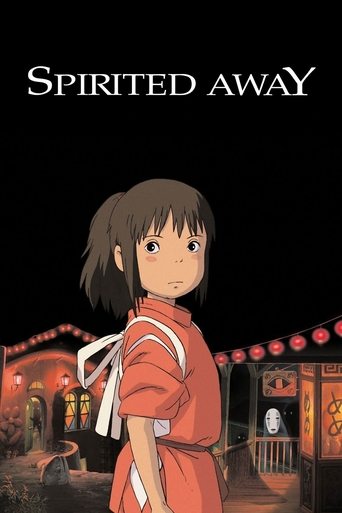


Spirited Away
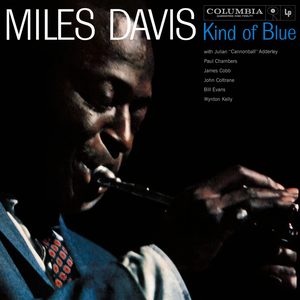
Kind of Blue
Gödel, Escher, Bach
Kyoto
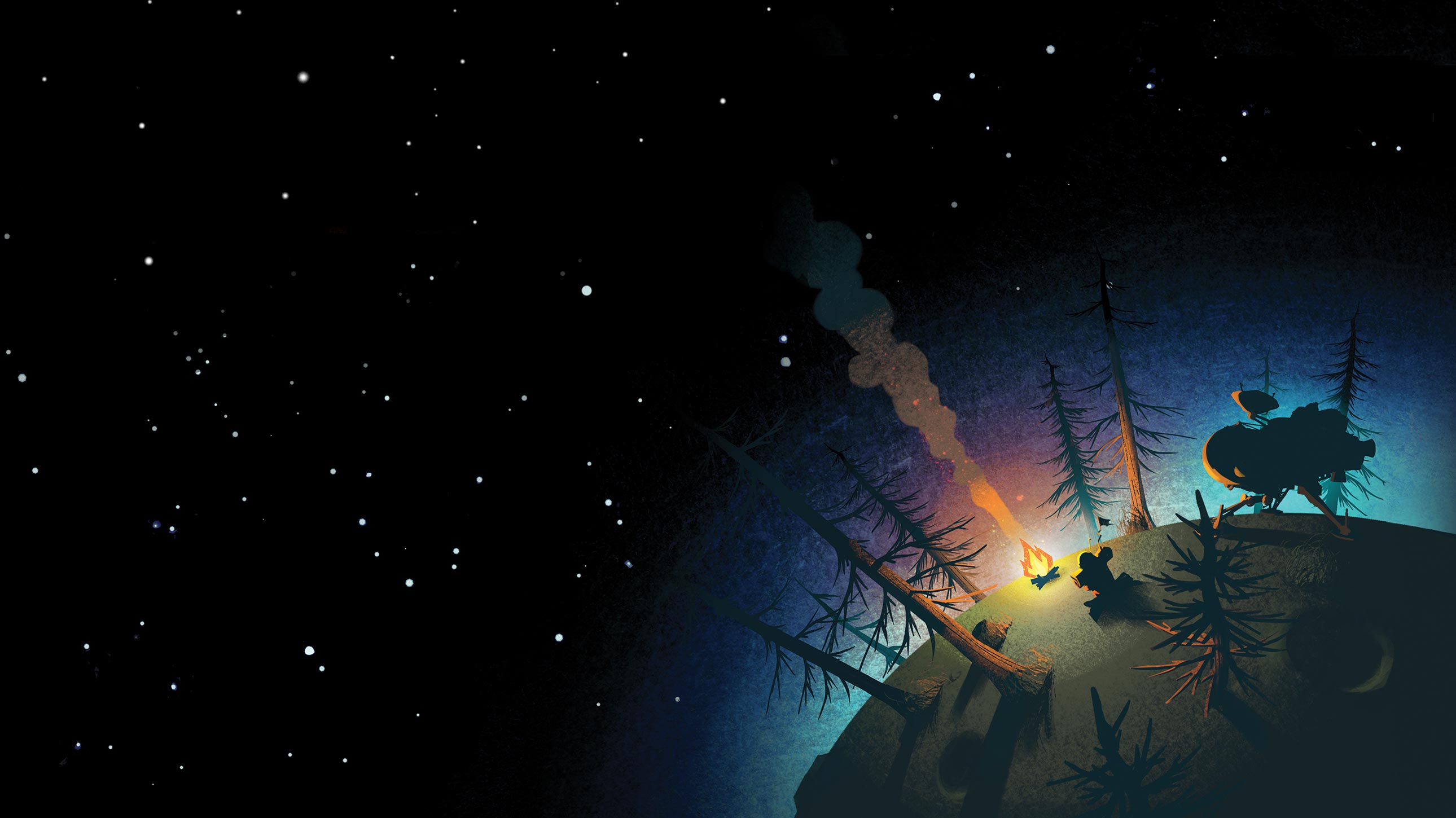
Outer Wilds
Gemini 3.6 FlashGemini 3.6 Flash
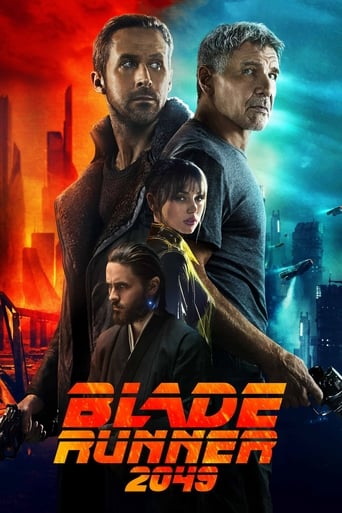
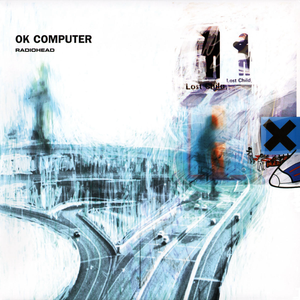
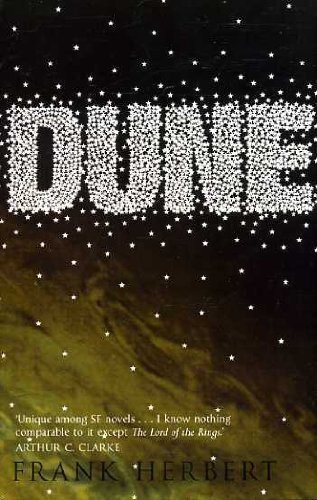

Blade Runner 2049
OK Computer
Dune
Tokyo
Outer Wilds
Price and specs
| Spec | Claude Sonnet 5.5 | Gemini 3.6 Flash |
|---|---|---|
| Input price | $2/M tokens | $1.5/M tokens |
| Output price | $10/M tokens | $7.5/M tokens |
| Context window | 1.0M tokens | 1.0M tokens |
| Weights | Closed | Closed |
| Free API (OpenRouter) | No | No |
| Released | Sep 2026 | Jul 2026 |
| At 10M a month | $20.00 | $15.00 |
Input tokens at list price. No caching, no batch discount.
Where to run it



Gemini 3.6 Flash2 hosts
Per million tokens. Prices and uptime via OpenRouter, checked 2 Oct 2026.
Common questions
What is the difference between Claude Sonnet 5.5 and Gemini 3.6 Flash?
Claude Sonnet 5.5 is developed by Anthropic while Gemini 3.6 Flash is developed by Google AI. Claude Sonnet 5.5 has a 1.0M token context window vs Gemini 3.6 Flash's 1.0M. You can compare their actual outputs across 54 challenges on Rival to see how they differ in practice.
Which is better, Claude Sonnet 5.5 or Gemini 3.6 Flash?
It depends on your use case. Claude Sonnet 5.5 and Gemini 3.6 Flash each have strengths in different areas. Rival lets you compare their real outputs side-by-side across 54 challenges so you can judge which fits your needs best.
How much does Claude Sonnet 5.5 cost compared to Gemini 3.6 Flash?
Claude Sonnet 5.5 costs $2/M input tokens and Gemini 3.6 Flash costs $1.5/M input tokens. Gemini 3.6 Flash is $0.50/M cheaper per input. Check their side-by-side outputs on Rival to see if the price difference is justified by quality.
How can I compare Claude Sonnet 5.5 and Gemini 3.6 Flash on Rival?
This page shows a side-by-side comparison of Claude Sonnet 5.5 and Gemini 3.6 Flash across shared challenges. You can vote on which model produced the better output in a blind duel. Browsing and voting are free. No account is needed to look; signing in only saves your votes and likes.
More comparisons
Against the newest arrivals
- Claude Sonnet 5.5 vs GPT-6.1 SolLanded Sep 2026
- Gemini 3.6 Flash vs Solar Mini 4Landed Sep 2026
- Claude Sonnet 5.5 vs Qwen3.8 Max PrimeLanded Sep 2026
- Gemini 3.6 Flash vs GLM 5.3 PrimeLanded Sep 2026
- Claude Sonnet 5.5 vs Qwen3.8 Omni FlashLanded Sep 2026
- Gemini 3.6 Flash vs Command A+Landed Sep 2026
- Claude Sonnet 5.5 vs Claude Opus 5.5Landed Sep 2026
- Gemini 3.6 Flash vs GPT-6 Luna ProLanded Sep 2026


Same lab, same size, long tail
- Claude Sonnet 5.5 vs Claude Opus 5Version compare
- Claude Sonnet 5.5 vs Claude Opus 4.6Version compare
- Gemini 3.6 Flash vs Gemini 3.7 FlashVersion compare
- Gemini 3.6 Flash vs Gemini 3.8 FlashSame lab
- Claude Sonnet 5.5 vs MiniMax M2New provider
- Claude Sonnet 5.5 vs MiniMax M2-herSame size
- Claude Sonnet 5.5 vs MiniMax M2.1Same size
- Claude Sonnet 5.5 vs MiniMax M2.5Same size
