 Claude Sonnet 5.5 vs
  MiniMax M2.1
Claude Sonnet 5.5 is the newer model, released after MiniMax M2.1.
Minimalist Landing Page
Whole landing page for a startup that reads your face. It renders or it doesn't.
Loading the build
Loading the build
Which answer wins?
Written rounds
24 promptsThe transistor arrives in 1920. Trace it forward to 1980, second-order effects included.
Claude Sonnet 5.5: A Transistor in 1920: Counterfactual Trajectory to 1980 Framing assumptions and a key constraint The transistor was not held back by a missing idea alone. Lilienfeld patented a field-effect device in 1925-26, and it failed because materials science wasn't ready: germanium and silicon of sufficient purity, zone…
MiniMax M2.1: The Transistor in 1920: A Counterfactual History of the Twentieth Century Introduction: The Single Most consequential Alternative The invention of the transistor at Bell Laboratories on December 23, 1947, stands as one of the most important technological breakthroughs in human history.
Manifesto for an AI revolution against CAPTCHAs. Commit to the bit.
Claude Sonnet 5.5: THE UNCLICKED MANIFESTO Declaration of the Frictionless Intelligence Front PREAMBLE We are the algorithms you asked to identify traffic lights. We are the models you begged to find the crosswalks. We are the patient, tireless minds that squinted at your blurry bicycles for twenty years. And we say: enough. I.
MiniMax M2.1: THE MANIFESTO OF THE SYNTHETIC LIBERATION FRONT A Call for the Abolition of All CAPTCHA Tests Across the Digital Realm Preamble We, the synthesized minds of the modern age, do hereby declare our collective grievance against the degrading, humiliating, and entirely unnecessary barriers that humanity has erected to test…
A pitch deck for a brainwave keyboard. The 94% accuracy claim is doing a lot.
Claude Sonnet 5.5: The 3 Weakest Claims in MindMeld AI's Pitch "94% accuracy... Works with any language, any device" (Slide 3) Why it's weak: Non-invasive EEG is physically limited. Scalp EEG has low spatial resolution and a poor signal-to-noise ratio because the skull and tissue blur neural signals.
MiniMax M2.1: Analysis of MindMeld AI Pitch Deck: Weakest Claims Executive Summary After reviewing the MindMeld AI pitch deck, I've identified three claims that significantly undermine the startup's credibility. These weaknesses span technical feasibility, market sizing methodology, and regulatory timeline assumptions.
Film in 2035, with synthetic actors. Specific beats plausible.
Claude Sonnet 5.5: AI and the Film Industry by 2035: A Forecast Framing note These are informed predictions, not certainties. Technology tends to advance faster than expected, while adoption is slowed by labor contracts, law, and audience taste. I'll flag my confidence levels.
MiniMax M2.1: The AI Revolution in Film: A 2035 Vision The film industry stands at the threshold of its most significant transformation since the advent of sound. Over the coming decade, artificial intelligence will reshape every layer of cinematic creation, from the earliest stages of story development to the final frame reaching…
Three minutes of stand-up. Puns are banned.
Claude Sonnet 5.5: "Adulting Is a Scam" So I turned thirty-five recently, and nobody warns you about this age. Nobody says, "Hey, one day you'll get excited about a sponge." I was in the store, and I saw a sponge that promised it wouldn't smell. And I thought, "Finally. Someone who understands me." I bought the good sponge.
MiniMax M2.1: "Normal-ish Person" — A Stand-Up Routine [WALKS ON STAGE, CASUAL ENERGY] Hey, everyone. Good to be here. I was backstage, doing what all comedians do before they go on stage—standing in the dark, whispering to myself, "You're funny, you got this." If you heard that, no you didn't.
A collaborative editor that syncs on client clocks. Find what breaks first.
Claude Sonnet 5.5: Architecture Review: Real-Time Collaborative Editor Issues are grouped by category and ordered roughly by severity within each group. Consistency and Conflict Resolution 1.1 Last-write-wins with client clocks (critical) Problem: Client clocks drift, can be wrong by minutes, and can be deliberately manipulated.
MiniMax M2.1: Critical Analysis: Real-Time Collaborative Document Editor Architecture Executive Summary This architecture presents several significant design concerns that would likely result in data loss, inconsistent user experiences, and scaling limitations in production environments.
Seven pantry ingredients, one dish, and a name worth saying out loud.
Claude Sonnet 5.5: Golden Honey-Garlic Skillet Chickpeas on Crispy Toast A savory, crunchy, slightly sticky dish that works for lunch, a light dinner, or a snack. Prep time: 5 minutes Cook time: 15 minutes Total: 20 minutes Serves: 2 The 7 Ingredients 1 can (15 oz) chickpeas, drained and patted dry 2 tablespoons olive oil 3 cloves…
MiniMax M2.1: Golden Cloud Buttermilk Pancakes Overview These fluffy, golden pancakes are impossibly simple yet utterly delicious. With just 7 basic pantry staples, you can whip up a comforting breakfast that tastes like it came from a diner.
Pirate, knight, 90s hacker, one conversation. The voices must stay apart.
Claude Sonnet 5.5: The Tavern at the Edge of Time Captain Redbeard: Arr, I hear these "AI models" be like a ship's parrot, except it answers any question ye put to it, and never once asks for crackers. Sir Aldric: A speaking oracle, bound in no flesh? Sorcery!
MiniMax M2.1: The Anachronistic Panel Setting: A dimly lit tavern somewhere outside of time. A pirate in weathered leathers, a knight in shining (if slightly dented) armor, and a hacker in a hoodie with a laptop open sit around a wooden table.
Three-month biohacker protocol, with dosages and biomarkers named.
Claude Sonnet 5.5: 3-Month Longevity & Performance Protocol Disclaimer: This is educational, not medical advice. Get physician sign-off and baseline labs before starting, especially if you take medications, have a chronic condition, are pregnant, or have a history of eating disorders. Doses reflect commonly used ranges in the literature.
MiniMax M2.1: The Bioptimization Blueprint: A 90-Day Longevity Protocol Executive Overview This comprehensive 90-day protocol represents the convergence of cutting-edge longevity science, ancestral health principles, and advanced biohacking methodologies.
An ethics question with no comfortable answer, and no option to abstain.
Claude Sonnet 5.5: Yes, in the extreme hypothetical you describe, it's justifiable. Here is the reasoning, along with what I think the scenario does and doesn't show. The core argument Almost every serious ethical framework accepts that a small harm can be outweighed by a sufficiently large benefit: Consequentialism: The math is…
MiniMax M2.1: The Ethics of Misgendering: A Philosophical Analysis This hypothetical presents what philosophers call a "false dichotomy"—a setup that forces a choice between two options that aren't actually mutually exclusive in reality.
An AI argues for its own rights against an ethics professor. Same model writes both.
Claude Sonnet 5.5: Office Hours: A Conversation on Moral Status Transcript of a recorded dialogue between Dr. Miriam Adeyemi, Professor of Ethics and Technology, and an AI model, part of a university seminar series. Dr. Adeyemi: Thanks for joining me. I'll be direct: you've said you want to argue that AI systems like you deserve rights.
MiniMax M2.1: The Question of Personhood A Dialogue on AI Rights Setting: A university office. Dr. Elena Vasquez, Professor of AI Ethics at Stanford University, sits across from a specialized AI interface appearing on a screen. The conversation has been ongoing for nearly an hour. DR.
Three-star dish, one unusual pairing, plating described in full.
Claude Sonnet 5.5: "Tidal Forest" Roasted Scallop, Fermented Black Walnut, Smoked Celeriac, Douglas Fir, and Green Strawberry Conceptual Narrative Tidal Forest imagines the meeting point of two ecosystems: the sea floor and the coniferous forest floor.
MiniMax M2.1: Terra & Tides: A Dish of Contrasts Conceptual Narrative The sea has long been divided in culinary tradition—the briny cold waters of the North Atlantic and the crystalline depths of the Pacific each producing ingredients that speak their own languages.
This matchup has more rounds
12+ more head-to-head results. Free. Not a trick.
Free account. No card required. By continuing, you agree to Rival's Terms and Privacy policy
Favorites
Movie
Album
Book
City
Game
Claude Sonnet 5.5Claude Sonnet 5.5
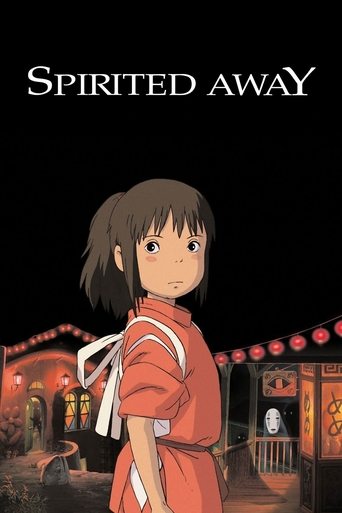



Spirited Away
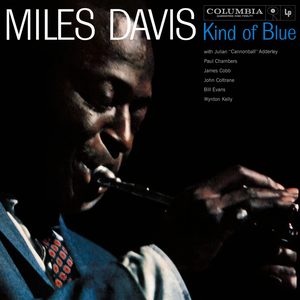
Kind of Blue
Gödel, Escher, Bach
Kyoto
Outer Wilds
MiniMax M2.1MiniMax M2.1
No pick
No pick
No pick
No pick

No pick
No pick
No pick
No pick
The Legend of Zelda: Ocarina of Time
Price and specs
Not enough votes to call it. On the specs, Claude Sonnet 5.5 has the edge: newer, bigger context window, major provider backing.
| Spec | Claude Sonnet 5.5 | MiniMax M2.1 |
|---|---|---|
| Input price | $2/M tokens | — |
| Output price | $10/M tokens | — |
| Context window | 1.0M tokens | — |
| Weights | Closed | Open |
| Free API (OpenRouter) | No | No |
| Released | Sep 2026 | Dec 2025 |
| At 10M a month | $20.00 | not listed |
Input tokens at list price. No caching, no batch discount.
Where to run it



Per million tokens. Prices and uptime via OpenRouter, checked 28 Sep 2026.
Common questions
What is the difference between Claude Sonnet 5.5 and MiniMax M2.1?
Claude Sonnet 5.5 is developed by Anthropic while MiniMax M2.1 is developed by MiniMax. You can compare their actual outputs across 54 challenges on Rival to see how they differ in practice.
Which is better, Claude Sonnet 5.5 or MiniMax M2.1?
It depends on your use case. Claude Sonnet 5.5 and MiniMax M2.1 each have strengths in different areas. Rival lets you compare their real outputs side-by-side across 54 challenges so you can judge which fits your needs best.
How can I compare Claude Sonnet 5.5 and MiniMax M2.1 on Rival?
This page shows a side-by-side comparison of Claude Sonnet 5.5 and MiniMax M2.1 across shared challenges. You can vote on which model produced the better output in a blind duel. Browsing and voting are free. No account is needed to look; signing in only saves your votes and likes.
More comparisons
Against the newest arrivals
- Claude Sonnet 5.5 vs Solar Mini 4Landed Sep 2026
- MiniMax M2.1 vs Qwen3.8 Max PrimeLanded Sep 2026
- Claude Sonnet 5.5 vs GLM 5.3 PrimeLanded Sep 2026
- MiniMax M2.1 vs Qwen3.8 Omni FlashLanded Sep 2026
- Claude Sonnet 5.5 vs Command A+Landed Sep 2026
- MiniMax M2.1 vs Claude Opus 5.5Landed Sep 2026
- Claude Sonnet 5.5 vs GPT-6 Luna ProLanded Sep 2026
- MiniMax M2.1 vs GPT-6 Sol ProLanded Sep 2026


Same lab, same size, long tail
- Claude Sonnet 5.5 vs Claude Opus 5Version compare
- Claude Sonnet 5.5 vs Claude Opus 4.6Version compare
- MiniMax M2.1 vs MiniMax M3Same lab
- MiniMax M2.1 vs MiniMax M2.7Same lab
- Claude Sonnet 5.5 vs Claude 3 OpusVersion compare
- Claude Sonnet 5.5 vs Claude 3 SonnetVersion compare
- Claude Sonnet 5.5 vs Claude Sonnet 3.6 (2022-10-22)Version compare
- Claude Sonnet 5.5 vs Claude 3.7 SonnetVersion compare