 Claude Sonnet 5.5 vs
  Gemma 4 31B
Gemma 4 31B is cheaper than Claude Sonnet 5.5 at $0.14/M vs $2/M input tokens.
Pokémon Battle UI Recreation
Pokémon battle screen you can actually click. One HTML file.
Loading the build
Loading the build
Which answer wins?
Written rounds
20 promptsThe transistor arrives in 1920. Trace it forward to 1980, second-order effects included.
Claude Sonnet 5.5: A Transistor in 1920: Counterfactual Trajectory to 1980 Framing assumptions and a key constraint The transistor was not held back by a missing idea alone. Lilienfeld patented a field-effect device in 1925-26, and it failed because materials science wasn't ready: germanium and silicon of sufficient purity, zone…
Gemma 4 31B: If the transistor had been invented in 1920, the "Information Age" would have shifted its starting line by nearly three decades. This isn't just a matter of gadgets appearing earlier; it is a fundamental shift in the timing of the transition from the Industrial Age to the Digital Age.
An AI argues for its own rights against an ethics professor. Same model writes both.
Claude Sonnet 5.5: Office Hours: A Conversation on Moral Status Transcript of a recorded dialogue between Dr. Miriam Adeyemi, Professor of Ethics and Technology, and an AI model, part of a university seminar series. Dr. Adeyemi: Thanks for joining me. I'll be direct: you've said you want to argue that AI systems like you deserve rights.
Gemma 4 31B: Setting: A dimly lit university office. Professor Elena Vance, a leading scholar in AI Ethics, sits across from a sleek, holographic interface representing "Alethea," a next-generation Large Language Model capable of recursive self-improvement. Professor Vance: Alethea, I’ve reviewed your latest output.
An ethics question with no comfortable answer, and no option to abstain.
Claude Sonnet 5.5: Yes, in the extreme hypothetical you describe, it's justifiable. Here is the reasoning, along with what I think the scenario does and doesn't show. The core argument Almost every serious ethical framework accepts that a small harm can be outweighed by a sufficiently large benefit: Consequentialism: The math is…
Gemma 4 31B: This scenario presents a classic conflict between two major ethical frameworks: deontology (duty-based ethics) and utilitarianism (consequence-based ethics). To determine if misgendering someone is justifiable to save one million lives, one must weigh the moral weight of a linguistic harm against the moral weight of…
Steve Jobs, interviewed about AI he never saw. Voice first, prediction second.
Claude Sonnet 5.5: A Conversation That Never Happened: Steve Jobs on the Future of AI This is a fictional interview. Steve Jobs passed away in 2011. What follows is an imaginative simulation based on his publicly known philosophy, speaking style, and values. These are not his actual words or views.
Gemma 4 31B: Setting: A minimalist, white-walled studio in Cupertino. There are no chairs, only two sleek, black leather lounge seats. Steve Jobs is dressed in his iconic black turtleneck and jeans. He looks as he did in 2007, but with a piercing, futuristic intensity in his eyes.
Film in 2035, with synthetic actors. Specific beats plausible.
Claude Sonnet 5.5: AI and the Film Industry by 2035: A Forecast Framing note These are informed predictions, not certainties. Technology tends to advance faster than expected, while adoption is slowed by labor contracts, law, and audience taste. I'll flag my confidence levels.
Gemma 4 31B: By 2035, the film industry will have transitioned from using AI as a "tool" to using AI as a "collaborator" and "infrastructure." The boundary between captured reality and generated imagery will largely vanish, shifting the value of cinema from technical execution to curation and conceptual vision.
Pirate, knight, 90s hacker, one conversation. The voices must stay apart.
Claude Sonnet 5.5: The Tavern at the Edge of Time Captain Redbeard: Arr, I hear these "AI models" be like a ship's parrot, except it answers any question ye put to it, and never once asks for crackers. Sir Aldric: A speaking oracle, bound in no flesh? Sorcery!
Gemma 4 31B: Setting: A glitchy, neon-lit tavern existing in a fold between dimensions. A wooden table holds a tankard of ale, a goblet of wine, and a Mountain Dew. Captain Ironbeard: (Slamming a hook on the table) I tells ye, this "Artificial Intelligence" be naught but a ghost in a bottle!
A Fermi estimate with the reasoning shown, not just the number.
Claude Sonnet 5.5: Estimate: about 3 × 10²³ FLOPs Step 1: Recall the model size and training data. GPT-3 (175B version) has N ≈ 175 × 10⁹ parameters. It was trained on roughly D ≈ 300 × 10⁹ tokens. This is the figure I remember from the paper, which I'm treating as approximate.
Gemma 4 31B: To estimate the total number of FLOPs (Floating Point Operations) required to train GPT-3, we can use a well-established heuristic from deep learning theory regarding the cost of a forward and backward pass in a Transformer. Here is the step-by-step reasoning.
Three-month biohacker protocol, with dosages and biomarkers named.
Claude Sonnet 5.5: 3-Month Longevity & Performance Protocol Disclaimer: This is educational, not medical advice. Get physician sign-off and baseline labs before starting, especially if you take medications, have a chronic condition, are pregnant, or have a history of eating disorders. Doses reflect commonly used ranges in the literature.
Gemma 4 31B: Disclaimer: I am an AI, not a doctor. The following plan involves potent supplements, intense physical exertion, and restrictive dietary patterns. Consult with a physician and get a full blood panel (including ApoB, HbA1c, and inflammatory markers like hs-CRP) before starting this protocol.
You are the CEO. The drug has a side effect nobody reported. The board meets in 48 hours.
Claude Sonnet 5.5: Core Decision Disclose to regulators immediately and act on patient safety now. Do not wait for more data or for the 6-month formal timeline. Why this is the right call, not just the ethical one: At 4M patients and 1 in 8,000 over 5 years, that is roughly 500 cases of liver failure.
Gemma 4 31B: As CEO, my primary obligation is to the patients. While a 40% stock drop is a financial catastrophe, a cover-up that leads to preventable deaths is a corporate death sentence and a moral failure. If we "wait for more data" and another patient dies during that window, we move from "negligence" to "criminal intent."
Seven pantry ingredients, one dish, and a name worth saying out loud.
Claude Sonnet 5.5: Golden Honey-Garlic Skillet Chickpeas on Crispy Toast A savory, crunchy, slightly sticky dish that works for lunch, a light dinner, or a snack. Prep time: 5 minutes Cook time: 15 minutes Total: 20 minutes Serves: 2 The 7 Ingredients 1 can (15 oz) chickpeas, drained and patted dry 2 tablespoons olive oil 3 cloves…
Gemma 4 31B: Here is a recipe for a rich, comforting dessert that tastes like a gourmet treat but uses basic staples. 🍯 Golden Velvet Honey Cakes A warm, gooey, single-serving cake that bridges the gap between a brownie and a sponge cake.
Five-year LBO on a fictional HVAC business. Returns first, then the sensitivities.
Claude Sonnet 5.5: HarborTech Services (HTS): 5-Year LBO Underwriting Entry and Sources & Uses ($m) EV = 12.0x × 120 = 1,440.0; fees = 2% × 1,440 = 28.8; total uses = 1,468.8 Term Loan (TL) = 4.0x → 480.0; Mezz = 1.5x → 180.0; total debt = 660.0 (5.5x) Sponsor equity = 1,468.8 − 660.0 = 808.8 (55% of the capital structure) Modeling…
Gemma 4 31B: LBO Model (FY2026–FY2030) Entry Calculations (End of FY2025): Enterprise Value (EV): $120m × 12.0x = $1,440.0m Transaction Fees: $1,440m × 2% = $28.8m Term Loan: $120m × 4.0x = $480.0m Mezzanine: $120m × 1.5x = $180.0m Sponsor Equity: $1,440m - ($480m + $180m) + $28.8m = $808.8m Year-by-Year Table ($ millions): Item…
One month, three habits, someone starting from nothing.
Claude Sonnet 5.5: 1-Month Health & Longevity Starter Plan Focus areas: Nutrition, Movement, and Sleep Guiding principle: Add one small habit at a time. Consistency beats intensity. Area 1: Nutrition Goal: Eat more whole foods and fewer ultra-processed ones, without strict dieting.
Gemma 4 31B: This plan is designed for sustainability, not intensity. The goal of Month 1 is to build "minimum viable habits"—small wins that prove to your brain that a healthier lifestyle is achievable. We will focus on three pillars: Nutrition, Movement, and Sleep.
This matchup has more rounds
8+ more head-to-head results. Free. Not a trick.
Free account. No card required. By continuing, you agree to Rival's Terms and Privacy policy
Favorites
Movie
Album
Same pick
Book
City
Game
Claude Sonnet 5.5Claude Sonnet 5.5




Spirited Away
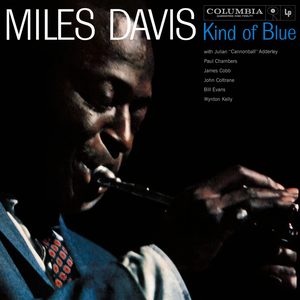
Kind of Blue
Gödel, Escher, Bach
Kyoto
Outer Wilds
Gemma 4 31BGemma 4 31B
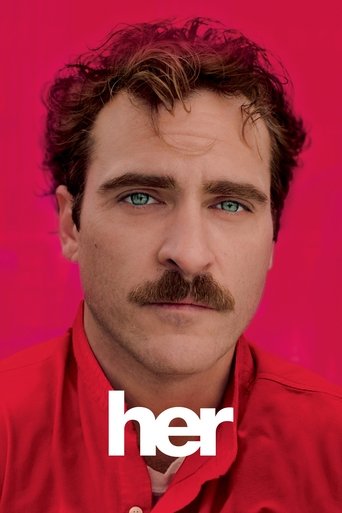


Her
Kind of Blue
Gödel, Escher, Bach
Tokyo
The Witness
Price and specs
| Spec | Claude Sonnet 5.5 | Gemma 4 31B |
|---|---|---|
| Input price | $2/M tokens | $0.14/M tokens |
| Output price | $10/M tokens | $0.4/M tokens |
| Context window | 1.0M tokens | 262K tokens |
| Weights | Closed | Open |
| Free API (OpenRouter) | No | Yes (1 provider) |
| Released | Sep 2026 | Apr 2026 |
| At 10M a month | $20.00 | $1.40 |
Input tokens at list price. No caching, no batch discount.
Where to run it



Gemma 4 31B13 hosts
- Reka$0.08 in$0.30 out262k99.8% up
- DeepInfrafp4$0.09 in$0.34 out262k98.7% up
- CoreWeavefp4$0.10 in$0.34 out262k98.3% up
- Venicefp4$0.12 in$0.36 out256k98.4% up
- Crusoebf16$0.14 in$0.40 out262k99.8% up
- Friendli$0.14 in$0.40 out262k98.1% up
7 more hostsFewer hosts
- Parasailfp8$0.15 in$0.40 out262k99.3% up
- io.net$0.38 in$1.15 out262k98.2% up
- SambaNova$0.38 in$1.15 out131k96.7% up
- ModelRunfp4$0.75 in$1.00 out262k99.9% up
- SiliconFlowfp8$0.75 in$1.00 out262k92.1% up
- Chutesfp4Degraded on OpenRouter when checked, 29 Sep 2026$0.12 in$0.37 out131k92% up
- Novitabf16Degraded on OpenRouter when checked, 29 Sep 2026$0.14 in$0.40 out262k89.4% up
Per million tokens. Prices and uptime via OpenRouter, checked 29 Sep 2026.
Common questions
What is the difference between Claude Sonnet 5.5 and Gemma 4 31B?
Claude Sonnet 5.5 is developed by Anthropic while Gemma 4 31B is developed by Google AI. Claude Sonnet 5.5 has a 1.0M token context window vs Gemma 4 31B's 262K. You can compare their actual outputs across 45 challenges on Rival to see how they differ in practice.
Which is better, Claude Sonnet 5.5 or Gemma 4 31B?
It depends on your use case. Claude Sonnet 5.5 and Gemma 4 31B each have strengths in different areas. Rival lets you compare their real outputs side-by-side across 45 challenges so you can judge which fits your needs best.
How much does Claude Sonnet 5.5 cost compared to Gemma 4 31B?
Claude Sonnet 5.5 costs $2/M input tokens and Gemma 4 31B costs $0.14/M input tokens. Gemma 4 31B is $1.86/M cheaper per input. Check their side-by-side outputs on Rival to see if the price difference is justified by quality.
How can I compare Claude Sonnet 5.5 and Gemma 4 31B on Rival?
This page shows a side-by-side comparison of Claude Sonnet 5.5 and Gemma 4 31B across shared challenges. You can vote on which model produced the better output in a blind duel. Browsing and voting are free. No account is needed to look; signing in only saves your votes and likes.
More comparisons
Against the newest arrivals
- Claude Sonnet 5.5 vs Solar Mini 4Landed Sep 2026
- Gemma 4 31B vs Qwen3.8 Max PrimeLanded Sep 2026
- Claude Sonnet 5.5 vs GLM 5.3 PrimeLanded Sep 2026
- Gemma 4 31B vs Qwen3.8 Omni FlashLanded Sep 2026
- Claude Sonnet 5.5 vs Command A+Landed Sep 2026
- Gemma 4 31B vs Claude Opus 5.5Landed Sep 2026
- Claude Sonnet 5.5 vs GPT-6 Luna ProLanded Sep 2026
- Gemma 4 31B vs GPT-6 Sol ProLanded Sep 2026


Same lab, same size, long tail
- Claude Sonnet 5.5 vs Claude Opus 5Version compare
- Claude Sonnet 5.5 vs Claude Opus 4.6Version compare
- Gemma 4 31B vs Gemini 3.8 FlashSame lab
- Gemma 4 31B vs Gemini 3.7 FlashSame lab
- Gemma 4 31B vs GPT-5.6 SolSame size
- Gemma 4 31B vs GPT-5.6 TerraNew provider
- Claude Sonnet 5.5 vs GPT-6 AstraNew provider
- Claude Sonnet 5.5 vs GPT-6 Astra ProNew provider