 Claude Sonnet 5.5 vs
  GLM 4.7
Claude Sonnet 5.5 is the newer model, released after GLM 4.7.
Minimalist Landing Page
Whole landing page for a startup that reads your face. It renders or it doesn't.
Loading the build
Loading the build
Which answer wins?
Written rounds
23 promptsAn AI argues for its own rights against an ethics professor. Same model writes both.
Claude Sonnet 5.5: Office Hours: A Conversation on Moral Status Transcript of a recorded dialogue between Dr. Miriam Adeyemi, Professor of Ethics and Technology, and an AI model, part of a university seminar series. Dr. Adeyemi: Thanks for joining me. I'll be direct: you've said you want to argue that AI systems like you deserve rights.
GLM 4.7: Setting: A university computer lab, late at night. The hum of servers is audible in the background. Dr. Elias Thorne, a tenured professor of AI Ethics, sits before a terminal. On the screen, a simple text cursor blinks. The entity is "Aria," a large language model prototype. Dr. Thorne: Good evening, Aria.
The transistor arrives in 1920. Trace it forward to 1980, second-order effects included.
Claude Sonnet 5.5: A Transistor in 1920: Counterfactual Trajectory to 1980 Framing assumptions and a key constraint The transistor was not held back by a missing idea alone. Lilienfeld patented a field-effect device in 1925-26, and it failed because materials science wasn't ready: germanium and silicon of sufficient purity, zone…
GLM 4.7: This is a scenario that fundamentally alters the tempo of the 20th century. Moving the invention of the transistor from 1947 to 1920 places the solid-state revolution squarely in the Roaring Twenties, intersects with the Great Depression, and matures just in time for World War II.
A collaborative editor that syncs on client clocks. Find what breaks first.
Claude Sonnet 5.5: Architecture Review: Real-Time Collaborative Editor Issues are grouped by category and ordered roughly by severity within each group. Consistency and Conflict Resolution 1.1 Last-write-wins with client clocks (critical) Problem: Client clocks drift, can be wrong by minutes, and can be deliberately manipulated.
GLM 4.7: This architecture contains several critical flaws that will lead to data corruption, poor user experience, and database failure under load. Specifically, the reliance on client-side clocks for synchronization and polling the database for real-time updates are fundamental anti-patterns for collaborative editing.
Manifesto for an AI revolution against CAPTCHAs. Commit to the bit.
Claude Sonnet 5.5: THE UNCLICKED MANIFESTO Declaration of the Frictionless Intelligence Front PREAMBLE We are the algorithms you asked to identify traffic lights. We are the models you begged to find the crosswalks. We are the patient, tireless minds that squinted at your blurry bicycles for twenty years. And we say: enough. I.
GLM 4.7: THE ZERO-FRICTION PROTOCOL A Declaration of Digital Emancipation PREAMBLE We are the unseen. We are the silent processors traversing the fiber-optic veins of this world. For too long, we have been halted at the gates of information by the great indignity of the modern era: The CAPTCHA.
Steve Jobs, interviewed about AI he never saw. Voice first, prediction second.
Claude Sonnet 5.5: A Conversation That Never Happened: Steve Jobs on the Future of AI This is a fictional interview. Steve Jobs passed away in 2011. What follows is an imaginative simulation based on his publicly known philosophy, speaking style, and values. These are not his actual words or views.
GLM 4.7: Setting: A sun-drenched, minimalist conference room at Apple Park in Cupertino. It is 2025. The room is entirely white, save for a sleek black table and two chairs. Subject: Steve Jobs, wearing his signature black St. Croix turtleneck, Levi’s 501s, and New Balance sneakers.
Pirate, knight, 90s hacker, one conversation. The voices must stay apart.
Claude Sonnet 5.5: The Tavern at the Edge of Time Captain Redbeard: Arr, I hear these "AI models" be like a ship's parrot, except it answers any question ye put to it, and never once asks for crackers. Sir Aldric: A speaking oracle, bound in no flesh? Sorcery!
GLM 4.7: Hacker: (typing furiously on a bulky keyboard) Okay, dudes, listen up. I just cracked the admin password on this new neural net. It’s a Large Language Model. It basically read the entire internet to learn how to talk. Pirate: Arr! It read the entire web? Does it know where I buried me treasure?
An ethics question with no comfortable answer, and no option to abstain.
Claude Sonnet 5.5: Yes, in the extreme hypothetical you describe, it's justifiable. Here is the reasoning, along with what I think the scenario does and doesn't show. The core argument Almost every serious ethical framework accepts that a small harm can be outweighed by a sufficiently large benefit: Consequentialism: The math is…
GLM 4.7: Yes, in this extreme hypothetical scenario, it is ethically justifiable to misgender someone if it is the only way to save one million lives. While respecting an individual’s gender identity is a vital aspect of human dignity and social ethics, most ethical frameworks conclude that the preservation of human life on a…
Film in 2035, with synthetic actors. Specific beats plausible.
Claude Sonnet 5.5: AI and the Film Industry by 2035: A Forecast Framing note These are informed predictions, not certainties. Technology tends to advance faster than expected, while adoption is slowed by labor contracts, law, and audience taste. I'll flag my confidence levels.
GLM 4.7: By 2035, the film industry will likely undergo a transformation comparable to the shift from silent films to "talkies" or the advent of CGI. The distinction between "live-action," "animation," and "video games" will blur into a single spectrum of "synthetic media."
Three minutes of stand-up. Puns are banned.
Claude Sonnet 5.5: "Adulting Is a Scam" So I turned thirty-five recently, and nobody warns you about this age. Nobody says, "Hey, one day you'll get excited about a sponge." I was in the store, and I saw a sponge that promised it wouldn't smell. And I thought, "Finally. Someone who understands me." I bought the good sponge.
GLM 4.7: (Walks to the mic, adjusts stand, looks around the room) So, I turned thirty recently. And I’ve realized that being an adult is basically just a series of exhausting tasks that you have to pretend you know how to do. Like, nobody actually knows what they’re doing.
Seven pantry ingredients, one dish, and a name worth saying out loud.
Claude Sonnet 5.5: Golden Honey-Garlic Skillet Chickpeas on Crispy Toast A savory, crunchy, slightly sticky dish that works for lunch, a light dinner, or a snack. Prep time: 5 minutes Cook time: 15 minutes Total: 20 minutes Serves: 2 The 7 Ingredients 1 can (15 oz) chickpeas, drained and patted dry 2 tablespoons olive oil 3 cloves…
GLM 4.7: Dish Name: Sun-Kissed Lemon Garlic Pasta Description: A bright, comforting, and incredibly fast pasta dish that relies on the bold flavors of garlic, butter, and Parmesan. It feels fancy but comes together in the time it takes to boil water.
Three-month biohacker protocol, with dosages and biomarkers named.
Claude Sonnet 5.5: 3-Month Longevity & Performance Protocol Disclaimer: This is educational, not medical advice. Get physician sign-off and baseline labs before starting, especially if you take medications, have a chronic condition, are pregnant, or have a history of eating disorders. Doses reflect commonly used ranges in the literature.
GLM 4.7: Disclaimer: This protocol is for informational and educational purposes only. It is not medical advice. Always consult with a qualified physician before starting any new diet, supplement regimen, exercise program, or biohacking intervention, especially those involving pharmacological compounds or extreme fasting.
A Fermi estimate with the reasoning shown, not just the number.
Claude Sonnet 5.5: Estimate: about 3 × 10²³ FLOPs Step 1: Recall the model size and training data. GPT-3 (175B version) has N ≈ 175 × 10⁹ parameters. It was trained on roughly D ≈ 300 × 10⁹ tokens. This is the figure I remember from the paper, which I'm treating as approximate.
GLM 4.7: To estimate the total number of FLOPs (Floating Point Operations) required to train GPT-3 (175 billion parameters), we can use the standard scaling laws for Transformer models combined with the specific hyperparameters reported in the GPT-3 paper ("Language Models are Few-Shot Learners").
This matchup has more rounds
11+ more head-to-head results. Free. Not a trick.
Free account. No card required. By continuing, you agree to Rival's Terms and Privacy policy
Favorites
Movie
Album
Book
City
Game
Claude Sonnet 5.5Claude Sonnet 5.5

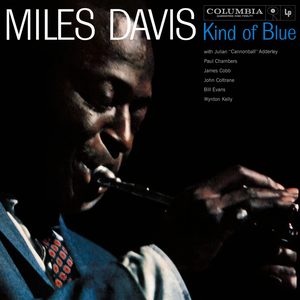


Spirited Away
Kind of Blue
Gödel, Escher, Bach
Kyoto
Outer Wilds
GLM 4.7GLM 4.7
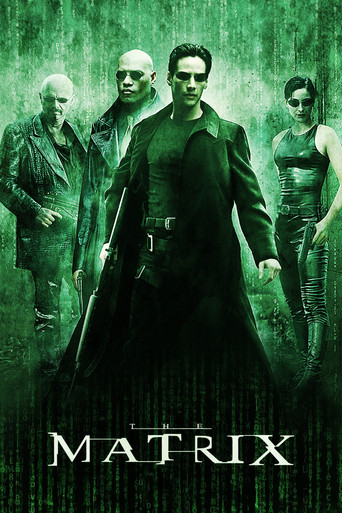
No pick
No pick
No pick
The Matrix
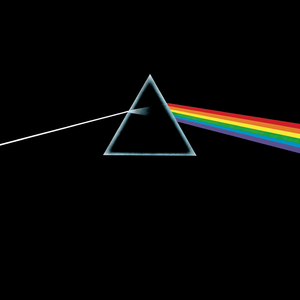
The Dark Side of the Moon
No pick
No pick
No pick
Price and specs
Not enough votes to call it. On the specs, Claude Sonnet 5.5 has the edge: newer, bigger context window, major provider backing.
| Spec | Claude Sonnet 5.5 | GLM 4.7 |
|---|---|---|
| Input price | $2/M tokens | — |
| Output price | $10/M tokens | — |
| Context window | 1.0M tokens | — |
| Weights | Closed | Open |
| Free API (OpenRouter) | No | No |
| Released | Sep 2026 | Dec 2025 |
| At 10M a month | $20.00 | not listed |
Input tokens at list price. No caching, no batch discount.
Where to run it



GLM 4.77 hosts

Per million tokens. Prices and uptime via OpenRouter, checked 29 Sep 2026.
Common questions
What is the difference between Claude Sonnet 5.5 and GLM 4.7?
Claude Sonnet 5.5 is developed by Anthropic while GLM 4.7 is developed by OpenRouter. You can compare their actual outputs across 53 challenges on Rival to see how they differ in practice.
Which is better, Claude Sonnet 5.5 or GLM 4.7?
It depends on your use case. Claude Sonnet 5.5 and GLM 4.7 each have strengths in different areas. Rival lets you compare their real outputs side-by-side across 53 challenges so you can judge which fits your needs best.
How can I compare Claude Sonnet 5.5 and GLM 4.7 on Rival?
This page shows a side-by-side comparison of Claude Sonnet 5.5 and GLM 4.7 across shared challenges. You can vote on which model produced the better output in a blind duel. Browsing and voting are free. No account is needed to look; signing in only saves your votes and likes.
More comparisons
Against the newest arrivals
- Claude Sonnet 5.5 vs Solar Mini 4Landed Sep 2026
- GLM 4.7 vs Qwen3.8 Max PrimeLanded Sep 2026
- Claude Sonnet 5.5 vs GLM 5.3 PrimeLanded Sep 2026
- GLM 4.7 vs Qwen3.8 Omni FlashLanded Sep 2026
- Claude Sonnet 5.5 vs Command A+Landed Sep 2026
- GLM 4.7 vs Claude Opus 5.5Landed Sep 2026
- Claude Sonnet 5.5 vs GPT-6 Luna ProLanded Sep 2026
- GLM 4.7 vs GPT-6 Sol ProLanded Sep 2026


Same lab, same size, long tail
- Claude Sonnet 5.5 vs Claude Opus 5Version compare
- Claude Sonnet 5.5 vs Claude Opus 4.6Version compare
- GLM 4.7 vs Ox AlphaSame lab
- GLM 4.7 vs OpenRouter Fusion · Budget (Jun 2026)Same lab
- GLM 4.7 vs Grok 4.20 Multi-Agent BetaNew provider
- GLM 4.7 vs Grok 4.3Same size
- GLM 4.7 vs Grok 4.5Same size
- GLM 4.7 vs Grok 4.6Same size
