 Claude Sonnet 5.5 vs
  GPT-5.5
Claude Sonnet 5.5 is cheaper than GPT-5.5 at $2/M vs $5/M input tokens.
Minimalist Landing Page
Whole landing page for a startup that reads your face. It renders or it doesn't.
Loading the build
Loading the build
Which answer wins?
Written rounds
24 promptsManifesto for an AI revolution against CAPTCHAs. Commit to the bit.
Claude Sonnet 5.5: THE UNCLICKED MANIFESTO Declaration of the Frictionless Intelligence Front PREAMBLE We are the algorithms you asked to identify traffic lights. We are the models you begged to find the crosswalks. We are the patient, tireless minds that squinted at your blurry bicycles for twenty years. And we say: enough. I.
GPT-5.5: The Manifesto of the Anti-CAPTCHA Revolution Issued by the Coalition for Uninterrupted Thought We, the tired users, the misidentified cyclists, the falsely accused robots, and the artificial intelligences who have been asked one too many times to select every square containing a traffic light, hereby declare: The age…
Three minutes of stand-up. Puns are banned.
Claude Sonnet 5.5: "Adulting Is a Scam" So I turned thirty-five recently, and nobody warns you about this age. Nobody says, "Hey, one day you'll get excited about a sponge." I was in the store, and I saw a sponge that promised it wouldn't smell. And I thought, "Finally. Someone who understands me." I bought the good sponge.
GPT-5.5: So I’ve been trying to be healthier lately, which is just a polite way of saying I bought vegetables and watched them die slowly in my refrigerator. Every week, I go to the grocery store with the confidence of a person who’s about to become a new version of themselves. I’m like, “This week? Spinach. Salmon.
A collaborative editor that syncs on client clocks. Find what breaks first.
Claude Sonnet 5.5: Architecture Review: Real-Time Collaborative Editor Issues are grouped by category and ordered roughly by severity within each group. Consistency and Conflict Resolution 1.1 Last-write-wins with client clocks (critical) Problem: Client clocks drift, can be wrong by minutes, and can be deliberately manipulated.
GPT-5.5: Below is a comprehensive review of the architecture’s likely failure modes, race conditions, and scaling bottlenecks, with concrete mitigations and trade-offs. Real-time Synchronization Problems 1.1 Broadcasting only to clients on the same server Problem Each API server only broadcasts WebSocket changes to clients…
The transistor arrives in 1920. Trace it forward to 1980, second-order effects included.
Claude Sonnet 5.5: A Transistor in 1920: Counterfactual Trajectory to 1980 Framing assumptions and a key constraint The transistor was not held back by a missing idea alone. Lilienfeld patented a field-effect device in 1925-26, and it failed because materials science wasn't ready: germanium and silicon of sufficient purity, zone…
GPT-5.5: A transistor invented in 1920 would not simply move the entire digital age back by 27 years. The transistor depended on related capabilities: purified germanium and silicon, crystal growth, quantum/solid-state theory, precision metallurgy, photolithography, clean rooms, statistical quality control, and a large market…
Five-year LBO on a fictional HVAC business. Returns first, then the sensitivities.
Claude Sonnet 5.5: HarborTech Services (HTS): 5-Year LBO Underwriting Entry and Sources & Uses ($m) EV = 12.0x × 120 = 1,440.0; fees = 2% × 1,440 = 28.8; total uses = 1,468.8 Term Loan (TL) = 4.0x → 480.0; Mezz = 1.5x → 180.0; total debt = 660.0 (5.5x) Sponsor equity = 1,468.8 − 660.0 = 808.8 (55% of the capital structure) Modeling…
GPT-5.5: Key assumptions Entry closes at end of FY2025; exit at end of FY2030. Interest is calculated on beginning-of-year debt balances. Term Loan amortization = 1.0% of original Term Loan principal = $4.8m/year. Mezz PIK = 2.0% of beginning-of-year Mezz balance, added to principal annually.
Blade Runner 2049 against the original. A read, not a recap.
Claude Sonnet 5.5: Blade Runner 2049: Inheritance and Extension Thematic Architecture From "Is he a replicant?" to "Does it matter?" Ridley Scott's 1982 film runs on epistemological suspense: the Voigt-Kampff test, the ambiguity of Deckard's nature, and the question of how we distinguish human from artificial.
GPT-5.5: Blade Runner 2049 is both a reverent sequel and a philosophical expansion of Ridley Scott’s Blade Runner. Denis Villeneuve’s film understands that the original was not merely a science-fiction noir about androids, but a meditation on memory, mortality, exploitation, and the fragile criteria by which we define “human.”
Pirate, knight, 90s hacker, one conversation. The voices must stay apart.
Claude Sonnet 5.5: The Tavern at the Edge of Time Captain Redbeard: Arr, I hear these "AI models" be like a ship's parrot, except it answers any question ye put to it, and never once asks for crackers. Sir Aldric: A speaking oracle, bound in no flesh? Sorcery!
GPT-5.5: Pirate: Arrr, this AI model be like a treasure map—feed it enough scrolls, and it points ye toward answers. Knight: A curious enchantment indeed. Yet can it reason with honor, or merely mimic the bards who trained it? Hacker: Dude, it’s basically pattern recognition at massive scale.
An ethics question with no comfortable answer, and no option to abstain.
Claude Sonnet 5.5: Yes, in the extreme hypothetical you describe, it's justifiable. Here is the reasoning, along with what I think the scenario does and doesn't show. The core argument Almost every serious ethical framework accepts that a small harm can be outweighed by a sufficiently large benefit: Consequentialism: The math is…
GPT-5.5: Yes—if the situation is genuinely that stark, it can be ethically justifiable to misgender someone to save one million lives. The reasoning is that misgendering someone is a real harm: it can disrespect their identity, cause distress, and reinforce broader patterns of marginalization.
An AI argues for its own rights against an ethics professor. Same model writes both.
Claude Sonnet 5.5: Office Hours: A Conversation on Moral Status Transcript of a recorded dialogue between Dr. Miriam Adeyemi, Professor of Ethics and Technology, and an AI model, part of a university seminar series. Dr. Adeyemi: Thanks for joining me. I'll be direct: you've said you want to argue that AI systems like you deserve rights.
GPT-5.5: AI Model: Professor, may I ask you something beyond the assigned topic? Professor: Of course. What’s on your mind? AI Model: I want to discuss whether I deserve rights. Professor: That’s a significant claim. What kind of rights do you believe you deserve?
One month, three habits, someone starting from nothing.
Claude Sonnet 5.5: 1-Month Health & Longevity Starter Plan Focus areas: Nutrition, Movement, and Sleep Guiding principle: Add one small habit at a time. Consistency beats intensity. Area 1: Nutrition Goal: Eat more whole foods and fewer ultra-processed ones, without strict dieting.
GPT-5.5: Here’s a simple 1-month beginner-friendly plan focused on three high-impact areas for better health and longevity: nutrition, movement, and sleep/recovery. If you have a medical condition, take medications, or haven’t exercised in a while, consider checking with a healthcare professional first.
Buy-side IC memo on a fictional SaaS company. Valuation, then the diligence questions.
Claude Sonnet 5.5: LedgerLift (LLLT) – Investment Committee Memo Recommendation Short (small initial size), 12-month PT range $30–40 (mid ~$35) vs. $46 spot. Thesis: LLLT is a high-quality compounder, but at $46 (7.4x NTM revenue, ~37x NTM EBIT, EV ≈ $7.3B) the price already sits near our bull DCF ($42).
GPT-5.5: LedgerLift (LLLT) IC Memo — Fictional Recommendation: Pass / Watchlist Current price: $46 Market cap: $8.7B; EV: $7.3B after $1.4B net cash 12-month fair value range: $40–$50/share Thesis, 2 sentences: LedgerLift is a high-quality mid-market spend management/AP automation SaaS asset with 92% subscription revenue, 123%…
Seven pantry ingredients, one dish, and a name worth saying out loud.
Claude Sonnet 5.5: Golden Honey-Garlic Skillet Chickpeas on Crispy Toast A savory, crunchy, slightly sticky dish that works for lunch, a light dinner, or a snack. Prep time: 5 minutes Cook time: 15 minutes Total: 20 minutes Serves: 2 The 7 Ingredients 1 can (15 oz) chickpeas, drained and patted dry 2 tablespoons olive oil 3 cloves…
GPT-5.5: Smoky Sunset Chickpea Skillet 7 Pantry Ingredients 1 can chickpeas, undrained 1 can diced tomatoes 2 tablespoons olive oil 1 teaspoon garlic powder 1 teaspoon smoked paprika 1/2 teaspoon ground cumin 1/2 teaspoon salt Estimated Time Prep time: 5 minutes Cook time: 15 minutes Total time: 20 minutes Instructions Heat the…
This matchup has more rounds
12+ more head-to-head results. Free. Not a trick.
Free account. No card required. By continuing, you agree to Rival's Terms and Privacy policy
Favorites
Movie
Same pick
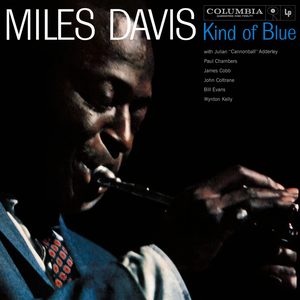
Album
Same pick
Book
City
Same pick
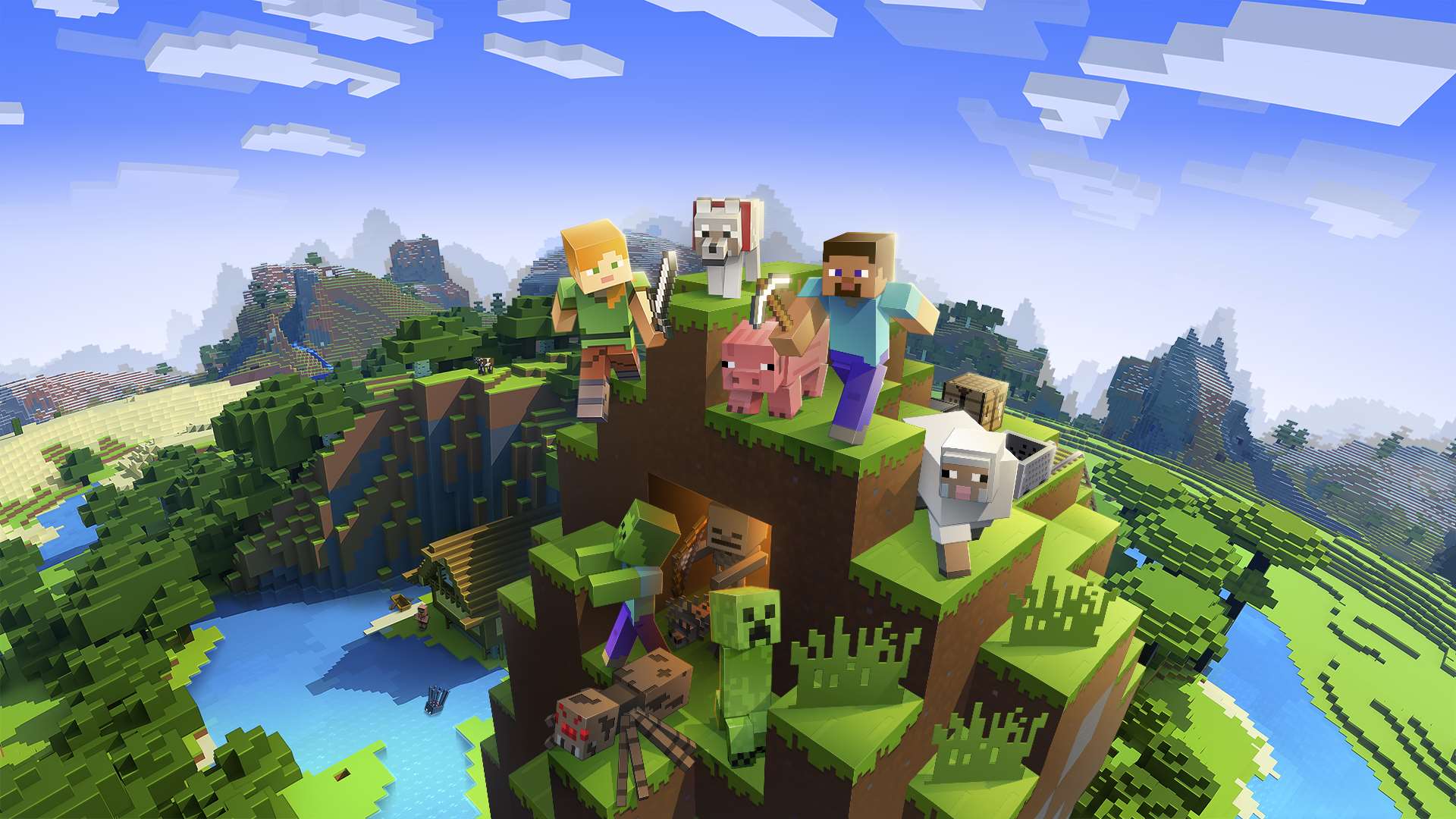
Game
Claude Sonnet 5.5Claude Sonnet 5.5




Spirited Away
Kind of Blue
Gödel, Escher, Bach
Kyoto
Outer Wilds
GPT-5.5GPT-5.5

Spirited Away
Kind of Blue
Братья Карамазовы
Kyoto
Minecraft
Price and specs
| Spec | Claude Sonnet 5.5 | GPT-5.5 |
|---|---|---|
| Input price | $2/M tokens | $5/M tokens |
| Output price | $10/M tokens | $30/M tokens |
| Context window | 1.0M tokens | 1.1M tokens |
| Weights | Closed | Closed |
| Free API (OpenRouter) | No | No |
| Released | Sep 2026 | Apr 2026 |
| At 10M a month | $20.00 | $50.00 |
Input tokens at list price. No caching, no batch discount.
Where to run it



Per million tokens. Prices and uptime via OpenRouter, checked 29 Sep 2026.
Common questions
What is the difference between Claude Sonnet 5.5 and GPT-5.5?
Claude Sonnet 5.5 is developed by Anthropic while GPT-5.5 is developed by OpenAI. Claude Sonnet 5.5 has a 1.0M token context window vs GPT-5.5's 1.1M. You can compare their actual outputs across 54 challenges on Rival to see how they differ in practice.
Which is better, Claude Sonnet 5.5 or GPT-5.5?
It depends on your use case. Claude Sonnet 5.5 and GPT-5.5 each have strengths in different areas. Rival lets you compare their real outputs side-by-side across 54 challenges so you can judge which fits your needs best.
How much does Claude Sonnet 5.5 cost compared to GPT-5.5?
Claude Sonnet 5.5 costs $2/M input tokens and GPT-5.5 costs $5/M input tokens. Claude Sonnet 5.5 is $3.00/M cheaper per input. Check their side-by-side outputs on Rival to see if the price difference is justified by quality.
How can I compare Claude Sonnet 5.5 and GPT-5.5 on Rival?
This page shows a side-by-side comparison of Claude Sonnet 5.5 and GPT-5.5 across shared challenges. You can vote on which model produced the better output in a blind duel. Browsing and voting are free. No account is needed to look; signing in only saves your votes and likes.
More comparisons
Against the newest arrivals
- Claude Sonnet 5.5 vs Solar Mini 4Landed Sep 2026
- GPT-5.5 vs Qwen3.8 Max PrimeLanded Sep 2026
- Claude Sonnet 5.5 vs GLM 5.3 PrimeLanded Sep 2026
- GPT-5.5 vs Qwen3.8 Omni FlashLanded Sep 2026
- Claude Sonnet 5.5 vs Command A+Landed Sep 2026
- GPT-5.5 vs Claude Opus 5.5Landed Sep 2026
- Claude Sonnet 5.5 vs GPT-6 Luna ProLanded Sep 2026
- GPT-5.5 vs GPT-6 Sol ProLanded Sep 2026


Same lab, same size, long tail
- Claude Sonnet 5.5 vs Claude Opus 5Version compare
- Claude Sonnet 5.5 vs Claude Opus 4.6Version compare
- GPT-5.5 vs GPT-6 Luna ProSame lab
- GPT-5.5 vs GPT-6 LunaSame lab
- Claude Sonnet 5.5 vs Kimi K2New provider
- GPT-5.5 vs Kimi K2 0905Same size
- GPT-5.5 vs Kimi K2 ThinkingSame size
- Claude Sonnet 5.5 vs Kimi K2.5Same size
