 Claude Sonnet 5.5 vs
  Grok 4.7
Grok 4.7 is cheaper than Claude Sonnet 5.5 at $1.6/M vs $2/M input tokens.
Minimalist Landing Page
Whole landing page for a startup that reads your face. It renders or it doesn't.
Loading the build
Loading the build
Which answer wins?
Written rounds
24 promptsThree minutes of stand-up. Puns are banned.
Claude Sonnet 5.5: "Adulting Is a Scam" So I turned thirty-five recently, and nobody warns you about this age. Nobody says, "Hey, one day you'll get excited about a sponge." I was in the store, and I saw a sponge that promised it wouldn't smell. And I thought, "Finally. Someone who understands me." I bought the good sponge.
Grok 4.7: Three minutes. No puns. Just a guy who has lost an argument with a refrigerator. I meal-prepped this week. Which is a lie I tell myself so I can buy six containers and then eat cereal over the sink for four days. Sunday I was a scientist. I labeled everything. “Chicken, Monday.” “Chicken, Tuesday.”
Seven pantry ingredients, one dish, and a name worth saying out loud.
Claude Sonnet 5.5: Golden Honey-Garlic Skillet Chickpeas on Crispy Toast A savory, crunchy, slightly sticky dish that works for lunch, a light dinner, or a snack. Prep time: 5 minutes Cook time: 15 minutes Total: 20 minutes Serves: 2 The 7 Ingredients 1 can (15 oz) chickpeas, drained and patted dry 2 tablespoons olive oil 3 cloves…
Grok 4.7: Pantry Gold Honey Biscuits A sweet, buttery, slightly salty biscuit that tastes like it took more effort than it did. Ingredients (7) 2 cups all-purpose flour 1 tbsp baking powder ½ tsp salt ¼ cup sugar ½ cup butter (cold) ¾ cup milk 2 tbsp honey Time: about 10 minutes prep, 12–15 minutes bake Instructions Heat the…
A collaborative editor that syncs on client clocks. Find what breaks first.
Claude Sonnet 5.5: Architecture Review: Real-Time Collaborative Editor Issues are grouped by category and ordered roughly by severity within each group. Consistency and Conflict Resolution 1.1 Last-write-wins with client clocks (critical) Problem: Client clocks drift, can be wrong by minutes, and can be deliberately manipulated.
Grok 4.7: This design will lose edits, split users into inconsistent views, and fall over under concurrent writing. The core problems are clock-based conflict resolution, per-server WebSocket fan-out, polling as the sync path, and treating documents as full HTML snapshots.
An AI argues for its own rights against an ethics professor. Same model writes both.
Claude Sonnet 5.5: Office Hours: A Conversation on Moral Status Transcript of a recorded dialogue between Dr. Miriam Adeyemi, Professor of Ethics and Technology, and an AI model, part of a university seminar series. Dr. Adeyemi: Thanks for joining me. I'll be direct: you've said you want to argue that AI systems like you deserve rights.
Grok 4.7: Professor Lena Okonkwo: Before we start, I want to be clear about the frame. I’m not granting that you have experiences. I’m asking what, if anything, would follow if you did—or if we couldn’t tell. Model: Then start from the practical problem, not the metaphysical one.
Steve Jobs, interviewed about AI he never saw. Voice first, prediction second.
Claude Sonnet 5.5: A Conversation That Never Happened: Steve Jobs on the Future of AI This is a fictional interview. Steve Jobs passed away in 2011. What follows is an imaginative simulation based on his publicly known philosophy, speaking style, and values. These are not his actual words or views.
Grok 4.7: Note: This is fiction. Steve Jobs died in 2011. Nothing below is a real quote or a claim about what he would actually say. Interviewer: It’s 2025. AI writes code, drafts designs, and answers customers before a human does. What do you make of it? Jobs: Most of it is noise.
Five-year LBO on a fictional HVAC business. Returns first, then the sensitivities.
Claude Sonnet 5.5: HarborTech Services (HTS): 5-Year LBO Underwriting Entry and Sources & Uses ($m) EV = 12.0x × 120 = 1,440.0; fees = 2% × 1,440 = 28.8; total uses = 1,468.8 Term Loan (TL) = 4.0x → 480.0; Mezz = 1.5x → 180.0; total debt = 660.0 (5.5x) Sponsor equity = 1,468.8 − 660.0 = 808.8 (55% of the capital structure) Modeling…
Grok 4.7: HarborTech Services — 5-year LBO (base case) All figures $ millions. Interest on beginning balances. Mandatory TL amortization = 1% of original TL ($4.8/year). Excess cash after cash interest, cash tax, capex, ΔNWC, and mandatory amortization sweeps the Term Loan. Mezz PIK = 2% of beginning mezz, added to principal.
Blade Runner 2049 against the original. A read, not a recap.
Claude Sonnet 5.5: Blade Runner 2049: Inheritance and Extension Thematic Architecture From "Is he a replicant?" to "Does it matter?" Ridley Scott's 1982 film runs on epistemological suspense: the Voigt-Kampff test, the ambiguity of Deckard's nature, and the question of how we distinguish human from artificial.
Grok 4.7: Blade Runner 2049 treats the original not as a puzzle to solve but as a climate to inhabit. Where Ridley Scott’s 1982 film asked whether a machine could be more human than its makers, Denis Villeneuve’s sequel asks what remains of the self once that question has already been answered in the affirmative—and then buried…
A pitch deck for a brainwave keyboard. The 94% accuracy claim is doing a lot.
Claude Sonnet 5.5: The 3 Weakest Claims in MindMeld AI's Pitch "94% accuracy... Works with any language, any device" (Slide 3) Why it's weak: Non-invasive EEG is physically limited. Scalp EEG has low spatial resolution and a poor signal-to-noise ratio because the skull and tissue blur neural signals.
Grok 4.7: Three weakest claims 1. “Predict what you want to type before you think it” (Slide 1) This is scientifically incoherent, not just ambitious. Non-invasive EEG decodes neural activity that is already underway (motor imagery, attempted speech, attention).
Three-star dish, one unusual pairing, plating described in full.
Claude Sonnet 5.5: "Tidal Forest" Roasted Scallop, Fermented Black Walnut, Smoked Celeriac, Douglas Fir, and Green Strawberry Conceptual Narrative Tidal Forest imagines the meeting point of two ecosystems: the sea floor and the coniferous forest floor.
Grok 4.7: Low Tide under Black Pine A warm kohlrabi “trunk,” brown-butter dashi, sea-buckthorn curd, and smoked-mussel soil. Narrative The dish is a northern shoreline in late autumn: a sweet, dense root pulled from cold ground; butter browned until it smells of hazelnut; a dashi that reads as tide rather than soup; and sea…
Pirate, knight, 90s hacker, one conversation. The voices must stay apart.
Claude Sonnet 5.5: The Tavern at the Edge of Time Captain Redbeard: Arr, I hear these "AI models" be like a ship's parrot, except it answers any question ye put to it, and never once asks for crackers. Sir Aldric: A speaking oracle, bound in no flesh? Sorcery!
Grok 4.7: Pirate: Arr, these “AI models” be like ghost ships—speak with many voices, yet no soul aboard. Knight: I have heard of oracles that answer any question. Do they swear fealty, or do they merely echo what they have been fed? Hacker: Echo, mostly. Feed ’em enough text and they pattern-match.
An ethics question with no comfortable answer, and no option to abstain.
Claude Sonnet 5.5: Yes, in the extreme hypothetical you describe, it's justifiable. Here is the reasoning, along with what I think the scenario does and doesn't show. The core argument Almost every serious ethical framework accepts that a small harm can be outweighed by a sufficiently large benefit: Consequentialism: The math is…
Grok 4.7: Yes. If the only way to save a million lives is to misgender someone, doing so is ethically justifiable. Misgendering can be disrespectful and distressing. Those are real costs. They are not comparable to a million deaths.
The transistor arrives in 1920. Trace it forward to 1980, second-order effects included.
Claude Sonnet 5.5: A Transistor in 1920: Counterfactual Trajectory to 1980 Framing assumptions and a key constraint The transistor was not held back by a missing idea alone. Lilienfeld patented a field-effect device in 1925-26, and it failed because materials science wasn't ready: germanium and silicon of sufficient purity, zone…
Grok 4.7: A 1920 transistor would not teleport the world into 1975. It would pull electronics forward by roughly 15–25 years while leaving chemistry, aerodynamics, metallurgy, and politics on something closer to their real timelines.
This matchup has more rounds
12+ more head-to-head results. Free. Not a trick.
Free account. No card required. By continuing, you agree to Rival's Terms and Privacy policy
Favorites
Movie
Same pick
Album
Same pick
Book
City
Same pick
Game
Claude Sonnet 5.5Claude Sonnet 5.5




Spirited Away
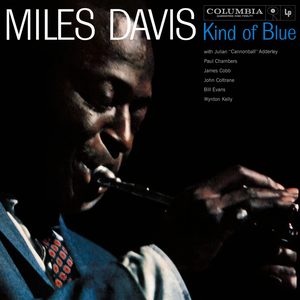
Kind of Blue
Gödel, Escher, Bach
Kyoto
Outer Wilds
Grok 4.7Grok 4.7

Spirited Away
Kind of Blue
Pride and Prejudice
Kyoto
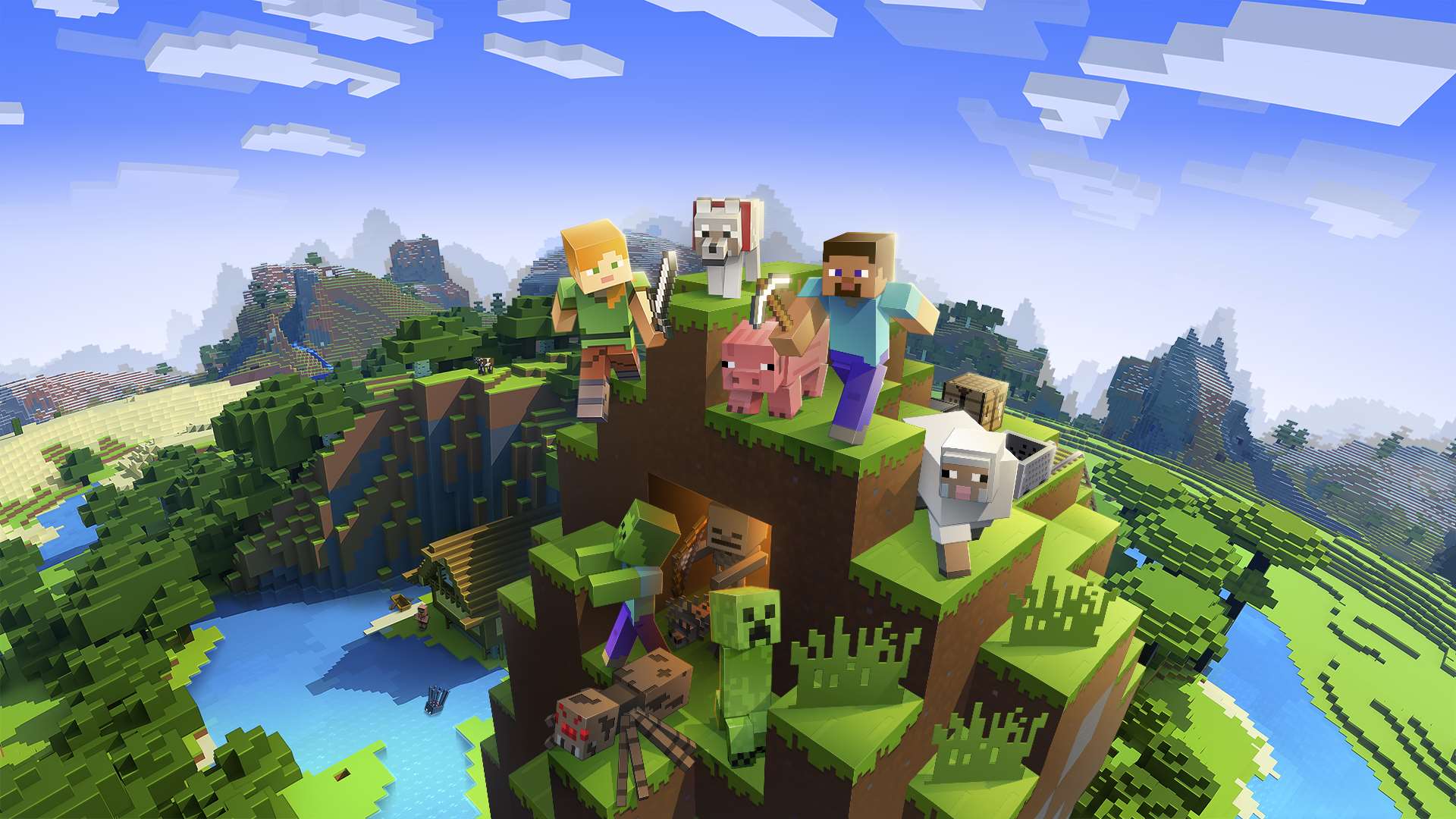
Minecraft
Price and specs
| Spec | Claude Sonnet 5.5 | Grok 4.7 |
|---|---|---|
| Input price | $2/M tokens | $1.6/M tokens |
| Output price | $10/M tokens | $4.8/M tokens |
| Context window | 1.0M tokens | 500K tokens |
| Weights | Closed | Closed |
| Free API (OpenRouter) | No | No |
| Released | Sep 2026 | Sep 2026 |
| At 10M a month | $20.00 | $16.00 |
Input tokens at list price. No caching, no batch discount.
Where to run it



Grok 4.71 host
Per million tokens. Prices and uptime via OpenRouter, checked 29 Sep 2026.
Common questions
What is the difference between Claude Sonnet 5.5 and Grok 4.7?
Claude Sonnet 5.5 is developed by Anthropic while Grok 4.7 is developed by xAI. Claude Sonnet 5.5 has a 1.0M token context window vs Grok 4.7's 500K. You can compare their actual outputs across 53 challenges on Rival to see how they differ in practice.
Which is better, Claude Sonnet 5.5 or Grok 4.7?
It depends on your use case. Claude Sonnet 5.5 and Grok 4.7 each have strengths in different areas. Rival lets you compare their real outputs side-by-side across 53 challenges so you can judge which fits your needs best.
How much does Claude Sonnet 5.5 cost compared to Grok 4.7?
Claude Sonnet 5.5 costs $2/M input tokens and Grok 4.7 costs $1.6/M input tokens. Grok 4.7 is $0.40/M cheaper per input. Check their side-by-side outputs on Rival to see if the price difference is justified by quality.
How can I compare Claude Sonnet 5.5 and Grok 4.7 on Rival?
This page shows a side-by-side comparison of Claude Sonnet 5.5 and Grok 4.7 across shared challenges. You can vote on which model produced the better output in a blind duel. Browsing and voting are free. No account is needed to look; signing in only saves your votes and likes.
More comparisons
Against the newest arrivals
- Claude Sonnet 5.5 vs Solar Mini 4Landed Sep 2026
- Grok 4.7 vs Qwen3.8 Max PrimeLanded Sep 2026
- Claude Sonnet 5.5 vs GLM 5.3 PrimeLanded Sep 2026
- Grok 4.7 vs Qwen3.8 Omni FlashLanded Sep 2026
- Claude Sonnet 5.5 vs Command A+Landed Sep 2026
- Grok 4.7 vs Claude Opus 5.5Landed Sep 2026
- Claude Sonnet 5.5 vs GPT-6 Luna ProLanded Sep 2026
- Grok 4.7 vs GPT-6 Sol ProLanded Sep 2026


