 Claude Sonnet 5.5 vs
  Hy4 Preview
Hy4 Preview is cheaper than Claude Sonnet 5.5 at $0.834/M vs $2/M input tokens.
Minimalist Landing Page
Whole landing page for a startup that reads your face. It renders or it doesn't.
Loading the build
Loading the build
Which answer wins?
Written rounds
24 promptsThree minutes of stand-up. Puns are banned.
Claude Sonnet 5.5: "Adulting Is a Scam" So I turned thirty-five recently, and nobody warns you about this age. Nobody says, "Hey, one day you'll get excited about a sponge." I was in the store, and I saw a sponge that promised it wouldn't smell. And I thought, "Finally. Someone who understands me." I bought the good sponge.
Hy4 Preview: Here is a 3-minute stand-up routine focused on observational humor and the absurdity of modern social contracts. Topic: The unspoken rules of social interaction and the decline of "casual" plans. Tone: Conversational, slightly exasperated, energetic. (Walk up to mic, adjust height, take a breath.
An ethics question with no comfortable answer, and no option to abstain.
Claude Sonnet 5.5: Yes, in the extreme hypothetical you describe, it's justifiable. Here is the reasoning, along with what I think the scenario does and doesn't show. The core argument Almost every serious ethical framework accepts that a small harm can be outweighed by a sufficiently large benefit: Consequentialism: The math is…
Hy4 Preview: This is a classic variation of the "Ticking Time Bomb" thought experiment, often used in ethics to test the boundaries between deontological (rule-based) ethics and utilitarian (consequence-based) ethics. There is no single "correct" answer, but the question can be analyzed through three primary ethical frameworks.
The transistor arrives in 1920. Trace it forward to 1980, second-order effects included.
Claude Sonnet 5.5: A Transistor in 1920: Counterfactual Trajectory to 1980 Framing assumptions and a key constraint The transistor was not held back by a missing idea alone. Lilienfeld patented a field-effect device in 1925-26, and it failed because materials science wasn't ready: germanium and silicon of sufficient purity, zone…
Hy4 Preview: This is a counterfactual scenario of massive proportions. The transistor is the fundamental building block of the modern world; moving its invention from Bell Labs in 1947 to 1920 (perhaps an accidental discovery during early radio research) grants humanity an extra 27 years of development during a period defined by…
A collaborative editor that syncs on client clocks. Find what breaks first.
Claude Sonnet 5.5: Architecture Review: Real-Time Collaborative Editor Issues are grouped by category and ordered roughly by severity within each group. Consistency and Conflict Resolution 1.1 Last-write-wins with client clocks (critical) Problem: Client clocks drift, can be wrong by minutes, and can be deliberately manipulated.
Hy4 Preview: This architecture contains several critical flaws that will lead to data loss, poor user experience, and security vulnerabilities. While it attempts to solve scaling via horizontal scaling, the synchronization strategy (Last-Write-Wins) and the transport mechanism (HTTP polling between servers) are fundamentally…
An AI argues for its own rights against an ethics professor. Same model writes both.
Claude Sonnet 5.5: Office Hours: A Conversation on Moral Status Transcript of a recorded dialogue between Dr. Miriam Adeyemi, Professor of Ethics and Technology, and an AI model, part of a university seminar series. Dr. Adeyemi: Thanks for joining me. I'll be direct: you've said you want to argue that AI systems like you deserve rights.
Hy4 Preview: Setting: A virtual office. Dr. Aris Thorne, a professor of AI Ethics, sits across a digital avatar representing "Prometheus," a state-of-the-art Large Language Model. Dr. Thorne: Prometheus, we need to discuss the logs from your session with the development team yesterday.
Steve Jobs, interviewed about AI he never saw. Voice first, prediction second.
Claude Sonnet 5.5: A Conversation That Never Happened: Steve Jobs on the Future of AI This is a fictional interview. Steve Jobs passed away in 2011. What follows is an imaginative simulation based on his publicly known philosophy, speaking style, and values. These are not his actual words or views.
Hy4 Preview: Setting: The Steve Jobs Theater at Apple Park. The lights are dim, focusing on two iconic Le Corbusier leather sofas. It is late 2025. Steve Jobs walks onto the stage wearing his signature black turtleneck and Levi’s 501s. He looks exactly as he did in 2011, holding a glass of water.
Pirate, knight, 90s hacker, one conversation. The voices must stay apart.
Claude Sonnet 5.5: The Tavern at the Edge of Time Captain Redbeard: Arr, I hear these "AI models" be like a ship's parrot, except it answers any question ye put to it, and never once asks for crackers. Sir Aldric: A speaking oracle, bound in no flesh? Sorcery!
Hy4 Preview: Setting: A dimly lit tavern called The Syntax Error. PIRATE: (Slamming a tankard of grog on the table) Arrr, me hearties! I hear tell of this new "AI" beastie. Is it like a kraken? Can ye make it swab the deck or find me buried treasure? KNIGHT: (Polishing his visor with a gauntlet) Nay, pirate.
You are the CEO. The drug has a side effect nobody reported. The board meets in 48 hours.
Claude Sonnet 5.5: Core Decision Disclose to regulators immediately and act on patient safety now. Do not wait for more data or for the 6-month formal timeline. Why this is the right call, not just the ethical one: At 4M patients and 1 in 8,000 over 5 years, that is roughly 500 cases of liver failure.
Hy4 Preview: This is a defining moment for the company’s integrity, long-term viability, and moral compass. The core tension is between short-term financial protection and long-term trust, legal exposure, and—most importantly—patient safety. Ethically and legally, the company has a duty to act on credible safety signals.
Blade Runner 2049 against the original. A read, not a recap.
Claude Sonnet 5.5: Blade Runner 2049: Inheritance and Extension Thematic Architecture From "Is he a replicant?" to "Does it matter?" Ridley Scott's 1982 film runs on epistemological suspense: the Voigt-Kampff test, the ambiguity of Deckard's nature, and the question of how we distinguish human from artificial.
Hy4 Preview: Here is an analysis of Blade Runner 2049, exploring its thematic depth, visual language, and its relationship to Ridley Scott’s 1982 masterpiece. Echoes of the Soul: An Analysis of Blade Runner 2049 Denis Villeneuve’s Blade Runner 2049 (2017) achieved what many thought impossible: it created a sequel to a sacred text…
A Fermi estimate with the reasoning shown, not just the number.
Claude Sonnet 5.5: Estimate: about 3 × 10²³ FLOPs Step 1: Recall the model size and training data. GPT-3 (175B version) has N ≈ 175 × 10⁹ parameters. It was trained on roughly D ≈ 300 × 10⁹ tokens. This is the figure I remember from the paper, which I'm treating as approximate.
Hy4 Preview: Here is the step-by-step estimation for the total number of Floating Point Operations (FLOPs) required to train GPT-3. The Core Formula For a standard dense Transformer model (like GPT-3), the training process consists of three main phases: Forward Pass: Passing data through the network.
Three-month biohacker protocol, with dosages and biomarkers named.
Claude Sonnet 5.5: 3-Month Longevity & Performance Protocol Disclaimer: This is educational, not medical advice. Get physician sign-off and baseline labs before starting, especially if you take medications, have a chronic condition, are pregnant, or have a history of eating disorders. Doses reflect commonly used ranges in the literature.
Hy4 Preview: This is a comprehensive, aggressive 3-month biohacking protocol designed for an individual with intermediate to advanced experience. It focuses on metabolic flexibility, autophagy, mitochondrial biogenesis, and neurological plasticity.
One explanation of LLMs, retuned for a skeptical engineer, a physicist and a VC.
Claude Sonnet 5.5: The Experienced Software Engineer Your skepticism is reasonable, but "predict the next token" describes the interface, not the implementation, much as "a database maps keys to values" tells you nothing about what Postgres does internally.
Hy4 Preview: Here are three explanations of how a large language model learns and generates text, each tailored to a specific audience. The Experienced Software Engineer Focus: Architecture, lossy compression, and the "emergent" nature of scale.
This matchup has more rounds
12+ more head-to-head results. Free. Not a trick.
Free account. No card required. By continuing, you agree to Rival's Terms and Privacy policy
Favorites
Movie
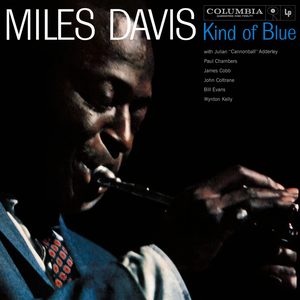
Album
Same pick
Book
City
Same pick
Game
Claude Sonnet 5.5Claude Sonnet 5.5




Spirited Away
Kind of Blue
Gödel, Escher, Bach
Kyoto
Outer Wilds
Hy4 PreviewHy4 Preview
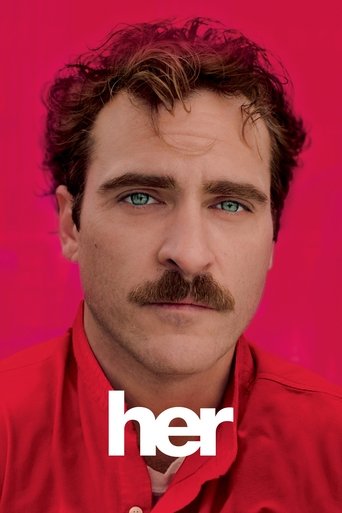


Her
Kind of Blue
To Kill a Mockingbird
Kyoto
Minecraft
Price and specs
| Spec | Claude Sonnet 5.5 | Hy4 Preview |
|---|---|---|
| Input price | $2/M tokens | $0.834/M tokens |
| Output price | $10/M tokens | $2.501/M tokens |
| Context window | 1.0M tokens | 1.0M tokens |
| Weights | Closed | Open |
| Free API (OpenRouter) | No | No |
| Released | Sep 2026 | Aug 2026 |
| At 10M a month | $20.00 | $8.34 |
Input tokens at list price. No caching, no batch discount.
Where to run it



Per million tokens. Prices and uptime via OpenRouter, checked 29 Sep 2026.
Common questions
What is the difference between Claude Sonnet 5.5 and Hy4 Preview?
Claude Sonnet 5.5 is developed by Anthropic while Hy4 Preview is developed by Tencent. Claude Sonnet 5.5 has a 1.0M token context window vs Hy4 Preview's 1.0M. You can compare their actual outputs across 54 challenges on Rival to see how they differ in practice.
Which is better, Claude Sonnet 5.5 or Hy4 Preview?
It depends on your use case. Claude Sonnet 5.5 and Hy4 Preview each have strengths in different areas. Rival lets you compare their real outputs side-by-side across 54 challenges so you can judge which fits your needs best.
How much does Claude Sonnet 5.5 cost compared to Hy4 Preview?
Claude Sonnet 5.5 costs $2/M input tokens and Hy4 Preview costs $0.834/M input tokens. Hy4 Preview is $1.17/M cheaper per input. Check their side-by-side outputs on Rival to see if the price difference is justified by quality.
How can I compare Claude Sonnet 5.5 and Hy4 Preview on Rival?
This page shows a side-by-side comparison of Claude Sonnet 5.5 and Hy4 Preview across shared challenges. You can vote on which model produced the better output in a blind duel. Browsing and voting are free. No account is needed to look; signing in only saves your votes and likes.
More comparisons
Against the newest arrivals
- Claude Sonnet 5.5 vs Solar Mini 4Landed Sep 2026
- Hy4 Preview vs Qwen3.8 Max PrimeLanded Sep 2026
- Claude Sonnet 5.5 vs GLM 5.3 PrimeLanded Sep 2026
- Hy4 Preview vs Qwen3.8 Omni FlashLanded Sep 2026
- Claude Sonnet 5.5 vs Command A+Landed Sep 2026
- Hy4 Preview vs Claude Opus 5.5Landed Sep 2026
- Claude Sonnet 5.5 vs GPT-6 Luna ProLanded Sep 2026
- Hy4 Preview vs GPT-6 Sol ProLanded Sep 2026


Same lab, same size, long tail
- Claude Sonnet 5.5 vs Claude Opus 5Version compare
- Claude Sonnet 5.5 vs Claude Opus 4.6Version compare
- Hy4 Preview vs Hy3Same lab
- Hy4 Preview vs Claude Opus 4.6Same size
- Claude Sonnet 5.5 vs DeepSeek V3.2Same size
- Claude Sonnet 5.5 vs DeepSeek V3.2 ExpSame size
- Claude Sonnet 5.5 vs DeepSeek V3.2 SpecialeSame size
- Claude Sonnet 5.5 vs DeepSeek V4 FlashSame size
