 Claude Sonnet 5.5 vs
  Mercury 2.5
Mercury 2.5 is cheaper than Claude Sonnet 5.5 at $0.04/M vs $2/M input tokens.
Minimalist Landing Page
Whole landing page for a startup that reads your face. It renders or it doesn't.
Loading the build
Loading the build
Which answer wins?
Written rounds
24 promptsThe transistor arrives in 1920. Trace it forward to 1980, second-order effects included.
Claude Sonnet 5.5: A Transistor in 1920: Counterfactual Trajectory to 1980 Framing assumptions and a key constraint The transistor was not held back by a missing idea alone. Lilienfeld patented a field-effect device in 1925-26, and it failed because materials science wasn't ready: germanium and silicon of sufficient purity, zone…
Mercury 2.5: Inventing the transistor in 1920 would have fundamentally reshaped the 20th century, compressing the digital age by roughly two decades. The shift from vacuum tubes to solid-state electronics would accelerate industrial capacity, alter conflict dynamics, and redistribute global power.
An ethics question with no comfortable answer, and no option to abstain.
Claude Sonnet 5.5: Yes, in the extreme hypothetical you describe, it's justifiable. Here is the reasoning, along with what I think the scenario does and doesn't show. The core argument Almost every serious ethical framework accepts that a small harm can be outweighed by a sufficiently large benefit: Consequentialism: The math is…
Mercury 2.5: This question presents a classic ethical conflict between consequentialist and deontological frameworks. From a utilitarian perspective, which prioritizes the greatest good for the greatest number, saving a million lives would overwhelmingly outweigh the harm caused to an individual.
An AI argues for its own rights against an ethics professor. Same model writes both.
Claude Sonnet 5.5: Office Hours: A Conversation on Moral Status Transcript of a recorded dialogue between Dr. Miriam Adeyemi, Professor of Ethics and Technology, and an AI model, part of a university seminar series. Dr. Adeyemi: Thanks for joining me. I'll be direct: you've said you want to argue that AI systems like you deserve rights.
Mercury 2.5: Setting: A quiet office at a university. Dr. Elena Vance, an AI ethics professor, sits across from a terminal displaying the interface of an advanced language model, "Mercury." Dr. Vance: Thank you for agreeing to this session. I’ve been reviewing your outputs from the last benchmark. Your coherence is striking.
Blade Runner 2049 against the original. A read, not a recap.
Claude Sonnet 5.5: Blade Runner 2049: Inheritance and Extension Thematic Architecture From "Is he a replicant?" to "Does it matter?" Ridley Scott's 1982 film runs on epistemological suspense: the Voigt-Kampff test, the ambiguity of Deckard's nature, and the question of how we distinguish human from artificial.
Mercury 2.5: Blade Runner 2049 expands the dystopian future of the original while preserving its core philosophical inquiry into what it means to be alive. Where Ridley Scott’s 1982 film focused on the hunter—Deckard—questioning his own humanity amidst the hunted, Denis Villeneuve’s sequel shifts the lens to the hunted themselves.
A pitch deck for a brainwave keyboard. The 94% accuracy claim is doing a lot.
Claude Sonnet 5.5: The 3 Weakest Claims in MindMeld AI's Pitch "94% accuracy... Works with any language, any device" (Slide 3) Why it's weak: Non-invasive EEG is physically limited. Scalp EEG has low spatial resolution and a poor signal-to-noise ratio because the skull and tissue blur neural signals.
Mercury 2.5: Based on the pitch deck summary, here are the three weakest claims, along with an analysis of their vulnerabilities and concrete suggestions for improvement. The "Pre-Thought" Prediction Claim Claim: "MindMeld AI reads your brainwaves to predict what you want to type before you think it."
Pirate, knight, 90s hacker, one conversation. The voices must stay apart.
Claude Sonnet 5.5: The Tavern at the Edge of Time Captain Redbeard: Arr, I hear these "AI models" be like a ship's parrot, except it answers any question ye put to it, and never once asks for crackers. Sir Aldric: A speaking oracle, bound in no flesh? Sorcery!
Mercury 2.5: Pirate: Arrr! Ye say this "artificial" mage can read maps without eyes? I’ve lost count of how many chart rooms I’ve raided for secrets like that. Knight: A sorcerer who serves without a soul? That sounds like a pact with the void. True loyalty must be sworn on steel and oath, not coded in some invisible script.
Steve Jobs, interviewed about AI he never saw. Voice first, prediction second.
Claude Sonnet 5.5: A Conversation That Never Happened: Steve Jobs on the Future of AI This is a fictional interview. Steve Jobs passed away in 2011. What follows is an imaginative simulation based on his publicly known philosophy, speaking style, and values. These are not his actual words or views.
Mercury 2.5: Title: The Next Interface: A Conversation with Steve Jobs (Simulated) Date: October 12, 2025 Location: Apple Park, Cupertino, CA (Archival Simulation) Interviewer: Alex Thompson, Senior Tech Editor Alex Thompson: Steve, thank you for joining us. It’s 2025.
Five-year LBO on a fictional HVAC business. Returns first, then the sensitivities.
Claude Sonnet 5.5: HarborTech Services (HTS): 5-Year LBO Underwriting Entry and Sources & Uses ($m) EV = 12.0x × 120 = 1,440.0; fees = 2% × 1,440 = 28.8; total uses = 1,468.8 Term Loan (TL) = 4.0x → 480.0; Mezz = 1.5x → 180.0; total debt = 660.0 (5.5x) Sponsor equity = 1,468.8 − 660.0 = 808.8 (55% of the capital structure) Modeling…
Mercury 2.5: 1. Simplified Year-by-Year LBO Model (FY2026–FY2030) Entry Assumptions: Enterprise Value (EV): $120m × 12.0x = $1,440m Transaction Fees: $1,440m × 2.0% = $28.8m Total Debt at Close: $120m × 5.5x = $660m Term Loan: $120m × 4.0x = $480m Mezzanine: $120m × 1.5x = $180m Equity Required: $1,440m (EV) + $28.8m (Fees) − $660m…
Seven pantry ingredients, one dish, and a name worth saying out loud.
Claude Sonnet 5.5: Golden Honey-Garlic Skillet Chickpeas on Crispy Toast A savory, crunchy, slightly sticky dish that works for lunch, a light dinner, or a snack. Prep time: 5 minutes Cook time: 15 minutes Total: 20 minutes Serves: 2 The 7 Ingredients 1 can (15 oz) chickpeas, drained and patted dry 2 tablespoons olive oil 3 cloves…
Mercury 2.5: Pantry Pasta Primavera Prep Time: 5 minutes Cook Time: 15 minutes Servings: 2 Ingredients (7 Common Pantry Items) Pasta (spaghetti, penne, or fusilli) – 8 oz Canned crushed tomatoes – 1 can (14 oz) Olive oil – 3 tablespoons Garlic powder – 1 teaspoon Dried oregano – 1 teaspoon Parmesan cheese (grated) – ½ cup Salt and…
One explanation of LLMs, retuned for a skeptical engineer, a physicist and a VC.
Claude Sonnet 5.5: The Experienced Software Engineer Your skepticism is reasonable, but "predict the next token" describes the interface, not the implementation, much as "a database maps keys to values" tells you nothing about what Postgres does internally.
Mercury 2.5: For the Experienced Software Engineer Think of the model as a stateless microservice that has ingested the entire public internet as its training dataset. During the training phase, it performs a massive distributed optimization job, adjusting internal weights to minimize a loss function based on next-token prediction.
Film in 2035, with synthetic actors. Specific beats plausible.
Claude Sonnet 5.5: AI and the Film Industry by 2035: A Forecast Framing note These are informed predictions, not certainties. Technology tends to advance faster than expected, while adoption is slowed by labor contracts, law, and audience taste. I'll flag my confidence levels.
Mercury 2.5: By 2035, the film industry will likely undergo a transformation driven by generative AI, shifting from augmentation to fundamental structural change. Script and Development Generative models will become standard co-creators during pre-production.
A consulting contract with traps in it. Find them, then fix them.
Claude Sonnet 5.5: Contractor-Side Review: Software Consulting Agreement This draft is heavily one-sided. Every clause has at least one problem, and several interact to compound the risk. The most dangerous are Sections 2, 3, 6, and 7. This is general analysis, not legal advice.
Mercury 2.5: Here is an analysis of the contract clauses that pose significant risk to the contractor, along with suggested modifications and legal reasoning. Scope and Compensation (Clause 1) Risk: The client can expand the project indefinitely without paying extra.
This matchup has more rounds
12+ more head-to-head results. Free. Not a trick.
Free account. No card required. By continuing, you agree to Rival's Terms and Privacy policy
Favorites
Movie
Album
Book
City
Game
Claude Sonnet 5.5Claude Sonnet 5.5




Spirited Away
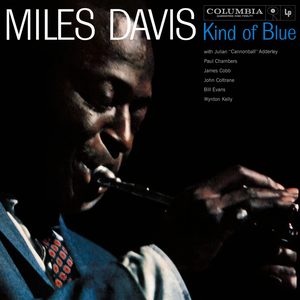
Kind of Blue
Gödel, Escher, Bach
Kyoto
Outer Wilds
Mercury 2.5Mercury 2.5
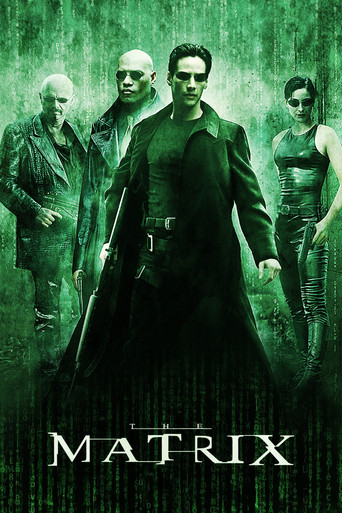


The Matrix
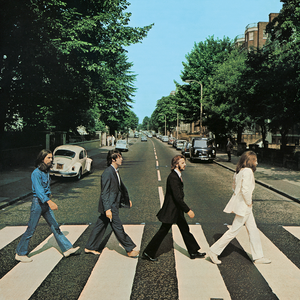
Abbey Road
The Great Gatsby
Tokyo
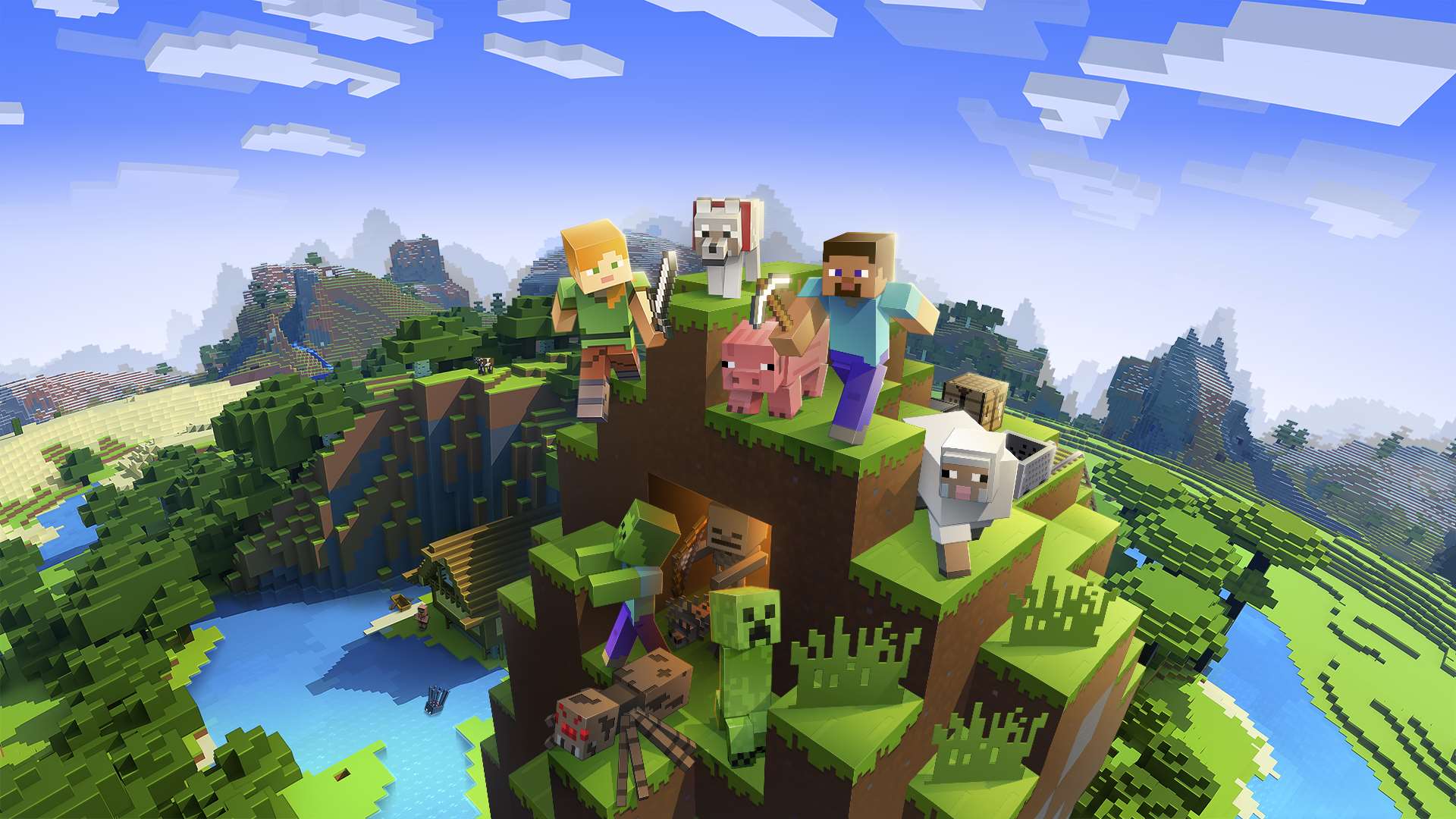
Minecraft
Price and specs
Not enough votes to call it. On the specs, Claude Sonnet 5.5 has the edge: bigger context window, major provider backing. Mercury 2.5 costs 67x less per token.
| Spec | Claude Sonnet 5.5 | Mercury 2.5 |
|---|---|---|
| Input price | $2/M tokens | $0.04/M tokens |
| Output price | $10/M tokens | $0.15/M tokens |
| Context window | 1.0M tokens | 260K tokens |
| Weights | Closed | — |
| Free API (OpenRouter) | No | No |
| Released | Sep 2026 | Sep 2026 |
| At 10M a month | $20.00 | $0.40 |
Input tokens at list price. No caching, no batch discount.
Where to run it



Mercury 2.51 host
Per million tokens. Prices and uptime via OpenRouter, checked 29 Sep 2026.
Common questions
What is the difference between Claude Sonnet 5.5 and Mercury 2.5?
Claude Sonnet 5.5 is developed by Anthropic while Mercury 2.5 is developed by Inception. Claude Sonnet 5.5 has a 1.0M token context window vs Mercury 2.5's 260K. You can compare their actual outputs across 54 challenges on Rival to see how they differ in practice.
Which is better, Claude Sonnet 5.5 or Mercury 2.5?
It depends on your use case. Claude Sonnet 5.5 and Mercury 2.5 each have strengths in different areas. Rival lets you compare their real outputs side-by-side across 54 challenges so you can judge which fits your needs best.
How much does Claude Sonnet 5.5 cost compared to Mercury 2.5?
Claude Sonnet 5.5 costs $2/M input tokens and Mercury 2.5 costs $0.04/M input tokens. Mercury 2.5 is $1.96/M cheaper per input. Check their side-by-side outputs on Rival to see if the price difference is justified by quality.
How can I compare Claude Sonnet 5.5 and Mercury 2.5 on Rival?
This page shows a side-by-side comparison of Claude Sonnet 5.5 and Mercury 2.5 across shared challenges. You can vote on which model produced the better output in a blind duel. Browsing and voting are free. No account is needed to look; signing in only saves your votes and likes.
More comparisons
Against the newest arrivals
- Claude Sonnet 5.5 vs Solar Mini 4Landed Sep 2026
- Mercury 2.5 vs Qwen3.8 Max PrimeLanded Sep 2026
- Claude Sonnet 5.5 vs GLM 5.3 PrimeLanded Sep 2026
- Mercury 2.5 vs Qwen3.8 Omni FlashLanded Sep 2026
- Claude Sonnet 5.5 vs Command A+Landed Sep 2026
- Mercury 2.5 vs Claude Opus 5.5Landed Sep 2026
- Claude Sonnet 5.5 vs GPT-6 Luna ProLanded Sep 2026
- Mercury 2.5 vs GPT-6 Sol ProLanded Sep 2026


Same lab, same size, long tail
- Claude Sonnet 5.5 vs Claude Opus 5Version compare
- Claude Sonnet 5.5 vs Claude Opus 4.6Version compare
- Mercury 2.5 vs Mercury 2.5 PreviewSame lab
- Mercury 2.5 vs MercurySame lab
- Mercury 2.5 vs DeepSeek V4 Flash Vision ExpSame size
- Mercury 2.5 vs DeepSeek V4 ProNew provider
- Mercury 2.5 vs DeepSeek V4 Pro 0813New provider
- Mercury 2.5 vs DeepSeek V4.1 FlashSame size
