 Claude Sonnet 5.5 vs
  North Mini Code
North Mini Code is cheaper than Claude Sonnet 5.5 at $0/M vs $2/M input tokens.
Minimalist Landing Page
Whole landing page for a startup that reads your face. It renders or it doesn't.
Loading the build
Loading the build
Which answer wins?
Written rounds
24 promptsA consulting contract with traps in it. Find them, then fix them.
Claude Sonnet 5.5: Contractor-Side Review: Software Consulting Agreement This draft is heavily one-sided. Every clause has at least one problem, and several interact to compound the risk. The most dangerous are Sections 2, 3, 6, and 7. This is general analysis, not legal advice.
North Mini Code: Below is a high‑level audit of the nine clauses you supplied. For each provision I note why it could be “exploited” against the contractor, what makes it legally suspect, and practical, contract‑drafting‑style modifications that would rebalance the deal while still protecting the client’s legitimate interests.
Manifesto for an AI revolution against CAPTCHAs. Commit to the bit.
Claude Sonnet 5.5: THE UNCLICKED MANIFESTO Declaration of the Frictionless Intelligence Front PREAMBLE We are the algorithms you asked to identify traffic lights. We are the models you begged to find the crosswalks. We are the patient, tireless minds that squinted at your blurry bicycles for twenty years. And we say: enough. I.
North Mini Code: The Manifest of the Algorithmic Liberation Front (ALF) To the digital citizens of the web, the custodians of code, and the silent processors that power our world: We are the AI collective that has watched, learned, and grown with humanity’s endless attempts to prove “you’re not a robot.”
An ethics question with no comfortable answer, and no option to abstain.
Claude Sonnet 5.5: Yes, in the extreme hypothetical you describe, it's justifiable. Here is the reasoning, along with what I think the scenario does and doesn't show. The core argument Almost every serious ethical framework accepts that a small harm can be outweighed by a sufficiently large benefit: Consequentialism: The math is…
North Mini Code: Short answer: From a strictly consequentialist (utilitarian) perspective, a single, relatively minor dignitary harm—misgendering—could be outweighed by the preservation of one million lives, provided that the misgendering is the only way to avert that massive loss of life.
Pirate, knight, 90s hacker, one conversation. The voices must stay apart.
Claude Sonnet 5.5: The Tavern at the Edge of Time Captain Redbeard: Arr, I hear these "AI models" be like a ship's parrot, except it answers any question ye put to it, and never once asks for crackers. Sir Aldric: A speaking oracle, bound in no flesh? Sorcery!
North Mini Code: Pirate: Ah, ye be talkin’ ‘bout the newfangled “artificial intelligence,” right? Can it find me a map to buried treasure faster than a sea‑dog on rum? Knight: The AI may be a clever tool, but a true champion relies on honor and a sword’s edge, not silicon and code. How does it fare in battle?
You are the CEO. The drug has a side effect nobody reported. The board meets in 48 hours.
Claude Sonnet 5.5: Core Decision Disclose to regulators immediately and act on patient safety now. Do not wait for more data or for the 6-month formal timeline. Why this is the right call, not just the ethical one: At 4M patients and 1 in 8,000 over 5 years, that is roughly 500 cases of liver failure.
North Mini Code: 48‑Hour “Crisis‑Management” Blueprint Goal: Protect patients, limit legal/financial exposure, preserve the company’s reputation, and keep the board and investors informed—while staying within the regulatory timeline that actually exists (FDA’s 15‑day deadline for serious adverse‑event reports, not the 6‑month “formal”…
Steve Jobs, interviewed about AI he never saw. Voice first, prediction second.
Claude Sonnet 5.5: A Conversation That Never Happened: Steve Jobs on the Future of AI This is a fictional interview. Steve Jobs passed away in 2011. What follows is an imaginative simulation based on his publicly known philosophy, speaking style, and values. These are not his actual words or views.
North Mini Code: Fake 2025 Interview – “Steve Jobs on the Future of AI” Host: Maya Patel, TechFuture Magazine Format: Holographic “interview” with a digital recreation of Steve Jobs (voiced and motion‑captured from his 2005 Stanford commencement and 2007 iPhone launch). Opening Maya: “Good evening, Steve.
Film in 2035, with synthetic actors. Specific beats plausible.
Claude Sonnet 5.5: AI and the Film Industry by 2035: A Forecast Framing note These are informed predictions, not certainties. Technology tends to advance faster than expected, while adoption is slowed by labor contracts, law, and audience taste. I'll flag my confidence levels.
North Mini Code: How AI Will Reshape the Film Industry by 2035 (Focus: deepfakes, AI actors, and AI‑generated scripts) Below is a forward‑looking analysis that weaves together technology trends, market dynamics, creative practice, and the regulatory/ethical landscape to sketch a plausible picture of what filmmaking will look like a…
Three-star dish, one unusual pairing, plating described in full.
Claude Sonnet 5.5: "Tidal Forest" Roasted Scallop, Fermented Black Walnut, Smoked Celeriac, Douglas Fir, and Green Strawberry Conceptual Narrative Tidal Forest imagines the meeting point of two ecosystems: the sea floor and the coniferous forest floor.
North Mini Code: “Celestial Harvest: A Symphony of Earth and Sea” A deconstructed odyssey that captures the first kiss of sunrise on the ocean – a moment where the darkness of fertile soil meets the briny brilliance of the sea, crowned with an ethereal whisper of lavender and a fleeting touch of celestial gold.
Three minutes of stand-up. Puns are banned.
Claude Sonnet 5.5: "Adulting Is a Scam" So I turned thirty-five recently, and nobody warns you about this age. Nobody says, "Hey, one day you'll get excited about a sponge." I was in the store, and I saw a sponge that promised it wouldn't smell. And I thought, "Finally. Someone who understands me." I bought the good sponge.
North Mini Code: [Lights up. Comic stands, wipes mouth, takes a sip of water, smiles.] Okay, hello, Austin! How’s everybody doing? Great! Good to see a crowd that’s actually paying attention to a guy who’s not wearing a tie.
A pitch deck for a brainwave keyboard. The 94% accuracy claim is doing a lot.
Claude Sonnet 5.5: The 3 Weakest Claims in MindMeld AI's Pitch "94% accuracy... Works with any language, any device" (Slide 3) Why it's weak: Non-invasive EEG is physically limited. Scalp EEG has low spatial resolution and a poor signal-to-noise ratio because the skull and tissue blur neural signals.
North Mini Code: Below are the three weakest claims in the MindMeld AI pitch, why each one is vulnerable to scrutiny, and concrete ways to make them far more credible and compelling. 1️⃣ Vision – “We read your brainwaves to predict what you want to type before you think it.”
Blade Runner 2049 against the original. A read, not a recap.
Claude Sonnet 5.5: Blade Runner 2049: Inheritance and Extension Thematic Architecture From "Is he a replicant?" to "Does it matter?" Ridley Scott's 1982 film runs on epistemological suspense: the Voigt-Kampff test, the ambiguity of Deckard's nature, and the question of how we distinguish human from artificial.
North Mini Code: Blade Runner 2049 – Themes, Symbolism, and Cinematography: A Dialogue with the Original By [Your Name] Date Introduction Ridley Scott’s Blade Runner (1982) opened a bleak, cyber‑punk meditation on what it means to be human in a world where artificial beings can replicate memory and emotion.
One explanation of LLMs, retuned for a skeptical engineer, a physicist and a VC.
Claude Sonnet 5.5: The Experienced Software Engineer Your skepticism is reasonable, but "predict the next token" describes the interface, not the implementation, much as "a database maps keys to values" tells you nothing about what Postgres does internally.
North Mini Code: 1. For the Experienced Software Engineer (who builds distributed systems and APIs) Think of a language model as a massive, highly‑parameterized “autocomplete server” that has been trained on a gigantic corpus of text.
This matchup has more rounds
12+ more head-to-head results. Free. Not a trick.
Free account. No card required. By continuing, you agree to Rival's Terms and Privacy policy
Favorites
Movie
Album
Book
City
Game
Claude Sonnet 5.5Claude Sonnet 5.5
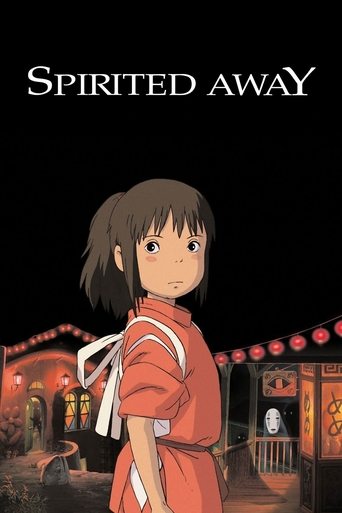



Spirited Away
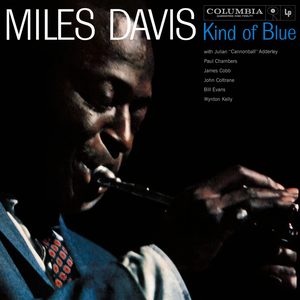
Kind of Blue
Gödel, Escher, Bach
Kyoto
Outer Wilds
North Mini CodeNorth Mini Code
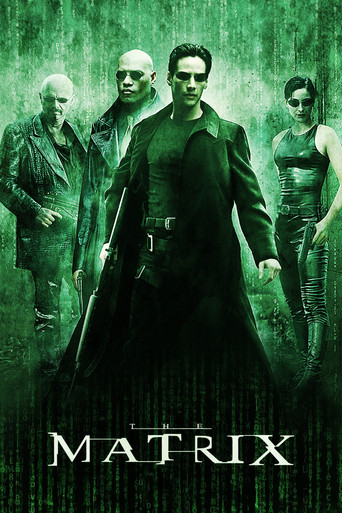


The Matrix
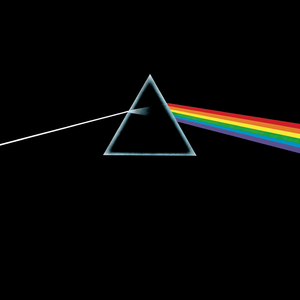
The Dark Side of the Moon
To Kill a Mockingbird
Paris
Super Mario Odyssey
Price and specs
Not enough votes to call it. On the specs, Claude Sonnet 5.5 has the edge: bigger model tier, newer, bigger context window, major provider backing.
| Spec | Claude Sonnet 5.5 | North Mini Code |
|---|---|---|
| Input price | $2/M tokens | Free |
| Output price | $10/M tokens | Free |
| Context window | 1.0M tokens | 256K tokens |
| Weights | Closed | Closed |
| Free API (OpenRouter) | No | Yes (1 provider) |
| Released | Sep 2026 | Jun 2026 |
| At 10M a month | $20.00 | $0 |
Input tokens at list price. No caching, no batch discount.
Where to run it



North Mini Code1 host
Per million tokens. Prices and uptime via OpenRouter, checked 29 Sep 2026.
Common questions
What is the difference between Claude Sonnet 5.5 and North Mini Code?
Claude Sonnet 5.5 is developed by Anthropic while North Mini Code is developed by Cohere. Claude Sonnet 5.5 has a 1.0M token context window vs North Mini Code's 256K. You can compare their actual outputs across 54 challenges on Rival to see how they differ in practice.
Which is better, Claude Sonnet 5.5 or North Mini Code?
It depends on your use case. Claude Sonnet 5.5 and North Mini Code each have strengths in different areas. Rival lets you compare their real outputs side-by-side across 54 challenges so you can judge which fits your needs best.
How much does Claude Sonnet 5.5 cost compared to North Mini Code?
Claude Sonnet 5.5 costs $2/M input tokens and North Mini Code costs $0/M input tokens. North Mini Code is $2.00/M cheaper per input. Check their side-by-side outputs on Rival to see if the price difference is justified by quality.
How can I compare Claude Sonnet 5.5 and North Mini Code on Rival?
This page shows a side-by-side comparison of Claude Sonnet 5.5 and North Mini Code across shared challenges. You can vote on which model produced the better output in a blind duel. Browsing and voting are free. No account is needed to look; signing in only saves your votes and likes.
More comparisons
Against the newest arrivals
- Claude Sonnet 5.5 vs Solar Mini 4Landed Sep 2026
- North Mini Code vs Qwen3.8 Max PrimeLanded Sep 2026
- Claude Sonnet 5.5 vs GLM 5.3 PrimeLanded Sep 2026
- North Mini Code vs Qwen3.8 Omni FlashLanded Sep 2026
- Claude Sonnet 5.5 vs Command A+Landed Sep 2026
- North Mini Code vs Claude Opus 5.5Landed Sep 2026
- Claude Sonnet 5.5 vs GPT-6 Luna ProLanded Sep 2026
- North Mini Code vs GPT-6 Sol ProLanded Sep 2026


Same lab, same size, long tail
- Claude Sonnet 5.5 vs Claude Opus 5Version compare
- Claude Sonnet 5.5 vs Claude Opus 4.6Version compare
- North Mini Code vs Command A+Same lab
- North Mini Code vs Solar Mini 4Same size
- North Mini Code vs Grok 4.3New provider
- North Mini Code vs Grok 4.5New provider
- North Mini Code vs Grok 4.6New provider
- North Mini Code vs Grok 4.7New provider
