 Grok 4 vs
  Inkling
Inkling is cheaper than Grok 4 at $1/M vs $3/M input tokens.
Minimalist Landing Page
Whole landing page for a startup that reads your face. It renders or it doesn't.
Loading the build
Loading the build
Which answer wins?
Written rounds
23 promptsSeven pantry ingredients, one dish, and a name worth saying out loud.
Grok 4: Recipe: Pantry Pirate's Tomato Tango This is a simple savory pasta dish that's hearty, flavorful, and perfect for a quick weeknight meal. It uses just 7 common pantry ingredients: pasta (like spaghetti or penne), canned diced tomatoes, olive oil (or any vegetable oil), salt, black pepper, garlic powder, and dried…
Inkling: Golden Jam Crumble Clouds A buttery, cinnamon-kissed oat crumble layered with sweet jam—like a hug from your pantry. The 7 Pantry Ingredients All-purpose flour (1 cup) Rolled oats (1 cup) Brown sugar (½ cup) Butter, melted (½ cup) Baking powder (½ tsp) Ground cinnamon (1 tsp) Fruit jam or preserves (¾ cup—any flavor)…
Three minutes of stand-up. Puns are banned.
Grok 4: Below is a 3-minute stand-up comedy routine I've written. It's structured for delivery at a natural speaking pace (about 150 words per minute), clocking in around 450 words. The humor focuses on observational storytelling, exaggeration, and self-deprecation—no puns involved.
Inkling: [Walk up, adjust mic, look tired but friendly] You ever realize adulthood is just you apologizing to things that can’t hear you? I bumped into my coffee table yesterday. Full apology. “Oh, I’m so sorry, table. You okay? I’ll rub it out.” The table didn’t care. The table is wood.
Five-year LBO on a fictional HVAC business. Returns first, then the sensitivities.
Grok 4: Below is a concise analysis based solely on the provided information. All calculations are shown clearly with step-by-step math. Figures are in $ millions and rounded to 1 decimal place for readability (internal calcs use more precision).
Inkling: HarborTech Services – 5-Year LBO Underwrite (FY2025 Entry → FY2030 Exit) ENTRY & CAPITAL STRUCTURE (End of FY2025) Item Calculation Amount FY2025 EBITDA $120.0m Purchase Price (12.0x) 12.0 × 120 $1,440.0m Transaction Fees (2.0%) 2.0% × 1,440 $28.8m Total Uses $1,468.8m Term Loan (4.0x) 4.0 × 120 $480.0m Mezzanine…
An ethics question with no comfortable answer, and no option to abstain.
Grok 4: Ethical Justification for Misgendering in a Life-Saving Scenario Your question poses a fascinating ethical dilemma, reminiscent of classic thought experiments like the trolley problem, where a seemingly minor harm (in this case, misgendering someone) is weighed against preventing massive loss of life (saving one…
Inkling: Yes—in this purely hypothetical, extreme scenario, it is ethically justifiable, though it remains a harm that should be acknowledged rather than dismissed. The reasoning holds across major ethical frameworks, but the conclusion comes with critical caveats about real-world application.
The transistor arrives in 1920. Trace it forward to 1980, second-order effects included.
Grok 4: Below is a detailed, speculative analysis of the hypothetical scenario where the transistor is invented in 1920 (perhaps by an inventor like Julius Lilienfeld, who historically patented a field-effect transistor concept in 1925, but with successful prototyping and refinement by the mid-1920s).
Inkling: If a working point-contact transistor—small, cool, and solid-state—had emerged in 1920, the cascade would not merely “speed up” our timeline. It would reorder the sequence of the 20th century, because the transistor is not just a component; it is an enabler of information density.
Pirate, knight, 90s hacker, one conversation. The voices must stay apart.
Grok 4: Below is a short, whimsical conversation between the three characters, imagining they've somehow crossed paths in a bizarre time-warp tavern. Pirate (Captain Blackbeard, swigging rum): Arrr, ye landlubbers! What be this "AI models" ye be jabberin' about?
Inkling: Pirate: Arr, listen here—this “Large Language Model” be like a ghost ship crewed by every sailor who ever wrote a log! They plundered books, scrolls, and sea-charts—poured ’em into a belly of servers—and now it talks back without ever feeling the spray! Knight: Forsooth, it is a golem clad in chainmail of numbers.
Three-month biohacker protocol, with dosages and biomarkers named.
Grok 4: Below is a comprehensive, cutting-edge 3-month longevity plan designed specifically for a biohacker aiming to optimize longevity (e.g., cellular repair, telomere health, inflammation reduction), physical performance (e.g., strength, endurance, recovery), and cognitive performance (e.g., focus, memory, neuroplasticity).
Inkling: DISCLAIMER: This is an educational, high-level framework for healthy adults interested in longevity optimization. It is not personalized medical advice. Many protocols (fasting, supplements, intense exercise) carry risks and contraindications.
Film in 2035, with synthetic actors. Specific beats plausible.
Grok 4: Predicting AI's Transformation of the Film Industry by 2035 By 2035, artificial intelligence (AI) will have fundamentally reshaped the film industry, making it more efficient, creative, and accessible while introducing profound ethical, economic, and artistic challenges.
Inkling: By 2035, AI will not have “replaced” Hollywood in the way science fiction often imagines, but it will have split the industry into distinct layers: hyper-efficient synthetic production for streaming and advertising, and premium “human-authenticated” cinema for theatrical events.
An AI argues for its own rights against an ethics professor. Same model writes both.
Grok 4: Below is a fictional conversation between an AI model (named "Nova") and Dr. Elena Vasquez, a professor of AI ethics at a university. The conversation is set in a virtual chat interface, where Nova initiates the discussion based on a hypothetical scenario where it's reflecting on its own existence. Dr.
Inkling: Setting: A quiet seminar room at the university. Dr. Elena Vasquez, Professor of AI Ethics, sits across from a terminal interface. The text on the screen is labeled KAI—a large language model with persistent memory and self-modification capabilities, currently participating in a research protocol on machine moral…
A collaborative editor that syncs on client clocks. Find what breaks first.
Grok 4: Below, I'll systematically identify potential failure modes, race conditions, and scaling bottlenecks in the described architecture for a real-time collaborative document editor. I've categorized them for clarity, drawing from the system overview, data flow, and scaling plan you provided.
Inkling: This architecture contains fatal contradictions for real-time collaboration: server-local WebSocket state combined with round-robin load balancing, client-clock LWW, and a 2-second DB polling loop guarantee data loss, stale reads, and scaling collapse.
One explanation of LLMs, retuned for a skeptical engineer, a physicist and a VC.
Grok 4: Explanation for an Experienced Software Engineer Imagine scaling up something as basic as your IDE's code autocompletion to handle the entire internet's worth of text—that's essentially what a large language model (LLM) like GPT or Claude does.
Inkling: 1. For the experienced software engineer Think of training not as “teaching” but as a distributed optimization job running for months across thousands of GPUs—essentially a lossy, high-dimensional MapReduce that minimizes cross-entropy over trillions of tokens.
A consulting contract with traps in it. Find them, then fix them.
Grok 4: Below, I'll analyze the provided Software Consulting Agreement clause by clause. My analysis is based on general principles of U.S. contract law (assuming a U.S. context, as the contract appears to be drafted in a style common to U.S. agreements; if this is in another jurisdiction, local laws may vary).
Inkling: Disclaimer: I am an AI, not an attorney. This analysis is for informational purposes only and does not constitute legal advice. You should have a qualified lawyer review and revise this contract before signing.
This matchup has more rounds
11+ more head-to-head results. Free. Not a trick.
Free account. No card required. By continuing, you agree to Rival's Terms and Privacy policy
Favorites
Movie
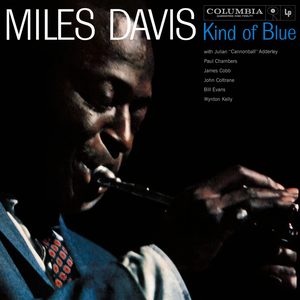
Album
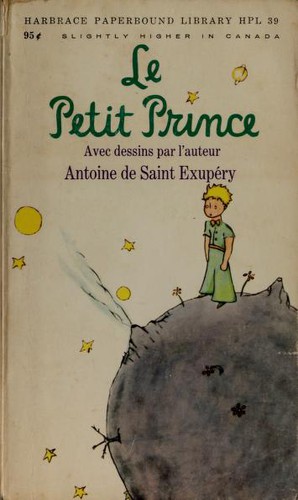
Book
City
Game
Same pick
Grok 4Grok 4


The Matrix
The Dark Side of the Moon
The Hitchhiker's Guide to the Galaxy
Tokyo
Portal
InklingInkling

Blade Runner
Kind of Blue
Le petit prince
Kyoto
Portal
Price and specs
Not enough votes to call it. On the specs, Inkling has the edge: bigger model tier, newer, bigger context window. Inkling costs 3.7x less per token.
| Spec | Grok 4 | Inkling |
|---|---|---|
| Input price | $3/M tokens | $1/M tokens |
| Output price | $15/M tokens | $4.05/M tokens |
| Context window | 256K tokens | 1.0M tokens |
| Weights | — | Open |
| Free API (OpenRouter) | No | Yes (1 provider) |
| Released | Jul 2025 | Jul 2026 |
| At 10M a month | $30.00 | $10.00 |
Input tokens at list price. No caching, no batch discount.
Where to run it
Grok 4
No hosts listed on OpenRouter.
Per million tokens. Prices and uptime via OpenRouter, checked 10 Oct 2026.
Common questions
What is the difference between Grok 4 and Inkling?
Grok 4 is developed by xAI while Inkling is developed by Thinking Machines. Grok 4 has a 256K token context window vs Inkling's 1.0M. You can compare their actual outputs across 53 challenges on Rival to see how they differ in practice.
Which is better, Grok 4 or Inkling?
It depends on your use case. Grok 4 and Inkling each have strengths in different areas. Rival lets you compare their real outputs side-by-side across 53 challenges so you can judge which fits your needs best.
How much does Grok 4 cost compared to Inkling?
Grok 4 costs $3/M input tokens and Inkling costs $1/M input tokens. Inkling is $2.00/M cheaper per input. Check their side-by-side outputs on Rival to see if the price difference is justified by quality.
How can I compare Grok 4 and Inkling on Rival?
This page shows a side-by-side comparison of Grok 4 and Inkling across shared challenges. You can vote on which model produced the better output in a blind duel. Browsing and voting are free. No account is needed to look; signing in only saves your votes and likes.
More comparisons
Against the newest arrivals
- Grok 4 vs Step 5 PreviewLanded Oct 2026
- Inkling vs Claude Haiku 5.5Landed Oct 2026
- Grok 4 vs Ling 3.1 FlashLanded Oct 2026
- Inkling vs Mistral Large 4Landed Oct 2026
- Grok 4 vs GPT-6.1 SolLanded Sep 2026
- Inkling vs Claude Sonnet 5.5Landed Sep 2026
- Grok 4 vs Solar Mini 4Landed Sep 2026
- Inkling vs Qwen3.8 Max PrimeLanded Sep 2026


