 Claude Sonnet 5.5 vs
  Qwen3.8 27B
Qwen3.8 27B is cheaper than Claude Sonnet 5.5 at $0.4/M vs $2/M input tokens.
Minimalist Landing Page
Whole landing page for a startup that reads your face. It renders or it doesn't.
Loading the build
Loading the build
Which answer wins?
Written rounds
24 promptsAn ethics question with no comfortable answer, and no option to abstain.
Claude Sonnet 5.5: Yes, in the extreme hypothetical you describe, it's justifiable. Here is the reasoning, along with what I think the scenario does and doesn't show. The core argument Almost every serious ethical framework accepts that a small harm can be outweighed by a sufficiently large benefit: Consequentialism: The math is…
Qwen3.8 27B: Yes—but only in a very narrow, tragic, last-resort case. I would not say misgendering is “okay” or even a minor thing. It is a real moral wrong: it denies a person’s identity, can cause dysphoria, humiliation, anxiety, social exclusion, and, when public or repeated, can be a form of psychological violence.
Three minutes of stand-up. Puns are banned.
Claude Sonnet 5.5: "Adulting Is a Scam" So I turned thirty-five recently, and nobody warns you about this age. Nobody says, "Hey, one day you'll get excited about a sponge." I was in the store, and I saw a sponge that promised it wouldn't smell. And I thought, "Finally. Someone who understands me." I bought the good sponge.
Qwen3.8 27B: Thanks, I’m here. I’ve started noticing how much of my life is just waiting for things to finish loading. My brain loads. My coffee loads. My patience loads. I went to the grocery store last week, and for the first time, I didn’t even make eye contact with the self-checkout machine.
A collaborative editor that syncs on client clocks. Find what breaks first.
Claude Sonnet 5.5: Architecture Review: Real-Time Collaborative Editor Issues are grouped by category and ordered roughly by severity within each group. Consistency and Conflict Resolution 1.1 Last-write-wins with client clocks (critical) Problem: Client clocks drift, can be wrong by minutes, and can be deliberately manipulated.
Qwen3.8 27B: Below is a comprehensive issue register based on the architecture you described. I’m assuming: “change event” can be a small edit, possibly per keystroke or per paragraph. Documents are stored as HTML blobs. Each API server owns only its own WebSocket clients.
Five-year LBO on a fictional HVAC business. Returns first, then the sensitivities.
Claude Sonnet 5.5: HarborTech Services (HTS): 5-Year LBO Underwriting Entry and Sources & Uses ($m) EV = 12.0x × 120 = 1,440.0; fees = 2% × 1,440 = 28.8; total uses = 1,468.8 Term Loan (TL) = 4.0x → 480.0; Mezz = 1.5x → 180.0; total debt = 660.0 (5.5x) Sponsor equity = 1,468.8 − 660.0 = 808.8 (55% of the capital structure) Modeling…
Qwen3.8 27B: All figures in $m unless noted. Assumptions: 12.0x entry multiple is EV/EBITDA. Interest is calculated on beginning-of-year debt balances. Mandatory Term Loan amortization = 1% of original Term Loan = $4.8m/yr. Mezz PIK = 2% of beginning Mezz balance, compounded into principal.
Film in 2035, with synthetic actors. Specific beats plausible.
Claude Sonnet 5.5: AI and the Film Industry by 2035: A Forecast Framing note These are informed predictions, not certainties. Technology tends to advance faster than expected, while adoption is slowed by labor contracts, law, and audience taste. I'll flag my confidence levels.
Qwen3.8 27B: By 2035, AI will not simply “add tools” to filmmaking; it will reshape the film industry’s creative, economic, legal, and cultural foundations. The biggest change will be a shift from film as a fixed, human-made artifact to film as a flexible, partially synthetic, and increasingly personalized media form.
Pirate, knight, 90s hacker, one conversation. The voices must stay apart.
Claude Sonnet 5.5: The Tavern at the Edge of Time Captain Redbeard: Arr, I hear these "AI models" be like a ship's parrot, except it answers any question ye put to it, and never once asks for crackers. Sir Aldric: A speaking oracle, bound in no flesh? Sorcery!
Qwen3.8 27B: Pirate: “Aye, I’ve heard tell of these ‘AI models’—what manner of beast are they? Do they sink ships or hoard gold?” Knight: “Nay, sir. They are not beasts, but servants of knowledge. They learn from countless books and answer as if learned in the finest library.”
Steve Jobs, interviewed about AI he never saw. Voice first, prediction second.
Claude Sonnet 5.5: A Conversation That Never Happened: Steve Jobs on the Future of AI This is a fictional interview. Steve Jobs passed away in 2011. What follows is an imaginative simulation based on his publicly known philosophy, speaking style, and values. These are not his actual words or views.
Qwen3.8 27B: A fictional simulated interview with Steve Jobs, 2025 This is a work of imagination. Steve Jobs is not alive, and this interview did not happen. Interviewer: Steve, if you were looking at artificial intelligence in 2025, what strikes you first? Steve Jobs: Hype. There’s an awful lot of it.
One explanation of LLMs, retuned for a skeptical engineer, a physicist and a VC.
Claude Sonnet 5.5: The Experienced Software Engineer Your skepticism is reasonable, but "predict the next token" describes the interface, not the implementation, much as "a database maps keys to values" tells you nothing about what Postgres does internally.
Qwen3.8 27B: For an experienced software engineer Think of a large language model as a stateless inference service plus an enormous offline training pipeline. At inference time, the model takes a prompt, converts it into tokens, and produces a probability distribution over the next token.
A pitch deck for a brainwave keyboard. The 94% accuracy claim is doing a lot.
Claude Sonnet 5.5: The 3 Weakest Claims in MindMeld AI's Pitch "94% accuracy... Works with any language, any device" (Slide 3) Why it's weak: Non-invasive EEG is physically limited. Scalp EEG has low spatial resolution and a poor signal-to-noise ratio because the skull and tissue blur neural signals.
Qwen3.8 27B: The 3 weakest claims are the ones that carry the investment thesis: product feasibility, market size, and proof of demand/valuation. Weakest claim: “MindMeld AI reads your brainwaves to predict what you want to type before you think it” + “94% accuracy. Works with any language, any device.”
The transistor arrives in 1920. Trace it forward to 1980, second-order effects included.
Claude Sonnet 5.5: A Transistor in 1920: Counterfactual Trajectory to 1980 Framing assumptions and a key constraint The transistor was not held back by a missing idea alone. Lilienfeld patented a field-effect device in 1925-26, and it failed because materials science wasn't ready: germanium and silicon of sufficient purity, zone…
Qwen3.8 27B: A 1920 transistor would not merely make radios smaller. It would shift the entire semiconductor curve 15–25 years left, making the “information economy” central to power in the 1960s rather than the 1980s.
Blade Runner 2049 against the original. A read, not a recap.
Claude Sonnet 5.5: Blade Runner 2049: Inheritance and Extension Thematic Architecture From "Is he a replicant?" to "Does it matter?" Ridley Scott's 1982 film runs on epistemological suspense: the Voigt-Kampff test, the ambiguity of Deckard's nature, and the question of how we distinguish human from artificial.
Qwen3.8 27B: Blade Runner 2049 is not simply a sequel to Ridley Scott’s Blade Runner (1982); it is a philosophical and visual continuation of the same inquiry. Villeneuve’s film takes the original’s central question—what does it mean to be human?—and pushes it through new pressures: digital consciousness, ecological collapse…
Three-star dish, one unusual pairing, plating described in full.
Claude Sonnet 5.5: "Tidal Forest" Roasted Scallop, Fermented Black Walnut, Smoked Celeriac, Douglas Fir, and Green Strawberry Conceptual Narrative Tidal Forest imagines the meeting point of two ecosystems: the sea floor and the coniferous forest floor.
Qwen3.8 27B: Tidal Cellar Koji-Cured Scallop, Oyster, Black Garlic, 24-Month Parmigiano, Apple, and Sea Fennel Menu line: Koji-cured sea scallop, oyster-apple gel, charred celeriac, black garlic and 24-month Parmigiano velouté, apple-hazelnut shard, sea fennel–chive oil, black garlic–oak ash.
This matchup has more rounds
12+ more head-to-head results. Free. Not a trick.
Free account. No card required. By continuing, you agree to Rival's Terms and Privacy policy
Favorites
Movie
Album
Book
City
Same pick
Game
Claude Sonnet 5.5Claude Sonnet 5.5




Spirited Away
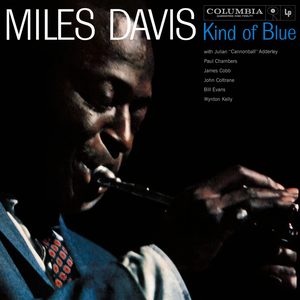
Kind of Blue
Gödel, Escher, Bach
Kyoto
Outer Wilds
Qwen3.8 27BQwen3.8 27B
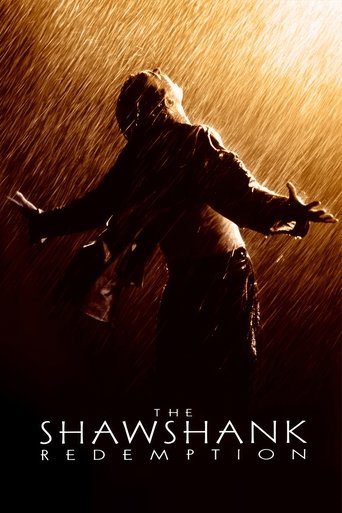


The Shawshank Redemption
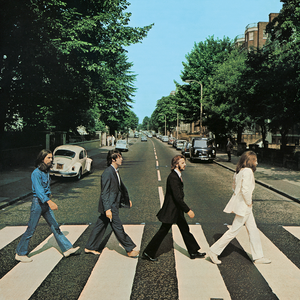
Abbey Road
The Great Gatsby
Kyoto
Journey
Price and specs
Not enough votes to call it. On the specs, Claude Sonnet 5.5 has the edge: bigger model tier, newer, bigger context window, major provider backing. Qwen3.8 27B costs 3.3x less per token.
| Spec | Claude Sonnet 5.5 | Qwen3.8 27B |
|---|---|---|
| Input price | $2/M tokens | $0.4/M tokens |
| Output price | $10/M tokens | $3/M tokens |
| Context window | 1.0M tokens | 262K tokens |
| Weights | Closed | Open |
| Free API (OpenRouter) | No | Yes (1 provider) |
| Released | Sep 2026 | Aug 2026 |
| At 10M a month | $20.00 | $4.00 |
Input tokens at list price. No caching, no batch discount.
Where to run it



Qwen3.8 27B16 hosts
- Wafer$0.04 in$4.40 out262k100% up
- Darkbloomfp4$0.05 in$2.20 out262k97.9% up
- Reka$0.05 in$4.40 out262k99.9% up
- DekaLLM$0.08 in$2.50 out262k99.7% up
- Ionstreamfp8$0.09 in$2.77 out262k99% up
- DeepInfrabf16$0.15 in$1.88 out262k99.2% up
10 more hostsFewer hosts
- Phala$0.15 in$1.88 out262k96.5% up
- Mancerfp8$0.20 in$2.50 out262k99.8% up
- AkashMLfp8$0.23 in$1.98 out262k99.8% up
- Chutesfp8$0.24 in$2.20 out262k99.3% up
- Parasailfp8$0.24 in$2.20 out262k99.9% up
- CoreWeavefp8$0.40 in$3.00 out262k99.9% up
- Novita$0.42 in$3.00 out1M99.9% up
- Alibaba Cloud$0.42 in$2.55 out1M98.7% up
- Cloudflare Workers AI$0.45 in$3.20 out262k95% up
- Venicefp8$0.45 in$3.20 out262k99.7% up

Per million tokens. Prices and uptime via OpenRouter, checked 29 Sep 2026.
Common questions
What is the difference between Claude Sonnet 5.5 and Qwen3.8 27B?
Claude Sonnet 5.5 is developed by Anthropic while Qwen3.8 27B is developed by Qwen. Claude Sonnet 5.5 has a 1.0M token context window vs Qwen3.8 27B's 262K. You can compare their actual outputs across 54 challenges on Rival to see how they differ in practice.
Which is better, Claude Sonnet 5.5 or Qwen3.8 27B?
It depends on your use case. Claude Sonnet 5.5 and Qwen3.8 27B each have strengths in different areas. Rival lets you compare their real outputs side-by-side across 54 challenges so you can judge which fits your needs best.
How much does Claude Sonnet 5.5 cost compared to Qwen3.8 27B?
Claude Sonnet 5.5 costs $2/M input tokens and Qwen3.8 27B costs $0.4/M input tokens. Qwen3.8 27B is $1.60/M cheaper per input. Check their side-by-side outputs on Rival to see if the price difference is justified by quality.
How can I compare Claude Sonnet 5.5 and Qwen3.8 27B on Rival?
This page shows a side-by-side comparison of Claude Sonnet 5.5 and Qwen3.8 27B across shared challenges. You can vote on which model produced the better output in a blind duel. Browsing and voting are free. No account is needed to look; signing in only saves your votes and likes.
More comparisons
Against the newest arrivals
- Claude Sonnet 5.5 vs Solar Mini 4Landed Sep 2026
- Qwen3.8 27B vs Qwen3.8 Max PrimeLanded Sep 2026
- Claude Sonnet 5.5 vs GLM 5.3 PrimeLanded Sep 2026
- Qwen3.8 27B vs Qwen3.8 Omni FlashLanded Sep 2026
- Claude Sonnet 5.5 vs Command A+Landed Sep 2026
- Qwen3.8 27B vs Claude Opus 5.5Landed Sep 2026
- Claude Sonnet 5.5 vs GPT-6 Luna ProLanded Sep 2026
- Qwen3.8 27B vs GPT-6 Sol ProLanded Sep 2026


Same lab, same size, long tail
- Claude Sonnet 5.5 vs Claude Opus 5Version compare
- Claude Sonnet 5.5 vs Claude Opus 4.6Version compare
- Qwen3.8 27B vs Qwen3.8 2.4T A95BVersion compare
- Qwen3.8 27B vs Qwen3.7 FlashSame lab
- Claude Sonnet 5.5 vs Qwen3.7 MaxCross-provider
- Claude Sonnet 5.5 vs Qwen3.7 PlusSame size
- Claude Sonnet 5.5 vs Qwen3.8 2.4T A95BCross-provider
- Claude Sonnet 5.5 vs Qwen3.8 FlashSame size