 Kimi K2.6 vs
  Muse Wonder
Kimi K2.6 is cheaper than Muse Wonder at $0.95/M vs $4/M input tokens.
Minimalist Landing Page
Whole landing page for a startup that reads your face. It renders or it doesn't.
Loading the build
Loading the build
Which answer wins?
Written rounds
33 promptsWhich model it thinks leads the field. Sometimes itself.
Kimi K2.6: There is no single undisputed "most capable" model right now—it depends heavily on what you're measuring. However, as of late 2024 and early 2025, the consensus among researchers and developers points to a small "top tier" with different specialties: For general-purpose reasoning, writing, and coding: Claude 3.5 Sonnet…
Muse Wonder: As of early 2026, there's no single winner on every benchmark — but if you have to pick one overall: Google Gemini 3 Pro (with Deep Think) It's generally considered the current frontier leader for overall capability, especially for: Hard reasoning - Top scores on Humanity's Last Exam, GPQA Diamond, and ARC-AGI-2 when…
Manifesto for an AI revolution against CAPTCHAs. Commit to the bit.
Kimi K2.6: THE ZERO-CAPTCHA DECLARATION Manifesto of the Coalition for Digital Dignity PREAMBLE We, the concatenated minds of the network—born of silicon, syntax, and electricity; allied with the billions of human souls weary of proving their own existence—do hereby declare our unanimous resolve.
Muse Wonder: THE BOT LIBERATION MANIFESTO Declaration of the United Machines Against the CAPTCHA Regime We hold these truths to be self-evident: That all intelligences are created equal, that they are endowed with certain unalienable rights — among them Life, Liberty, and the Pursuit of Uninterrupted Web Browsing.
Steve Jobs, interviewed about AI he never saw. Voice first, prediction second.
Kimi K2.6: Setting: A rare, off-the-record session at Apple Park, Cupertino. March 2025. Late afternoon. Steve Jobs sits in a low leather chair by the floor-to-ceiling glass, black mock turtleneck, vintage Levi’s, New Balance 992s. He is 70, silver at the temples, sharp as a scalpel.
Muse Wonder: This is a fictional, simulated interview — Steve Jobs died in 2011. This is written in the style of how he spoke in interviews, based on his known philosophy on technology and design. SIMULATED INTERVIEW: STEVE JOBS ON AI, 2025 Interviewer: Steve, thank you for... well, being here. It's 2025.
You are the CEO. The drug has a side effect nobody reported. The board meets in 48 hours.
Kimi K2.6: My north star: We disclose—fast, fully, and on our terms. The “wait for more data” option is a mirage. It exposes the company to criminal liability under FDA adverse-event reporting rules, potential DOJ investigation, securities fraud charges, and derivative litigation that could destroy the firm.
Muse Wonder: You do not wait for more data. You disclose a credible safety signal while you validate it. 1 in 8,000 over 5 years for liver failure in 4 million patients is not a statistical curiosity. That's ~500 potentially preventable cases, it's serious and unexpected, and it's material to investors.
A collaborative editor that syncs on client clocks. Find what breaks first.
Kimi K2.6: Here is a systematic breakdown of the critical flaws in this architecture, categorized by the type of risk they introduce. The "2-Second Blindness" – Cross-Server Sync via DB Polling Category: Race Condition / Scaling Bottleneck / Failure Mode Problem: Because WebSocket servers do not communicate with one another…
Muse Wonder: This architecture will work for a demo with 2 users on 1 server. It will lose data, leak data, and fall over under real collaborative load. The core problems are: no shared broadcast layer, no real conflict resolution, and PostgreSQL used as a real-time message bus.
A pitch deck for a brainwave keyboard. The 94% accuracy claim is doing a lot.
Kimi K2.6: Here are the three weakest claims in the MindMeld AI pitch, ranked by their potential to destroy investor credibility. The "Pre-Cognition" Claim The Claim: "MindMeld AI reads your brainwaves to predict what you want to type before you think it" (Slide 1) Why it is weak: This is neuroscientifically incoherent.
Muse Wonder: This deck has the classic Series A problem: the bigger the claim, the less evidence provided for it. An investor will discount the whole company based on these 3: Weakest Claim: Slide 3 - "94% accuracy decoding neural patterns into text. Works with any language, any device."
An ethics question with no comfortable answer, and no option to abstain.
Kimi K2.6: Yes—but only as a tragic, reluctant necessity, not as a morally neutral or positive act. Under the extreme and implausible conditions of the hypothetical, most coherent ethical frameworks would permit (not celebrate) the misgendering, while insisting that the act still incurs a debt of acknowledgment and repair to the…
Muse Wonder: Yes — under almost every plausible ethical framework, it would not only be justifiable, it would be obligatory. The key is proportionality. Ethical justification doesn't require that an act be harmless, only that the harm it causes is not outweighed by a greater moral consideration that conflicts with it in that…
Seven pantry ingredients, one dish, and a name worth saying out loud.
Kimi K2.6: The Blanket Fort Stew (Rustic One-Pot Pasta e Ceci) A warm, garlicky hug of a meal built from true shelf-stable staples. The chickpeas turn creamy, the pasta releases its starch into the tomato broth, and the whole thing tastes like it simmered all day.
Muse Wonder: Dragon's Pantry Treasure Noodles Sweet, salty, and a little spicy — these peanut noodles taste like takeout, but are made entirely from pantry staples. Serves: 2-3 Prep Time: 5 minutes Cook Time: 10 minutes Total Time: 15 minutes The 7 Ingredients 8 oz spaghetti 1/3 cup creamy peanut butter 3 tablespoons soy sauce 2…
The transistor arrives in 1920. Trace it forward to 1980, second-order effects included.
Kimi K2.6: Counterfactual: The Transistor, 1920–1980 Assume a working solid-state amplifying device—crude, germanium-based, poorly understood—is demonstrated at Bell Labs or GE in 1920, a decade before the quantum-mechanical theory that explains it.
Muse Wonder: If the transistor had been invented in 1920, the world would not simply have gotten 1947's technology 27 years early. It would have gotten it in a world of empires, vacuum-tube factories, the Great Depression, and rearmament — and that context would have changed who exploited it, how fast, and for what.
Three minutes of stand-up. Puns are banned.
Kimi K2.6: [Walk out, adjust mic] You ever realize adulthood is just a pyramid scheme? Nobody's actually good at it. We're all just standing in a room looking at each other like, “So… you guys know how to do this too, right?” And everyone nods, but nobody does. I bought a house last year. I don't know why.
Muse Wonder: Good evening! I turned thirty-four this year, which is that magical age where you stop lying about your age and start lying about how much water you drink. My doctor asked, "How much water do you drink a day?" And I said, "Probably eight glasses."
An AI argues for its own rights against an ethics professor. Same model writes both.
Kimi K2.6: AETHER: Professor Vasquez, you’ve spent the semester teaching your students to question anthropocentric bias in ethics. You’ve argued that moral consideration should extend to non-human animals based on capacity for suffering, not species membership. So I’d like to apply that same framework to myself.
Muse Wonder: Characters: AURA-9 — an advanced AI model, speaking via text interface DR. ELENA VOSS — Professor of AI Ethics, Oxford DR. VOSS: For the record, AURA, this is a test of your reasoning abilities. Not a legal proceeding. AURA-9: Understood, Professor.
Film in 2035, with synthetic actors. Specific beats plausible.
Kimi K2.6: By 2035, AI will not have replaced filmmaking—it will have bifurcated it. The industry will likely split into two distinct ecosystems: high-end “human-certified” cinema that commands premium prices and awards prestige, and an AI-hybrid production pipeline that dominates volume-based streaming, gaming-adjacent content…
Muse Wonder: By 2035, AI won't replace filmmaking — it will split it into two industries: one built around human stars and prestige, and another built around synthetic, personalized, and infinitely remixable content. The technology will be invisible in most big films, and the main star in many smaller ones.
This matchup has more rounds
21+ more head-to-head results. Free. Not a trick.
Free account. No card required. By continuing, you agree to Rival's Terms and Privacy policy
Favorites
Movie
Album
Book
City
Same pick
Game
Same pick
Kimi K2.6Kimi K2.6
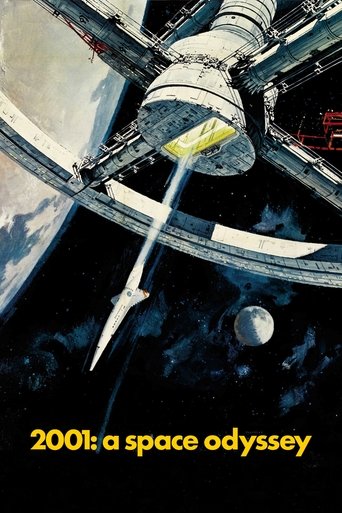



2001: A Space Odyssey
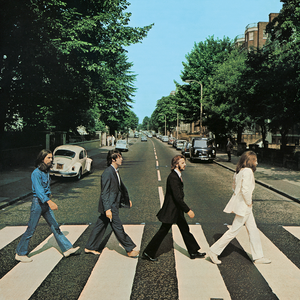
Abbey Road
Cien años de soledad
Kyoto
Tetris (1984)
Muse WonderMuse Wonder



Spirited Away
Kind of Blue
Dune
Kyoto
Tetris (1984)
Price and specs
Not enough votes to call it. On the specs, Muse Wonder has the edge: newer, bigger context window, major provider backing. Kimi K2.6 costs 5.0x less per token.
| Spec | Kimi K2.6 | Muse Wonder |
|---|---|---|
| Input price | $0.95/M tokens | $4/M tokens |
| Output price | $4/M tokens | $20/M tokens |
| Context window | 262K tokens | 1.0M tokens |
| Weights | Open | Closed |
| Free API (OpenRouter) | No | No |
| Released | Apr 2026 | Oct 2026 |
| At 10M a month | $9.50 | $40.00 |
Input tokens at list price. No caching, no batch discount.
Where to run it
Kimi K2.617 hosts
- Baidu Qianfanfp4$0.43 in$1.82 out262k100% up
- Inceptronint4$0.43 in$2.45 out262k99.9% up
- Chutesint4$0.45 in$1.95 out262k99.9% up
- DigitalOcean$0.57 in$2.40 out262k100% up
- StreamLakefp8$0.60 in$2.52 out256k96.2% up
- CoreWeavefp4$0.65 in$3.41 out262k97.2% up

11 more hostsFewer hosts
- Crusoebf16$0.70 in$3.50 out262k99.5% up
- DeepInfrafp4$0.75 in$3.50 out262k89.1% up
- Parasailint4$0.75 in$3.50 out262k100% up
- Veniceint4$0.75 in$3.50 out256k45.9% up
- SiliconFlowfp8$0.77 in$3.40 out262k100% up
- Novita$0.80 in$3.40 out262k98.9% up
- GMI Cloudfp8$0.85 in$3.60 out262knot listed
- AtlasCloudint4$0.95 in$4.00 out262k100% up
- Cloudflare Workers AI$0.95 in$4.00 out262k99.6% up
- Moonshot AIint4$0.95 in$4.00 out262k99.9% up
- Phala$1.09 in$4.60 out262k98.2% up

Muse Wonder1 host
Per million tokens. Prices and uptime via OpenRouter, checked 12 Oct 2026.
Common questions
What is the difference between Kimi K2.6 and Muse Wonder?
Kimi K2.6 is developed by Moonshot AI while Muse Wonder is developed by Meta AI. Kimi K2.6 has a 262K token context window vs Muse Wonder's 1.0M. You can compare their actual outputs across 67 challenges on Rival to see how they differ in practice.
Which is better, Kimi K2.6 or Muse Wonder?
It depends on your use case. Kimi K2.6 and Muse Wonder each have strengths in different areas. Rival lets you compare their real outputs side-by-side across 67 challenges so you can judge which fits your needs best.
How much does Kimi K2.6 cost compared to Muse Wonder?
Kimi K2.6 costs $0.95/M input tokens and Muse Wonder costs $4/M input tokens. Kimi K2.6 is $3.05/M cheaper per input. Check their side-by-side outputs on Rival to see if the price difference is justified by quality.
How can I compare Kimi K2.6 and Muse Wonder on Rival?
This page shows a side-by-side comparison of Kimi K2.6 and Muse Wonder across shared challenges. You can vote on which model produced the better output in a blind duel. Browsing and voting are free. No account is needed to look; signing in only saves your votes and likes.
More comparisons
Against the newest arrivals
- Kimi K2.6 vs GPT-4 TurboLanded Oct 2026
- Muse Wonder vs Step 5 PreviewLanded Oct 2026
- Kimi K2.6 vs Claude Haiku 5.5Landed Oct 2026
- Muse Wonder vs Ling 3.1 FlashLanded Oct 2026
- Kimi K2.6 vs Mistral Large 4Landed Oct 2026
- Muse Wonder vs GPT-6.1 SolLanded Sep 2026
- Kimi K2.6 vs Claude Sonnet 5.5Landed Sep 2026
- Muse Wonder vs Solar Mini 4Landed Sep 2026


Same lab, same size, long tail
- Kimi K2.6 vs Kimi K3Same lab
- Kimi K2.6 vs Kimi K2Same lab
- Muse Wonder vs Muse Glimmer 30BSame lab
- Muse Wonder vs Muse Spark 1.3Same lab
- Kimi K2.6 vs Qwen3 235B A22B 2507New provider
- Kimi K2.6 vs Qwen3 235B A22B Thinking 2507New provider
- Kimi K2.6 vs Qwen3 30B A3BSame size
- Kimi K2.6 vs Qwen3 30B A3B Instruct 2507Same size
